
Finding the perfect balance between daily lounging and hosting overnight relatives or friends requires looking closely at dimensions, frame types, and layout options. For a family of three to five, a standard sofa might feel cramped, while a dedicated guest bed takes up precious floor space in a typical living room or condominium. The ideal sofabed must serve as a comfortable, spacious seat by day and transform into a supportive sleeping surface by night without overwhelming your living area.
To comfortably accommodate a family of this size, you generally need a 3-seater, 4-seater, or L-shaped sectional sofabed. When unfolded, the sleeping surface should ideally measure at least a standard Queen size (approximately 60 by 75 inches) or a King size to ensure two adults can sleep comfortably without crowding. Choosing the right configuration requires understanding how seating capacity translates to sleeping space, measuring your room for both open and closed footprints, and selecting mechanisms that withstand frequent use.
Understanding Seating vs. Sleeping Capacity for Larger Households
Many homeowners assume that a sofa labeled as a “3-seater” will automatically provide a comfortable sleeping surface for three people. In reality, seating capacity and sleeping capacity are governed by entirely different dimensions. Seating capacity is determined by the overall width of the sofa cushions and the depth of the seat, whereas sleeping capacity is determined by the width and length of the mattress or cushion surface once the bed mechanism is fully deployed.
Products mentioned in this guide
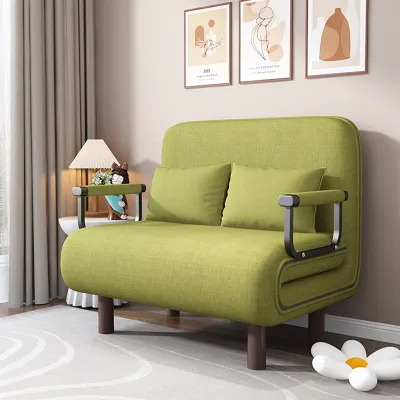
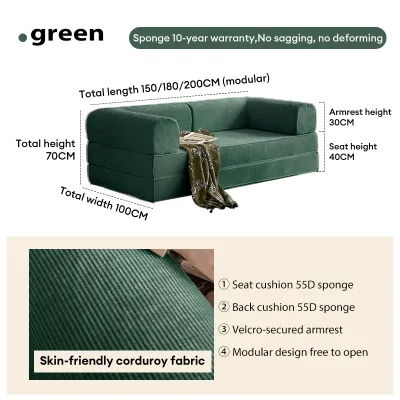
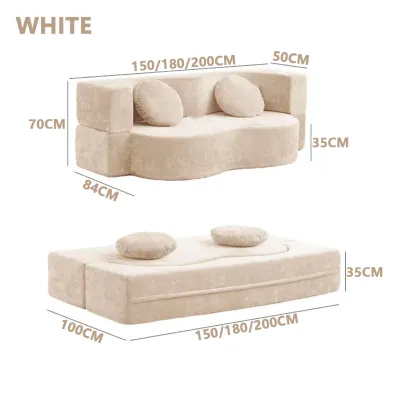
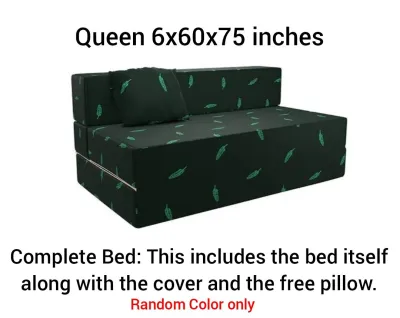
![[Vacuumed Comfy Rest Sofa Bed] Joyce & Diana Vacuumed Comfy Rest Sofa Bed 6inches/8inches with FREEBIE](https://img.lazcdn.com/g/p/9739273a130e5d2281c72c84ea958f26.png_400x400q80.png_.webp)
Prices are valid at publication and may change. Please refer to the product page for the latest price.
For daily living, a family of three to five requires sufficient seating width so that everyone can sit together without feeling squeezed. A standard 3-seater typically offers enough space for three adults, while a 4-seater or an L-shaped configuration provides the extra breathing room needed for five people. However, when converted into a bed, a standard 3-seater pull-out usually reveals a Double or Queen-size mattress, which is designed to sleep only two adults comfortably.
To determine your ideal setup, start by defining your primary use case. If your household uses the living room primarily for daily family lounging and only hosts overnight guests occasionally, prioritize seat cushion comfort, back support, and a layout that fits your room’s daily flow. If you host overnight guests frequently, or if a family member uses the bed regularly, prioritize the quality of the internal mattress, the ease of the conversion mechanism, and a larger unfolded sleeping capacity, such as a King-size or modular configuration.
Recommended Sofabed Configurations for 3-5 Person Families
Selecting the right configuration depends on your room’s layout, your daily seating habits, and how much space you can allocate when the bed is fully extended. Different styles offer distinct advantages in seating comfort, sleeping area, and spatial efficiency.

Standard 3-Seater and 4-Seater Pull-Out Sofabeds
Traditional pull-out sofabeds are highly effective choices for medium to large living rooms. These models feature a classic sofa profile during the day, hiding a metal or wooden folding frame and a dedicated mattress inside the base. A standard 3-seater or 4-seater provides ample seating width for three to four adults, making it an excellent hub for family movie nights.
When shopping for a pull-out model, it is crucial to check the actual seat width between the armrests rather than relying solely on the exterior dimensions. Oversized, rolled, or heavily padded armrests can easily eat up 10 to 15 inches of usable seating space, reducing a nominal 4-seater to the seating capacity of a 3-seater. Once unfolded, these models typically provide a Queen or King-size sleeping surface, keeping the mattress completely flat and separate from the daily seating cushions.
L-Shaped (Sectional) Sofabeds with Chaise
For families of four to five, an L-shaped sectional sofabed offers an excellent way to maximize corner spaces and provide comfortable, multi-directional seating. The sectional design naturally accommodates more people by utilizing the corner angle, allowing family members to face each other or stretch out comfortably on the chaise portion.
Many sectional sofabeds feature a pull-out trundle unit beneath the main seating area that rises to align perfectly with the chaise lounge, creating a massive, unified sleeping platform. When selecting an L-shaped model, you must decide between a left-arm facing (LAF) or right-arm facing (RAF) configuration based on your room’s layout. Some modular sectionals offer a reversible chaise that can be moved to either side, providing valuable flexibility if you decide to rearrange your living room or move to a new home.
Modular Sofabeds
Modular systems consist of individual seating units—such as single chairs, corner pieces, and ottomans—that can be configured in multiple ways. This flexibility is highly beneficial for dynamic families who need to adapt their living space for different activities, such as play areas, formal hosting, or sleeping arrangements.
During the day, you can arrange the modules to seat five or more people comfortably. At night, the pieces can be pushed together to form a large, flat sleeping surface, or separated into individual single beds for guests who prefer their own space. If you opt for a modular system, closely inspect the connection mechanisms, such as heavy-duty metal clips or interlocking brackets. Secure connectors are essential to prevent the individual modules from sliding apart on smooth tile or polished wood floors during daily use or while sleeping.
Space Planning and Room Measurement Guide
An oversized sofabed can quickly make a room feel cramped, while a model that is too small will fail to accommodate your family. To avoid buying an ill-fitting piece, follow a systematic measurement process before making a purchase.
1. Closed Footprint
Measure the maximum length, depth, and height of the space where the sofa will sit. Compare these measurements against the visual proportions of the room, ensuring the sofa does not block natural light from windows, cover electrical outlets, or obstruct high-traffic walkways. Be sure to leave enough wall space on either side of the sofa for side tables or floor lamps if desired.
2. Extended Clearance
Measure the distance from the back wall to the absolute furthest edge of the sofabed when it is fully unfolded. As a general interior design guideline, you should maintain a walking clearance of at least 24 to 30 inches (approximately 60 to 75 centimeters) between the edge of the extended bed and any facing obstacles, such as walls, TV consoles, or heavy coffee tables. If your coffee table is heavy or difficult to move, make sure you have an alternative spot to store it when the bed is open.
3. Delivery Access
Many homeowners overlook the path the furniture must take to reach the living room. Measure the width and height of all entryways, hallways, stairwells, and elevator doors. This step is especially critical for high-rise condominiums or multi-story townhouses in the Philippines, where tight corners and low ceilings in stairwells are common. Always compare these dimensions against the manufacturer’s packaged product dimensions and minimum delivery clearance requirements to ensure the piece can be safely brought inside without damaging your walls or the furniture itself.
Key Mechanisms and Comfort Considerations
The choice of mechanism directly impacts how easy the sofabed is to operate, how comfortable it is for sitting and sleeping, and how long it will last under the daily demands of a active household.
Pull-out frames typically feature a mechanism where the seating cushions are removed, and a folded metal or wooden frame is pulled forward to reveal a thin mattress. This style is highly regarded for sleeping comfort because the mattress is flat and free of seams. However, the internal mechanism adds significant weight to the piece, and the thin mattress may require a mattress topper for long-term comfort.
In contrast, click-clack or futon-style sofabeds operate by flattening the backrest down to align with the seat cushion. These are generally easier and faster to operate, having fewer moving parts that could wear out over time. The primary trade-off is that you sleep directly on the seating cushions, which means you may feel the seams or gaps between the cushions. Additionally, click-clack models often require a few inches of clearance between the back of the sofa and the wall to allow the backrest to swing down.
For a family of three to five using the sofa daily, durability is paramount. Prioritize sturdy frame materials, such as kiln-dried hardwoods or reinforced steel, and check the manufacturer’s weight capacity specifications. Upholstery fabric must also be chosen carefully. In humid, tropical climates, moisture management is essential to prevent mold, mildew, and musty odors. Look for breathable fabrics, and check the manufacturer’s care labels for cleaning instructions. Regular vacuuming and leaving the bed open occasionally in a well-ventilated room with ceiling fans or air conditioning running will help keep the internal materials dry and fresh.
Common Sizing and Placement Mistakes to Avoid
To ensure your new furniture fits seamlessly into your home and daily routine, keep these common pitfalls in mind during your selection process:
- Ignoring the Swing Radius: Always account for the swing radius of nearby bedroom doors, bathroom doors, or cabinet doors. A fully extended sofabed can easily block access to essential areas of your home if placed too close to doorways.
- Relying Solely on Seating Labels: Do not assume that a label like "3-seater" guarantees comfortable seating for three large adults. Always check the actual interior seat width dimension (excluding the armrests) and compare it against your family's seating preferences.
- Blocking Airflow and Ventilation: Avoid placing your sofabed directly underneath or in front of air conditioning units, standing fans, or windows. Blocking airflow can lead to uneven cooling in your living room and restrict the ventilation necessary to prevent moisture buildup in the sofa's fabric and cushions.
- Underestimating the Physical Effort: Some pull-out mechanisms require significant physical lifting and bending. If you plan to convert the sofa into a bed daily or multiple times a week, test the mechanism in-store to ensure that every family member who needs to operate it can do so safely and comfortably.
Frequently Asked Questions (FAQ)
Can a standard Queen-size sofabed comfortably sleep three adults?
No, a standard Queen-size sleeping surface (approximately 60 by 75 inches) is designed to sleep a maximum of two adults comfortably. Attempting to fit three adults on a Queen-size bed compromises both comfort and safety, and can put excessive stress on the frame and support joints. For hosting three adults, it is highly recommended to opt for a King-size pull-out, a modular sofabed system that can be split into separate sleeping surfaces, or to supplement your setup with an additional rollaway bed or air mattress.
How do I maintain a sofabed mattress in a humid environment?
To prevent moisture buildup, mold, and mildew in humid, tropical climates, regularly air out the sofabed mattress by leaving it fully unfolded in a well-ventilated room with open windows, ceiling fans, or an air conditioner running. Use a high-quality, breathable, and waterproof mattress protector to shield the mattress from sweat and ambient humidity. Additionally, always follow the manufacturer’s specific cleaning and care instructions, avoid folding the bed back into the frame while it is damp, and vacuum the mattress and internal compartment regularly to remove dust and allergens.
Community discussion
Share your experience or ask a question. Comments are reviewed before publication.