
Selecting an L-shaped sofa for a compact condo requires balancing seating capacity with strict spatial limitations. Rather than relying on guesswork, finding the right Uratex model involves precise space measurement, evaluating configuration flexibility, and verifying delivery logistics. This guide provides a structured framework to help you assess dimensions, match proportions to your living room shape, and build a practical shortlist of suitable options.
In high-density urban areas where condo units often feature compact layouts, every square meter counts. An L-shaped sofa set Uratex offers can be an excellent space-saving solution because it utilizes corners that might otherwise go to waste. However, because these sofas have a dual-axis footprint, they require more careful planning than a traditional straight sofa. By focusing on physical dimensions, layout compatibility, and material durability, you can find a piece that elevates your living space without overcrowding it.
Measure Your Condo Space and Delivery Access First
Before browsing any showroom or online catalog, you must establish the absolute physical limits of your living room. Start by measuring the length and width of the specific zone where the sofa will sit. Do not rely on the general dimensions listed on your condo’s floor plan, as actual built dimensions often vary slightly due to plastering, baseboards, or column protrusions. Use a steel measuring tape to capture the distance from corner to corner, and subtract at least 10 to 15 centimeters to account for baseboard clearance and wall breathing room.
Products mentioned in this guide
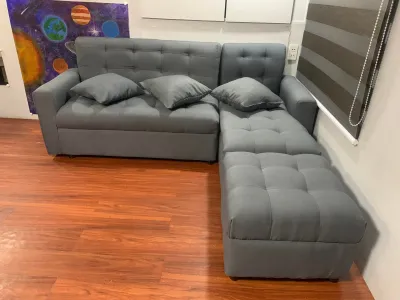
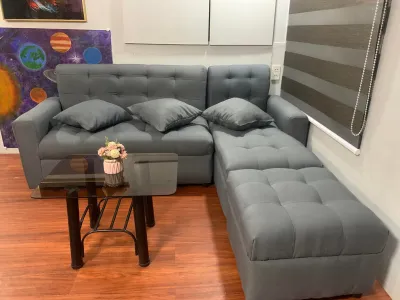
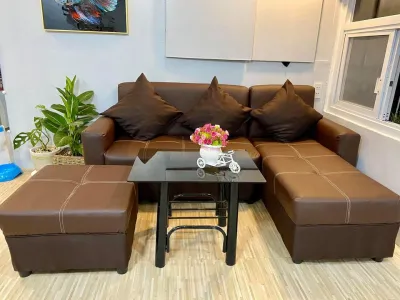
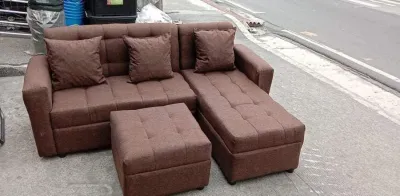
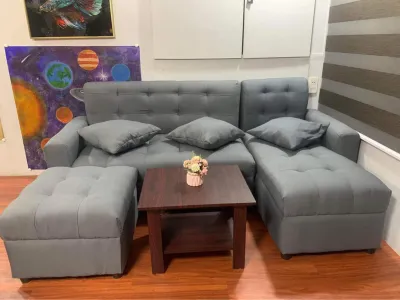
Prices are valid at publication and may change. Please refer to the product page for the latest price.
Next, identify any fixed architectural features that could conflict with the sofa’s placement. Look for wall-mounted split-type air conditioning units, light switches, electrical outlets, and internet ports. A tall sofa backrest can block access to switches, while a long chaise might cover floor-level outlets that you need for charging devices or plugging in floor lamps. Additionally, measure the swing path of your balcony door and entry door to ensure the sofa does not obstruct these essential pathways.
Traffic flow is another critical factor in a small condo. To maintain a comfortable living environment, aim for a minimum of 60 centimeters of clearance in walking paths around the sofa. If the chaise lounge section of the sofa extends into the middle of the room, it should leave enough space for a person to walk past without having to turn sideways. If your living room shares space with a dining area, ensure that pulling out the dining chairs does not cause them to bump into the back of the sofa.
Finally, you must plan for the delivery route. Many condo owners purchase the perfect sofa only to find it cannot reach their unit. Measure the height and width of your condo building’s elevator door, the interior cabin depth, and the ceiling height. If the sofa must be carried up the stairs, measure the width of the stairwell and the turning clearance at each landing. Do not forget to measure your own unit’s front door frame and any narrow interior hallways. If the sofa frame is a single, non-demountable piece, these entry points will dictate the maximum allowable dimensions of your purchase.
Choose the Right L-Shaped Configuration for Your Layout
When shopping for an lshaped sofa set uratex, understanding chaise orientation is vital. L-shaped sofas are typically categorized as either left-facing or right-facing. To determine which one you need, stand directly in front of the space where the sofa will be placed, facing the wall. If you want the chaise section to extend forward on your left side, you need a left-facing configuration; if you want it on your right, you need a right-facing one. Choosing the wrong orientation can result in the chaise blocking the main entrance to the room or cutting off the view of your television.

For small condos, flexibility is highly advantageous. Reversible or modular L-shaped sofas offer a practical solution to layout limitations. These designs typically feature a movable ottoman and a reversible long cushion, allowing you to switch the chaise from the left side to the right side whenever you decide to rearrange your furniture. This adaptability is particularly useful for renters who may move to a different condo layout in the future, as well as households that like to refresh their interior design periodically.
To maximize the usable seating area in a tight space, pay close attention to the design of the armrests and backrests. Wide, heavily padded rolled arms can add 20 to 30 centimeters of unnecessary width to a sofa without adding any seating space. Instead, look for streamlined track arms, which are thin, flat, and square. These minimalist profiles keep the overall footprint small while preserving maximum cushion width. Low-profile backrests are also beneficial in small rooms, as they keep the sightlines open and prevent the sofa from looking like a massive barrier in the center of the home.
Match Sofa Proportions to Your Living Room Shape
Your living room’s geometric shape should dictate how you position your L-shaped sofa. In a long, rectangular living room, the most efficient layout is to place the longest side of the sofa flat against the main wall. The chaise section should then run parallel to the shorter wall, effectively framing the seating zone. This arrangement keeps the center of the room open for a coffee table and maintains a clear pathway from the entryway to the window or balcony.
In square or open-plan condo units, the L-shaped sofa can serve as an excellent zoning tool. Instead of pushing the sofa against the walls, you can position it so that the back of the long section or the chaise acts as a physical divider. This creates a clear, natural boundary between the living room and the dining area or kitchen without the need for bulky room dividers or screens. When using this layout, ensure the back of the sofa is fully upholstered and finished neatly, as it will be highly visible from other parts of the condo.
Visual weight plays a significant role in how spacious a room feels. A bulky, solid sofa that sits directly on the floor with no visible space underneath can make a small room feel dark and cramped. To counter this, look for L-shaped designs that feature exposed legs or a raised base. Elevating the sofa even 10 to 15 centimeters off the ground allows light to pass underneath and keeps more of the floor visible. This simple design detail tricks the eye into perceiving the room as larger and more open than it actually is.
Evaluate Upholstery and Materials for Condo Living
The tropical climate of the Philippines, characterized by high humidity and warm temperatures, requires careful consideration of upholstery materials. If your condo relies primarily on natural ventilation or ceiling fans, highly breathable woven fabrics like linen blends or flat-weave polyesters are ideal because they do not trap heat against your skin. If you run your air conditioning frequently, synthetic leather or microfiber can be comfortable options. Synthetic leather is highly resistant to spills and can be wiped clean easily, but it can feel sticky in humid weather if the room is not cooled.
Cushion density is the key to longevity, especially for a primary piece of furniture like a living room sofa. Uratex is widely recognized for its foam manufacturing expertise, so it is important to look at the specific foam density used in the cushions. High-resiliency foam or high-density polyurethane foam offers the best balance of comfort and support. Low-density foams may feel incredibly soft in the showroom, but they tend to sag and lose their shape within a few years of daily use. Check the product specifications or ask the sales representative for details on the foam grade used in the seat cushions.
Your household’s daily lifestyle should also guide your material choices. If you share your condo with young children or pets, prioritize durability and ease of maintenance. Look for fabrics with tight weaves that resist snagging from pet claws, and opt for medium to dark colorways—such as charcoal, slate gray, navy, or textured tweed—which are much more forgiving with minor stains and dust. If possible, choose a model with removable, washable cushion covers, as this makes deep cleaning much more manageable in a compact living space.
Build Your Shortlist: Final Checks Before Purchasing
Once you have narrowed down your options based on size, configuration, and materials, it is time to perform your final pre-purchase checks. Start by reviewing the manufacturer’s warranty terms. Uratex products typically come with specific warranties covering the foam core, the wooden frame, and the upholstery. Be sure to read the fine print to understand what constitutes a defect versus normal wear and tear, and keep your official receipt and warranty card in a safe place, as these are required for any future claims.
Next, clarify the delivery and assembly terms with the retailer. Many condo associations have strict rules regarding delivery times, often restricting large furniture deliveries to specific weekday hours and requiring advance registration of the delivery personnel. Ask the retailer if their delivery service includes carrying the sofa up to your specific floor, unboxing it, and assembling the legs or modular sections. Confirm if there are additional fees for high-rise deliveries or if you need to arrange your own assembly tools.
Finally, familiarize yourself with the return and exchange policies. Even with meticulous planning, there is always a small risk that a sofa may not fit your space as expected or that the color looks different under your condo’s lighting. Check if the retailer allows returns or exchanges for modular furniture, what the time window is for making a return, and whether you will be responsible for return shipping fees or restocking charges. Having these details confirmed in writing will give you peace of mind as you make your final investment.
Frequently Asked Questions (FAQ)
Can I separate the chaise lounge from an Uratex L-shaped sofa?
Whether you can separate the chaise lounge depends entirely on the specific model’s design. Some L-shaped sofas are built as a single, continuous frame where the chaise is permanently attached to the main seating section. Other models are designed as modular systems or feature a separate, independent ottoman that supports a long chaise cushion. If you anticipate needing to separate the pieces for easier moving or layout changes, look specifically for modular or reversible designs, and verify the frame construction with the retailer before purchasing.
How far should an L-shaped sofa be from the wall in a small condo?
In a very tight condo living room, placing the long sides of the sofa directly against the walls is often necessary to maximize floor space. However, if your layout allows, leaving a small gap of 5 to 10 centimeters between the back of the sofa and the wall can prevent the room from feeling too cramped and allow air to circulate, reducing the risk of moisture buildup in humid climates. If you are using the sofa to divide an open-plan space, ensure there is a clear walkway of at least 60 to 75 centimeters behind the sofa to allow comfortable movement through the room.
Community discussion
Share your experience or ask a question. Comments are reviewed before publication.