
Choosing the right under-bed storage boxes for a king-size bed frame requires a careful balance of precise measurements, material selection, and layout planning. A king-size bed offers a massive footprint of unused floor space, but utilizing it effectively is not as simple as sliding any plastic bin underneath. Because king-size frames require extensive structural support, they are almost always built with central support beams and extra legs that divide the under-bed area into distinct compartments. To maximize this hidden storage without damaging your floors or getting containers permanently wedged, you must understand how to navigate these structural obstacles. By selecting containers that match your frame’s clearance, your room’s flooring, and the local climate, you can transform a chaotic under-bed void into an organized, easily accessible extension of your closet.
Measure Your King-Size Bed Frame Clearance
Before purchasing any storage containers, you must determine the exact physical boundaries of the space beneath your bed. Start by measuring the vertical clearance, which is the distance from the floor to the lowest point of the bed frame. Do not simply measure the height of the side rails, as the slats, center support beams, or metal brackets often hang lower than the outer frame. Use a rigid metal tape measure rather than a flexible sewing tape to ensure accuracy, and measure at multiple points along the bed. Floors can slope, and wooden slats can sag over time, meaning the clearance at the center of the bed might be significantly less than the clearance at the corners.
Next, measure the horizontal dimensions of the open spaces between the bed legs. A standard king-size bed frame is exceptionally wide, but it is typically divided by a central support rail running from the headboard to the footboard, supported by three or more center legs. Measure the width and depth of each individual open quadrant rather than the overall width of the bed. Note the location of any diagonal corner braces, joint bolts, or adjustable bed mechanisms that protrude into the storage zones. These structural elements act as barriers that will block wide or exceptionally long storage boxes from sliding in smoothly.
Products mentioned in this guide
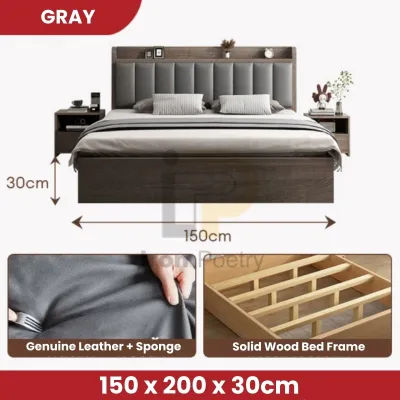
Prices are valid at publication and may change. Please refer to the product page for the latest price.
Finally, evaluate the floor surface beneath your bed, as this dictates how your storage boxes will move. Hardwood, laminate, polished concrete, and ceramic tiles offer smooth surfaces but are highly susceptible to scratching from rough plastic or metal wheels. Conversely, thick carpets and rugs create friction, which can cause wheeled boxes to sink or stall, making smooth-bottomed slider bins a more practical choice.
Select the Right Storage Container Type
The material and design of your under-bed storage boxes directly impact their durability, ease of use, and protective qualities. Hard plastic bins with wheels are a highly popular choice because they maintain their structural integrity regardless of how heavily they are packed. They provide an excellent barrier against dust, insects, and ambient moisture, making them ideal for long-term storage of heavy items like books, spare tools, or extra shoes. However, the integrated wheels and lid latches add overall height to the container, which reduces the actual internal storage volume. If your vertical clearance is tight, the wheels themselves might consume too much valuable space.

Soft fabric organizers with structured lids or internal wire frames offer a more flexible alternative. These containers are lightweight, easy to handle, and can compress slightly to squeeze under tight frame rails. They are perfect for storing soft goods such as extra bedsheets, blankets, pillows, and seasonal clothing. The primary drawback of fabric is its lack of rigidity; if you overstuff a fabric bin, the sides can bulge, or the bottom can sag, causing it to drag and catch on the floor as you pull it out. Additionally, fabric is porous, meaning it does not offer the same level of protection against high humidity or dust as sealed plastic.
For homes in humid tropical climates, managing moisture is a critical consideration when choosing storage materials. While wooden under-bed drawers on casters look beautiful, untreated wood can warp, swell, or harbor mold when exposed to persistent humidity. If you prefer a natural aesthetic, look for treated wood or woven rattan baskets lined with removable, washable fabric. For maximum protection of delicate fabrics, low-profile vacuum storage bags are an excellent supplement. Compressing your linens in vacuum bags before placing them inside a structured fabric or plastic bin protects them from musty odors while doubling your usable storage capacity.
Determine the Ideal Dimensions and Configuration
Calculating the correct dimensions for your under-bed boxes requires leaving a safety margin to prevent the containers from getting stuck. Never buy a box that matches your measured clearance height exactly. If your bed frame has an 8-inch clearance, a box that is exactly 8 inches tall will scrape against the slats, especially when someone sits on the bed and causes the frame to flex downward. Aim for a vertical clearance gap of 1 to 2 inches. This buffer ensures that even with mattress compression and minor frame movement, the boxes can slide in and out effortlessly without catching on the underside of the bed.
When planning the layout, you must decide between using a few large boxes or multiple smaller, modular units. While a single long box might seem like an efficient way to use space, it is often impractical. A box that is 4 feet long is heavy to pull out, difficult to maneuver around bedroom furniture, and requires a massive amount of open floor space beside the bed to access its contents. For a king-size bed, which typically measures around 76 inches wide by 80 inches long, a modular configuration is far more functional.
A split layout strategy is the most effective way to utilize the footprint of a king-size bed frame. By dividing the under-bed space into four distinct zones—two on the left side and two on the right side—you can work around the central support legs seamlessly. This setup allows you to pull out smaller, lighter boxes that are easy to lift and carry. If your bed is positioned against a wall on one side, you can adjust this strategy by placing long-term, rarely accessed items on the wall side and daily-use items on the open, accessible side.
Check for Accessibility and Surface Protection
An under-bed storage system is only useful if it is easy to access and does not damage your home. Look for containers equipped with sturdy, ergonomic handles on multiple sides. When a box is pushed deep under a king-size bed, you need a reliable grip point to pull it forward. Front-facing handles are essential for daily retrieval, while side handles make it much easier to lift a fully loaded box onto a bed or table when you need to sort through its contents.
Lid design is another crucial factor for accessibility. Traditional lift-off lids require you to pull the entire box out from under the bed before you can open it. In contrast, split lids or side-opening lids allow you to pull the box out only halfway to access the items stored at the front. This is a massive convenience in smaller bedrooms or condos where floor space beside the bed is limited. Transparent or semi-transparent plastic bins are also highly beneficial, as they allow you to identify the contents of a box at a glance without having to open multiple containers.
Protecting your flooring and bed frame from wear and tear is vital during daily use. Hard plastic wheels on heavy bins can easily scratch polished hardwood, dent vinyl planks, or leave dark scuff marks on ceramic tiles. Inspect the wheels of any container you buy; soft rubber or polyurethane wheels are far gentler on hard floors than cheap, rigid plastic. If you choose wheel-less bins, apply heavy-duty felt pads or adhesive furniture sliders to the bottom corners. These pads allow the boxes to glide smoothly across hard floors and prevent fabric bins from tearing on rough tile grout lines or catching on carpet fibers.
Step-by-Step Guide to Packing and Placing Your Storage
To get the most out of your under-bed storage, follow a systematic approach to packing and positioning your boxes. Begin by thoroughly cleaning the floor space beneath your bed. Because the area under a king-size bed is large and relatively undisturbed, it acts as a magnet for dust bunnies, lint, and pet hair. Vacuum and damp-mop the floor, and allow it to dry completely before placing any storage containers underneath to prevent trapping moisture.
Next, sort your belongings by how often you need them. Place seasonal items, holiday decorations, or archival documents in the boxes destined for the deepest, center-most sections of the bed frame, which are the hardest to reach. Keep frequently used items, such as extra bedsheets, towels, or activewear, in the outer boxes near the sides or the foot of the bed. When packing, distribute the weight evenly inside each container. Place heavier items at the bottom and center of the box to prevent it from tipping, warping, or dragging unevenly when pulled.
Once packed, seal your containers securely. For plastic bins, ensure all latches click firmly into place to create a barrier against dust and pests. If you are using fabric organizers, zip them completely. Before sliding the boxes under the bed, check the perimeter of the frame for any hanging bed skirts, loose charging cables, or dangling mattress tags. These items can easily get caught in wheels or dragged under the boxes, causing damage or jams. Slide each box in slowly and straight, listening for any scraping sounds and feeling for resistance. If a box catches on a slat or support leg, pull it back out to inspect the clearance rather than forcing it.
Frequently Asked Questions (FAQ)
What should I do if my king-size bed has very low clearance?
If your bed frame sits very close to the floor, traditional plastic bins will not fit. Instead, look for ultra-low-profile fabric envelopes or specialized flat vacuum-sealed bags designed for tight spaces. Alternatively, check your bed frame’s manual to see if the legs are adjustable or if you can safely install heavy-duty bed risers to elevate the entire frame and create the necessary clearance.
How can I prevent musty odors in under-bed storage containers?
To prevent musty smells, especially in humid climates, ensure that every clothing item or linen is completely clean and dry before packing. Moisture trapped inside a sealed container will inevitably lead to mildew. You can also place silica gel packets, charcoal deodorizers, or dry lavender sachets inside the boxes to absorb residual moisture and keep your items smelling fresh.
Community discussion
Share your experience or ask a question. Comments are reviewed before publication.