
Setting up a functional makeup corner in your bedroom requires a thoughtful balance of ergonomic planning, balanced lighting, and smart storage. By selecting a vanity table that fits your physical space and organizing your tools to withstand local climate conditions, you can transform a simple corner into a highly efficient personal sanctuary. Achieving this setup involves analyzing your room’s layout, securing the right furniture, and protecting your investment from daily wear.
Planning Your Bedroom Space for a Makeup Corner
Before purchasing any furniture, you must assess your bedroom’s physical layout to ensure your new setup does not disrupt the flow of the room. Begin by measuring the exact floor area where you plan to place the vanity table. A functional setup requires not just the footprint of the table itself, but also a clearance of at least 60 to 75 centimeters behind it. This clearance allows you to pull out a chair or stool comfortably and sit down without bumping into your bed, wardrobe, or bedroom doorway.
In addition to floor space, you must evaluate the placement of windows and electrical outlets. Natural light is highly beneficial for makeup application, but positioning your vanity table directly in front of a window can cause backlighting, making it difficult to see your face clearly in the mirror. Instead, look for a spot where natural light falls evenly across your face or comes from the side. Simultaneously, locate your nearest electrical outlets. You will need safe, direct access to power for lighting fixtures, lighted mirrors, and heated hair styling tools without stretching cords across high-traffic walking paths.
Products mentioned in this guide
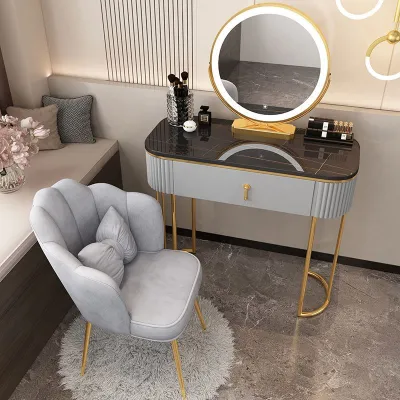
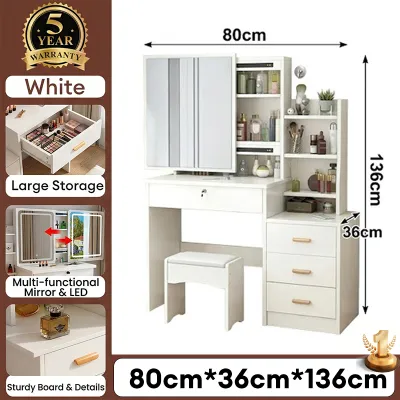
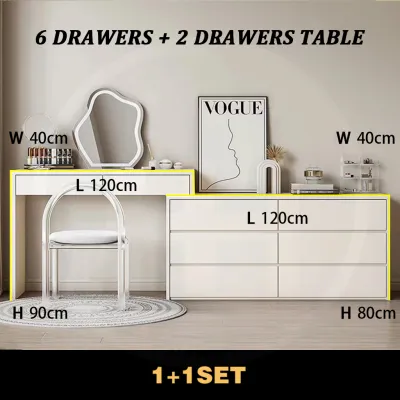
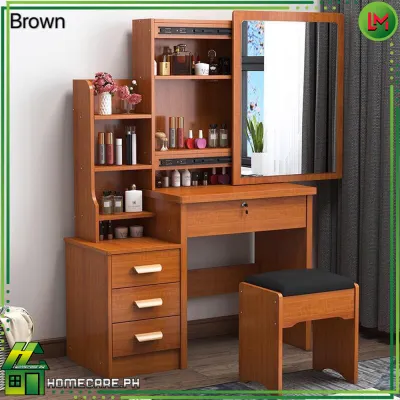
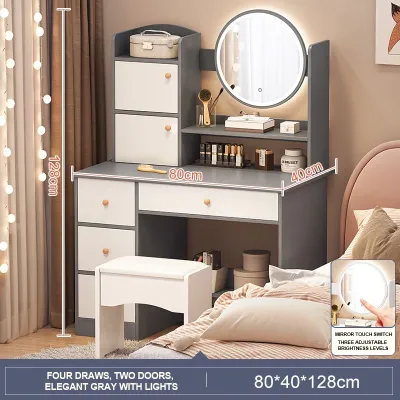
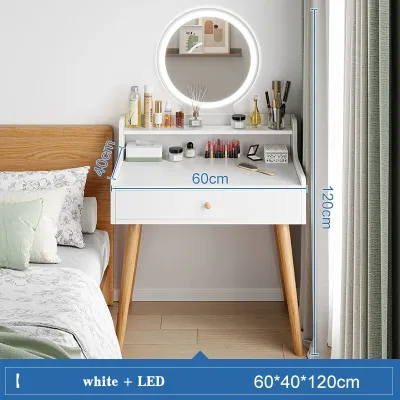
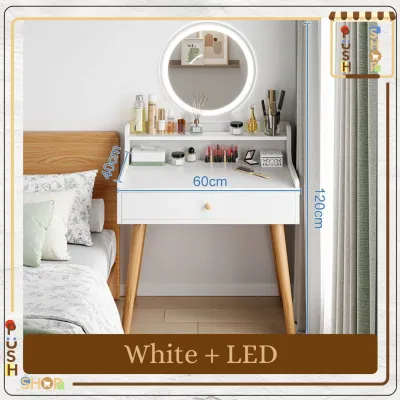

Prices are valid at publication and may change. Please refer to the product page for the latest price.
Finally, define your primary use case to determine the scale of your setup. If your daily routine consists of a quick ten-minute preparation, a compact console table with a single drawer may suffice. However, if you practice detailed skincare routines, multi-step makeup applications, or hair styling in the same space, you will require a larger vanity table with integrated drawers, a wide tabletop, and dedicated space for multiple electrical accessories. Understanding these needs early prevents you from buying furniture that is either too cramped or unnecessarily bulky for your bedroom.
Selecting and Positioning the Vanity Table and Mirror
Selecting the right vanity table requires balancing aesthetic appeal with structural reality. Before purchasing, verify the finished dimensions of the table and compare them against your measured space. It is equally important to plan the delivery route; check that the packaged or pre-assembled furniture can safely navigate your home’s entryways, narrow hallways, or condominium lifts. Once inside, the table must be structurally sound. Always check the manufacturer’s specified load capacity to ensure the tabletop can safely support heavy acrylic organizers, large glass perfume bottles, and substantial mirror units without bowing over time.

Your choice of mirror dictates how comfortable you will be during your routine. Wall-mounted mirrors free up valuable tabletop space but require permanent installation and limit your ability to rearrange the room later. Tabletop mirrors offer portability and often feature integrated storage or lighting, though they consume physical desk space. Tri-fold mirrors provide excellent side views, which are highly useful for detailed hair styling and makeup blending, but they require a deeper tabletop to sit securely without tipping forward.
To prevent physical strain, prioritize ergonomic positioning when setting up your vanity. When seated, the center of your mirror should align directly with your eye level. This prevents you from constantly leaning forward or craning your neck. The height of the vanity table should allow your forearms to rest comfortably on the surface at roughly a 90-degree angle, ensuring your shoulders remain relaxed. If the table is too high, you may experience shoulder fatigue; if it is too low, you will find yourself slouching.
Safety is a critical factor when dealing with heavy bedroom furniture. If you choose a tall, narrow vanity unit or a model with a heavy top-attached mirror, verify if the product includes anti-tip hardware. Securing these units to the wall prevents accidental tipping. For wall-mounted mirrors, avoid relying on simple adhesive strips or small nails. Instead, use heavy-duty wall anchors and screws appropriate for your wall type, whether you are mounting into concrete, hollow block, or drywall partitions common in modern residential builds.
Configuring Shadow-Free Lighting for Accurate Application
Proper lighting is the single most important element of a functional makeup corner. To make the most of natural light, position your vanity table perpendicular to a window. This orientation allows soft, indirect light to illuminate your face evenly. Avoid placing your vanity in direct, harsh afternoon sunlight. Intense tropical sunlight not only causes uncomfortable glare and squinting, but the heat can also accelerate the degradation of cream-based cosmetics, lipsticks, and active skincare ingredients stored on your tabletop.
When natural light is unavailable or insufficient, you must rely on artificial lighting designed to eliminate shadows. Avoid relying solely on a single overhead ceiling fixture, as this casts harsh downward shadows under your eyes, nose, and chin, often leading to uneven makeup application. Instead, implement a cross-illumination setup. Position light sources on both the left and right sides of your mirror, ideally at eye level. This balanced distribution of light fills in shadows and provides an accurate view of your entire face.
When purchasing light bulbs or lighted mirrors, read the product specifications carefully to ensure color accuracy. Look for bulbs that explicitly list a high Color Rendering Index, with a CRI of 90 or above being ideal for showing colors as they truly appear. Additionally, select a neutral color temperature between 4000K and 5000K, often labeled as natural white or cool daylight. Avoid warm yellow lighting, which can cause you to apply too much bronzer or foundation, and avoid overly blue fluorescent lighting, which can make your skin appear washed out.
Managing your electrical setup safely is crucial for preventing hazards in the bedroom. Heated styling tools, such as curling irons and hair straighteners, draw high wattages and should never be left plugged into overloaded extension cords or cheap multi-adapters. Group your low-wattage LED vanity lights on a separate, high-quality power strip, and keep the main wall outlet free for high-wattage appliances. Route all cables neatly behind the vanity table using adhesive cable clips or a dedicated cable management box to keep the floor clear of tripping hazards.
Organizing Cosmetics and Tools for Daily Efficiency
An organized vanity table streamlines your daily routine and protects your cosmetics from damage. Start by zoning your tabletop, keeping only your daily-use items within immediate arm’s reach. This includes your daily moisturizer, foundation, everyday brushes, and frequently used palettes. Storing these items in small, open trays keeps them accessible while maintaining a clean, visual order. Occasional-use items, seasonal makeup shades, and backup supplies should be stored away in drawers or closed cabinets to keep the desktop clutter-free.
Inside your vanity drawers, use adjustable dividers, shallow trays, or clear acrylic inserts to keep items from shifting when the drawers are opened and closed. Group your products by category: dedicate one section to eye makeup, another to lip products, and a separate drawer for skincare. Storing items flat or in designated slots prevents glass bottles from clinking together and breaking, and it stops small items like eyeliners and lip pencils from rolling to the back of the drawer where they are easily forgotten.
In warm, humid climates, cosmetic hygiene and climate control require extra attention. High humidity levels can encourage the growth of mold and bacteria on damp makeup sponges, powder compacts, and makeup brushes. Avoid storing damp beauty sponges inside dark, closed drawers. Instead, place them in open, ventilated wire holders on your desktop. Regularly wash your brushes and sponges, allowing them to dry completely in a well-ventilated area away from direct sunlight. Additionally, keep liquid foundations and cream products tightly sealed and stored away from heat-generating styling tools.
If your vanity table has limited drawer space, expand your storage vertically rather than crowding the tabletop. Install floating shelves on the wall adjacent to or above your mirror to hold perfume bottles, skincare jars, or decorative items. Stackable acrylic storage drawers are another excellent option for the tabletop, as their transparent design allows you to see exactly where your products are located without having to rummage through multiple compartments. This vertical approach maximizes your storage capacity while keeping the main workspace clear.
Upgrading Comfort and Protecting Your Furniture
To make your makeup corner a truly comfortable space, select seating that supports your body during extended routines. A simple backless stool is easy to tuck completely under the vanity table when not in use, making it ideal for smaller bedrooms. However, if you spend a significant amount of time at your vanity, consider a chair with a supportive backrest. In tropical climates, prioritize seating upholstered in breathable fabrics, natural rattan, or easy-to-clean materials rather than heavy velvet or synthetic leather, which can trap heat and become uncomfortable during warm days.
Protecting your vanity table’s finish is essential for maintaining its appearance and longevity. Makeup spills from liquid foundations, facial oils, and acetone-based nail polish removers can permanently stain, discolor, or strip the paint and lacquer off wooden surfaces. To prevent this, place a custom-cut clear glass top, a silicone vanity mat, or a washable PVC runner over the tabletop. Always refer to your furniture manufacturer’s care instructions before applying any adhesive protectors, as some adhesives can damage sensitive wood finishes upon removal.
Finally, incorporate practical details that keep the space clean and visually appealing. Place a small, lidded trash bin directly beside or underneath the vanity table for immediate disposal of cotton pads, makeup wipes, and cotton buds. This simple addition prevents trash from accumulating on your clean tabletop. You can also place a small, washable accent rug under your chair to define the makeup zone visually while protecting your bedroom flooring from scratches caused by moving the chair back and forth.
Frequently Asked Questions (FAQ)
What is the standard height for a vanity table and stool?
Most standard vanity tables range in height from 75 to 80 centimeters, which aligns closely with standard writing desks. Vanity stools and chairs typically have a seat height of 40 to 48 centimeters. To find your ideal pairing, sit on a chair and measure the distance from the floor to your relaxed, bent elbow. Your tabletop should sit roughly 15 to 20 centimeters below this elbow height, allowing your feet to rest flat on the floor while keeping your forearms comfortably supported without shoulder strain.
How can I protect my wooden vanity table from makeup stains and heat damage?
To protect a wooden vanity table, always consult the manufacturer’s specific care and cleaning guidelines before applying any sealants, waxes, or protective coatings. Use physical barriers such as silicone heat-resistant mats for hot hair styling tools, and clear acrylic trays or glass tops to catch cosmetic spills. If a spill occurs, wipe it up immediately with a soft, damp microfiber cloth. Avoid using harsh chemical cleaners, alcohol-based sanitizers, or abrasive scrubbing pads, as these can strip away the protective wood finish and leave the timber vulnerable to moisture.
Community discussion
Share your experience or ask a question. Comments are reviewed before publication.