
Moving house in the Philippines—often called lipat-bahay—presents unique challenges, from navigating narrow doorways and steep stairwells to protecting belongings from sudden tropical downpours and high humidity. Traditional cardboard boxes often succumb to moisture, lose their structural integrity when stacked, and hide their contents, forcing you to open dozens of taped boxes just to find a single kitchen utensil. A large clear storage box offers an efficient alternative, allowing you to instantly identify contents while providing a rigid, water-resistant barrier against dust and pests. Finding the right container requires looking beyond basic brand labels to evaluate specific structural features, plastic grades, and latching mechanisms that can withstand the physical demands of transport.
Key Features for Durability and Transport
To ensure your plastic containers survive the bumpy transit in a moving truck or pickup bed, you must first evaluate the thickness of the plastic walls. Look for containers made from heavy-duty polypropylene, often marked with the PP5 recycling symbol, which offers a balance of flexibility and impact resistance. Thin-walled plastic containers tend to bow outward when filled or crack under the pressure of adjacent cargo. Pay close attention to the corners and the bottom rim of the box; high-quality models feature molded ribs or reinforced columns at the corners to distribute vertical loads downward, preventing the base from buckling.
The lid design is another critical factor in securing your items during a move. Simple snap-on lids that rely solely on friction along the rim are highly susceptible to popping off when the box is flexed or compressed. For moving, prioritize boxes equipped with multi-point latching handles or heavy-duty buckle locks that physically clamp the lid to the container body. These latches mechanically lock the lid in place, ensuring that even if a box tips over in transit, the contents remain securely sealed inside.
Products mentioned in this guide
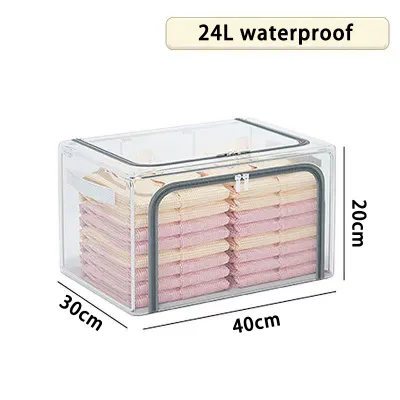
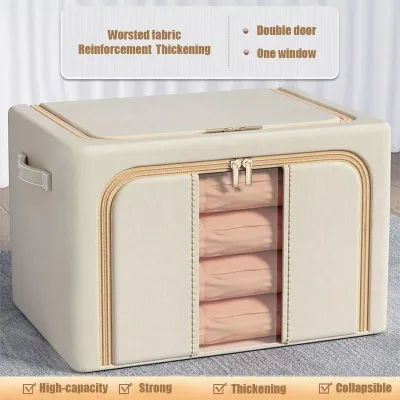
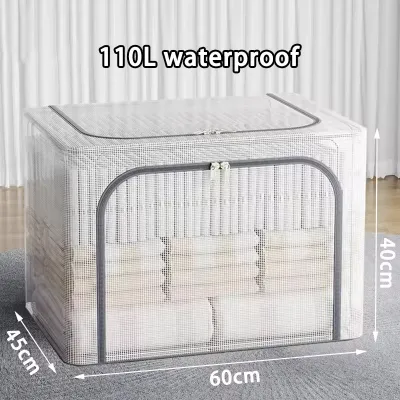
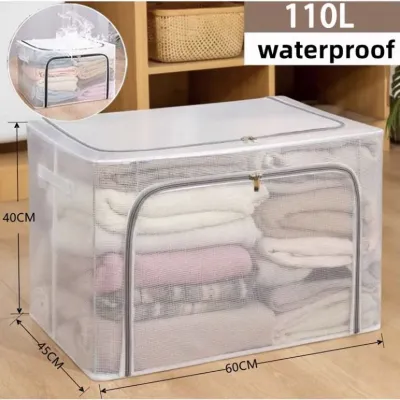
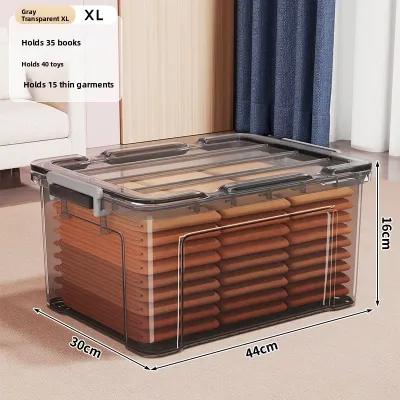
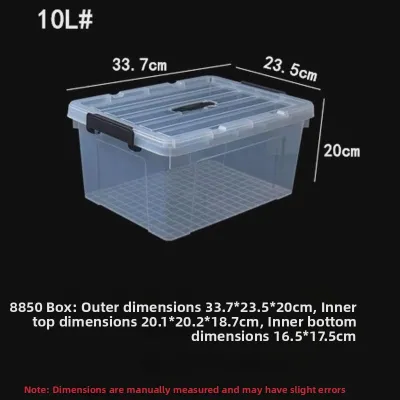
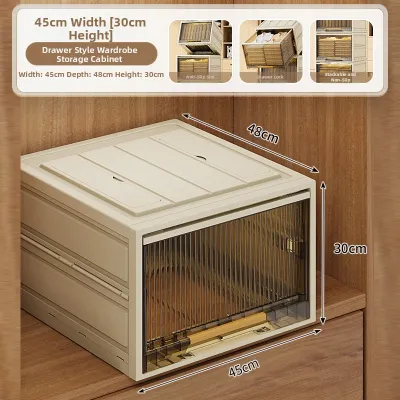
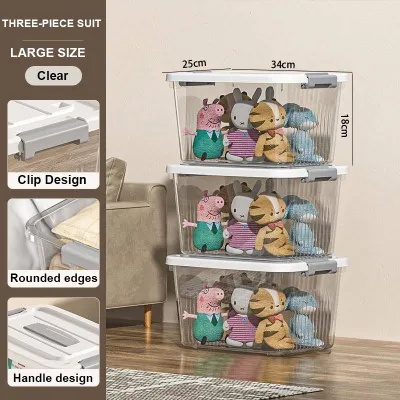
Prices are valid at publication and may change. Please refer to the product page for the latest price.
Stackability is essential for maximizing space inside a moving vehicle, but it introduces the risk of toppling. Examine the lid design for deep, molded grooves that match the footprint of the box’s base. This interlocking design prevents upper boxes from sliding off lower ones when the vehicle accelerates, brakes, or turns. Avoid stacking boxes higher than three units unless they are securely strapped down, and always place the heaviest, most rigid containers at the bottom of the stack to maintain a low center of gravity.
Finally, consider handle ergonomics and weight distribution. When a large clear storage box is fully loaded, lifting it by thin, sharp plastic edges can cause hand fatigue or even lead to dropped boxes. Look for wide, recessed handles molded directly into the box frame, or latches that double as smooth, rounded handles. These designs distribute the weight across your palms and reduce single-point stress on the plastic, minimizing the risk of the handle snapping off during a heavy lift.
Sizing and Capacity Guidelines for Household Items
Selecting the right capacity for your clear storage boxes is a balancing act between volume and weight. Large clear storage boxes typically range from 50 liters to over 120 liters in capacity. While it is tempting to pack as much as possible into a single 100-liter container, doing so with dense items can make the box too heavy to lift safely and may exceed the structural limits of the plastic. Reserve these massive containers for lightweight, bulky items such as pillows, blankets, winter wear, plush toys, or plastic kitchenware.

For heavier household goods like books, ceramic dishes, canned pantry items, or hand tools, smaller containers in the 30-to-50-liter range are far more practical. Overloading a large box with dense items creates immense downward pressure on the center of the plastic base, which can cause it to sag, drag along the floor, or split open when lifted. Keep the total weight of any single box under 20 kilograms to allow for safe manual lifting and to protect the structural integrity of the container.
Before purchasing a bulk set of storage boxes, measure the physical exterior dimensions—including the protruding handles and lid latches—and compare them against your transport vehicle’s cargo area. Whether you are hiring a closed van, utilizing a utility pickup, or packing the back of an SUV, knowing the exact dimensions helps you plan a tight, space-efficient grid. Do not forget to measure the narrowest points of your current and future homes, such as tight hallway corners, staircases, and standard door frames, to ensure the loaded boxes can pass through without scraping walls.
To prevent single-point stress on the plastic base during a lift, practice proper weight distribution within each box. Place the heaviest items flat along the bottom of the container to create a stable foundation, and fill the remaining upper space with lighter items. If you must pack items of varying weights, place a rigid sheet of cardboard or a thin plywood insert at the bottom of the box to help distribute the load evenly across the entire base, reducing the concentration of force on the center point.
Packing and Organization Strategies for Clear Boxes
The primary advantage of using a large clear storage box is visual accessibility, which can drastically reduce unpacking stress if you organize systematically. Group your belongings strictly by room and function, keeping bedroom linens separate from kitchen tools. Because the walls are transparent, you can easily spot where specific items are located without breaking seals or rummaging through packing tape. Arrange items with their front faces or recognizable labels pointing outward toward the clear plastic walls, allowing you to identify the contents at a glance from any angle.
While clear boxes offer excellent external visibility, loose items inside can still shift and sustain damage during transport. Use internal organization tools such as smaller clear pouches, fabric dividers, or color-coded plastic bins to keep small parts, cables, or fragile accessories from rattling around. For delicate items like glassware or decorative pieces, wrap each item individually in bubble wrap or clean packing paper before placing them in the box, ensuring they are packed tightly enough to prevent movement but not so tight that they exert outward pressure on the plastic walls.
When loading the boxes, always follow vertical placement rules to protect fragile items. Position heavy, sturdy items at the very bottom of the box to establish a solid base, and place lighter, delicate items on top. If there are empty spaces or voids within the box, fill them with soft items like clean towels, dishcloths, or crumpled packing paper to prevent the contents from shifting when the box is tilted or carried up a flight of stairs.
Although the transparent walls allow you to see what is inside, supplementing your clear boxes with external labels can streamline the moving process even further. Use removable adhesive labels or write directly on painter’s tape placed on the lid or handles. Note the destination room, a brief inventory of key items, and handling instructions such as “Fragile” or “This Side Up.” This dual system of visual confirmation and clear labeling ensures that helpers or professional movers know exactly where to place each box in your new home without needing to ask.
Where to Shop and How to Verify Product Claims
When sourcing large clear storage boxes for a major move, you will need to decide between visiting physical home improvement stores and browsing online marketplaces. Physical retail stores allow you to personally inspect the plastic quality, test the stiffness of the walls, and try out the latching mechanisms before spending money. You can physically press on the sides to check for excessive flexing and ensure the lids fit snugly. However, physical stores may have limited stock of identical units, which can be a drawback if you need a matching set for uniform stacking.
Online marketplaces offer the convenience of bulk purchasing, home delivery, and often lower unit prices, but they require extra diligence to verify product quality. Since you cannot touch the product before buying, rely heavily on user reviews that specifically mention moving, transport, or heavy-duty storage. Look for feedback regarding how well the boxes held up under weight, whether the latches arrived intact, and if any cracking occurred during shipping. Be cautious of listings with generic descriptions and instead look for sellers who provide detailed specifications, including plastic grade (such as PP5) and exact millimeter wall thickness.
Before finalizing a bulk purchase, carefully review the seller’s return policies and warranty terms. Plastic storage boxes are susceptible to damage during transit from the warehouse to your home, especially if they are nested together without sufficient protective packaging. Ensure the retailer offers a straightforward replacement or refund policy for items that arrive cracked, chipped, or with broken latches, and inspect your delivery immediately upon arrival so you can file claims within the allowed window.
Finally, always verify the stated capacity against the actual usable interior space. Manufacturers often list the maximum exterior dimensions, which include protruding handles, lid rims, and wheels. The actual interior space is typically smaller due to the tapered design of plastic molds, which allows boxes to nest when empty. Check the product description for interior dimensions, or ask the seller directly, to ensure your largest items will actually fit inside the box without forcing the lid or bowing the sides.
Frequently Asked Questions (FAQ)
Can large clear storage boxes be checked as luggage for flights?
Most commercial airlines allow rigid plastic storage boxes to be checked as luggage, provided they fall within the standard size and weight limits. However, standard clear plastic boxes are not designed to withstand the extreme impacts, pressure changes, and low temperatures of an aircraft cargo hold, making them highly prone to cracking or shattering during baggage handling. If you must use a plastic box for air travel, select a heavy-duty, impact-resistant utility case with reinforced corners and secure latching belts, or opt for flexible, woven moving bags which absorb impacts without breaking.
How do I prevent clear plastic boxes from becoming brittle over time?
Clear plastic boxes can become brittle and prone to cracking if they are exposed to direct sunlight and extreme temperature fluctuations over extended periods. Ultraviolet (UV) rays degrade the chemical bonds in polypropylene, causing the plastic to yellow, cloud, and lose its flexibility. To prolong the lifespan of your boxes after a move, store them in a cool, dry place away from direct sunlight, such as a closet, pantry, or shaded storage room. Additionally, ensure the boxes are thoroughly cleaned and dried before storage to prevent mold growth and plastic degradation from trapped moisture.
Are wheeled storage boxes better for moving house?
Wheeled storage boxes offer excellent convenience when moving heavy items across flat, smooth surfaces like tiled floors, concrete driveways, or apartment hallways. However, they present several structural drawbacks during a full household relocation. The small plastic wheels and their mounting housings create weak points on the bottom of the box that are highly susceptible to cracking under heavy loads or when dropped. Furthermore, the protruding wheels or recessed wheel wells can interfere with stable stacking inside a moving truck, increasing the risk of the stack shifting during transit.
Community discussion
Share your experience or ask a question. Comments are reviewed before publication.