
Finding the right height for a small stool chair involves matching your child’s individual body measurements to the height of their study desk, rather than relying on generic age brackets. A properly fitted stool ensures that your child can sit comfortably with their feet flat on the floor, their knees and hips bent at 90-degree angles, and their elbows resting naturally on the desk surface.
As the school season approaches in the Philippines, setting up a dedicated, comfortable study corner is a priority for many families. Whether your child is tackling homework, reading, or drawing, the physical setup of their study space plays a crucial role in their focus and physical development. A mismatched stool and desk can lead to immediate discomfort, causing children to fidget, slouch, or lose concentration quickly.
By understanding how to measure your child’s proportions and evaluate desk clearance, you can select a seating option that supports healthy posture and keeps them engaged. Let’s look at the essential ergonomic rules, measurement steps, and safety features you need to consider to create an optimal learning environment at home.
Products mentioned in this guide
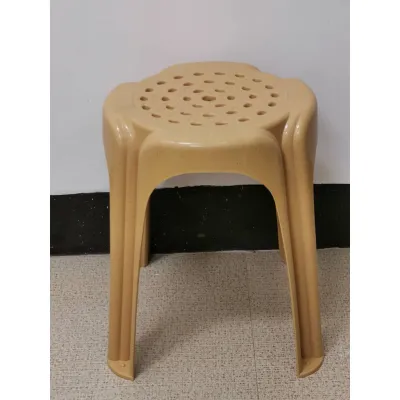
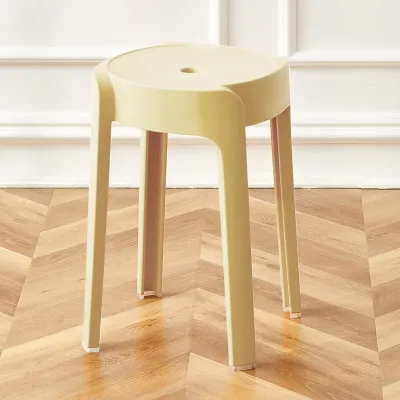

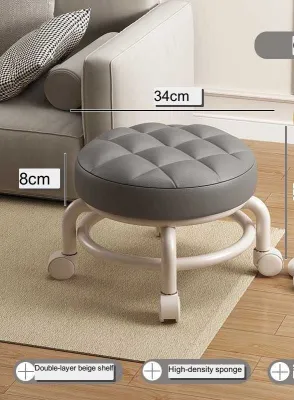
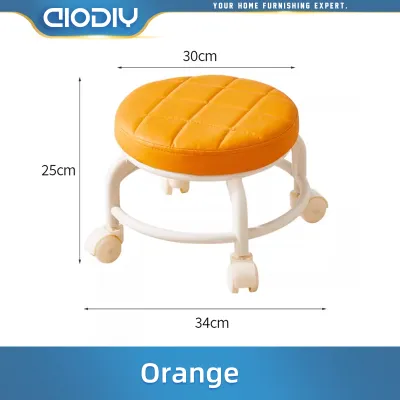
Prices are valid at publication and may change. Please refer to the product page for the latest price.
Understand the Ergonomic Rules for a Child's Study Posture
To choose the right seating, you must first understand what healthy sitting looks like for a growing child. The primary goal of study ergonomics is to prevent physical strain, which can manifest as slouching, neck tension, eye strain, and general musculoskeletal discomfort. When a child sits in an awkward position for extended periods, their muscles have to work harder to keep them upright, leading to rapid fatigue and a drop in concentration.
The universally accepted baseline for proper sitting posture is the “90-90-90 rule.” This rule dictates that when a child is seated, three key areas of their body should form approximately 90-degree angles:
- Hips: The child's hips should be bent at a 90-degree angle, with their lower back fully supported by the chair's backrest or positioned comfortably at the rear of a backless stool.
- Knees: The knees should bend at a 90-degree angle, allowing the lower legs to drop straight down.
- Elbows: The elbows should rest at a 90-degree angle when the child's hands are placed flat on the study desk surface.
Foot placement is another critical element of this ergonomic foundation. Both of your child’s feet must rest flat on the floor or on a stable, flat footrest. When feet dangle in the air, the front edge of the stool seat presses against the back of the thighs. This pressure can restrict blood circulation, cause a tingling sensation, and force the child to slouch forward or slide down the seat to reach the ground. Proper foot support stabilizes the pelvis and relieves pressure on the lower back.
Additionally, consider the ideal desk-to-eye relationship. When your child is seated at the correct height, their line of sight should naturally fall on their reading or writing material. They should not need to hunch their shoulders, bend their spine forward, or tilt their neck excessively downward to see their work. If the desk is too high or the stool is too low, you will notice them straining upward, which quickly tires the neck and shoulder muscles.
Relying solely on generic, age-based sizing charts on product packaging is a common pitfall. Children grow at highly variable rates, and two seven-year-olds can have vastly different torso and leg lengths. A stool must be selected based on your child’s actual physical measurements and the specific height of the desk they will use, ensuring a customized fit that truly supports their body.
Step-by-Step Guide to Measuring and Matching Stool Height
Determining the perfect stool height does not require specialized tools—just a standard measuring tape, a flat surface, and a few minutes with your child. Follow this step-by-step sequence to get precise measurements before purchasing a small stool chair.

Step 1: Measure the Child’s Lower Leg To find the ideal seat height, have your child sit on a firm, flat surface such as a dining chair or a step. Ensure their knees are bent at a clean 90-degree angle and their feet are resting flat on the floor. Using your measuring tape, measure the distance from the floor to the crease at the back of their knee (known as the popliteal height). This measurement represents the maximum height the stool’s seat should be from the ground. If the seat is any higher, their feet will not rest flat; if it is lower, their knees will be pushed upward, tilting their pelvis backward.
Step 2: Measure the Desk Height Next, measure the physical dimensions of the study desk. Extend your measuring tape vertically from the floor to the very top surface of the desk where your child will write or place their books. If the desk has a pull-out keyboard tray or a thick under-desk drawer, measure the distance from the floor to the lowest point of that obstacle as well, as this will impact thigh clearance.
Step 3: Calculate the Clearance For a comfortable fit, there must be adequate space between the underside of the desk and the top of the stool seat so your child’s thighs are not pinched. Take the ideal seat height calculated in Step 1 and add 2 to 3 inches to account for thigh thickness and natural movement. Subtract this combined number from the total desk height. The remaining value represents the clearance. If the clearance is less than 6 to 8 inches, your child’s legs may feel cramped under the desk, or they may struggle to slide the stool in and out.
Step 4: Evaluate the Elbow Angle Once you have a temporary seating setup or are testing a stool in a showroom, have your child sit on the stool at the desk. Instruct them to place their forearms flat on the desk surface as if they are preparing to write. Observe their shoulders and elbows. Their elbows should form a comfortable 90-degree angle, with their shoulders relaxed and down. If their shoulders are shrugged or bunched up toward their ears, the stool is too low relative to the desk. If they have to reach upward or their elbows flare out widely to rest on the surface, the stool is too low, or the desk is too high.
If your child’s measurements place them directly between standard stool sizes, it is generally safer to choose the slightly taller stool and pair it with a footrest, rather than selecting a stool that is too low. A stool that is too low forces the child to reach upward, causing shoulder strain that is difficult to correct without replacing the furniture. If you are dealing with a fixed, non-adjustable desk, matching the stool height to the desk’s height takes priority, and you can then use accessories to bring your child’s feet into the correct ergonomic position.
How to Test and Adjust the Setup at Home
Even with careful measurements, you should regularly monitor how your child interacts with their study setup. Children’s bodies are dynamic, and their sitting habits can reveal hidden ergonomic issues that measurements alone might miss. Testing the setup in real-world conditions allows you to make necessary adjustments before poor posture habits set in.
Observation Checklist Watch your child closely while they work at their desk for 15 to 20 minutes. Look for these physical indicators that the current stool height is incorrect:
- Wrapping their feet or legs tightly around the legs of the stool.
- Sliding their buttocks forward toward the front edge of the seat, leaving their back completely unsupported.
- Resting their chin on one or both hands, or leaning their entire torso heavily against the edge of the desk.
- Frequently shifting their weight from side to side, fidgeting, or standing up repeatedly.
- Hunching their upper back and neck downward to read.
Adjusting for a Stool That Is Too High If you find that the stool height matches the desk perfectly for elbow placement but leaves your child’s feet dangling, you must address the foot support immediately. Introduce a dedicated, stable footrest beneath the desk. The footrest should be wide enough for both feet to rest comfortably and heavy enough that it does not slide around on the floor. In a pinch, a temporary stack of heavy, non-slip books bound securely together can work. Ensuring their feet are fully supported maintains the 90-degree knee angle, prevents leg numbness, and significantly reduces the urge to fidget.
Adjusting for a Stool That Is Too Low If the stool is slightly too low, causing your child to reach up to the desk, you can temporarily elevate their seating position using a firm, high-density foam cushion. Secure the cushion to the stool seat so it does not slide. Avoid using soft, highly compressible bed pillows or decorative cushions; these will quickly flatten under your child’s weight, failing to provide stable ergonomic support and potentially causing pelvic instability.
Safety Boundary While adjustments are helpful, always prioritize physical safety. Never use unstable household items—such as plastic storage bins, wobbly cardboard boxes, or stacked loose toys—to prop up a stool or support your child’s feet. If the height mismatch between the stool and the desk is too extreme to resolve safely with a standard footrest or a firm cushion, do not risk a fall or joint strain. In such cases, the stool or the desk should be replaced with properly sized furniture. Always consult the manufacturer’s instructions for any specific weight limits or assembly requirements before modifying children’s furniture.
Safety and Stability Features to Check in a Small Stool Chair
When selecting a small stool chair, structural safety and stability are just as important as correct dimensions. Children are naturally active, often leaning, twisting, or shifting their weight suddenly while seated. A poorly constructed or unstable stool can easily tip over, leading to injuries.
Base Width and Tipping Risk Examine the overall design of the stool’s base. A safe child’s stool should feature a wide, stable, or slightly flared leg design. Stools where the legs extend outward past the perimeter of the seat are inherently more stable than those with vertical, straight-down legs. A wider footprint lowers the center of gravity and prevents the stool from tipping over when a child leans sideways to grab a pencil or stretches forward. Always check the manufacturer’s stability specifications and structural load ratings.
Floor Grip and Slipping In the tropical climate of the Philippines, home floors are commonly finished with smooth ceramic tiles, polished concrete, or glossy hardwood to keep spaces cool. These smooth surfaces can make furniture prone to sliding. Ensure the stool is equipped with high-quality, non-slip rubber feet or protective silicone pads. These grips prevent the stool from shooting backward when your child sits down or stands up, while also protecting your flooring from scratches.
Mobility Restrictions For a dedicated study corner, it is highly recommended to avoid small stools equipped with casters or wheels. While wheeled chairs are common in adult offices, they introduce significant rolling hazards for young children. A wheeled stool can easily roll away as a child attempts to sit, leading to falls. Furthermore, the ability to roll and spin serves as a major distraction, pulling your child’s focus away from reading and schoolwork. Opt for stationary legs to encourage a grounded, focused learning environment.
Weight Capacity and Labels Never assume a stool is safe simply because it is labeled as a “kids’ item.” Always locate and verify the manufacturer’s official product label, which should clearly state the maximum weight capacity and the recommended age or height range. Ensure your child’s current weight is well within the safe limits, keeping in mind that they will continue to grow rapidly.
Edge and Finish Check Perform a thorough physical inspection of the stool before placing it in your child’s study area. Run your hands over all surfaces to check for rounded edges and smooth finishes. If the stool is made of wood, verify that it is properly sealed and free of splinters or rough patches. For plastic or metal stools, inspect the joints and underside to ensure there are no sharp flashing lines, exposed screws, or pinch points that could catch small fingers or tear clothing. If the stool requires home assembly, double-check that all bolts and joints are tightly secured and inspect them periodically for looseness.
Frequently Asked Questions (FAQ)
Can I use an adjustable stool instead of buying multiple small stools?
Yes, a height-adjustable stool is an excellent, practical investment that can grow alongside your child. When choosing an adjustable model, ensure the locking mechanism is highly secure and cannot be easily or accidentally triggered by the child while they are seated. Pneumatic gas lifts or manual screw-thread adjusters should have safety locks. Remember that even with an adjustable stool, you must still apply the same ergonomic measurement rules—checking the 90-degree angles at the knees, hips, and elbows—to find and lock in the correct height setting for each stage of your child’s growth.
What if my child's study desk is a standard adult height?
Pairing a standard adult desk (which typically stands at 29 to 30 inches high) with a standard small stool will inevitably result in poor posture, as the stool will sit too low, forcing the child to strain upward. If you must use an adult-sized desk or dining table, the best solution is to pair it with a taller, adjustable drafting-style stool or an ergonomic high chair designed for youth. This raises your child to the correct elbow-to-desk height. You must then pair this elevated seating with a very sturdy, tall footrest so their feet do not dangle, ensuring their knees and hips remain safely supported at the required 90-degree angles.

Community discussion
Share your experience or ask a question. Comments are reviewed before publication.