
Upgrading to a spacious family couch is an exciting milestone, promising comfortable movie nights and plenty of room for guests. However, bringing home a large 3-5 seater couch, such as a sprawling cleopatra sofa, can quickly turn into a spatial nightmare if your living room is unprepared for its physical presence. To determine if a large sofa will truly fit your home, you must look beyond simple seating capacity and analyze three critical dimensions: the actual floor footprint, the visual volume within your room’s layout, and the clearance of your delivery pathway. Taking the time to measure and plan beforehand ensures your new furniture enhances your living space rather than crowding it.
Understanding the True Footprint of a 3-5 Seater Sofa
When browsing furniture showrooms or online catalogs, terms like “3-seater” or “5-seater” are frequently used as shorthand for size. In reality, these labels indicate seating capacity rather than standardized physical dimensions. A standard 3-seater from one manufacturer might measure a compact 180 centimeters in width, while a premium 3-5 seater cleopatra sofa or sectional can easily stretch past 300 centimeters. Because there is no universal standard for sofa sizing, relying solely on seat count to judge fit is a recipe for delivery-day disappointment.
To plan your layout accurately, you need to understand the typical reference ranges for large-scale seating. A substantial 3-5 seater sofa generally features a total width spanning from 200 centimeters to well over 300 centimeters. The total depth—the measurement from the very front of the seat cushion to the furthest point of the backrest—typically ranges from 90 centimeters to 110 centimeters or more. If the design includes an integrated chaise lounge or a daybed extension, the depth along that specific section can easily extend to 160 centimeters or 180 centimeters.
Products mentioned in this guide
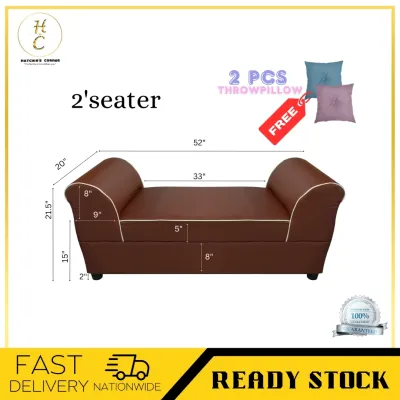
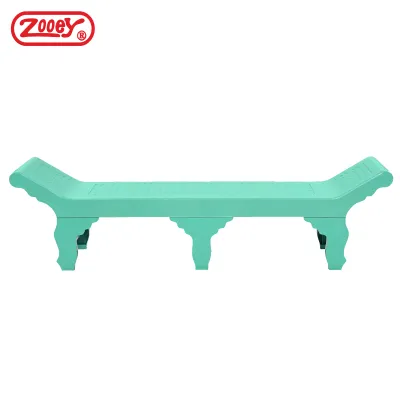

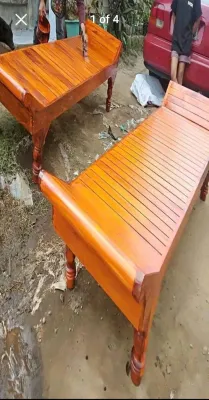
![[ONHAND] JOLLY 2277 LUXURY SOFA BED JCE (NO FOAM) CLEOPATRA PLASTIC SOFA/ DIVAN/ FAMILY SOFA/ SALA SOFA BED/ HEAVY DUTY/ ELEGANT SOFA BED/ CLEOPATRA SOFA BED MATIBAY](https://img.lazcdn.com/g/p/8a1f49da6e9a319d6ecda1a033aedb6c.jpg_400x400q80.jpg_.webp)
Prices are valid at publication and may change. Please refer to the product page for the latest price.
Before making a purchase, always request the manufacturer’s exact specification sheet. This document should detail the total width, total depth, and total height of the piece. Do not assume that the seating area represents the entire footprint of the sofa. Design elements such as wide, rolled armrests, thick overstuffed back cushions, and integrated reclining mechanisms can add up to 30 centimeters of hidden width and depth to the frame.
Additionally, consider how the sofa’s frame construction affects its footprint. Sofas with deep, angled backs or flared legs require extra floor clearance that might not be immediately obvious from a top-down product photo. By securing the precise exterior measurements of the entire frame, you can prevent spatial conflicts and ensure the sofa sits comfortably within its designated area.
Step-by-Step Guide to Measuring Your Living Room
To ensure your living room can accommodate a large 3-5 seater sofa, you must conduct a thorough physical assessment of the space. Begin by measuring the specific wall or corner where you intend to place the sofa. Use a metal measuring tape for accuracy, and record the total available length and width of the zone. If you plan to place the sofa in the center of the room rather than against a wall, measure the entire open area while keeping existing architectural features, like columns or floor outlets, in mind.

Once you have the raw room dimensions, you must establish essential clearance zones to maintain comfortable traffic flow. As a general rule, leave at least 60 centimeters to 90 centimeters of open walkway space around the sofa. This ensures that family members can walk through the room naturally without having to squeeze past the furniture or bump into walls. In high-traffic household environments, keeping these pathways clear is vital for safety and daily comfort.
Next, calculate the distance between the front edge of the sofa and your coffee table. To allow for comfortable legroom and easy access to drinks or remotes, maintain a clearance of 40 centimeters to 50 centimeters. If your sofa features reclining seats or a pull-out footrest, measure this clearance with the mechanisms fully extended to avoid collision with other furniture pieces.
To visualize the physical volume of the sofa before it arrives, use the “painter’s tape trick.” Outline the sofa’s exact width and depth on your living room floor using masking tape or painter’s tape. If you want to test the height and visual mass of the piece, stack empty cardboard boxes within the taped outline. Walk around this temporary mockup for a few days to evaluate how the physical presence of a large cleopatra sofa affects the natural flow and usability of your room.
Verifying Delivery and Access Routes Before You Buy
A common and costly mistake is purchasing a sofa that fits the living room perfectly but cannot physically enter the home. Before finalizing your order, you must carefully map and measure the entire delivery route from the delivery truck to the final resting spot. Measure the height and width of your main entrance door, all interior doorways, hallway corners, and elevator doors. Pay close attention to low-hanging light fixtures, wall sconces, or tight staircase turns that could obstruct the delivery team.
If your living room is located on an upper floor of a building without elevator access, staircase dimensions are critical. Measure the width of the stairs, the overhead clearance, and the dimensions of any intermediate landings. A landing must be wide and deep enough to allow the delivery team to tilt, pivot, and turn a long, rigid sofa frame without damaging the walls or the furniture itself.
When reviewing the product specifications, look closely at the “packaging dimensions” and the “diagonal depth.” The packaging dimensions reflect the size of the sofa box, which is often significantly larger than the assembled sofa due to protective padding. The diagonal depth is the minimum clearance needed to tilt the sofa on its side and pivot it through a standard doorway. If the diagonal depth of the sofa exceeds the width of your narrowest door frame, the piece will not fit through.
If your access routes are exceptionally tight or feature sharp angles, prioritize sofas with modular designs or those with detachable components. Many large sofas feature removable legs, screw-on armrests, or separate sectional pieces that can be carried in individually and assembled directly inside the living room. Verifying these assembly conditions beforehand can save you from a stressful, failed delivery.
Layout and Visual Strategies for Large Sofas
Integrating a large 3-5 seater sofa into your living room requires a balance of smart layout choices and visual design strategies. The configuration of your sofa plays a major role in how it occupies space. A traditional, straight-line 3-seater or 4-seater sofa works well along long, unbroken walls, but it can make a narrow room feel like a corridor. In contrast, an L-shaped sectional or a sofa with a built-in chaise lounge can utilize corner dead space highly efficiently, making it an excellent choice for maximizing seating in rectangular rooms without blocking central pathways.
To prevent a massive sofa from visually overwhelming your living room, look for designs that create an illusion of openness. Sofas with exposed wooden or metal legs lift the body of the couch off the floor, allowing light and sightlines to pass underneath. This small gap makes the entire room feel airier and less cluttered compared to heavy, blocky sofas that sit flush with the floor.
Additionally, pay attention to the profile of the backrest and armrests. Opting for a low-profile backrest keeps sightlines open across the room, which is particularly beneficial in open-plan living spaces. Slim, tailored armrests provide the same amount of seating space as thick, rolled arms but significantly reduce the physical and visual bulk of the frame.
The choice of upholstery color and texture also influences how large a sofa appears. In tropical environments where natural light is abundant, heavy, dark fabrics can make a large piece of furniture look like a dark void in the center of the room. Choosing lighter tones, neutral shades, or low-saturation fabrics helps the sofa blend harmoniously with the walls, reflecting light and making the space feel larger. When selecting fabrics, remember that material names alone do not guarantee durability or moisture resistance; always check for specific fabric treatments, easy-clean finishes, and frame care instructions to ensure the sofa can withstand local humidity and daily wear.
Common Space-Planning Mistakes to Avoid
Even with careful planning, it is easy to overlook minor architectural details that can disrupt your layout. One frequent mistake is forgetting to account for baseboards, window sills, and protruding wall-mounted fixtures. A sofa cannot sit flush against a wall if a thick baseboard pushes the bottom of the frame forward, or if a low window sill prevents the backrest from sliding back. In tropical climates, pay special attention to the location of split-type air conditioning units or window-type ACs; placing a large sofa directly underneath or too close to these units can block airflow or expose the upholstery to condensation drips.
Another common error is measuring the total square footage of the room instead of focusing on the continuous, usable wall space. A living room might seem spacious on paper, but doors, windows, built-in shelving, and entryways break up the walls, leaving much less continuous space for a large cleopatra sofa than initially expected. Always measure the uninterrupted wall segments where the sofa will actually rest.
Finally, remember to factor in the physical footprint of adjacent furniture and decorative elements. A layout that looks perfect in your head might fail if you forget to account for the space needed for floor lamps, side tables, heavy window curtains, or open cabinet doors. Ensure that standing fans can rotate freely and that walkways remain unobstructed when all nearby elements are in place. Double-checking these minor details before purchasing guarantees a seamless fit and a comfortable, functional living room.
Community discussion
Share your experience or ask a question. Comments are reviewed before publication.