
Replacing worn-out office chair wheels is one of the most practical ways to restore smooth mobility to your workspace, protect your flooring, and extend the lifespan of your furniture. Over time, dust, hair, and tropical humidity can degrade the performance of these casters, making your daily movements sluggish, noisy, or frustrating. Finding the correct replacement requires identifying the specific stem type and measuring its dimensions to ensure a secure fit. By taking a few precise measurements and choosing the right wheel material for your floor type, you can easily swap out your old wheels at home without needing professional assistance.
Diagnose the Problem: When to Replace Your Chair Wheels
Before purchasing replacement parts, you must confirm whether your current wheels are actually the source of your chair’s mobility issues. Failing casters typically exhibit clear physical symptoms. If your chair scratches hard floors, shows excessive rolling resistance, squeaks persistently despite cleaning, or has visible cracks in the plastic housing, the wheels are likely at the end of their functional life. Additionally, if your chair sits at an uneven angle, a bent or damaged wheel stem could be the culprit.
It is equally important to differentiate caster issues from other common office chair failures so you do not spend money on the wrong replacement parts. For instance, if your chair slowly sinks throughout the day, the issue lies with the gas lift cylinder rather than the wheels. Similarly, if the chair wobbles excessively but the wheels remain firmly on the ground, check the caster sockets or the star base for structural cracks. A cracked nylon or metal base compromises your safety and requires a full base replacement, whereas damaged wheels can be easily and safely swapped out individually.
Products mentioned in this guide
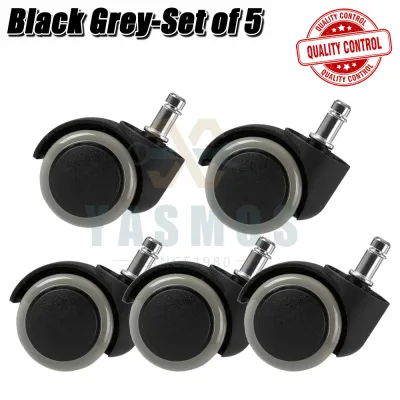

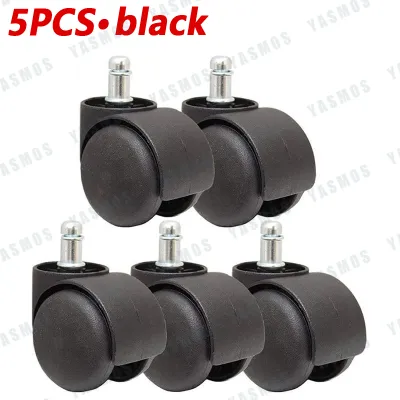


Prices are valid at publication and may change. Please refer to the product page for the latest price.
Tools and Materials You Will Need
Having the right tools on hand before you begin will make the replacement process quick and seamless. Most standard office chairs utilize grip-ring stems that require only hand pressure to remove, but older or rusted components may require a bit of mechanical assistance. Gather these basic items before starting:

- Measuring tape or digital calipers: Calipers are highly recommended for measuring stem diameter, as even a one-millimeter difference determines whether a wheel will fit your chair base.
- Flathead screwdriver: Useful for gaining leverage on stubborn stems.
- Pry bar or pipe wrench: Helpful for extracting tightly wedged or broken stems from the socket.
- Clean microfiber cloth: For wiping away accumulated dust, hair, and old grease from the base sockets.
- Penetrating lubricant (e.g., WD-40): Highly beneficial in humid tropical environments where metal stems may have oxidized or seized inside the socket.
- Rubber mallet: Useful for gently tapping new wheels into place if hand pressure is insufficient.
How to Identify and Measure Your Office Chair Wheels
To ensure your new office chair wheels fit perfectly, you must identify the correct stem type and measure its dimensions with high accuracy. Purchasing the wrong size is the most common mistake made during this process, as many stems look identical to the naked eye.
Identifying the Stem Type
To determine your stem type, you must first remove one wheel from the base of your chair. Flip the chair over to expose the underside, grip one wheel firmly, and pull it straight out of the socket. Once extracted, examine the metal pin (the stem) extending from the top of the caster housing.
The most common variety is the grip ring stem. This type features a smooth metal shaft with a small, split metal ring (the grip ring) nested in a groove near the top. This ring compresses when pushed into the socket and expands once fully inserted to hold the wheel in place.
Another option is the grip neck stem, which is smooth, tapers slightly at the top, and lacks a grip ring; this design is more common on traditional wooden chairs. Finally, some chairs use a threaded stem, which acts like a bolt and must be screwed into the base rather than pushed. Threaded stems are easily identified by the spiral threads running along the metal shaft.
Measuring Stem Dimensions and Wheel Diameter
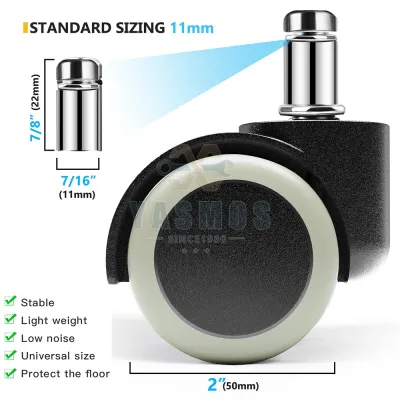
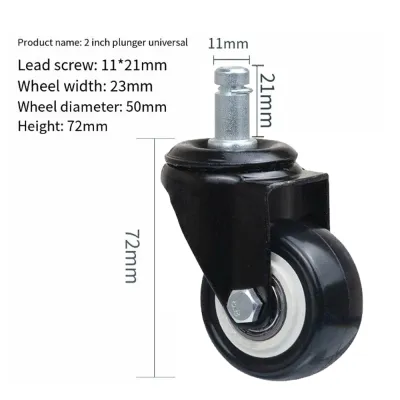
Once you have identified the stem type, use your digital calipers or measuring tape to find the exact stem diameter and length. For a grip ring stem, measure the diameter of the metal shaft directly below the split ring. In the global furniture market, the standard stem diameter for approximately 95% of office chairs is 7/16 inches (11mm). However, some specific brands and European models use a smaller 3/8-inch (10mm) stem. Attempting to force an 11mm stem into a 10mm socket can split a nylon base, while a 10mm stem in an 11mm socket will wobble and fall out.
Next, measure the length of the stem from its flat base (where it meets the caster housing) to the very tip of the metal pin. Standard grip ring stems are typically 7/8 inches (22mm) long.
Finally, measure the diameter of the wheel itself by measuring across the widest part of the circular wheel housing. Standard office chair wheels are usually 2 to 3 inches in diameter. If you decide to upgrade to a larger wheel size, bear in mind that this will raise the overall height of your chair, which can affect your ergonomic posture, armrest clearance under your desk, and how flat your feet rest on the floor.
How to Choose the Right Replacement Casters
Selecting the right replacement casters involves balancing the physical dimensions of your chair with your specific floor surface and daily usage habits. This ensures both smooth movement and long-term floor protection.
Matching Specifications and Weight Capacity
When browsing online marketplaces or local furniture supply stores, always double-check that the replacement wheels match your measured stem type and diameter exactly. Do not rely solely on compatibility lists, as manufacturers occasionally update their designs.
Additionally, check the weight capacity rating of the replacement set. Standard caster sets are typically rated to support a total weight of 110kg to 150kg across five wheels. If you are using a heavy-duty ergonomic chair—especially premium models in the ₱3,000 to ₱15,000 price range that feature heavy steel frames—or if you require higher load support, look for reinforced casters with heavy-duty steel brackets rated for 200kg or more to ensure long-term stability and safety.
Selecting Wheel Material for Your Floor Type
Matching the wheel material to your flooring is critical to prevent surface damage and minimize rolling noise. For hard floors—such as ceramic tile, polished concrete, terrazzo, marble, or delicate hardwood—always select soft tread wheels made of polyurethane (PU) or soft rubber. These materials grip the floor gently, roll silently, and will not scratch or wear down your floor’s protective finish over time.
For carpeted floors or thick area rugs, choose hard nylon or plastic wheels. Hard wheels glide easily over carpet fibers without sinking, reducing the physical effort required to move your chair.
If you want a premium upgrade for hard floors, rollerblade-style polyurethane wheels are highly popular. These wheels feature steel ball bearings and clear polyurethane tread, providing incredibly smooth, fluid movement. However, because they are larger than standard wheels, verify that the added height does not compromise your desk clearance or ergonomic setup.
Step-by-Step Guide to Removing Old Casters
Removing old casters can occasionally be difficult if dust, hair, or rust has accumulated inside the sockets. Follow these steps to safely extract them without damaging your chair’s star base.
- Step 1: Lay a soft blanket, cardboard, or protective mat on the floor to prevent scratching your work surface. Flip the office chair completely upside down so the star base points upward and is easily accessible.
- Step 2: Grip the wheel housing firmly with one hand while holding the leg of the star base with your other hand. Pull the caster straight upward with a firm, steady motion. For most standard grip ring stems, this manual pull is sufficient to compress the ring and release the stem.
- Step 3: If the wheel is stuck, slide a flathead screwdriver or the flat end of a pry bar between the caster housing and the chair base. Wrap the tool in a microfiber cloth to protect the chair base from scratches, then gently pry upward using the base leg as leverage.
- Step 4: If the metal stem is rusted or seized inside the socket—a common issue in humid, tropical climates—apply a small amount of penetrating lubricant directly into the socket joint. Let it sit for five to ten minutes to dissolve the rust before attempting to pull or pry the caster again.
- Step 5: Once the old caster is out, insert a clean cloth wrapped around a thin tool (like a screwdriver tip) into the socket hole. Thoroughly wipe out any accumulated dirt, hair, rust flakes, and old grease to ensure the new stem can slide in smoothly and sit securely.
Safety Warning: Never use excessive prying force or hammer raw metal tools directly against a plastic or nylon chair base. Doing so can easily crack the socket housing, rendering the entire star base useless. If you detect any deep cracks or structural warping around the socket holes, stop immediately and replace the star base before installing new wheels.
How to Install the New Wheels Safely
Installing your new casters is a straightforward process, but it requires careful alignment to prevent bending the metal stems or damaging the socket walls.
- Step 1: Hold the new caster and align the metal stem so it is perfectly straight and centered with the socket hole in the chair base. If the stem is inserted at an angle, it can damage the internal plastic ridges of the socket.
- Step 2: Push the stem firmly into the socket using your hand. You should feel a distinct click or pop as the grip ring compresses and then expands into the internal groove of the socket, locking the wheel in place.
- Step 3: If hand pressure is not enough to seat the stem fully, place a thick cloth over the wheel housing and tap it gently with a rubber mallet. Ensure you tap the solid plastic housing directly above the stem, rather than the spinning wheels themselves, to avoid cracking the assembly.
- Step 4: For threaded stems, align the threads carefully with the socket to avoid cross-threading. Turn the caster clockwise by hand until it is snug. If necessary, use a thin open-ended wrench to tighten the nut at the base of the stem, ensuring a tight fit without over-tightening, which can strip the threads.
Safety Warning: Never use a metal hammer or heavy steel tool to force the wheels into the base. Direct metal-on-plastic impact can easily shatter the caster housing or damage the internal ball bearings, ruining your new wheels before their first use.
Testing and Maintaining Your New Chair Wheels
After installing all five wheels, carefully flip your office chair back onto its upright position on a flat surface. Sit down slowly to allow your body weight to fully seat any stems that may not have clicked completely into place during manual installation. Roll slowly in all directions—forward, backward, and in a full circle—to check for any wobbling, uneven height, or unusual squeaks. If the chair feels unstable, inspect each wheel underneath to ensure all five stems are pushed completely flush against the star base.
To maximize the lifespan of your new office chair wheels, establish a simple maintenance routine. Every few months, check the wheel axles for accumulated hair, thread, or dust, and use a pair of tweezers or scissors to clear away any debris that could jam the bearings. Avoid rolling your chair over wet surfaces, especially during the humid rainy season, as moisture can seep into the metal bearings and cause rust. Finally, keep loose charging cables, power strips, and rug fringes clear of your workspace floor, as rolling over these items can damage both the cables and the internal alignment of your new casters.
Frequently Asked Questions (FAQ)
Can I use rollerblade-style wheels on any office chair?
Yes, rollerblade-style wheels can be used on most standard office chairs, provided you verify the stem size first. While the vast majority of these premium polyurethane wheels are manufactured with the standard 7/16-inch (11mm) grip ring stem, they will not fit specialty chairs that require a 3/8-inch (10mm) stem or a threaded design.
Additionally, keep in mind that rollerblade-style wheels have a larger diameter than standard casters, typically raising your chair’s overall height by 1 to 1.5 inches. This height increase can cause your feet to dangle or your knees to hit the underside of your desk tray. If you make this upgrade, you may need to lower your gas cylinder or adjust your desk height to maintain proper ergonomic posture.
What should I do if the old stem breaks off inside the chair base?
If a metal stem snaps and leaves a portion broken off inside the socket, do not attempt to force a new wheel in. First, try using a pair of needle-nose pliers to grip the exposed tip of the broken stem and pull it straight out. If the stem is broken flush with the socket opening, you can use a specialized screw extractor tool or gently slide a flathead screwdriver alongside the fragment to pry it loose.
If the broken metal piece is completely seized and cannot be extracted without cracking the surrounding nylon or metal socket, do not use excessive force. In this scenario, the safest and most reliable option is to purchase a replacement star base or consult a professional furniture repair service to ensure the structural integrity of your chair is preserved.
Community discussion
Share your experience or ask a question. Comments are reviewed before publication.