
To find the perfect drawer organizers for your desk, you must measure the exact interior dimensions of the drawer box—specifically the width, depth, and height of the usable space—rather than the outer drawer face. A common mistake is buying organizers based on external desk specifications, which leads to trays that are too tall to slide shut or too wide to clear internal tracks.
In tropical climates like the Philippines, high humidity can cause wooden drawers to swell or warp slightly over time. Taking precise measurements at multiple points ensures your new organizer fits comfortably year-round without jamming the drawer mechanism. By dedicating a few minutes to accurate preparation, you can avoid the hassle of returning ill-fitting storage bins and create a highly functional, clutter-free workspace.
Tools You Need Before Measuring
Gathering the right tools before you begin prevents errors and saves you from making multiple trips to your desk. A rigid metal tape measure is generally superior to a flexible sewing tape for this task. The stiff blade of a metal tape measure allows you to extend it flat across the drawer bottom and push it firmly into corners without sagging, ensuring you get an accurate reading.
Products mentioned in this guide
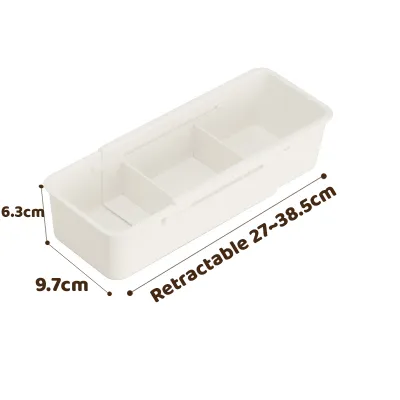
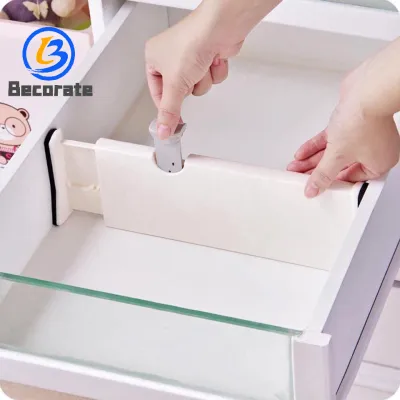
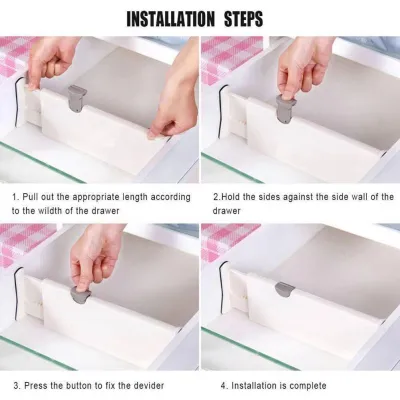
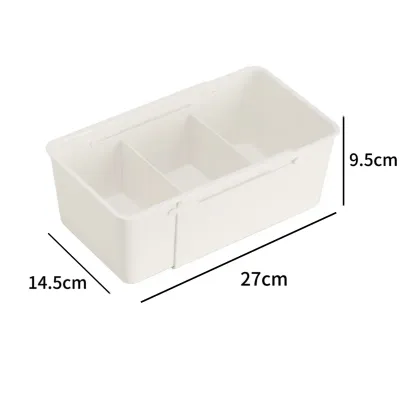
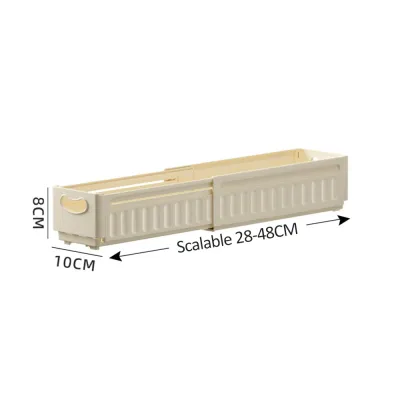
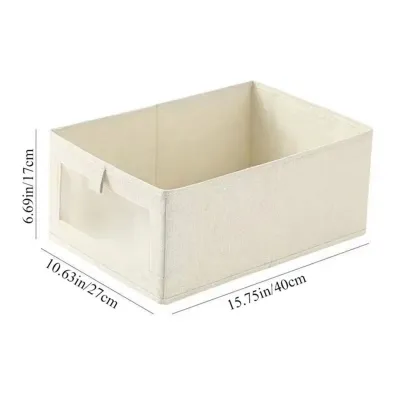
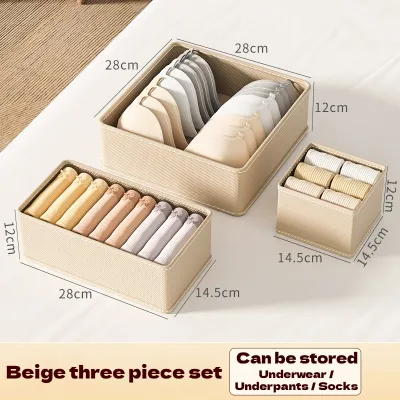
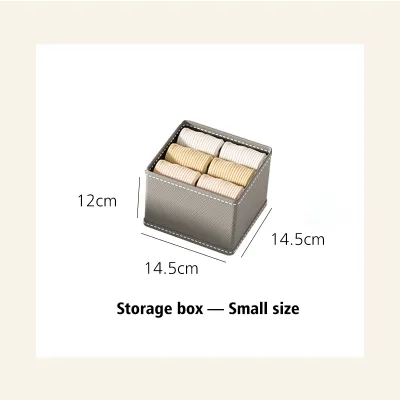
Prices are valid at publication and may change. Please refer to the product page for the latest price.
If you only have a standard rigid ruler, it can work, but you must be careful when measuring depths that exceed the ruler’s length. Overlapping multiple ruler measurements often introduces small errors that can ruin your calculations.
Keep a notepad or a digital note-taking app open on your phone to record each dimension immediately. Writing down the numbers as you go prevents memory slip-ups that lead to buying the wrong size. It is highly recommended to record your measurements in millimeters or centimeters, as most organizers sold on online marketplaces use metric units.
Finally, grab a small flashlight or use your smartphone’s built-in light. Desk drawers are notoriously dark, and a bright light helps you spot hidden screws, corner brackets, or wood joints that might reduce the actual usable space.
Step-by-Step Guide to Measuring Drawer Dimensions
To get a perfect fit, you must focus entirely on the inside usable box of the drawer. The decorative front panel of your desk drawer is almost always larger than the actual storage box behind it, so never use the exterior face as a guide.

Before pulling out your tape measure, clear out all existing clutter, pens, and paper from the drawer. Measuring an empty drawer is much easier and prevents loose items from throwing off your tape measure’s alignment.
Wooden furniture can settle, warp, or expand, meaning your drawer might not be a perfect geometric rectangle. Measuring at only one spot can lead to a tight fit or a stuck organizer.
Always take measurements at three different points for each dimension: the front, the middle, and the back. Once you have these three numbers, record the smallest measurement as your final guide. This conservative approach guarantees that your drawer organizers will slide in smoothly without forcing or scraping the interior walls.
Measuring the Interior Width
To measure the interior width, stretch your measuring tape horizontally from the left inner wall to the right inner wall. Take this measurement at the very front of the drawer, in the middle, and at the far back.
Pay close attention to how the drawer sides are constructed. If the drawer uses side-mounted metal slides, check if any part of the track or screw heads protrude into the interior space.
Some wooden drawers have tapered sides that are slightly narrower at the bottom than at the top. Run your tape measure along the bottom panel to catch any tapering or bowing in the wood.
Be sure to measure the width at both the bottom floor and the top lip of the drawer. Write down the narrowest width you find, as this is the maximum width your organizer setup can occupy.
Measuring the Interior Depth
Interior depth refers to the front-to-back distance inside the drawer box, which determines how long your organizer can be. Place the end of your tape measure flat against the inside of the front drawer panel and extend it straight back to the inside of the rear panel.
Repeat this measurement on both the left and right sides of the drawer floor, as well as down the center. Look closely at the joints where the front and back panels meet the floor.
If there are thick glue lines, staples, or reinforcing corner blocks, measure from the innermost edge of those obstructions.
Using the shortest front-to-back measurement ensures that your organizer will not prevent the drawer from closing completely. This also prevents the organizer from sliding back and forth violently when you open the drawer quickly.
Measuring the Interior Height
Measuring the height is crucial because an organizer that is even a millimeter too tall will prevent the drawer from sliding shut under the desk frame. Measure vertically from the drawer floor up to the top edge of the side wall.
Next, measure the clearance space above the drawer. Slide the drawer almost all the way closed and look inside to see how much space remains between the top of the drawer wall and the desk’s internal frame.
If your desk has a dust frame or a drawer directly above it, the vertical clearance might be lower than the actual drawer wall height.
Use the lower of these two vertical measurements to determine the maximum height for your drawer organizers. This step is especially important if you plan to store items that stick up slightly above the organizer’s rim.
How to Account for Drawer Hardware and Obstructions
Many desk drawers feature internal hardware or design elements that permanently reduce the usable storage volume. Inspect the sides and bottom of your drawer for mounting hardware. Side-mount drawer slides sometimes have tabs or screws that stick out into the drawer cavity, while under-mount slides might require screws that penetrate the drawer floor.
If your desk has a built-in lock, the locking bar or cylinder mechanism often protrudes into the top corner of the drawer interior. Some traditional wooden desks feature integrated dividers, small built-in pencil grooves, or structural support blocks in the corners.
Modern desks may also feature soft-close mechanisms or dampeners installed at the back of the drawer track. These components can sometimes limit how far back an organizer can sit, or they may require a small amount of clearance at the rear of the drawer box.
Measure the exact height, width, and depth of these obstructions. Subtract these dimensions from your total usable space to map out the remaining open areas.
For example, if a locking mechanism or screw head protrudes into the drawer space by the width of a ₱10 coin, you must subtract that from your total width. Adjusting your final usable dimensions by subtracting the space taken by these fixed obstructions prevents you from buying a tray that sits awkwardly on top of a screw head.
Translating Measurements into Organizer Sizes
Once you have your final, conservative measurements, you can begin shopping for drawer organizers on your preferred online marketplace or at a local home store. Do not buy an organizer that matches your drawer dimensions exactly. Always leave a clearance gap of about 5 to 10 millimeters on all sides.
This small buffer allows you to easily lift the organizers out for cleaning and accounts for the natural expansion of wooden drawers during humid seasons in the Philippines.
Decide whether you want a single large tray or a modular system of smaller, individual compartments. Modular organizers offer excellent flexibility because you can mix and match different sizes to fill the space, but you must add their exterior dimensions together to ensure the total does not exceed your drawer’s limits.
Consider the material of the organizers you select. Acrylic and plastic organizers usually have thin walls, maximizing internal storage, while bamboo or wooden organizers have thicker walls that require more clearance.
When checking product specifications, always look for the “exterior dimensions” or “overall dimensions” of the organizer, rather than the interior compartment sizes. If you plan to store tall items like staplers or standing ink bottles, add the height of those items to the organizer’s height to ensure they will clear the desk frame when the drawer is closed.
Common Measuring Mistakes to Avoid
One of the most frequent errors is measuring the exterior drawer front instead of the interior box, which often results in buying organizers that are several centimeters too large. Another common mistake is forgetting to account for the slope of the drawer walls. Many plastic and wooden drawers have slightly angled sides that make the bottom narrower than the top.
Do not assume your desk drawer is a perfect rectangle. Budget-friendly or older wooden desks often have slight manufacturing variances or warping that makes one side shorter than the other.
Avoid ignoring the height of the items you plan to store. A shallow organizer tray might fit perfectly, but if your pens or scissors stick up past the top edge, the drawer will still jam.
Never guess or round up your measurements. Even a tiny discrepancy of a few millimeters can prevent a rigid plastic or acrylic organizer from fitting into the drawer. Always measure twice and buy once to ensure a seamless fit.
Frequently Asked Questions (FAQ)
Can I use modular organizers if my drawer is an odd size?
Yes, modular organizers are the best solution for non-standard or irregular drawer sizes. Instead of trying to find one large tray that fits perfectly, you can combine several smaller square and rectangular trays to fill the space.
If your modular trays leave small gaps along the sides, the organizers might slide around when you open and close the drawer. To prevent this sliding, place a non-slip drawer liner underneath the trays, or fill the empty gaps with small items like binder clips or decorative boxes.
What if my drawer has a built-in pen tray that I want to keep?
If you want to keep a built-in pen tray, treat it as a permanent wall and measure only the remaining open space next to it. Measure the width and depth of the empty floor space starting from the edge of the built-in tray to the opposite drawer wall.
Be sure to check the height of the built-in tray as well. Your new organizers should be the same height or shorter to ensure they do not interfere with the built-in tray or block the drawer from closing.
Community discussion
Share your experience or ask a question. Comments are reviewed before publication.