
To choose the perfect marshmallow bed frame cover, you must measure the exact outer length, width, height, and rail thickness of your actual bed frame—not your mattress—and account for the cover’s padded thickness. This soft, quilted accessory has become a favorite for transforming standard wood or metal frames into cozy, cloud-like centerpieces. However, because these covers feature thick, puffy padding, a generic size label is rarely enough to guarantee a seamless fit. Taking precise physical measurements is the only way to avoid loose fabric folds, awkward corner gaps, or strained seams.
A well-fitting cover completely alters the visual weight of your bed, softening sharp edges and adding a luxurious, upholstered look. By focusing on the unique dimensions of your frame rather than standard mattress sizes, you ensure the elastic or straps align perfectly with the structure. This guide walks you through preparing your workspace, capturing every critical dimension, selecting the right fastening style, and installing the cover for a polished finish.
Gather Your Tools and Prepare the Bed Frame
Before pulling out your measuring tape, gathering the correct tools and preparing the bed frame will prevent skewed numbers. You will need a flexible tape measure, which easily wraps around curved corners and thick rails, a notepad, and a pen to write down your measurements immediately. If you have a high platform or a poster bed frame, keep a sturdy step stool nearby so you can read the tape measure at eye level without stretching.
Products mentioned in this guide
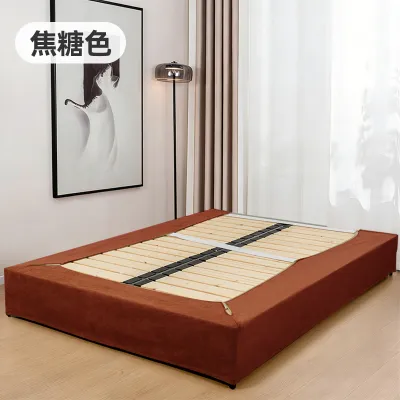
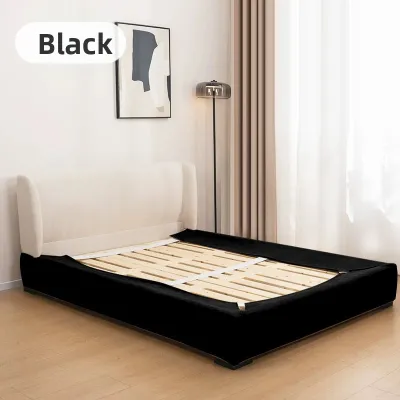
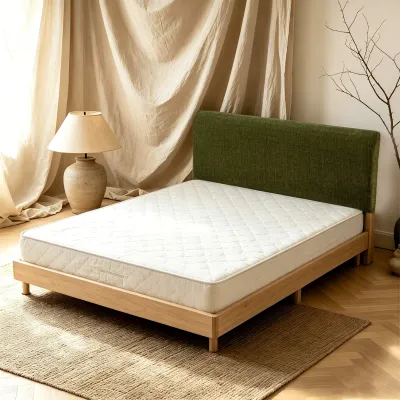
Prices are valid at publication and may change. Please refer to the product page for the latest price.
Next, strip the bed completely. Remove all pillows, blankets, sheets, and bed skirts. If it is safe to do so, slide the mattress off the frame and set it aside. Many modern bed frames feature recessed platforms, lip edges, or hidden brackets that are impossible to measure accurately while the mattress is in place. Exposing the bare frame ensures you are measuring the actual structure the cover must wrap around.
Clear a wide perimeter around the entire bed. Move bedside tables, floor lamps, and rugs at least two to three feet away to give yourself unhindered access to all four corners. This open space allows you to keep the measuring tape perfectly level, which is crucial for capturing precise lengths and heights.
Always prioritize safety during this preparation phase. Ensure the bed frame is fully assembled and stable before you begin leaning over it or shifting its position. If your bed frame is heavy wood or metal and needs to be moved away from a wall, do not attempt to lift or drag it alone. Ask for assistance to prevent personal injury or damage to your flooring.
Step-by-Step Guide to Measuring Your Bed Frame
To achieve a tailored, gap-free look, you must measure the physical frame itself. Standard mattress sizes are useful guidelines, but frame designs vary wildly between manufacturers. Capturing the exact outer limits of your frame ensures the plush, padded cover sits beautifully without bunching up or pulling too tight.

Measuring Length and Width
To measure the length, place the end of your tape measure at the outermost edge of the head of the bed frame and extend it straight down to the outermost edge of the foot. For the width, measure from the outermost left edge of the side rail to the outermost right edge.
Do not simply rely on your mattress dimensions for these figures. Many wooden, upholstered, or platform bed frames extend several centimeters past the mattress to create a decorative border or support ledge. If you purchase a cover based solely on mattress size, the fabric will stretch excessively, flattening the puffy marshmallow texture and putting immense pressure on the seams.
Measuring Height and Floor Clearance
Determine the required drop length by measuring from the top edge of the frame rail straight down to the floor. In warm, humid tropical climates like the Philippines, managing floor clearance is essential for hygiene. A cover that drags on the floor can trap moisture during cleaning, accumulate dust, and restrict healthy airflow beneath the bed.
For a clean look, aim for the cover to hang approximately one to two centimeters above the floor. Next, measure the vertical thickness of the frame rail itself. This is the height of the side beam that runs along the length of the bed. Knowing this thickness is vital if you are choosing a wrap-around cover that hugs the rails rather than hanging down as a full skirt.
Accounting for Special Features and Hardware
Examine your bed frame for any protruding structural elements. If your frame features an integrated headboard, a footboard, or prominent decorative corner posts, a continuous, solid cover will not fit. You will need to look for a cover designed with split corners or open ends to accommodate these posts.
Additionally, check the underside of your frame for functional hardware. Take note of any under-bed storage drawers, trundles, caster wheels, or central support legs. If you have active storage drawers, a solid skirt cover will block them from opening. In this scenario, a split-panel cover or a simple wrap-around rail band is necessary to preserve access to your storage space.
How to Match Your Measurements to the Right Cover Size
Once you have your exact measurements in centimeters or inches, you can begin shopping for the perfect cover. While standard bed sizes in the Philippines—such as Single (36 by 75 inches), Double (54 by 75 inches), Queen (60 by 75 inches), and King (72 by 78 inches)—serve as a helpful starting point, always compare your physical measurements against the manufacturer’s detailed sizing chart.
Pay close attention to the cover’s fastening mechanisms and design features. Elasticized edges function like a fitted sheet, making them excellent for simple platform beds where the fabric can tuck securely underneath the frame. Velcro straps or fabric ties offer more adjustability, allowing you to wrap the cover tightly around individual metal or wooden rails. Split-corner designs are essential if your frame has corner brackets or posts that prevent a continuous wrap.
You must also account for the physical volume of the marshmallow style itself. These covers are intentionally puffy, packed with thick polyester fiberfill or quilted batting to create their signature cloud-like appearance. This padding adds significant bulk, often extending the outer dimensions of the bed by three to five centimeters. If your frame measurements are on the boundary between two sizes, always choose the larger size to avoid compressing the padding and losing that signature puffy look.
Finally, decide between off-the-shelf and custom-tailored options. Standard off-the-shelf covers are widely available on local online marketplaces, typically ranging in price from ₱1,200 to ₱3,500, and work beautifully for standard rectangular platform frames. However, if your bed frame features irregular dimensions, custom hardware, or an unusual layout, investing in a custom-tailored or highly adjustable wrap-around cover will prevent unsightly sagging and ensure a perfect fit.
Install and Adjust the Cover for a Seamless Fit
Installing your new cover correctly is just as important as taking accurate measurements. Begin by aligning the cover at the head of the bed, securing it around the top corners or near the headboard attachments first. Slowly work your way down the length of the bed, alternating sides to maintain symmetry and keep the fabric centered on the frame.
Once the cover is loosely anchored, use your hands to gently pat, smooth, and distribute the padded sections. Because these covers are shipped compressed, the inner batting can sometimes clump or shift. Massaging the quilted sections helps redistribute the filling evenly, restoring the uniform, plush appearance across all sides of the bed.
If you notice minor gaps or slight sagging after installation, you can easily troubleshoot the fit. Use hidden upholstery pins or heavy-duty, double-sided fabric tape to secure loose edges to the underside of the frame rails. If there is a small amount of excess fabric, tuck it neatly beneath the mattress platform or use the integrated tension straps to pull it taut.
Be careful not to force the fabric if the fit feels too tight. If you feel strong resistance or see the seams pulling and straining, stop immediately and reassess the sizing. Forcing a small cover over a large frame can rip the stitching, tear the delicate backing material, or rub against and damage the bed frame’s wood finish or paint.
To complete the installation, take a slow walk around the bed to verify the overall look. Check that the drop length is uniform on all sides, the corners are aligned neatly, and no raw frame hardware or metal brackets are exposed. This final check ensures your bed looks neat, balanced, and ready for your mattress to be replaced.
Frequently Asked Questions (FAQ)
Can I use a marshmallow cover on a bed frame with storage drawers?
Yes, you can use a marshmallow cover on a bed frame with storage drawers, but you must select a wrap-around band style rather than a full-skirted cover. A wrap-around cover clings tightly to the side rails and does not hang down, leaving the space beneath the frame completely open. This design allows your storage drawers to slide out smoothly without catching on the thick, padded fabric.
How do I maintain the puffy texture of a marshmallow cover?
To preserve the quilted, cloud-like texture, vacuum the cover weekly using a clean upholstery brush attachment to remove dust, lint, and pet hair. Avoid leaning heavy storage boxes or sharp objects against the sides of the bed, as prolonged pressure can permanently flatten the inner batting. When cleaning is necessary, always check the manufacturer’s care label first; most covers require a gentle, cold-water machine cycle and low-temperature tumble drying or air drying to prevent the filling from clumping or shrinking in humid environments.
Community discussion
Share your experience or ask a question. Comments are reviewed before publication.