
A curved living room sofa brings an elegant, organic flow to your home, but its sweeping silhouette makes spatial planning more complex than a standard rectangular couch. Unlike straight sofas that sit flush against a wall, a curved design demands a deeper footprint and generous clearance to truly shine. To determine if a curved sofa will fit your living room, you must measure the total bounding box—the maximum width and depth of the entire arc—rather than just the seating edge, while leaving ample room for foot traffic.
Taking these measurements accurately prevents the common frustration of purchasing a beautiful piece of furniture only to find it dominates the room or blocks essential pathways. By understanding how the curve interacts with your walls, doorways, and existing furniture, you can confidently select a model that enhances your layout. Whether you are furnishing a spacious suburban home or a compact high-rise condominium, a systematic approach to measuring ensures your new seating is both functional and visually stunning.
Understand the Unique Footprint of a Curved Living Room Sofa
To plan your layout successfully, look past the graceful lines of a curved living room sofa and visualize its “bounding box.” This is the imaginary rectangle enclosing the outermost points of the sofa. While a standard sofa only requires measuring straight along the backrest, a curved sofa extends in multiple directions. Its true depth is often much greater than its seat depth because the arc pushes the center or the ends of the frame outward.
Products mentioned in this guide
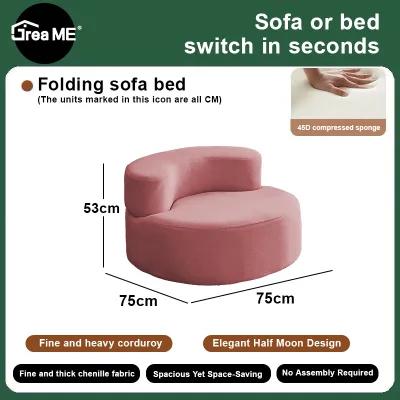
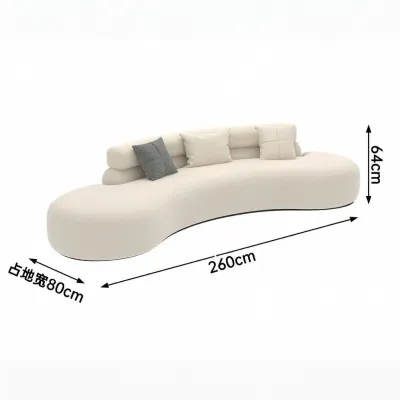
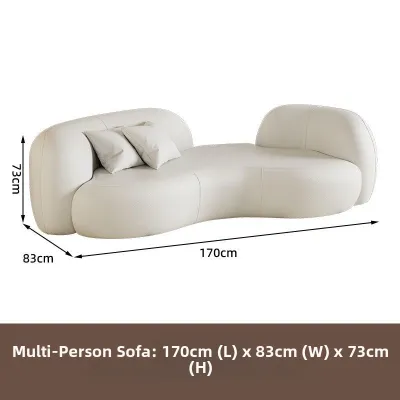
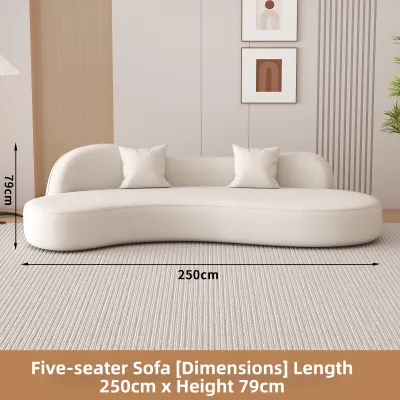
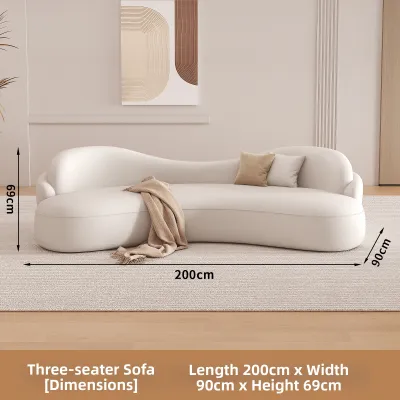
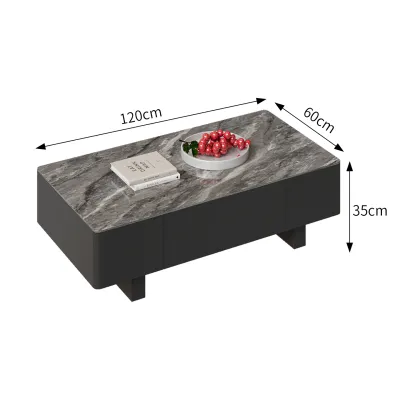
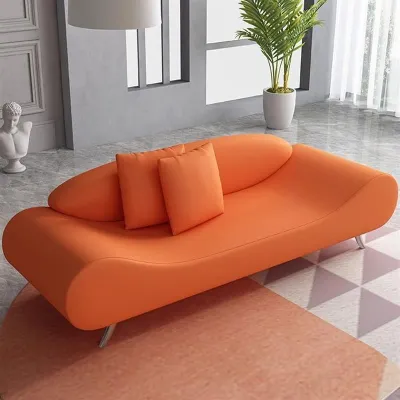
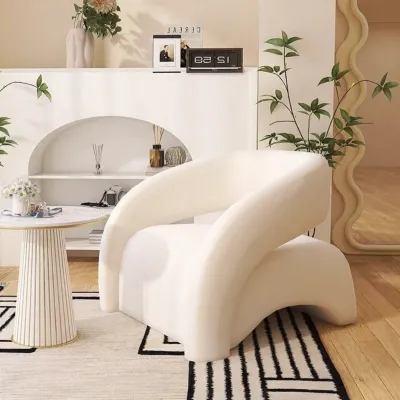
Prices are valid at publication and may change. Please refer to the product page for the latest price.
Measuring the maximum width, maximum depth, and diagonal depth is crucial for these irregular shapes. The maximum width is the straight-line distance between the furthest left and right points, not the curved length of the cushions. The maximum depth measures from the frontmost edge of the curve to the backmost point of the arc. Failing to account for this total depth can lead to a sofa that juts out too far into your living space.
Additionally, the curved back creates negative space behind it when placed near a flat wall. This empty semi-circular area cannot easily accommodate standard rectangular furniture. You must plan how to style this negative space, whether by leaving it clear for air circulation or placing a tall indoor plant behind the frame.
Step-by-Step Guide to Measuring Your Living Room Space
Before browsing online marketplaces or visiting local showrooms, you need a precise map of your living room. Begin by measuring the overall length and width of the room from baseboard to baseboard. Do not forget to record the ceiling height, as low ceilings can make a bulky, high-backed curved sofa feel incredibly imposing, whereas a low-profile design maintains an airy, open atmosphere.

Next, map out all fixed architectural features that cannot be moved. Note the locations of windows, doorways, columns, built-in shelving, and electrical outlets. Pay close attention to how doors swing open; a door that opens inward can easily strike the edge of a poorly positioned sofa. Mark the height of window sills to ensure the back of your sofa does not block natural light.
To visualize how the sofa will occupy the physical space, use painter’s tape or lay down flattened cardboard boxes on the floor to represent the sofa’s bounding box. Outline the exact dimensions of the curved sofa you are considering, including its deepest arc. Walk around this temporary template for a few days to get a realistic feel for how the physical object will impact your daily movement.
Calculating Clearance and Traffic Flow Around the Sofa
A beautiful sofa becomes a daily nuisance if it blocks the natural flow of movement through your home. In interior design, main walking paths require a minimum clearance of 90 centimeters to allow two people to pass comfortably. Secondary pathways, such as the space between the side of the sofa and an end table, should have at least 60 centimeters of clearance.
You must also calculate the distance between the curved sofa and adjacent furniture. For a comfortable seating arrangement, leave about 35 to 45 centimeters between the front edge of the sofa cushions and your coffee table. This distance is close enough to reach items easily, yet wide enough to prevent your knees from knocking against the table. If you have a media console, ensure there is at least 120 centimeters between the screen and the front of the sofa for comfortable viewing.
The shape of the curved back significantly influences whether you should float the sofa or place it near a wall. Floating the sofa in the center of the room is highly recommended for curved designs, as it showcases the elegant backrest from all angles. If you must place it near a wall, leave at least 10 to 15 centimeters of breathing room between the deepest part of the curve and the wall surface to prevent a cramped appearance and to allow adequate air circulation.
Checking Delivery Pathways and Entryway Dimensions
One of the most common and disappointing furniture mistakes is purchasing a sofa that fits perfectly in the living room but cannot physically enter the home. Before finalizing your purchase, trace the exact path the delivery team will take from the delivery vehicle to your living room. If you live in a condominium or apartment building, measure the building entrance, elevator door width, elevator interior height, and any tight turns in the communal hallways.
Within your own home, measure the width and height of all door frames, the clearance in narrow hallways, and the height of low ceilings or hanging light fixtures. If your home has a staircase, measure the width of the stairs, the overhead clearance, and the turning radius of any landings. A tight 90-degree turn on a staircase is often the primary obstacle for long, rigid furniture pieces.
When reviewing sofa specifications, do not rely solely on the assembled footprint. Check the manufacturer’s packaging dimensions, as sofas are often shipped in large, protective boxes that add several centimeters. If the sofa is delivered fully assembled, compare its diagonal depth—measured from the top back of the frame to the bottom front of the seat—with your door frame width to see if it can be tilted and carried through sideways.
Common Layout Mistakes to Avoid with Curved Sofas
A frequent design error is pushing a curved sofa completely flush against a flat wall. This placement forces the outer corners of the sofa to press against the wall while leaving an awkward, dusty gap in the middle. This layout defeats the aesthetic purpose of a curved sofa, making the piece look misplaced rather than intentional. Instead, embrace the curve by pulling the sofa forward into the room to let the design breathe.
Another mistake is overlooking the maximum depth of the sofa at its deepest point. Homeowners often focus entirely on the length of the sofa, assuming that if a three-meter straight sofa fits, a three-meter curved sofa will too. However, because the curve extends outward, it can easily crowd the center of the room, leaving insufficient space for a coffee table or blocking the path to the balcony or terrace.
Finally, avoid pairing a curved sofa with a rigid, rectangular coffee table. A rectangular table creates awkward, uneven gaps between the table edge and the curved seating arc, making it difficult for guests on the outer edges of the sofa to reach the table. Opting for round, oval, or organic-shaped tables ensures a consistent distance from every seat, maintaining both the visual harmony and the functional comfort of your seating area.
Frequently Asked Questions (FAQ)
Can a curved sofa work in a small living room?
Yes, a curved sofa can work beautifully in a smaller living room if you choose the right design. Look for a model with a shallow depth, a gentle arc, and exposed legs that lift the frame off the floor, which helps maintain a sense of openness and visual lightness. To keep the room from feeling cluttered, scale down the surrounding furniture by using slender side tables and a compact, round coffee table that preserves essential walking paths.
How do I choose the right coffee table for a curved sofa?
The best coffee table for a curved sofa is one that mirrors or complements its organic lines, such as a round, oval, or pebble-shaped table. These shapes maintain a uniform distance from the curved seating area, ensuring everyone can reach the table comfortably. Alternatively, you can use a set of modular nesting tables that can be rearranged easily to accommodate different seating arrangements and keep walkways clear when not in use.
Should a curved sofa be placed against a wall or floated in the room?
Floating a curved sofa in the center of the room is generally the best way to highlight its unique design and create a natural flow of movement. However, if your room layout requires placing it near a wall, you can soften the transition by placing a tall floor lamp, a large potted plant, or a custom curved console table in the negative space behind the center of the arc to make the placement look deliberate and balanced.
Community discussion
Share your experience or ask a question. Comments are reviewed before publication.