
To ensure a new seat or back cushion fits your office chair properly, you must take precise physical measurements of your chair’s seat pan and backrest. Taking these dimensions prevents the cushion from overhanging the edges, slipping out of place, or interfering with your armrests and adjustment levers. A poorly fitted cushion can compromise your posture, defeat the ergonomic benefits of the support, and cause physical discomfort over long working hours.
Office chairs come in a vast array of shapes, sizes, and designs. Some feature deep contours and waterfall front edges, while others have flat, minimalist profiles or flexible mesh backrests. Because there is no universal standard for chair dimensions, a cushion that works well on one model may slide off or bunch up on another.
Approaching the task of a seat cushion or back cushion: checking fit with your office chair requires a systematic measurement process. By gathering the right tools, preparing your workspace, and recording key dimensions, you can confidently select an ergonomic accessory that integrates seamlessly with your existing setup.
Products mentioned in this guide
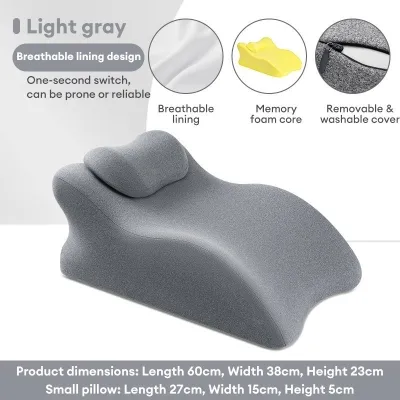
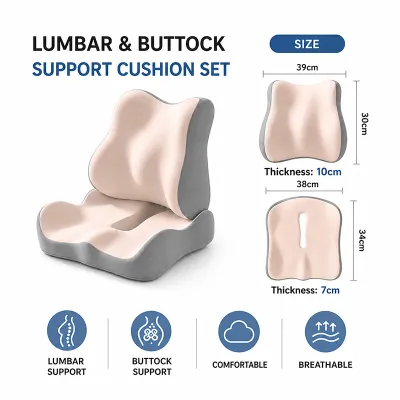
7 Lazada user ratings
Very comfortable to use! The memory foam is soft yet supportive, making sitting for long periods more comfortable. The lumbar support helps …Read full reviewShow less
Very comfortable to use! The memory foam is soft yet supportive, making sitting for long periods more comfortable. The lumbar support helps support my lower back, while the cushion provides a nice balance of softness and firmness. It is a great addition to my chair, especially for work or everyday use. Overall, a good product that offers comfort and support!
I received my order in good condition. It was packed and shipped immediately by the seller. I highly recommend this shop. Thank you!
Great for the price. Super comfy and ergonomic. Sulit na sulit because i got it cheap.
Dumating na, Maganda at malambot. sana tumagal. Hehe salamat po mabilis dumating. ☺️
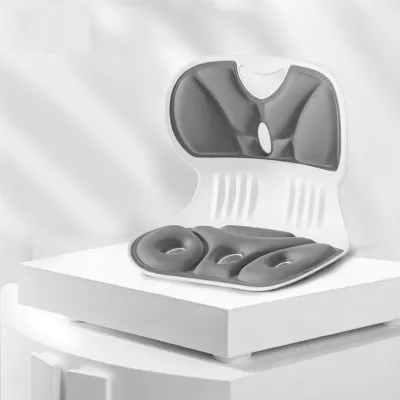
145 Lazada user ratings
The backrest is really light, and it provides decent support for my lower back when I sit. The cushion is a bit thin, so I might need to add…Read full reviewShow less
The backrest is really light, and it provides decent support for my lower back when I sit. The cushion is a bit thin, so I might need to add an extra pad for more comfort during long sitting sessions. Overall, it does the job!
I often work sitting on the edge of my bed, and my back can't take it. This cushion has helped a lot; I'm on the lean side, and it provides …Read full reviewShow less
I often work sitting on the edge of my bed, and my back can't take it. This cushion has helped a lot; I'm on the lean side, and it provides decent support. I hope it lasts long. Good review!
Previously, we bought one for home use, and the quality is quite good. The hardness is really great, and overall, it feels sturdy and reliab…Read full reviewShow less
Previously, we bought one for home use, and the quality is quite good. The hardness is really great, and overall, it feels sturdy and reliable.
Great value for the quality! It's really impressive to get this level of quality! Kudos to the seller!
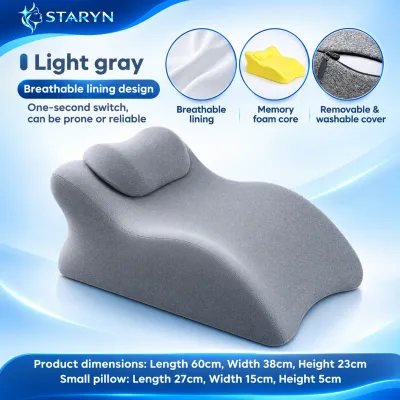
Prices are valid at publication and may change. Please refer to the product page for the latest price.
Tools and Preparation for Accurate Measuring
Before you begin pulling measurements, you need to gather a few basic tools to ensure accuracy. A flexible sewing measuring tape is highly recommended for this task. Its flexibility allows you to follow the curves, contours, and rounded edges of ergonomic seat pans and backrests without losing accuracy.
In addition to a flexible tape, a rigid metal ruler or a straight edge is incredibly useful. You will use this to measure flat spans, project straight lines across open spaces, and determine depth without sagging. Having both tools on hand ensures you can handle both flat surfaces and complex ergonomic curves.
Next, prepare your chair by clearing it of any existing accessories. Remove any temporary cushions, decorative throw pillows, loose fabric covers, or accumulated debris. You want to measure the bare, original surface of the chair to get a true baseline of its dimensions.
Finally, adjust your office chair to its standard, upright working position. Set the seat height to your normal daily preference and ensure the backrest is locked in its primary upright angle. Measuring the chair in the exact configuration you use for work ensures that clearances and heights remain accurate during actual use.
Step-by-Step Guide to Measuring the Seat Pan
The seat pan is the foundation of your sitting posture, making its measurements critical for cushion stability. To begin, measure the usable seat width. If your chair has armrests, measure the distance from the inner edge of one armrest to the inner edge of the other. This represents the absolute maximum width your new cushion can be without being squeezed or distorted by the armrests.

If your office chair is armless, measure across the widest part of the seat pan from one outer edge to the other. In this scenario, you have more flexibility, but you still want to avoid a cushion that is significantly wider than the seat, as it may overhang and become unstable.
Next, measure the seat depth. Place your measuring tape at the very back seam where the seat pan meets the backrest, and pull it straight forward to the front edge of the seat. As you do this, pay close attention to the front edge of the chair. Many ergonomic chairs feature a “waterfall edge,” which is a gentle downward slope designed to relieve pressure on the back of your thighs.
When measuring depth, your target cushion should ideally end just before the waterfall slope begins. If a cushion is too deep and extends over this curve, it can slide forward constantly or press uncomfortably into the back of your knees, restricting blood circulation. Note the measurement of both the total seat depth and the flat, usable depth before the slope starts.
You also need to identify the physical shape of your seat pan. Take a close look to see if the surface is completely flat, contoured with raised side bolsters, or scooped out in the center. A highly contoured or scooped seat pan presents a challenge for flat-bottomed cushions, as they may wobble, tilt, or fail to make full contact with the chair.
If your chair has deep contours, you will want to look for a cushion made of flexible materials, such as gel or low-density memory foam, which can conform to the shape of the seat. Alternatively, some cushions are specifically designed with contoured undersides to nestle into standard molded office chairs.
Lastly, locate all adjustment levers, tilt tension knobs, and seat slide mechanisms around and beneath the seat pan. Note their exact positions relative to the edges of the seat. Your prospective cushion, including any hanging fabric or securing straps, must not block your access to these controls or accidentally trigger them during movement.
Measuring the Backrest for Lumbar and Back Cushions
A backrest cushion must align precisely with your spine and the chair’s built-in support structures to be effective. Start by measuring the width of the backrest. Take this measurement at the widest point of the backrest, and then take a second measurement at the specific height where you plan to position the cushion.
Next, measure the vertical height of the backrest. Run your measuring tape from the seat seam—where the seat pan meets the backrest—all the way to the top edge of the backrest. This vertical dimension helps you decide whether a compact lumbar support cushion or a full-back cushion is more appropriate for your chair.
A full-back cushion requires a tall, supportive backrest to prevent it from flopping over the top, while a small lumbar cushion only needs a secure mounting zone in the lower third of the chair. If your chair has an integrated headrest, measure up to the base of the headrest to ensure the cushion does not push your head forward at an awkward angle.
Assess the contour and material of your backrest. Is it a flat padded surface, a curved plastic shell, or a flexible mesh screen? Mesh backrests tend to flex and bow under weight, which can alter how a cushion sits against your back. A curved backrest requires a cushion that can nestle into that curve without creating an excessive gap or pushing you too far forward.
Finally, identify your natural lumbar curve. Sit upright in your chair and have someone help you locate, or carefully feel for, the deepest curve of your lower spine. Measure the distance from the seat pan up to this specific point on the backrest.
When shopping for a lumbar cushion, the thickest, most supportive part of the cushion must align with this measurement. If the cushion’s support curve sits too high or too low, it can strain your lower back muscles and worsen your posture rather than improving it.
Checking Clearances for Armrests and Chair Mechanisms
Adding a cushion to your chair alters the spatial relationships between your body, the chair components, and your desk. First, measure the vertical distance from the seat pan to the top of your armrests. A thick seat cushion, which often ranges from 5 to 10 centimeters in height, will raise your sitting position significantly.
If your armrests are fixed, a thick cushion will make them feel much lower relative to your elbows, potentially leaving your arms unsupported. If your armrests are adjustable, verify that they can be raised sufficiently to match your new sitting height. This ensures your shoulders remain relaxed and your elbows rest at a comfortable 90-degree angle.
Next, check the horizontal clearance between the armrests. A cushion that is too wide will wedge tightly between the armrests, causing its sides to curl upward. This curling reduces the usable flat surface area of the cushion and can pinch your hips or restrict your natural movement.
You must also ensure that the cushion does not interfere with the chair’s mechanical operations. Check the path of any securing straps. Ensure they do not wrap around or block the seat height adjustment lever, the tilt tension knob, or the synchro-tilt mechanism.
Mentally test the chair’s full range of motion. Consider how the cushion will behave when you recline, swivel, or slide the seat pan forward. If the cushion does not have a reliable non-slip backing or secure straps, the motion of reclining can cause it to slide forward or bunch up, requiring constant manual adjustment.
How to Compare Your Chair Measurements to Cushion Specs
Once you have recorded all your measurements, you can begin comparing them to the specifications of prospective cushions on online marketplaces or retail sites. Start by comparing your usable seat width and depth against the cushion’s listed dimensions. It is wise to select a cushion that is slightly smaller than your seat pan—allowing a margin of 1 to 2 centimeters—to prevent any overhang.
An overhanging cushion is highly unstable and will degrade quickly along the edges due to uneven weight distribution. Next, check the product descriptions for specific stability features. Look for non-slip rubberized bases, adjustable buckle straps, or tie-downs that match your chair’s design.
For example, if your chair has a solid backrest, a simple elastic strap might slide off, whereas a dual-strap system with adjustable buckles will hold the cushion securely. If your chair has a mesh back, ensure the straps can wrap around the frame without damaging the delicate mesh material.
Carefully evaluate the cushion’s thickness and its impact on your overall ergonomics. A very thick cushion might solve seat hardness but could leave your feet dangling above the floor. If this happens, you may need to adjust your chair’s overall height downward or invest in a footrest to maintain proper ergonomic alignment.
Additionally, ensure your desk has enough clearance for your thighs once your sitting height is raised by the cushion. If your desk has a keyboard tray or a low drawer, a thick cushion might force your knees to rub against the underside of the desk. While high-quality ergonomic cushions typically range from ₱800 to ₱2,500, focusing on physical dimensions is far more important than price alone.
Finally, always verify the retailer’s return policy before making your purchase. Even with perfect measurements, the actual density, firmness, and feel of a cushion can only be truly assessed by sitting on it. A flexible return policy ensures you can exchange the cushion if the physical fit is correct but the comfort level does not meet your personal needs.
Community discussion
Share your experience or ask a question. Comments are reviewed before publication.