
Building a modular closet system with stackable drawers is an efficient, highly customizable way to maximize your storage space. By systematically measuring your closet, selecting compatible interlocking units, and assembling them from the ground up, you can create a tailored wardrobe solution that adapts to your changing needs. This approach allows you to bypass expensive custom carpentry while still achieving a clean, organized, and highly functional layout.
Assess Your Closet Space and Storage Needs
Before purchasing any storage units, you must determine the exact physical boundaries of your closet. Start by using a reliable metal tape measure to record the interior width, height, and depth of the space. Do not rely on general estimates; measure at the top, middle, and bottom of the closet, as walls are rarely perfectly square. Be sure to account for protruding baseboards, light fixtures, door hinges, and the swing radius of the closet doors. In humid tropical climates like the Philippines, leaving a small ventilation gap of at least two to three centimeters between the back of the drawers and the wall is highly recommended to promote airflow and prevent mold growth.
Next, evaluate what you plan to store to determine the necessary drawer depths and weight capacities. Lightweight items like t-shirts, undergarments, and socks fit well in shallow drawers, while bulky items like bed linens, towels, or heavy denim require deeper compartments. Estimate the total weight of these items to ensure you do not exceed the manufacturer’s rated capacity for individual drawers.
Products mentioned in this guide
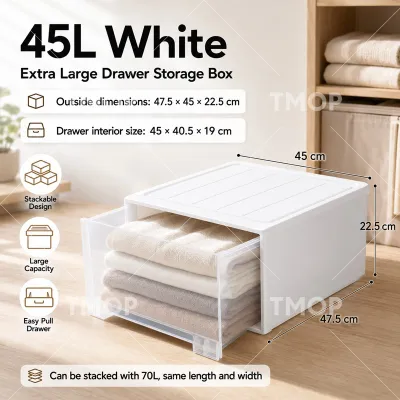
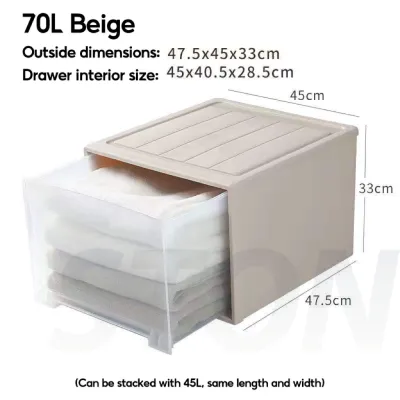
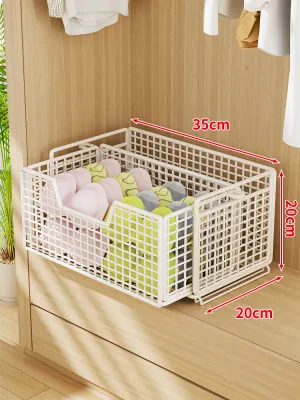
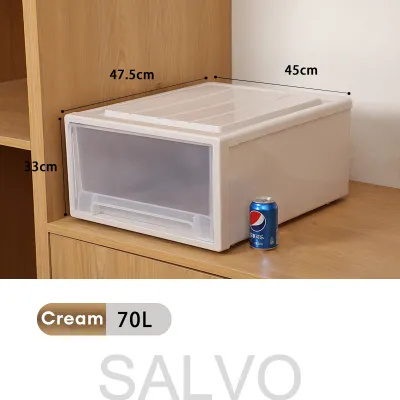
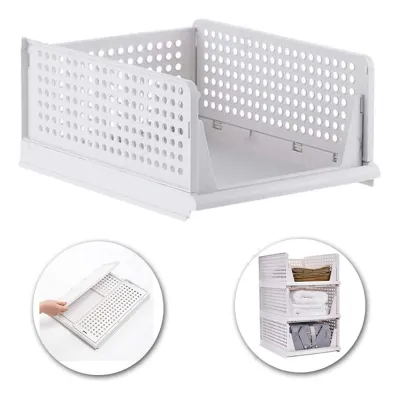
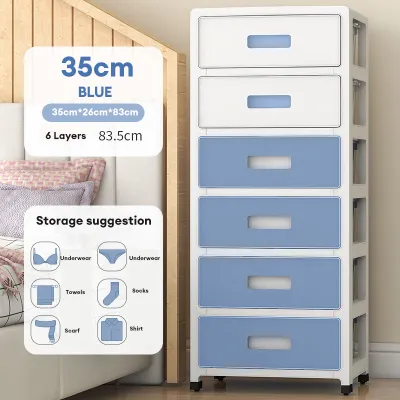
Prices are valid at publication and may change. Please refer to the product page for the latest price.
Finally, check the levelness of your closet floor using a spirit level. An uneven floor will cause a vertical stack of drawers to lean, putting stress on the joints and causing the drawers to stick or slide open on their own. If the floor is uneven, plan to use plastic shims or select drawer units equipped with adjustable leveling feet to establish a perfectly flat foundation.
Choose the Right Stackable Drawer Units
Selecting the right stackable drawer units requires balancing stability, material durability, and your budget in ₱. You will generally choose between dedicated interlocking modular systems and freestanding stackable bins. Interlocking systems feature built-in grooves, clips, or pegs that physically lock the top of one unit to the bottom of another, providing superior stability for taller configurations. Freestanding stackable bins, while often more affordable, rely purely on gravity and shallow nesting ridges, making them better suited for shorter stacks or lightweight items.

When browsing options, always verify the exact external dimensions and required clearances from the product labels or manufacturer manuals. Nominal sizes listed in product titles can be misleading; a drawer labeled as “30 cm wide” might actually measure 31.5 cm when accounting for outer lips, handles, or interlocking tabs. Ensure the fully extended drawer depth still allows your closet doors to close completely without obstruction.
Material selection is critical for long-term durability. In high-humidity environments, heavy-duty plastic stackable drawers are exceptionally practical because they do not warp, rust, or attract termites. If you prefer the aesthetic of wood or metal wire modular systems, verify that the wood has a moisture-resistant finish and the metal is powder-coated to prevent rust. Budgeting for your project can range from a few hundred pesos (₱) for basic plastic units to several thousand pesos for premium engineered wood or metal modular systems. Investing in sturdy, interlocking units for the base of your stack is always a wise allocation of your budget.
Prepare the Space and Gather Necessary Tools
A successful installation begins with a clean, empty workspace. Completely clear out your closet and thoroughly sweep or vacuum the floor to remove dust, lint, and debris. Even small particles of dirt can settle under the base units, causing minor tilts that amplify as you stack higher.
Gather all necessary tools before you begin assembly. You will typically need a tape measure, a spirit level, and a screwdriver if your chosen system uses securing screws or brackets. If you are anchoring the system to concrete or masonry walls—common in many Philippine homes—ensure you have a hammer drill and appropriate wall plugs.
Unpack your drawer units and inspect each piece carefully for any shipping damage, such as cracked plastic corners or bent tracks. Verify that all interlocking clips, screws, and accessory parts listed in the manual are present before you begin stacking.
Assemble and Stack the Modular System
The structural integrity of your modular closet relies entirely on the stability of the base layer. Place the bottom drawer units on the closet floor and use your spirit level to check them from front to back and side to side. If the bubble is not centered, insert thin, non-slip shims under the low points until the base is perfectly level. Skipping this step will cause the entire stack to lean, which places uneven stress on the interlocking joints and can cause the drawers to bind.
Once the base is secure and level, begin stacking the subsequent layers. Always follow the manufacturer’s specific interlocking guidelines, ensuring that every clip, peg, or groove snaps firmly into place. As a rule of thumb, place the heaviest, deepest drawers at the bottom of the stack to keep the center of gravity as low as possible. Reserve the lighter, shallower drawers for the upper levels.
Test the operation of every single drawer at each stage of the build. Pull each drawer completely out and push it back in to ensure the tracks or slides glide smoothly. If you notice any resistance, sticking, or scraping, stop immediately. This is usually an early warning sign that the stack is slightly tilted, the units are not fully locked together, or the weight of the upper units is compressing the lower frames. Adjust the alignment before adding more layers.
Secure, Maintain, and Reconfigure Your Setup
To ensure long-term safety, any stack of drawers that exceeds waist height should be securely anchored to the wall. Follow the manufacturer’s instructions to install anti-tip brackets, wall straps, or anchoring screws. Securing the system to the wall studs or using heavy-duty wall anchors prevents the entire unit from tipping forward when multiple drawers are opened simultaneously.
Over time, daily use can cause interlocking joints to loosen or shift slightly. Establish a routine check every few months to inspect the connections, tighten any loose hardware, and verify that the stack remains level. If you notice any bowing in the plastic or wood frames, redistribute the weight by moving heavier items to lower drawers.
One of the greatest advantages of a modular system is its ability to adapt. When you need to reconfigure or expand your closet, always empty the drawers completely before moving or unstacking them. This protects the interlocking mechanisms from snapping under lateral stress and ensures you can safely handle the units without losing your balance.
Frequently Asked Questions (FAQ)
Can I mix different brands or sizes of stackable drawers?
It is highly recommended to stick to a single brand and product line when building a vertical stack. Interlocking mechanisms, alignment tabs, and structural load paths are rarely standardized across different manufacturers. Attempting to stack mismatched brands can result in unstable connections, uneven weight distribution, and a high risk of the stack collapsing. If you must use different sizes, ensure they are from the same compatible product family, and always place the wider, heavier units at the bottom of the stack to maintain structural integrity.
How do I prevent the stack from tipping when a drawer is fully extended?
When a heavily loaded drawer is pulled completely open, the center of gravity shifts forward, creating a leverage effect that can pull the entire stack down. To prevent this, always install the manufacturer-provided anti-tip wall straps or brackets, securing them firmly into a wall stud or solid concrete wall. Additionally, practice safe loading habits: place your heaviest items in the bottom drawers, open only one drawer at a time, and avoid overloading the front section of any individual drawer.
Community discussion
Share your experience or ask a question. Comments are reviewed before publication.