
Finding the ideal minimalist vanity table with a mirror in the Philippines requires balancing clean, modern aesthetics with the practical realities of tropical living. A minimalist design focuses on clean lines, neutral colors, and clutter-free surfaces, making it an excellent choice for space-conscious bedrooms, modern condominiums, and townhouses. However, because local homes often face high humidity, salt air in coastal regions, and varying room layouts, selecting the right piece goes beyond mere visual appeal. You must evaluate physical dimensions, material resilience, mirror functionality, and storage capacity to ensure your investment remains both beautiful and durable over time. By focusing on smart design choices and robust construction, you can find a vanity that serves as a peaceful, functional corner for your daily routine without cluttering your living space.
Defining Your Space and Layout Requirements
Before browsing online marketplaces, grab a tape measure to assess your bedroom’s physical layout. The first step is measuring the exact floor area where the vanity table will sit. Do not just measure the footprint of the table itself; you must also account for the depth of the stool or chair. Ensure there is at least 60 to 70 centimeters of clearance behind the table so you can pull the seat out comfortably and sit down without blocking walkways. If the vanity features pull-out drawers or swing-out cabinet doors, measure their fully extended depth to prevent them from colliding with your bed, wardrobe, or bedroom door. Additionally, check the height of your baseboards and the placement of electrical outlets, as these can prevent the table from sitting completely flush against the wall.
Next, consider the delivery path from the entrance of your home to the final bedroom setup. Many residential buildings in urban areas like Manila or Cebu have narrow hallways, tight stairwells, or compact passenger elevators. Check the dimensions of your doorways, entry passages, and elevator doors against the packaged box dimensions provided by the seller. If a vanity arrives fully assembled, a tight corner can prevent it from ever reaching your bedroom. Knowing these constraints beforehand helps you decide whether to purchase a flat-packed model that can be assembled in the room or a pre-assembled piece that requires ample clearance.
Products mentioned in this guide
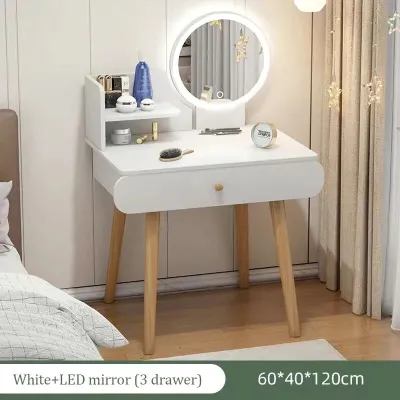
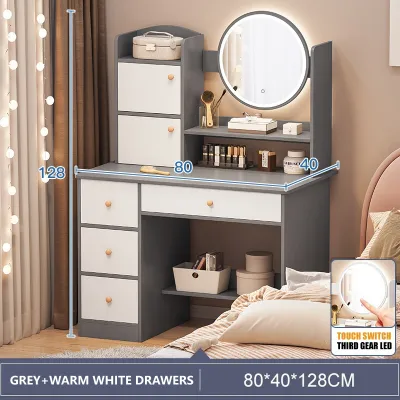

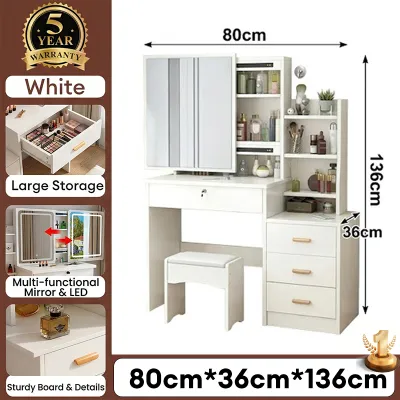
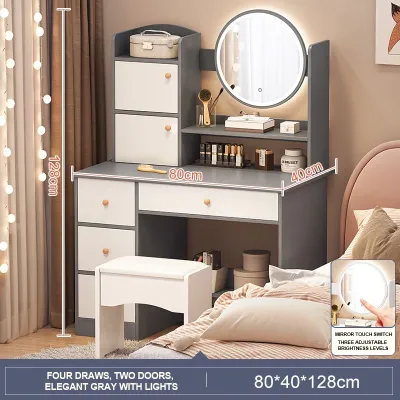


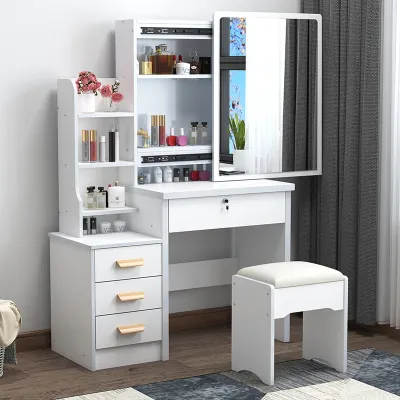
Prices are valid at publication and may change. Please refer to the product page for the latest price.
Finally, evaluate the traffic flow and lighting conditions in your room. Placing a vanity table directly in front of a window can block natural light, while placing it too close to a high-traffic pathway can lead to accidental bumps. Position the table where you can utilize natural side-lighting if possible, while keeping the main walking paths completely clear. If space is exceptionally tight, look for corner vanity designs or wall-mounted floating models that free up valuable floor space while still providing a dedicated area for your morning and evening routines.
Evaluating Materials and Finishes for Humid Environments
The Philippine climate presents unique challenges for furniture, particularly high relative humidity and seasonal temperature shifts. When selecting a minimalist vanity, pay close attention to the base materials and surface finishes to ensure long-term durability. Engineered wood, such as Medium-Density Fiberboard (MDF) or particle board, is highly common in minimalist furniture due to its smooth surface and clean lines. However, untreated engineered wood can absorb moisture from the air, leading to swelling, warping, or sagging over time.

To protect your investment, check the manufacturer’s specifications for moisture-resistant treatments, high-pressure laminate (HPL) finishes, or fully sealed edges. Melamine coatings and PVC edge banding are excellent indicators that the core material is protected against ambient humidity. If you prefer solid wood, look for species that naturally handle humidity well, and verify that the wood has been properly kiln-dried and sealed with a protective polyurethane or lacquer topcoat. Unsealed wood will quickly react to seasonal changes, causing drawers to stick or joints to loosen.
If the vanity features metal legs, frames, or drawer slides, inspect the hardware specifications carefully. Untreated steel or iron will quickly rust in humid environments, especially in coastal areas. Look for metal components finished with powder coating, chrome plating, or anodized aluminum, which provide a protective barrier against oxidation. Additionally, check that the drawer runners operate smoothly without grinding, as high humidity can accelerate wear on poorly finished metal tracks. Soft-close drawer glides are a premium feature worth checking for, as they reduce physical impact and wear on the joints.
Review the manufacturer’s care instructions to understand the maintenance requirements for different surface materials. High-quality minimalist vanities should only require a simple wipe-down with a dry or slightly damp microfiber cloth. Avoid tables that require specialized, high-maintenance oils or those that warn against any contact with moisture, as these may not hold up well in a typical tropical bedroom setup where humidity levels fluctuate daily.
Comparing Mirror Configurations and Lighting Options
The mirror is the centerpiece of any vanity setup, and its configuration directly impacts both your daily routine and the table’s footprint. Fixed vertical mirrors are classic and provide a continuous, unobstructed view, but they remain permanently exposed. If you prefer a multi-functional workspace, a flip-top mirror design is highly efficient. When closed, the mirror folds flat into the tabletop, transforming the vanity into a clean writing desk or laptop station. Tri-fold mirrors, on the other hand, offer adjustable side panels that let you view your profile from multiple angles, though they require more lateral space and can look slightly less minimalist when fully opened.
Lighting is another critical factor to consider during your selection process. Built-in LED mirrors offer a streamlined look, often featuring touch-sensitive buttons to adjust brightness or color temperature. If you choose a model with integrated lighting, verify the power source, voltage compatibility (ensuring it matches the standard 220V electrical system in the Philippines), and cord routing. Ensure there is an electrical outlet within reach of your planned layout, and check if the table has built-in grommets or channels to hide unsightly cables. If you prefer external lighting, ensure the mirror frame has enough clearance to accommodate clip-on ring lights or wall-mounted sconces without cluttering the minimalist aesthetic.
Safety and clarity are paramount when evaluating mirror glass. Check the product specifications for mirror glass quality, looking for mirrors with shatter-resistant backing or copper-free silver glass. Copper-free mirrors resist the black-edge corrosion common in humid climates, ensuring your mirror remains clear and functional for years. Avoid mirrors that do not specify their backing material, as standard glass can degrade quickly when exposed to moisture and warmth.
Assessing Storage Capacity and Ergonomic Design
A truly minimalist vanity keeps clutter out of sight, which means its internal storage must be highly organized and functional. Analyze the drawer configurations to ensure they match your specific cosmetic inventory. Deep drawers are ideal for standing up tall skincare bottles, hair dryers, or styling tools, while shallow drawers equipped with built-in dividers are perfect for organizing smaller makeup items, jewelry, and brushes. Open shelving can look elegant but requires constant curation to maintain a minimalist look; if you prefer a low-maintenance setup, prioritize closed drawers or hidden compartments behind the mirror.
Ergonomics play a vital role in how comfortable you feel during your daily routine. Check the table’s overall height—standard vanity tables usually stand between 75 and 80 centimeters tall. Ensure there is sufficient knee clearance beneath the tabletop or drawer unit. If the clearance is too tight, you won’t be able to sit close enough to the mirror, forcing you to lean forward uncomfortably. Measure your existing stool or check the dimensions of the included seating to ensure a comfortable fit that allows your feet to rest flat on the floor.
Do not overlook structural stability and weight capacity. A minimalist design often features slender legs, but the table must support the weight of the mirror, your storage items, and the pressure of you leaning on the surface. Look for reinforced joints, solid wood or heavy-duty metal legs, and check if the manufacturer includes wall-anchoring hardware to prevent tipping. This is especially important if the table is top-heavy due to a large integrated mirror or if you plan to place heavy items on the tabletop. To maintain stability, plan to distribute weight evenly, placing heavier items in the lower drawers.
Building Your Shortlist: Pre-Purchase Verification Checklist
Before finalizing your purchase on any online marketplace, a systematic verification process will save you from buyer’s remorse. First, cross-reference the seller’s listed dimensions and material claims with real-world customer reviews. Look for uploaded photos and videos from previous buyers in the Philippines to verify if the color, finish, and overall scale match the product listing. Pay close attention to reviews mentioning the sturdiness of the table and the clarity of the mirror upon arrival, as these are common pain points in flat-packed furniture.
Second, clarify the assembly requirements. Many minimalist vanity tables are shipped flat-packed to reduce delivery costs. Read the product description to see if basic assembly tools are included or if you will need your own screwdriver and hammer. If the model is a wall-mounted floating vanity, determine if you have the appropriate wall type (such as concrete or solid masonry, common in Philippine homes) and the tools required to drill and secure the mounting brackets safely. If the assembly process seems overly complex, check if the seller offers professional installation services for an additional fee.
Finally, confirm the warranty terms, shipping fees, and return policies. Mirror glass is fragile and can easily crack during transit, especially when shipped across different provinces. Ensure the merchant has a clear policy for replacing damaged glass or missing hardware. Check if they offer a warranty on the structural frame or any integrated LED electronics, and verify how easy it is to contact their customer service department should any issues arise after delivery. A reliable seller should provide clear communication channels and a straightforward return process for damaged goods.
Frequently Asked Questions (FAQ)
How do I prevent my vanity mirror from fogging up in a humid bedroom?
To manage condensation on your vanity mirror, focus on improving air circulation in your bedroom. Keep windows open when weather permits, or use a standing fan or air conditioning unit to lower the ambient humidity. You can also apply a thin layer of specialized anti-fog solution or a mild, non-abrasive soapy water mixture to the glass surface, wiping it clean with a dry microfiber cloth. Always check the manufacturer’s care instructions before applying any liquid treatments, and avoid harsh chemical sprays or abrasive scrubbers that could strip away protective coatings or damage the mirror’s silver backing.
Can I assemble a minimalist vanity table by myself?
Many minimalist vanity tables are designed for straightforward DIY assembly, but your success depends on the complexity of the design and your comfort with basic tools. Before starting, review the instruction manual and lay out all included hardware to ensure nothing is missing. While assembling the main table frame and drawers can usually be done solo, lifting, aligning, and securing large or heavy mirror panels often requires a second person to prevent accidental drops or misalignment. If you encounter structural instability, confusing instructions, or missing parts, stop assembly immediately and contact the manufacturer or a professional assembly service rather than forcing the pieces together.

Community discussion
Share your experience or ask a question. Comments are reviewed before publication.