
To find the perfect bookcase or shelving unit for your home office, you must balance your storage needs with the physical limits of your room. The ideal size is not just about what fits against a wall; it must also preserve comfortable walking paths, accommodate your daily workflow, and safely clear architectural features. In typical Philippine homes—ranging from compact high-rise condominiums in urban hubs to spacious suburban studies—selecting the right dimensions prevents a room from feeling cramped while ensuring your reference materials, printers, and decorative items remain easily accessible. By taking precise measurements of your room, understanding layout configurations, and planning for safety clearances, you can select storage that enhances your productivity without overwhelming your space.
Measure Your Space Before Buying Bookcases and Shelving
Before browsing furniture catalogs or visiting local showrooms, you must establish the maximum physical boundaries of your designated office area. Begin by measuring the width, height, and depth of the wall space where you plan to position your storage. Use a metal measuring tape for accuracy, and record the dimensions in both centimeters and inches, as local retailers often use both systems. If you have high ceilings, a tall vertical unit can maximize storage; however, you must ensure the unit does not block ceiling fans, light fixtures, or wall-mounted split-type air conditioning units.
Architectural obstacles frequently disrupt furniture placement if they are not accounted for early. Check the wall for electrical outlets, light switches, internet ports, and window sills. A bookcase placed directly in front of a power outlet will prevent you from plugging in your computer or desk lamp unless you leave a substantial gap or cut a cord-access hole in the unit’s back panel. Additionally, take note of baseboards along the floor. Baseboards prevent furniture from sitting completely flush against the wall, which can create a small gap at the top and affect the stability of tall units.
Products mentioned in this guide
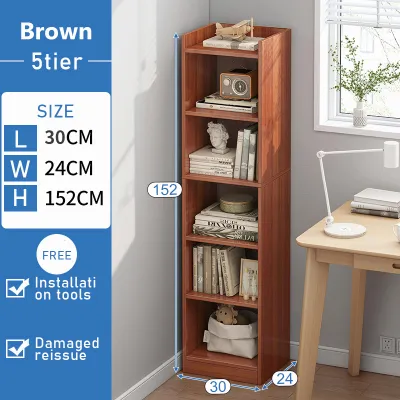
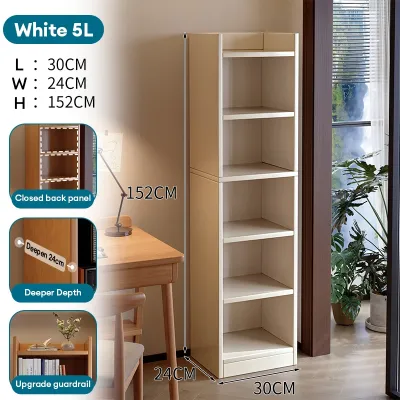
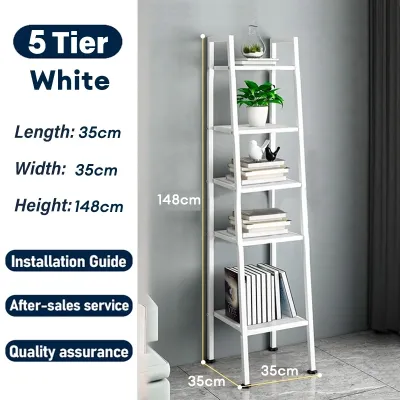
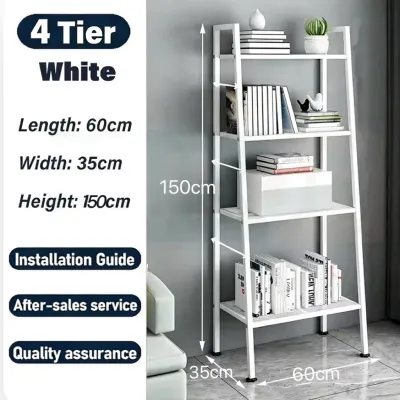
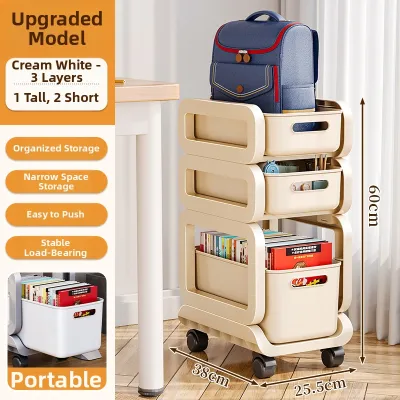
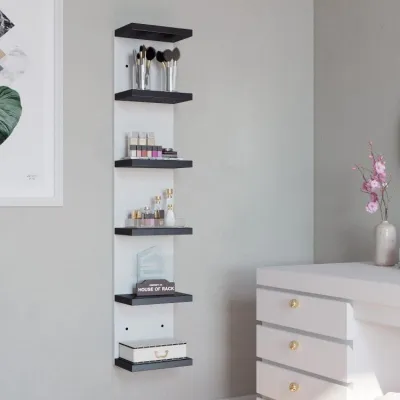
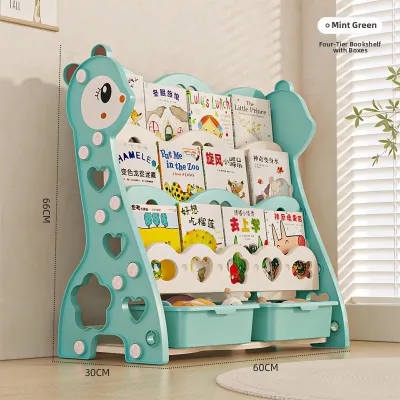
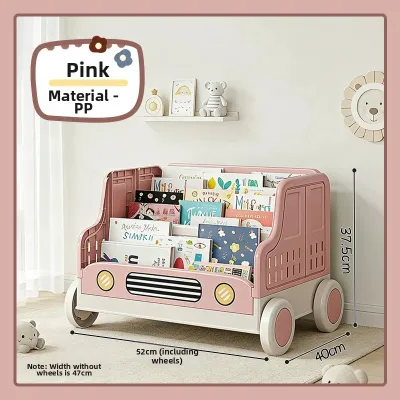
Prices are valid at publication and may change. Please refer to the product page for the latest price.
Do not overlook the delivery and assembly pathway. A massive, pre-assembled wooden cabinet might fit perfectly in your study but fail to clear the tight corners of your hallway, the low ceiling of your stairwell, or the narrow dimensions of a condominium elevator. Measure the height and width of every doorway, corridor turn, and entry point from the street to your home office. If you choose flat-pack furniture, verify that you have enough open floor space in the room to safely lay out the pieces and assemble the unit.
Finally, assess the floor and wall conditions. Floors in older buildings or rapidly constructed units may not be perfectly level. If your floor slopes slightly, a tall, heavy bookcase can lean forward or wobble, requiring adjustable leveling feet or shims. Because the Philippines is a seismically active region, anchoring tall furniture is a critical safety step. Identify the construction material of your wall; solid concrete or hollow-block walls require masonry drill bits and appropriate wall plugs, while drywall partitions require finding the internal wooden or metal studs to secure heavy-duty anchoring brackets.
Match Shelving Dimensions to Your Room Layout
Selecting the right storage is a balancing act between physical capacity and visual weight. A massive, dark-stained wooden bookcase can make a small room feel claustrophobic, whereas a series of open, light-colored shelves can make the same space feel airy and organized. The depth of your shelving should directly match the items you intend to store, ensuring you do not waste floor space on unnecessarily deep structures.

Standard books and novels typically require a shelf depth of only 20 to 25 centimeters. If your work involves handling large ring binders, legal-sized documents, or storage boxes, you will need deeper shelves of at least 30 to 35 centimeters. For specialized office equipment like printers, scanners, or paper shredders, shelves must be 40 to 50 centimeters deep, accompanied by robust structural support to handle the weight and vibration of active machinery.
Compact and Corner Configurations for Small Rooms
In compact home offices, studio apartments, or shared bedroom-workspace layouts, floor space is highly limited. Corner shelving units are excellent space-saving options because they utilize the intersection of two walls—an area that otherwise remains empty and unusable. These units draw the eye upward and provide deep storage corners without protruding into primary walking paths.
Another highly effective approach is utilizing vertical space with narrow, tall bookcases or floating wall shelves. A bookcase with a small footprint (such as 40 to 60 centimeters wide) that extends upward to 180 centimeters provides significant storage while leaving plenty of floor space for your desk and office chair. Floating shelves offer an even lighter visual footprint because they leave the floor entirely clear, making the room feel larger. However, before mounting floating shelves, you must verify the load-bearing capacity of your wall. Lightweight drywall partitions without stud support cannot safely hold heavy rows of books, so reserve floating shelves on hollow walls for lightweight decor, and mount heavy book storage on solid masonry walls.
Standard and Wide Units for Dedicated Offices
If you have a dedicated, spacious home office, you can opt for wider, freestanding bookcases or modular shelving systems. A wide bookcase (typically 80 to 120 centimeters or more) serves as an excellent focal point and can hold an extensive library, reference materials, and decorative items. In open-concept rooms, a double-sided, open-backed freestanding bookcase can even serve as a functional room divider, separating your professional workspace from your living or sleeping areas without completely blocking light or air circulation.
For rooms with large windows, wide and low shelving units (such as credenzas or console-style bookcases) are ideal. These units sit comfortably below the window sill, allowing natural light to flood the room while providing a flat top surface for a printer, desk organizer, or indoor plants. If your storage needs are likely to grow over time, look for modular shelving systems. These systems let you start with a single base unit and add matching lateral extensions, corner pieces, or extra vertical shelves as your collection of books and office files expands.
Clearance, Pathways, and Installation Requirements
A home office must remain highly functional, which means your furniture layout must allow for safe, unhindered movement. Ensure there is a clearance of at least 90 to 100 centimeters between the front of your bookcase and your office desk or other walls. This clearance gives you ample room to pull back your desk chair, stand up, and walk comfortably without bumping into the shelves. If your bookcase features cabinet doors or drawers at the bottom, measure their full extension to ensure they can open completely without striking your desk, chair, or doorway.
Air circulation is another critical consideration, particularly in the warm, humid climate of the Philippines. Placing a bookcase flat against an external wall can trap moisture, creating a breeding ground for mold, mildew, and book-damaging pests. To prevent this, leave a gap of 2 to 5 centimeters between the back of the bookcase and the wall. This small gap allows air to circulate freely. If you place electronic equipment like routers, external hard drives, or small printers on your shelves, ensure there is at least 5 to 10 centimeters of open space around the sides and top of each device to prevent heat buildup and premature equipment failure.
Safety must always be a priority during installation. Any bookcase or shelving unit taller than 120 centimeters should be anchored securely to the wall to prevent tip-over accidents. This is especially vital in households with young children, climbing pets, or in areas prone to seismic tremors. Most high-quality bookcases include wall-anchoring kits; always follow the manufacturer’s instructions for installation. If the included hardware is designed only for drywall and you have concrete walls, purchase appropriate masonry anchors and screws from a local hardware store.
Finally, never assume all shelves can support the same weight based solely on the material name. A solid wood shelf and a particleboard shelf of the same thickness can have vastly different load capacities. Always consult the manufacturer’s specified weight limit per shelf. To prevent sagging or structural failure, distribute the weight evenly, placing your heaviest books, binders, and equipment on the bottom shelves and reserving the upper shelves for lighter items.
Common Sizing Mistakes to Avoid
One of the most frequent mistakes is ignoring the depth of the shelving unit. Shoppers often focus entirely on the width and height, only to find that a deep bookcase blocks a nearby doorway or prevents a room door from swinging open fully. Always map out the footprint of the unit on your floor using painter’s tape before making a purchase to visualize how much physical space it will occupy.
Another common error is forgetting to account for baseboards when planning a flush installation. If your baseboards are thick, they will push the bottom of the bookcase away from the wall, leaving a gap at the top. This gap makes anchoring the unit difficult and can cause it to lean backward or forward unstably. To avoid this, look for bookcases with baseboard cutouts at the rear, or use wooden spacers behind your wall anchors to bridge the gap securely.
Additionally, do not overestimate shelf weight capacity based purely on material terms like “engineered wood” or “hardwood.” A long, unsupported shelf made of low-density fiberboard may sag under the weight of heavy legal volumes even if the overall unit feels sturdy. Always check the manufacturer’s structural specifications for individual shelf weight limits, and consider units with center support brackets or thicker shelf profiles if you have a heavy collection.
Lastly, avoid buying a single, massive piece of furniture for a small or awkwardly shaped room. A giant, heavy bookcase is difficult to move, hard to transport if you relocate, and limits your ability to rearrange your office layout. Opting for two smaller, matching bookcases or a modular shelving system provides the same amount of storage while offering far greater flexibility, easier assembly, and simpler delivery.
Frequently Asked Questions (FAQ)
How much space should I leave between a bookcase and my desk?
You should maintain a minimum clearance of 90 centimeters between your desk and any adjacent bookcase. This distance ensures you can comfortably push back your office chair, stand up, and move around without your chair hitting the shelves. If you have a swivel chair or a reclining executive chair, extending this clearance to 120 centimeters will provide a much more comfortable and ergonomic workspace.
Can I place a bookcase in front of a window?
It is generally best to avoid placing tall bookcases directly in front of windows, as they block natural light, obstruct your view, and can trap heat against the glass, which may warp the furniture over time. However, you can successfully place a low-profile bookcase or a wide console unit (under 80 centimeters tall) beneath a window sill. This utilizes otherwise empty space while keeping your office bright and well-ventilated.
What is the standard depth for a home office bookshelf?
The standard depth for a home office bookshelf ranges between 25 and 30 centimeters. This depth comfortably accommodates standard novels, textbooks, and decorative items. If you need to store large three-ring binders, architectural portfolios, or office electronics, look for deeper shelving units measuring 35 to 45 centimeters. Always measure your largest items before purchasing to ensure they will not overhang the shelf edges.
Community discussion
Share your experience or ask a question. Comments are reviewed before publication.