
Fitting a versatile piece of furniture into a compact 20 square meter condo living room requires careful planning. A 4-fold sofa bed is an excellent space-saving solution for urban dwellings, offering a comfortable seating area by day and a practical sleeping surface by night. However, choosing the wrong dimensions can quickly turn a cozy living space into a cramped, impassable obstacle course. To maintain a balanced layout, the ideal folded width of the sofa bed should range between 120 and 150 centimeters, which comfortably accommodates two seated adults. When fully extended, the bed’s length should not exceed 190 to 200 centimeters, leaving enough clearance to navigate the room freely. Understanding how to calculate your available floor area and accounting for both folded and unfolded dimensions ensures you select a piece that enhances comfort without sacrificing walking space.
Calculate the Maximum Allowable Sofa Bed Footprint
To find the perfect sofa bed size, first determine the usable floor area of your 20 square meter living room. A standard condo living space of this size is typically shared with an entryway, dining nook, or kitchenette. This means the dedicated living area might only occupy a fraction of the total footprint, often measuring around 3 meters by 3.5 meters. Before browsing catalogs, map out existing furniture like the TV console, side tables, and storage units. Subtracting these items reveals the true space available for seating.
Standard interior design rules dictate that primary walkways—such as the path leading from the kitchen to the balcony—require a clear width of 60 to 90 centimeters. This ensures that two people can pass each other comfortably without bumping into furniture. Secondary paths, such as the clearance between the edge of the sofa and a coffee table, should maintain a minimum of 45 centimeters. Neglecting these clearances can make the room feel claustrophobic and restrict daily movement.
Products mentioned in this guide
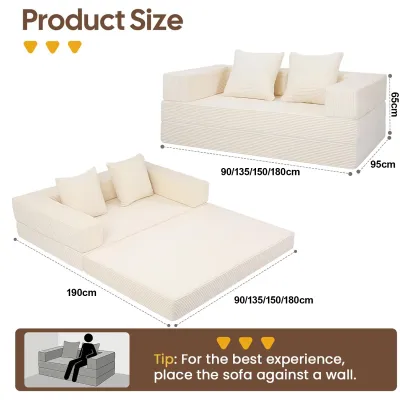

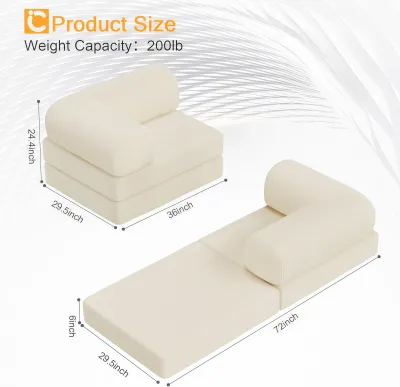

Prices are valid at publication and may change. Please refer to the product page for the latest price.
To calculate the maximum allowable footprint for your sofa bed in its folded position, measure the length of the wall where the sofa will rest. If your designated sofa wall is 250 centimeters long, a sofa bed with a folded width of 150 centimeters is highly suitable, leaving 100 centimeters of breathing room for a side table. Next, measure the depth from the wall to the center of the room. A folded depth of 80 to 90 centimeters is ideal, as it leaves ample space for a central walkway and a low-profile entertainment console on the opposite wall.
Check Folded and Unfolded Space Requirements
While a 4-fold sofa bed is compact, its footprint changes dramatically when transitioned from a seat to a bed. Evaluate both states to ensure the furniture remains functional. Folded widths vary significantly by manufacturer and mechanism. A single sleeper chair might measure 80 to 90 centimeters wide, whereas a double or queen equivalent can span 150 centimeters or more. Compare these widths against your calculated maximum footprint to ensure the unit does not overlap with switches, outlets, or doors.

The unfolded length is where many condo owners run into spatial conflicts. When fully extended, a typical 4-fold mattress reaches a length of 180 to 190 centimeters. However, you must also account for the thickness of the sofa’s backrest or frame, which can add another 10 to 20 centimeters to the overall depth. This brings the total extended length to approximately 200 to 210 centimeters. To ensure safety and comfort, measure the distance from the back wall to the opposite furniture pieces, ensuring that at least 60 centimeters of front clearance remains at the foot of the bed when it is fully opened. This space is essential for getting in and out of bed safely without hitting walls or tripping over the TV console.
Additionally, consider the physical swing or pull space required to operate the folding mechanism. Some 4-fold designs unfold directly onto the floor with simple fabric hinges, while others utilize a pull-out metal frame or a click-clack mechanism that requires the backrest to tilt backward before laying flat. If the mechanism requires you to pull the sofa away from the wall every time you convert it, the daily hassle can quickly become frustrating. Always consult the specific product manual or manufacturer specifications to verify the exact operational clearances required for smooth transition.
Optimize Furniture Layout and Traffic Flow
Maximizing a 20 square meter condo living room requires strategic furniture placement. Positioning the sofa bed against the longest uninterrupted wall is the most effective way to centralize open floor space. This layout creates a clear sightline from the entryway, making a compact room feel larger and more inviting. It also provides a stable backing, enhancing comfort when sitting or sleeping.
When planning the layout, pay close attention to the unique architectural features of your condo. In tropical climates like the Philippines, living rooms often feature sliding glass doors leading to a balcony or large windows designed to maximize natural light. Never position the sofa bed where it blocks these doors or restricts access to emergency exits. Furthermore, consider the placement of your split-type air conditioning unit. Avoid placing the bed directly under the heavy draft of the air conditioner, as this can cause discomfort during sleep. Ensure that the unfolded bed does not block the airflow or prevent you from accessing the air filter for regular cleaning.
To keep the room feeling open, pair your 4-fold sofa bed with space-saving furniture alternatives. Instead of a heavy, solid wood coffee table that is difficult to move, opt for lightweight nesting tables that can be easily stacked and tucked into a corner when the bed is unfolded. C-shaped tables that slide over the arm of the sofa are another excellent choice, providing a convenient surface for drinks or laptops without occupying valuable floor space. Wall-mounted shelves and floating entertainment consoles can also replace bulky floor-standing furniture, keeping the ground clear and making the room easier to sweep and maintain.
Verify Delivery Access and Installation Clearances
Before purchasing, verify that the sofa bed can actually reach your living room. Many condo residents experience the frustration of buying furniture only to find it cannot fit through the service elevator or front door. Measure the height, width, and diagonal clearance of all entry points, including corridors, stairwells, and door frames. Compare these with the boxed dimensions provided by the retailer to ensure a hassle-free delivery.
Once inside the unit, check the specific installation clearances along the designated wall. Floor skirting and baseboard thickness can prevent the sofa frame from sitting completely flush against the wall, potentially stealing a few centimeters of space and altering your layout calculations. Take note of wall socket and light switch placements as well. A sofa that blocks a crucial power outlet can limit your ability to plug in phone chargers, reading lights, or the sofa bed’s electronic components if it features built-in USB ports.
Finally, protect your condo’s flooring from potential damage. Many modern condos feature laminate, vinyl, or engineered wood flooring, which can easily scratch under the weight of a heavy sofa bed frame. Check the design of the sofa’s legs or support feet. If the folding mechanism relies on rolling casters, ensure they are made of non-marking rubber or polyurethane rather than hard plastic. Plan to install heavy-duty felt pads or rubber protectors on all contact points to distribute the weight evenly and prevent unsightly scuffs when converting the sofa into a bed.
Frequently Asked Questions (FAQ)
What mattress thickness is ideal for a 4-fold sofa bed in a small space?
For a 4-fold sofa bed in a compact condo, a mattress thickness of 8 to 10 centimeters is ideal. This thickness balances sleeping support and folded practicality. While a thicker mattress (12 to 15 centimeters) seems appealing, it significantly increases the folded bulk. A mattress that is too thick results in an awkwardly high seating height or an excessively deep seat cushion, crowding a small 20 square meter room and reducing daily comfort.
Rather than assuming standard mattress sizes will fit your space, always check the manufacturer’s specified folded dimensions. A thicker mattress requires more fabric and structural support, which can alter the sofa’s overall proportions and footprint. Before making a decision, test the folding mechanism in-store or review the user manual online. Ensure that the mattress compresses smoothly without putting excessive strain on the hinges, joints, or fabric covers, as forcing a thick mattress into a tight fold can damage the internal frame over time.

Community discussion
Share your experience or ask a question. Comments are reviewed before publication.