
To fit a 20 sqm condo living room comfortably, a wooden sofa bed should have a sofa width of 120 cm to 150 cm (ideally a 2-seater loveseat) and a depth of no more than 85 cm. When converted into a bed, the total extended length should stay under 190 cm to 200 cm, leaving at least 60 cm of open walkway space. Selecting a versatile sofabed wood frame requires balancing these physical dimensions with visual weight to keep your limited floor area open, functional, and breezy.
Space Allocation Rules for a 20 Sqm Living Room
In many condominium developments, a 20 square meter unit is a compact studio or a cozy one-bedroom layout. While 20 square meters represents the total floor area, the actual usable living room space is significantly smaller. Structural columns, protruding corner beams, entryway hallways, and sliding balcony doors immediately carve up the floor plan, often leaving only 8 to 10 square meters of dedicated space for your living and entertainment zone.
To maintain a balanced, uncrowded layout, interior design guidelines suggest that large seating pieces should not occupy more than 25% to 30% of your usable living room floor area. For a typical 10 square meter living zone, your seating footprint should ideally remain under 2.5 to 3 square meters. Exceeding this ratio quickly makes the room feel cramped, restricting physical movement and disrupting the visual flow of the space.
Products mentioned in this guide
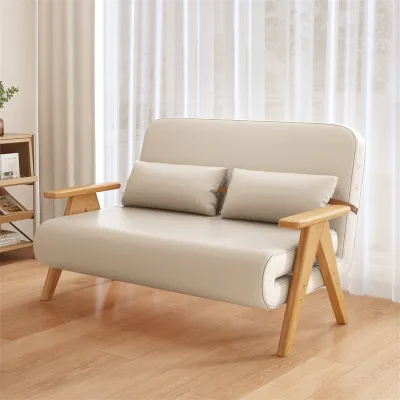
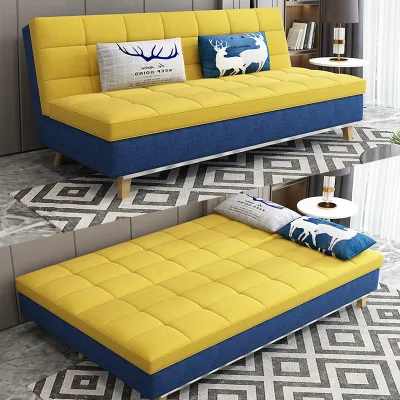
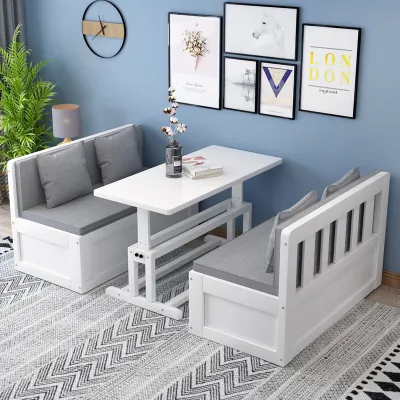
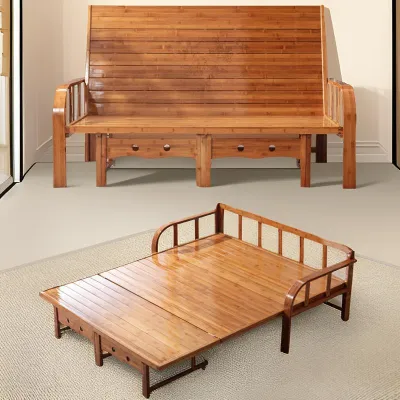
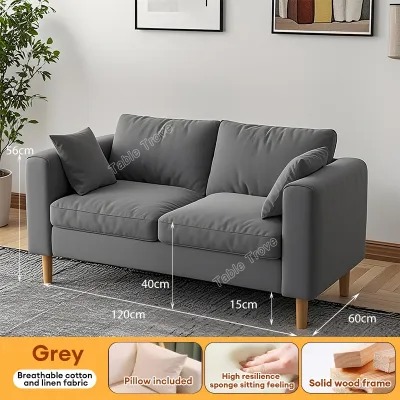


Prices are valid at publication and may change. Please refer to the product page for the latest price.
The material choice also plays a major role in how large the furniture feels. Solid wood frames, while beautiful and durable, carry significantly more visual weight than slim metal frames or low-profile upholstered sofas. A chunky, dark wooden frame can easily dominate a small room, making it feel heavy and closed-in. To counteract this, look for slatted wooden designs, open armrests, or tapered legs that allow light and air to pass through, creating a sense of spaciousness.
Before purchasing any furniture, map out your specific 20 sqm layout on paper or using painter’s tape on the floor. Identify your primary focal point, which is typically the TV wall or a scenic window, and establish your secondary zones, such as a dining nook or a small work-from-home desk. This mapping exercise ensures that your sofa bed coordinates with other essential pieces without overlapping their dedicated functional zones.
Recommended Sofabed Wood Frame Sizes
When shopping for a compact condo living room, a compact double (full-size) or a generous single (twin-size) wooden sofa bed offers the most practical balance of seating and sleeping space. These sizes provide comfortable accommodations for guests or daily lounging without completely swallowing your limited floor area.

To ensure a successful fit, you must evaluate the furniture in both its folded sofa configuration and its fully extended bed configuration, as each state demands different spatial clearances.
Sofa Mode: Width and Depth Limits
For a 20 sqm condo, the ideal width range for a wooden sofa bed is 120 cm to 150 cm, which comfortably accommodates two adults as a loveseat. If your layout features a long, uninterrupted wall, you might stretch the width to a compact 3-seater range of 160 cm to 180 cm, but this should be the absolute limit to avoid crowding adjacent walkways or dining areas.
Depth is often the trickiest dimension to manage with wooden frames. Standard fabric sofas often have flexible, compressed backs, but wooden armrests and thick wooden bases add substantial, unyielding depth. A frame depth of 80 cm to 85 cm is ideal; anything exceeding 90 cm will protrude too far into the center of your living room, narrowing your main walkway. To save depth, look for low-profile wooden arms, thin slatted sides, or frameless wooden futon styles that minimize unnecessary bulk.
When choosing a wooden frame, also verify its load capacity and joint construction. High-quality mortise-and-tenon joints provide superior stability over simple screws, ensuring the frame can handle the daily transition from seating to sleeping without wobbling.
Always measure your designated wall length carefully and subtract at least 30 cm of clearance on either side before comparing it to product width specifications. This prevents the wooden frame from pressing tightly against corner walls, light switches, or electrical outlets.
Additionally, verify the exact seat depth and backrest angle from the manufacturer’s labels. An upright wooden backrest saves valuable floor space, but it can feel stiff; you may need to budget space for plush, supportive accent pillows to ensure comfortable daily seating.
Bed Mode: Length and Unfolded Clearance
When fully converted into a sleeping surface, standard single or double wooden sofa beds typically require an unfolded length of 180 cm to 190 cm. However, when you factor in the thick wooden headboard, frame overhangs, and mechanical hinges, the total deployed length can easily reach 200 cm to 210 cm.
The type of folding mechanism directly dictates how much floor space is consumed during transition. Pull-out styles featuring built-in wooden under-bed drawers are excellent for storage but require completely clear floor space directly in front of the sofa to roll out smoothly. Click-clack mechanisms are incredibly easy to operate, but they often require 10 cm to 15 cm of clearance behind the frame to allow the backrest to drop down, meaning the sofa cannot sit flush against your wall. Bi-fold designs fold out forward in stages, requiring a long, unobstructed path.
To prevent layout issues, calculate the total deployed length of the frame rather than relying solely on the mattress dimensions listed on the product tag. The wooden frame’s outer boundaries are what will ultimately interact with your walls and other furniture.
Ensure that you maintain at least 60 cm of open space at the foot of the extended bed. This clearance allows a person to get in and out of bed comfortably without having to squeeze past walls or awkwardly step over a coffee table.
Essential Clearances and Delivery Measurements
Maintaining comfortable walkways is the secret to making a small condo feel spacious and liveable. In a 20 sqm layout, try to preserve at least 60 cm to 90 cm of clear path around the wooden sofa bed when it is in sofa mode. This ensures that household members can walk through the living room without bumping into corners or having to turn sideways.
Pay close attention to the “swing zones” of your condo’s doors and windows. In the Philippines, many condos feature sliding or swing-out balcony doors that provide essential ventilation. Placing a bulky wooden sofa bed in a position that blocks these doors not only restricts natural airflow—which is vital in our warm, humid climate—but also creates a safety hazard in the event of an emergency.
Delivery logistics are a frequently overlooked hurdle when purchasing solid wooden furniture. Unlike flat-packed particle board items, high-quality wooden sofa beds often feature heavy, solid-wood frames that may arrive fully assembled or in large, non-detachable sections. Before making a purchase, measure the width of your condo’s main entry door, the clearance of hallway corners, and the interior dimensions of the building’s elevator.
Many high-rise condominium developments in Metro Manila have strict cargo elevator dimensions and scheduling policies. If the wooden frame cannot be disassembled and exceeds the elevator’s ceiling height (typically 210 cm to 240 cm), you may face the exhausting task of carrying a heavy wooden frame up narrow emergency stairwells. Always check your building administration’s moving-in guidelines and verify the product’s shipping box dimensions beforehand.
Space-Saving Furniture Pairings
To maximize the functionality of your 20 sqm living room, pair your wooden sofa bed with lightweight, flexible furniture that can be easily rearranged. Avoid large, heavy, stationary center coffee tables that block the path of an unfolding bed. Instead, choose nesting tables or C-shaped side tables that slide neatly over the wooden armrests, providing a convenient surface for drinks or laptops without taking up valuable floor space.
Another excellent alternative is a lightweight upholstered ottoman paired with a removable wooden tray. This piece can serve as a footrest, extra seating for guests, or a coffee table, and it can be effortlessly pushed into a corner when it is time to unfold the sofa bed for the night.
To keep the floor area opposite your sofa bed as open as possible, swap out bulky, floor-standing TV consoles for wall-mounted shelves or floating media consoles. Elevating your storage off the ground creates the visual illusion of a larger room by exposing more of the floor tiles, while still providing plenty of space for media players and decorative items.
If you want to add a side table, select multi-functional wooden designs that match the sofa bed’s wood finish. Utilizing cohesive wood tones—such as matching rubberwood, ash, or light oak—creates a unified visual flow that prevents the small room from looking cluttered or chaotic.
When choosing a rug, size it carefully to avoid mechanical interference. A massive rug that sits under the entire sofa bed can bunch up, jam rolling wheels, or get caught in folding hinges. Instead, select a smaller accent rug that sits just under the front legs of the sofa, leaving the unfolding path completely clear so the bed can transition smoothly.
Common Sizing Mistakes to Avoid
One of the most common sizing errors is measuring only the mattress dimensions and ignoring the extra bulk of the wooden frame. A standard “double” mattress may measure 137 cm in width, but the thick wooden armrests, decorative side panels, and mechanical hinges can easily push the total product width past 160 cm. Always base your layout planning on the outer frame dimensions.
Another frequent mistake is forgetting to account for the clearance required by the folding mechanism. If you purchase a click-clack style wooden sofa bed and push it flush against your living room wall, you will have to physically drag the heavy wooden frame forward every single time you want to convert it into a bed, which can scratch your floors and strain your back.
In tropical climates like the Philippines, placing a high-backed wooden sofa bed directly in front of balcony sliding doors or low windows is a major design mistake. This blocks natural light and restricts critical cross-ventilation, leading to a stuffy living space and increasing the risk of moisture buildup, which can damage the wood’s finish over time.
While many local sellers advertise mahogany or acacia as naturally moisture-resistant, a material name alone does not guarantee durability against high humidity. Always inspect the protective finish, check the quality of the joints, and follow the manufacturer’s care instructions to prevent warping in a tropical environment.
Finally, avoid choosing dark, heavy wood finishes (such as dark mahogany, charcoal, or wenge) for an oversized frame in a small room. Dark, solid blocks of furniture visually shrink a 20 sqm space, making it feel dark and restrictive. Instead, opt for lighter wood tones like natural rubberwood, beech, or light oak, and look for slatted wooden designs that allow light to pass through, keeping your condo feeling bright, airy, and open.
Community discussion
Share your experience or ask a question. Comments are reviewed before publication.