
Choosing between an inflatable and a compressible foam camping pillow for hammock sleeping depends on how you balance pack space against physical comfort. In a suspended hammock, your body naturally curves, which alters how your neck and head align compared to sleeping on a flat ground pad. While inflatable pillows offer excellent packability and adjustable firmness, compressible foam pillows provide consistent contouring and a more natural, bed-like feel that resists shifting under your head.
For tropical environments like the Philippines, where high humidity and warm nights are common, your choice also affects how well your gear manages sweat and moisture. Understanding how these two pillow types behave in a suspended sleep system will help you avoid waking up with a stiff neck or dealing with damp, moldy gear after a weekend in the mountains or by the beach.
Comfort and Neck Support in a Suspended Sleep Position
Sleeping in a hammock creates a unique ergonomic challenge because the fabric wraps around your body, naturally elevating your head and shoulders. This curved position means you generally need a thinner pillow than you would on a flat mattress to prevent your chin from being pushed too far forward toward your chest.
Products mentioned in this guide
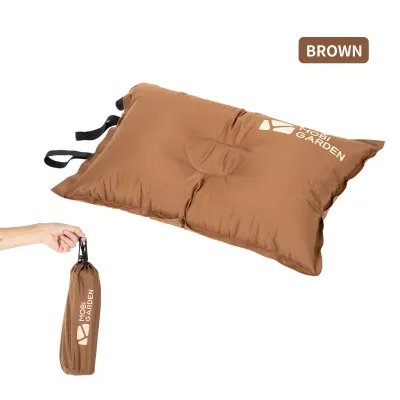
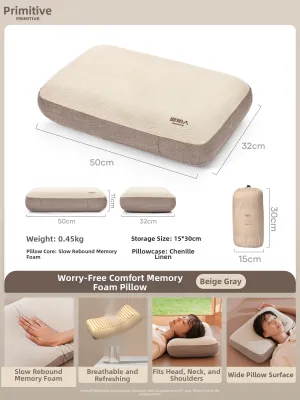
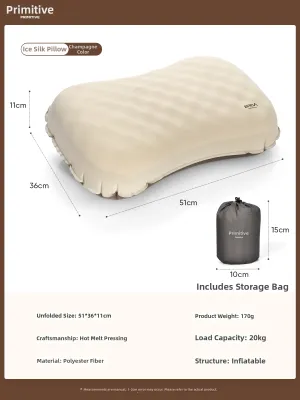
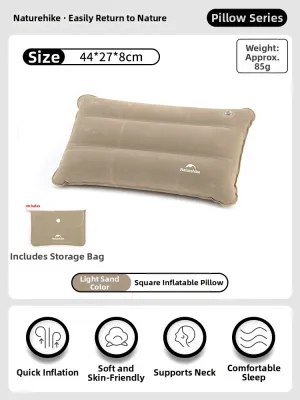
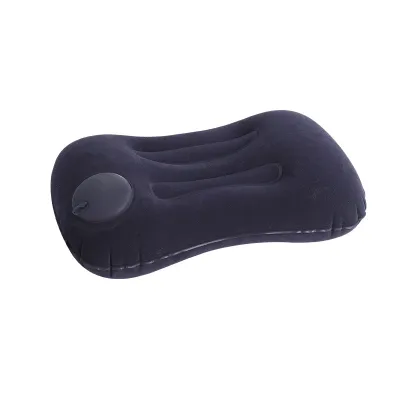
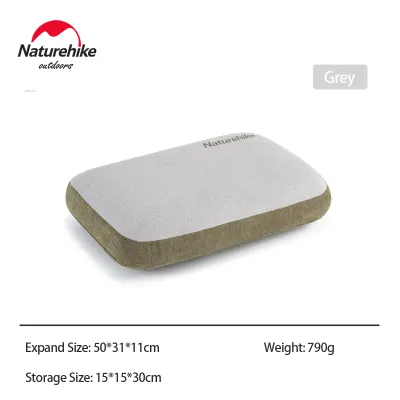
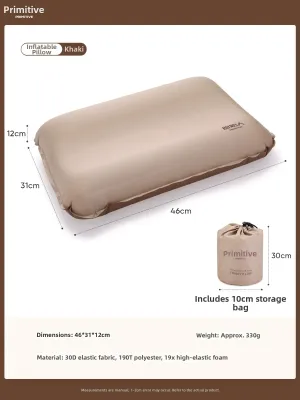
Prices are valid at publication and may change. Please refer to the product page for the latest price.
Inflatable pillows rely on pressurized air to create loft, which can sometimes feel stiff or bouncy in a hammock. As you shift your weight during the night, the air inside the bladder moves to the areas of least resistance, which can cause your head to roll off the center or create a hard dome effect. If you inflate the pillow fully, it may feel too firm and push your neck into an unnatural angle; however, under-inflating it to soften the feel can sometimes lead to bottoming out, where your head presses completely through the air chamber to touch the taut hammock fabric.
Compressible foam pillows, on the other hand, utilize shredded or solid open-cell foam that compresses under pressure and contours directly to the shape of your head and neck. This material provides consistent loft and support because the physical foam structure does not shift or displace like air does. The foam naturally fills the small gap between your neck and the curved hammock wall, offering a stable, cushioned cradle that requires very little manual adjustment throughout the night.
Adjustability is where the two designs diverge significantly. With an inflatable pillow, you can easily customize the firmness and height by releasing a small amount of air through the valve until you find the right level of support. Compressible foam pillows have a fixed amount of filling, meaning their thickness and firmness are predetermined by the manufacturer; you must rely on the physical compression of the foam itself to adapt to your sleeping posture.
Packability, Weight, and Camp Setup Effort
When hiking to a remote campsite or packing for a multi-day trek, every square centimeter of backpack space and every gram of weight matters. Inflatable pillows are highly efficient in packability, often compressing down to the size of a small soda can or even a pack of cards. They weigh very little, making them an excellent choice for ultralight backpackers who prioritize keeping their base weight as low as possible.

Compressible foam pillows are inherently bulkier and heavier because the foam material cannot be deflated. Even when compressed tightly into a stuff sack, a foam pillow will still occupy a noticeable amount of space in your pack, often comparable to a small sleeping bag or a lightweight jacket. For those with limited pack volume, carrying a foam pillow might require strapping it to the outside of the pack or sacrificing space that would otherwise go to food or extra clothing.
The effort required to set up and pack away your camp also differs between these two styles. An inflatable pillow requires you to manually blow air into the valve before use, which can be a minor chore after a long day of hiking, and you must carefully squeeze all the air out to pack it away. A compressible foam pillow offers instant readiness: you simply pull it out of its stuff sack, shake it to let the foam expand, and it is ready for your hammock. Packing it up requires rolling or stuffing the foam back into its sack, which requires some physical effort but eliminates the need to manage air valves.
Durability and Moisture Management in Outdoor Conditions
The tropical climate of the Philippines introduces specific challenges for outdoor gear, particularly regarding humidity, rain, and perspiration. Inflatable pillows feature an internal airtight bladder, usually made of thermoplastic polyurethane (TPU) or laminated fabric. While these materials are durable, they are susceptible to punctures from sharp objects, such as stray twigs, thorns, or even zippers on your sleeping bag or hammock suspension. Before placing an inflatable pillow in your hammock, you must carefully inspect the interior space for any debris that could pierce the bladder and leave you without support in the middle of the night.
Moisture management is another critical factor. Inflatable pillows do not absorb moisture internally, but their synthetic outer fabrics can feel sticky against your skin on warm, humid nights. It is important to check the product label for a breathable, moisture-wicking cover that can be removed and washed.
Compressible foam pillows act like sponges, meaning they can easily absorb sweat, ambient humidity, and condensation. If a foam pillow gets wet during a sudden tropical downpour or from high humidity, it can take a long time to dry completely. To prevent mold, mildew, and unpleasant odors, you must verify that the pillow features a quick-drying, breathable cover and follow the manufacturer’s care instructions for washing and drying. Regularly airing out a foam pillow in the sun after a trip is essential for maintaining hygiene and preserving the integrity of the foam.
Side-by-Side Feature Comparison
To help you evaluate your options, the following table outlines the key practical differences between these two pillow types when used in a hammock setup.
| Feature | Inflatable Pillows | Compressible Foam Pillows |
|---|---|---|
| Loft Consistency | Can feel bouncy; air may shift under head | Consistent, stable cushioning that contours to neck |
| Packed Size | Extremely compact; fits in a pocket | Bulkier; occupies significant pack space |
| Setup Time | Requires manual inflation and valve adjustment | Instant expansion upon unpacking |
| Weight | Ultralight; minimal impact on gear load | Heavier; depends on foam density and volume |
| Firmness Adjustability | Highly adjustable via air valve | Fixed; relies on natural foam compression |
| Moisture Risk | Non-absorbent bladder; cover requires washing | High absorption; requires thorough drying to prevent mold |
Decision Framework: Which Pillow Fits Your Hammock Setup?
To make your final decision, consider your primary camping style, your gear capacity, and how your body responds to different sleeping surfaces.
Choose an inflatable pillow if you prioritize keeping your backpack as light and compact as possible. This option is ideal for long-distance hikers, motorcycle campers, or anyone using a smaller pack who needs to conserve space. It is also the better choice if you prefer a highly adjustable sleeping surface and want the ability to fine-tune the firmness of your pillow throughout the night.
Choose a compressible foam pillow if your primary goal is camp comfort and you do not mind carrying a slightly heavier, bulkier pack. This style is well-suited for car camping, short trail walks, or backyard hammock setups where pack space is not a limiting factor. It is also highly recommended for sleepers who are sensitive to neck stiffness and prefer the familiar, contouring support of a traditional bed pillow.
Before making a purchase, always verify the dimensions of your hammock and your personal sleeping posture. A pillow that is too wide may push against the sides of a narrow single hammock, causing it to pop out or bunch up uncomfortably. Additionally, check the weight limits of your suspension system to ensure your total gear weight remains within safe operating limits.
Frequently Asked Questions (FAQ)
How do I keep my camping pillow from slipping in a hammock?
Hammock fabrics, particularly nylon and polyester, are naturally slick, which can cause your pillow to slide upward and out from under your head as you move. To prevent this, look for a camping pillow that features a textured, non-slip backing or integrated silicone grip dots on the underside. Alternatively, you can place the pillow inside the hood of your sleeping bag, or use a lightweight pillowcase made of a less slippery fabric like cotton or brushed polyester to increase friction against the hammock wall.
Can I just use a regular bed pillow for hammock camping?
While a standard household pillow offers excellent comfort, it is generally impractical for outdoor hammock camping. Regular pillows are bulky, difficult to compress, and take up an excessive amount of space in your travel gear. Furthermore, household pillows are typically filled with materials that absorb moisture rapidly and dry very slowly, making them highly susceptible to dampness, mold, and outdoor odors when exposed to humid tropical air.
Community discussion
Share your experience or ask a question. Comments are reviewed before publication.