
A 160-liter storage box can be an exceptionally practical asset for your lipat bahay, but it is rarely a standalone solution for an entire household move. Its suitability depends entirely on what you plan to pack and how you intend to transport it. While the massive volume is tempting for consolidating your belongings, using a box of this size requires a strategic approach to avoid packing hazards, broken items, or physical strain.
To determine if this size fits your moving needs, you must balance its generous volume against the physical realities of lifting, stacking, and transporting large containers. For most households, a 160-liter box serves best as a specialized container for bulky, lightweight goods rather than a general-purpose moving crate. Integrating this large capacity into a mixed-box strategy is the key to a smooth, damage-free transition to your new home.
Understanding the Capacity of a 160-Liter Storage Box
When shopping for moving supplies, seeing a label for a “160-liter storage box” can be misleading if you only focus on the number. This measurement represents the internal volume of the container, equivalent to the amount of liquid it could theoretically hold. It does not represent the external footprint or the actual shape of the space you have available to pack your belongings.
Products mentioned in this guide
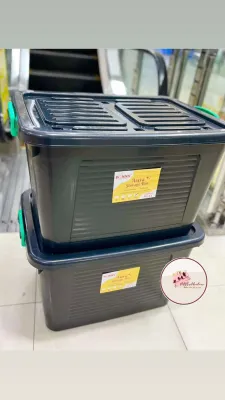
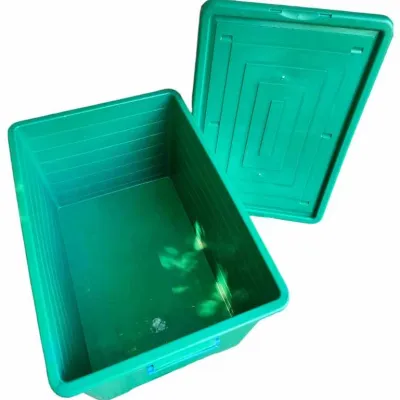
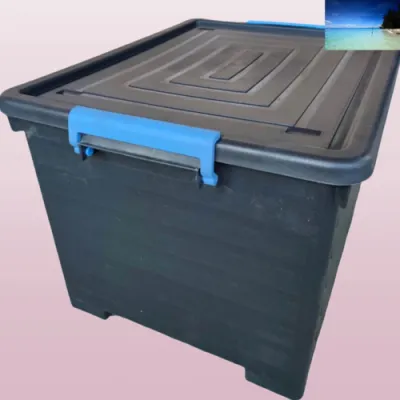
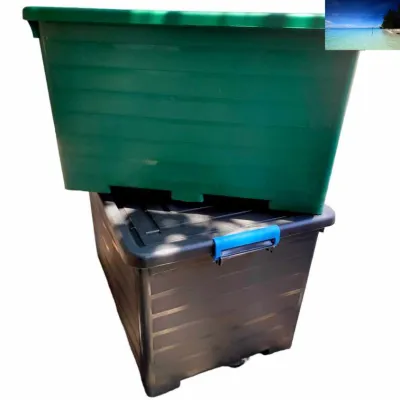
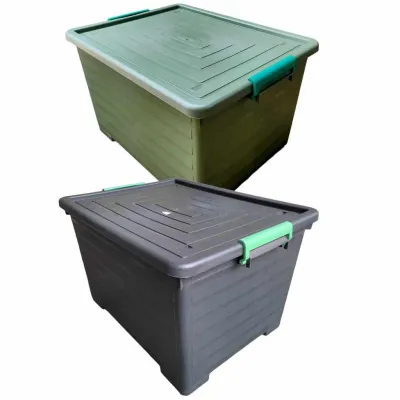
Prices are valid at publication and may change. Please refer to the product page for the latest price.
Before purchasing, always check the manufacturer’s external dimensions, typically listed in centimeters or inches as length, width, and height. A 160-liter plastic container is physically large and will occupy a significant amount of floor space in your home, the moving vehicle, and your destination. Knowing these dimensions helps you visualize whether the box can sit comfortably in a room during the packing phase without blocking essential walkways.
Additionally, you must distinguish between gross capacity and usable capacity. Many heavy-duty plastic storage boxes feature tapered walls that are wider at the top than at the bottom, which helps with nesting when empty but reduces the usable space for rigid, rectangular items. Recessed lids, molded handles, and internal structural reinforcements also eat into the actual packing space. When planning your packing layout, assume you will lose a small percentage of the advertised volume to these design features.
What Items Fit Best in a 160L Box for Moving
The golden rule of using a 160-liter storage box is to reserve it for bulky, low-density items. In a tropical climate, households often accumulate large volumes of fabric-based goods that require protection from dust, humidity, and pests during a move. This container size is ideal for packing thick comforters, bedsheets, pillows, mosquito nets, curtains, and seasonal clothing. It is also excellent for storing large stuffed toys, cushions, and lightweight plastic kitchenware.

Conversely, you must strictly avoid packing dense or heavy objects in a container of this size. Filling a 160-liter box with books, school binders, canned food, heavy tools, or ceramic tableware is a recipe for disaster. The cumulative weight of these items will quickly exceed the structural load capacity of the plastic, causing the bottom to bow, the handles to snap, or the lid to crack under pressure. More importantly, an overloaded box becomes a severe safety hazard, making it nearly impossible for you or your movers to lift and carry safely down stairs.
A successful packing strategy relies on weight distribution. Use smaller, heavy-duty cardboard boxes or compact plastic crates for your heaviest possessions. By keeping your dense items in small containers and dedicating your 160-liter boxes exclusively to high-volume, lightweight goods, you ensure that every package remains manageable and safe to handle throughout the moving day.
Estimating How Many 160L Boxes You Need
Calculating the exact number of large containers required for a move prevents unnecessary spending and reduces clutter in your living space. Instead of guessing, conduct a room-by-room assessment of your bulky items. Walk through your bedrooms and living areas, noting the volume of your closets, bedding sets, and soft furnishings. If you have multiple bedrooms with thick mattresses and extensive wardrobes, you may find that two to three 160-liter boxes are sufficient to house these lightweight essentials.
However, relying solely on 160-liter boxes is highly impractical. A successful lipat bahay requires a “mix and match” approach to packing materials. A balanced inventory typically consists of a few large 160-liter containers for textiles, a larger number of medium-sized boxes (around 50 to 70 liters) for general household items, and several small boxes for heavy or fragile goods. This variety allows you to pack efficiently without leaving empty, wasted space in your containers.
To streamline this process, create a basic inventory checklist before purchasing your packing supplies. Group your belongings by category and weight, then map them to the appropriate box sizes. This systematic preparation ensures you buy only what you need, saving you money on packing materials and making the loading process much more organized for your moving crew.
Physical Handling and Space Constraints
Before committing to multiple 160-liter storage boxes, you must evaluate the physical pathways they will travel. Measure the width of your doorways, the clearance of your stairwells, and the interior dimensions of any elevators in both your current and future residences. A large plastic box can easily become wedged in tight apartment hallways or narrow staircases, especially in high-density urban residential areas where space is at a premium.
Transport vehicle compatibility is another critical factor. Whether you are hiring a utility truck, a closed van, or using a smaller local transport option, you must verify that the external dimensions of your stacked boxes will fit within the cargo area. Measure the height of the vehicle’s opening to ensure you can load and unload the boxes without having to tilt them excessively, which could shift the contents inside and cause damage.
Finally, pay close attention to stacking and structural limits. When loading the moving vehicle, place heavier, more rigid containers on the bottom and stack your lighter 160-liter boxes on top. Check the manufacturer’s guidelines to see how many units can be safely stacked when fully loaded. Avoid over-tightening ratchet straps or ropes directly across the plastic lids, as the tension combined with the vibrations of the road can easily crack the plastic, exposing your belongings to dust or sudden tropical rain.
Frequently Asked Questions (FAQ)
Can I use a 160-liter storage box for fragile items?
Using a 160-liter storage box for fragile items is generally not recommended. The massive internal volume of a large box encourages the packing of too many items together, which increases the risk of shifting and colliding during transit. Furthermore, the lack of internal structural dividers means that delicate glassware, ceramics, or electronics can easily be crushed under the weight of other items inside the same box. For fragile belongings, it is much safer to use smaller, specialized boxes with built-in dividers and ample bubble wrap or packing paper to prevent movement.
Are 160L boxes with wheels better for moving?
While 160-liter storage boxes equipped with wheels offer convenience on smooth, flat surfaces like tiled floors or concrete driveways, they present distinct disadvantages during a move. The wheel assemblies often protrude from the base, increasing the external footprint and making the boxes more difficult to stack securely inside a moving truck. Additionally, budget-friendly plastic wheels can easily snap off when rolling over rough pavement, gravel, or steps. If you choose a wheeled model, verify the durability of the wheel mechanism and ensure they can be locked or nested securely to prevent the box from rolling around inside the transport vehicle.
Community discussion
Share your experience or ask a question. Comments are reviewed before publication.