
Deciding between a compact 4-seater rattan dining set and a larger, extendable table that accommodates 6 to 10 guests comes down to balancing your daily lifestyle with your hosting aspirations. While a fixed four-seater offers a cozy, space-saving footprint ideal for everyday family meals, an extendable table provides the ultimate flexibility for larger gatherings without permanently crowding your dining room. In tropical homes where natural ventilation and open-air aesthetics are highly valued, rattan-style furniture brings a light, breezy feel, but choosing the wrong configuration can lead to cramped walkways or underutilized space.
To make the right investment, you must evaluate how your household actually uses the dining area on a daily basis versus how often you entertain. A dining table is more than just a place to eat; it is a central hub for work, study, and family connection. By analyzing your space, comparing structural designs, and understanding the maintenance needs of rattan materials, you can select a dining set that serves your home beautifully for years to come.
Assess Your Daily and Occasional Seating Needs
Establishing a baseline for your dining table starts with counting your daily household members. If your immediate family consists of two to four people, a standard 4-seater rattan dining table set 4 is highly efficient. It accommodates daily breakfasts, quick lunches, and casual dinners without taking up unnecessary floor space. Consider your regular routines: do you all eat together at the same time, or do household members have staggered schedules? If the table is rarely fully occupied during the week, a compact set is often the most practical choice.
Products mentioned in this guide
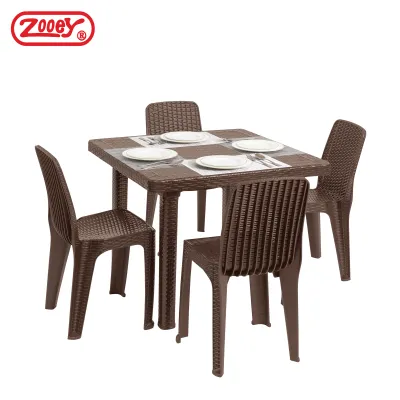
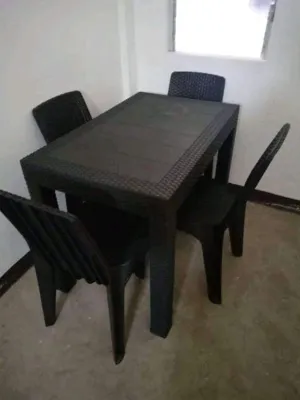
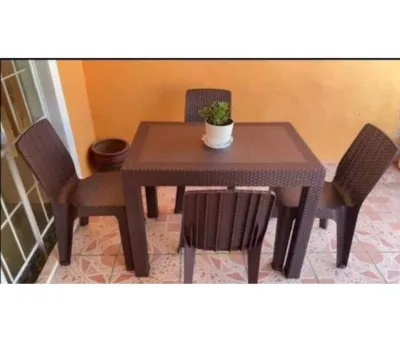
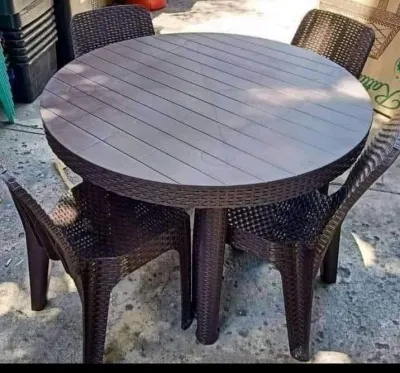
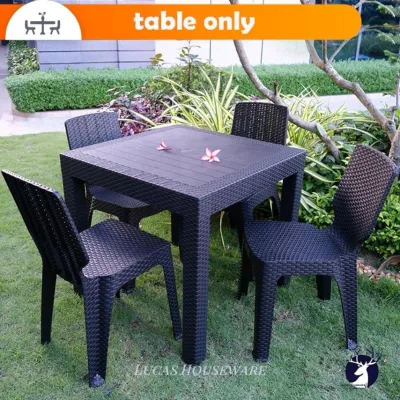

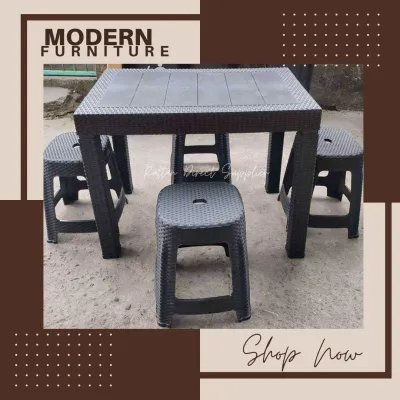
Prices are valid at publication and may change. Please refer to the product page for the latest price.
However, daily use is only one part of the equation. You must also estimate the frequency and typical size of your social gatherings. In the Philippines, weekend family lunches, holiday feasts, and casual get-togethers with friends are common traditions. If you host these events once a month or more, a fixed four-seater can quickly feel restrictive, forcing guests to eat in shifts or balance plates on their laps. If hosting is a core part of your lifestyle, a table that expands to seat 6 to 10 people becomes highly desirable.
If you only host large groups once or twice a year, you might not need a permanently large table. Instead, consider alternative seating arrangements for occasional overflow. Nesting stools, folding chairs, or nearby living room seating can easily be brought into the dining area when extra guests arrive. If you have a nearby kitchen island with bar stools or an outdoor patio set, you can distribute guests across different zones rather than trying to fit everyone around a single dining table.
Evaluate Your Dining Space and Layout Constraints
Before committing to any furniture purchase, you must measure your dining room to ensure a comfortable fit. As a general rule of thumb, you need at least 90 centimeters of clearance between the edge of the table and the nearest wall or piece of furniture. This clearance allows diners to pull out their chairs and sit down comfortably, and it leaves enough room for others to walk behind them. For an extendable table, you must calculate this clearance for both the collapsed state and the fully extended state to avoid blocking essential pathways.

Access constraints are another critical factor that buyers often overlook. A larger extendable table is typically heavier and bulkier than a fixed four-seater. Before ordering, check the dimensions of your doorways, hallways, staircases, and condominium elevators. Ensure that the delivery team can safely navigate these spaces to bring the table into your home. If your dining room is located on an upper floor with tight stairwells, a modular or easy-to-assemble set may be necessary.
Finally, account for the other furniture pieces in your dining area. Display cabinets, sideboards, buffet tables, and room dividers all compete for floor space. A fully extended table must not block access to these items or prevent cabinet doors and drawers from opening fully. If your dining room is multi-functional—perhaps doubling as a home office or a study area—ensuring that the table can easily transition between its compact and extended forms without disrupting the rest of the room is essential.
Compare Fixed 4-Seater and Extendable Rattan Dining Tables
When comparing fixed and extendable rattan dining tables, structural design and material quality are paramount. Rattan furniture relies on an underlying frame for support, which is typically constructed from solid wood, aluminum, or steel. For a fixed 4-seater, the frame is straightforward and highly stable. For an extendable table, however, the frame must accommodate moving parts. You must verify the stability of the extension tracks and joints; high-quality metal glides or sturdy wooden slides are necessary to support the extra weight of the extended sections without sagging.
Tabletop durability and maintenance also differ significantly between these two configurations. A fixed rattan table often features a continuous woven surface, sometimes protected by a sheet of tempered glass. Extendable tables, on the other hand, require split tops or removable leaves. These leaves may be made of solid wood, engineered panels, or glass inserts. When sliding or folding these leaves, there is a risk of pinching the rattan weave or scratching the finish. You should check the manufacturer’s instructions regarding weight limits and the proper storage of extension leaves to prevent warping in humid tropical climates.
Price and long-term value are also key differentiators. Fixed 4-seater rattan sets are generally more budget-friendly, typically ranging from ₱12,000 to ₱25,000 in local showrooms and online marketplaces. Extendable sets, due to their complex hardware and larger material requirements, represent a more significant investment, often ranging from ₱28,000 to ₱60,000 or more. While the initial cost of an extendable table is higher, it offers excellent long-term value if it eliminates the need to purchase secondary dining furniture or replace your set as your family grows.
Decision Guide: Which Table Configuration is Right for You?
To finalize your decision, match your household profile to one of the following conditional pathways:
- Choose the fixed 4-seater if: Your dining space is limited (such as in a typical city condominium), your daily household size is small, you rarely host large sit-down dinners, and you want to keep your initial budget low. This configuration maximizes your daily living space and is easy to move and maintain.
- Choose the extendable 6-10 seater if: You have a spacious dining room, you host regular family gatherings or dinner parties, you want a single versatile piece of furniture that adapts to different occasions, and you have the budget to invest in a high-quality mechanical frame. This option provides long-term flexibility as your lifestyle evolves.
- When to pause: If you have an unusually shaped dining room, tight architectural bottlenecks, or specific structural concerns regarding weight capacity, pause your search. It is wise to consult a furniture specialist or an interior designer for custom space planning or structural verification before making a final purchase.
Frequently Asked Questions (FAQ)
How do I maintain the rattan weave on an extendable table?
Maintaining the rattan weave on an extendable table requires regular, gentle cleaning to keep the mechanical parts functioning smoothly. Use a soft-bristled brush or a vacuum cleaner with a brush attachment to remove dust, crumbs, and debris from the weave, paying close attention to the seams where the table splits. Avoid using excess water or harsh chemical cleaners near the metal extension tracks, as moisture can cause rust or warp the wooden frame components. Always refer to the manufacturer’s specific care labels for material-safe cleaning guidelines.
Can I add matching chairs later if I start with a 4-seater set?
While it is possible to add matching chairs later, doing so carries some risks. Furniture manufacturers frequently update their product lines, meaning a specific rattan weave pattern or frame design may be discontinued. Additionally, natural rattan and synthetic weaves can exhibit slight color variations between different production batches (dye lots), making an exact match difficult to find later. To ensure a cohesive look, verify stock availability with the retailer or consider purchasing extra matching chairs upfront if your budget and storage space allow.
Community discussion
Share your experience or ask a question. Comments are reviewed before publication.