
A double deck bed frame with single bed dimensions is an excellent space-saving solution for growing families, but its suitability depends on your children’s developmental readiness, your room’s vertical clearance, and the frame’s structural integrity. In many homes, maximizing floor space for play, study, and storage is a priority, making a vertical sleeping arrangement highly attractive. However, before purchasing this furniture piece, you must evaluate specific safety milestones, physical room constraints, and long-term usability to ensure it is a safe and practical investment for your household.
Assessing Age and Safety Readiness for Bunk Beds
The transition to a double deck bed frame single bed setup is an exciting milestone, but safety must remain the primary consideration. Most manufacturers and international safety standards recommend that the top bunk be reserved exclusively for children aged six and older. This age threshold is based on developmental milestones, as younger children typically lack the coordination, balance, and spatial awareness required to safely climb up and down a ladder, especially when waking up disoriented in the middle of the night.
To assess your child’s readiness, observe their physical coordination in daily life. Consider how confidently they navigate playground climbing structures, household stairs, and uneven surfaces. If your child frequently trips, struggles with balance, or is an exceptionally active sleeper who tosses and turns, they are not yet ready for the top bunk. Nighttime habits are also critical; children who frequently wake up to use the restroom or are prone to sleepwalking should remain on the bottom bunk or a standard single bed.
Products mentioned in this guide
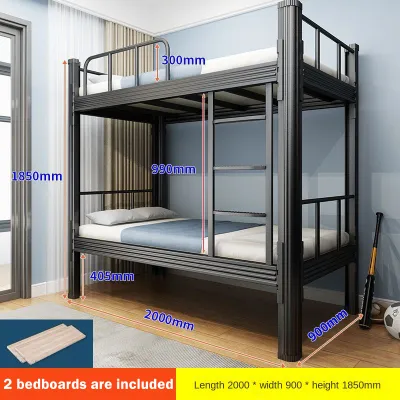

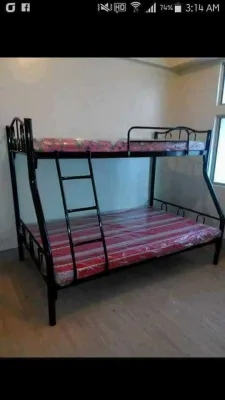
Prices are valid at publication and may change. Please refer to the product page for the latest price.
Behavioral readiness is just as vital as physical capability. Children must be mature enough to understand and consistently follow safety rules. This includes understanding that the top bunk is strictly for sleeping, not a play platform or a jumping pad. If your children still engage in rough play, pillow fights, or climbing on the outer frame of furniture, it is best to delay the purchase or keep them on separate single beds until they can demonstrate responsible behavior.
Evaluating Room Dimensions and Ceiling Clearance
Before purchasing a double deck bed frame single bed size, precise measurements of your children’s bedroom are essential to prevent physical hazards and ensure a comfortable living environment. Start by measuring the floor footprint. While a standard single mattress measures approximately 36 by 75 inches (90 by 190 centimeters), the actual bed frame will be slightly larger. You must account for the thickness of the headboard, footboard, and especially the ladder, which may angle outward and require additional floor clearance. Ensure there is ample space for walking, opening wardrobe doors, and pulling out study chairs without creating tight bottlenecks.

Vertical clearance is the most critical dimension when installing a double deck bed. Measure the height of your ceiling from the floor. To prevent painful head injuries, the child sleeping on the top bunk must have enough headroom to sit up straight comfortably without bumping their head. A safe guideline is to maintain at least 30 inches (approximately 76 centimeters) of open space between the top of the mattress and the ceiling. Remember to factor in the thickness of the mattress when calculating this clearance, as a thicker mattress will reduce the available headroom.
Additionally, conduct a thorough sweep of the room for potential overhead hazards. The top bunk must be positioned far away from ceiling fans, low-hanging light fixtures, air conditioning units, and wall-mounted shelves. It is also crucial to avoid placing the bed directly next to windows where children could reach window blind cords, curtain pull strings, or window screens, all of which present significant safety risks.
Verifying Structural Safety and Guardrail Specifications
When shopping for a double deck bed frame, structural integrity and safety features must take precedence over aesthetics. Begin your inspection with the guardrails on the top bunk. These rails must be continuous on all sides, with the only exception being the entry point for the ladder. To prevent a child from rolling out of bed, the top of the guardrail must sit at least 5 inches (about 13 centimeters) above the top surface of the mattress. Always verify the recommended mattress thickness for the specific frame, as using a mattress that is too thick will dangerously lower the effective height of the guardrails.
Examine the spacing between the guardrail slats and the frame itself. These gaps must be narrow enough to prevent a child’s head, torso, or limbs from slipping through and becoming trapped. The ladder must also be exceptionally stable. Avoid models with ladders that simply hook over the side of the frame; instead, look for ladders that bolt securely to the main structure. The steps should be wide, flat, and slip-resistant, providing a secure foothold for small feet, rather than narrow, round rungs that can be painful and slippery.
Finalizing your inspection, check the overall stability of the bed frame. Shake the frame gently to check for wobbling or loose joints. High-quality frames utilize heavy-duty hardware and robust materials, such as solid wood or thick-gauge metal, to ensure long-term stability. Locate the manufacturer’s safety labels, which should clearly state compliance with recognized safety standards and specify the maximum weight capacity for both the top and bottom decks. Never exceed these weight limits, and ensure you factor in the weight of the mattress and bedding alongside the child’s weight.
Aligning the Bed Frame With Long-Term Family Needs
A single-size double deck bed frame is a highly efficient solution for compact bedrooms, but you must evaluate how well it will serve your family as your children grow. While a single mattress is perfectly adequate for toddlers and young children, rapid growth spurts during the pre-teen and teenage years can quickly make a single bed feel cramped. If you plan for your children to use these beds for many years, consider whether the frame’s length and weight capacity can comfortably accommodate taller, heavier teenagers.
Flexibility is another key factor to consider for future-proofing your home. Many modern double deck frames feature a convertible design, allowing you to disassemble the bunk setup and separate it into two independent, standalone single beds. This is an incredibly valuable feature if you plan to move to a larger home with separate bedrooms in the future, or if your children eventually outgrow the shared-room dynamic and desire their own private spaces.
If safety concerns or room dimensions make a double deck bed impractical, explore alternative space-saving furniture. A single bed with a pull-out trundle is an excellent alternative, providing an extra sleeping surface that slides completely out of sight during the day. This setup eliminates the fall risks associated with a top bunk while still preserving valuable floor space. Alternatively, a loft bed with a built-in study desk or play area underneath can maximize vertical space for a single child, keeping the sleeping area elevated while freeing up the floor below.
Finalizing Your Decision: Proceed, Wait, or Explore Alternatives
Deciding whether to purchase a double deck bed frame single bed size requires balancing space-saving benefits against safety and developmental readiness. You can confidently proceed with the purchase if your oldest child is at least six years old, possesses the physical coordination to climb safely, and demonstrates the maturity to follow safety rules. Your room must also meet the necessary physical requirements, including high ceilings, adequate floor space for ladder clearance, and a layout free of overhead hazards like ceiling fans.
Conversely, it is best to wait if your children are still toddlers, prone to sleepwalking, or frequently engage in active, rough play indoors. In these situations, keeping your children on low-profile single beds, trundle beds, or floor mattresses is the safest choice. Waiting a year or two allows your children to develop the physical coordination and behavioral maturity required for safe bunk bed use.
If your room’s layout cannot safely accommodate a vertical structure due to low ceilings, or if you prefer to avoid the risks of elevated sleeping altogether, pivot to alternative configurations. A single bed with a pull-out trundle, a low-to-the-ground loft bed, or two separate single beds arranged in an L-shape along the walls can provide comfortable, space-efficient sleeping arrangements without compromising your peace of mind.
Frequently Asked Questions (FAQ)
What is the recommended weight limit for a single-size top bunk?
The weight limit for a single-size top bunk varies significantly based on the frame’s materials and construction quality. Generally, basic metal or lightweight wooden frames may support around 150 to 200 pounds (approximately 68 to 90 kilograms), while heavy-duty solid wood or reinforced steel frames can support more. Always locate and read the manufacturer’s safety labels and structural specifications attached to the frame to verify the exact weight capacity, ensuring you include the weight of the mattress and bedding in your calculations.
Can a double deck bed frame be separated into two single beds later?
Many double deck bed frames are designed with convertibility in mind, allowing you to unbolt the structure and separate it into two standalone single beds. However, this feature is not standard on all models. Before making a purchase, carefully review the product description, assembly manual, or manufacturer specifications to confirm if the frame is detachable and check if any additional hardware or support legs are required for the conversion.

Community discussion
Share your experience or ask a question. Comments are reviewed before publication.