
The Short Answer: Are Hammock Loft Style Beds Safe for Children?
Evaluating a hammock loft style bed for a child’s bedroom requires balancing space-saving design with rigorous safety standards. The short answer is that a hammock loft style bed can be safe, but only under specific conditions. Its safety is not absolute; instead, it depends heavily on the child’s developmental age, their unique sleeping behaviors, the structural integrity of the frame, and strict adherence to manufacturer guidelines.
While these elevated beds offer an appealing, cozy nook for older children, they are not suitable for toddlers or younger kids. The suspended, flexible nature of a hammock introduces physical dynamics that differ significantly from a traditional flat mattress. Before making a purchase, parents must carefully verify product safety labels, weight limits, and material certifications to ensure the bed meets modern safety standards.
Core Safety Risks of Hammock-Style Elevated Beds
Combining an elevated loft frame with a flexible, suspended hammock-style sleeping surface creates a unique piece of furniture. However, this hybrid design also introduces specific physical and structural hazards that do not exist with standard flat-surface beds. Understanding these risks is the first step in determining if this style fits your home.
Products mentioned in this guide
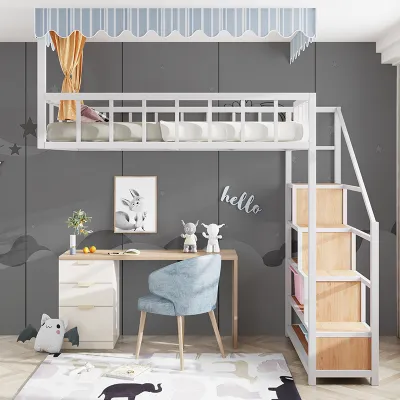
Prices are valid at publication and may change. Please refer to the product page for the latest price.

Fall and Entrapment Hazards
Unlike solid wooden slats or metal mesh bases, a suspended hammock moves and contours to the child’s body weight. This shifting surface can create unexpected hazards, particularly regarding falls and body entrapment. When a child lies in the hammock, the material naturally sags, which can pull the outer edges of the fabric away from the rigid guardrails of the loft frame.
This movement can create dangerous, wedge-shaped gaps between the flexible sleeping surface and the solid frame or the adjacent wall. If a child rolls over during sleep, they risk slipping into these gaps. This can lead to limb entrapment or, in worse scenarios, a fall to the floor below. To mitigate this risk, the bed must feature high, completely rigid guardrails that remain effective even when the hammock fabric is fully weighted and stretched to its lowest point.
Structural Integrity and Weight Limits
An elevated bed frame must withstand both static weight (a child sleeping quietly) and dynamic weight (a child climbing in, shifting, or sitting down). For a hammock loft style bed, the stress is concentrated on the specific suspension points where the flexible fabric or netting attaches to the rigid loft frame. These joints, brackets, and carabiners require robust, heavy-duty hardware to prevent sudden failure.
Parents must verify the manufacturer’s maximum weight capacity before assembly. When calculating this limit, remember to factor in the weight of the child, any additional bedding, pillows, and the potential for rapid growth spurts. If the suspension hardware or the frame itself is constructed from low-grade materials, the constant lateral tension exerted by a suspended hammock can cause the frame to bow, warp, or fail over time.
Material Breathability and Suffocation Risks
The fabric used for the hammock portion—whether it is canvas, tight mesh, or woven netting—plays a critical role in overall safety. In warm, tropical climates like the Philippines, breathability is a primary concern. High-density synthetic fabrics that trap heat can cause discomfort and, more importantly, present a suffocation hazard if a sleeping child rolls face-down into a deep fold of the material.
Additionally, parents must inspect the fabric for small detachable parts, loose threads, or weak seams. Over time, the tension placed on the fabric can cause seams to fray or unravel. Loose threads can pose strangulation or circulation-cut-off hazards for younger children, while poorly secured decorative elements can become choking hazards. Checking for high-quality, double-stitched seams and certified non-toxic, breathable fabrics is essential.
Is Your Child the Right Age and Sleeper for This Bed?
Determining whether a hammock loft style bed is appropriate for your child requires an honest assessment of their age, physical coordination, and sleep habits. Children develop at different rates, and a bed that is safe for one child may pose significant risks to another of the same age.
As a general safety standard, elevated beds—including loft and bunk designs—are not recommended for children under six years old. Before this age, children typically lack the spatial awareness, depth perception, and motor coordination required to safely climb up and down ladders, especially when waking up disoriented in the middle of the night.
Beyond age, you must evaluate your child’s specific sleeping behaviors:
- Active Sleepers: If your child frequently tosses, turns, or rolls across the bed during the night, the shifting center of gravity of a hammock can cause them to roll unexpectedly toward the edges, increasing the risk of contact with the guardrails or falling into gaps.
- Sleepwalkers: Children prone to sleepwalking or night terrors should never sleep in an elevated bed, as the physical barrier of climbing down a ladder while semi-conscious presents an extreme fall risk.
- Edge Sitters: If your child enjoys sitting on the edge of the bed to read, play, or talk, the unstable, yielding edge of a suspended hammock can easily cause them to lose their balance and slip.
Only children who sleep relatively quietly, possess excellent coordination, and can reliably follow safety rules should be considered candidates for an elevated hammock bed.
Essential Safety Features and Installation Checks
If you decide that a hammock loft style bed is suitable for your child, minimizing risk depends heavily on selecting the right product features and executing a flawless installation. Use the following checks during your purchase and assembly process.
Critical Structural Components
Guardrail Height and Rigidity: Ensure the loft frame features continuous guardrails on all sides. These rails must extend at least 5 inches (approximately 12.7 cm) above the highest point of the sleeping surface or mattress when it is occupied. The guardrails must be securely bolted to the main frame to prevent bowing under pressure.
Frame Anchoring: Because loft beds have a high center of gravity, they can sway or tip during climbing. To prevent tipping, the loft frame should be securely anchored to the wall studs. In homes with concrete walls, use appropriate masonry anchors and heavy-duty L-brackets as specified in the product’s instruction manual.
Spatial and Environmental Clearance
Mattress and Fabric Fit: If the bed design utilizes a mattress inside or on top of the hammock structure, the mattress must fit snugly within the designated frame boundaries. There should be no gaps wider than 3 inches (approximately 7.6 cm) between the mattress and the frame sides to eliminate any risk of head or limb entrapment.
Ceiling and Fixture Clearance: Measure your room’s ceiling height carefully. There must be at least 30 inches (approximately 76 cm) of clear headroom between the top of the sleeping surface and the ceiling. Additionally, ensure the bed is positioned far away from ceiling fans, light fixtures, air conditioning units, and window blind cords to prevent accidental impact or entanglement.
Daily Safety Rules and Maintenance for Parents
Maintaining a safe sleeping environment does not end once the bed is assembled. Ongoing parental supervision, clear household rules, and regular maintenance checks are vital to ensuring the bed remains secure over its lifespan.
Establish clear, non-negotiable household rules with your child. The bed must be used strictly for sleeping or quiet lounging. Activities such as jumping, roughhousing, gymnastics, or hanging from the under-bed support bars must be strictly prohibited. Furthermore, enforce a strict “one person at a time” rule on the elevated platform to prevent overloading the suspension hardware and avoid accidental collisions.
Incorporate regular physical inspections into your cleaning routine. Weekly, check all hardware—including screws, bolts, tensioning straps, and carabiners—for any signs of loosening or wear, tightening them immediately if needed.
In the high humidity of the Philippines, natural fabrics like cotton canvas are highly susceptible to moisture absorption. This can lead to mold, mildew, and the gradual weakening of the fabric fibers. Inspect the hammock material regularly for musty odors, dark spots, or thin patches. Always follow the manufacturer’s care instructions for washing and drying the fabric to preserve its structural integrity and keep the sleeping environment hygienic.
Frequently Asked Questions (FAQ)
Can I use a regular mattress on a hammock loft bed?
No, you should not use a standard mattress on a hammock loft bed unless the manufacturer explicitly states it is compatible. Standard mattresses are heavy and designed to lay flat on rigid slats. Placing a heavy mattress onto a suspended hammock system can exceed the engineered weight limits of the suspension hardware, cause excessive sagging, and create dangerous entrapment gaps along the sides of the bed.
What should I do if the hammock fabric starts to sag?
If you notice the hammock fabric sagging excessively, stop using the bed immediately. Inspect the tensioning hardware, straps, and attachment points to see if they can be adjusted or tightened according to the manufacturer’s instruction manual. If the fabric has permanently stretched, frayed, or suffered fiber degradation from humidity, contact the manufacturer directly to purchase a certified replacement. Do not attempt temporary DIY fixes, as they may fail under load.
Community discussion
Share your experience or ask a question. Comments are reviewed before publication.