
A plastic cabinet can serve as a highly practical kitchen buffet or display unit, but its success depends on your storage load, aesthetic goals, and kitchen environment. While plastic offers excellent moisture resistance and budget-friendly utility, it lacks the structural rigidity of wood or metal for heavy ceramics, and its clear panels can scratch more easily than tempered glass. Determining if this material suits your kitchen requires balancing these physical limits against your daily dining needs.
Assess Your Storage Load and Kitchen Environment
When planning to use a plastic cabinet for kitchen storage, your first task is to calculate the physical demands you will place on it. Kitchen items are deceptively heavy. While a single ceramic dinner plate seems light, a stack of ten to twelve plates quickly accumulates a concentrated weight of six to eight kilograms. When you add heavy stoneware bowls, glass baking dishes, and serving platters, a single shelf can easily be subjected to over fifteen kilograms of continuous downward force. Before buying, weigh a representative stack of your dinnerware on a scale to understand your actual storage load.
Do not assume all plastic cabinets share the same strength. Their structural integrity varies depending on the polymer used, wall thickness, and internal engineering. Always check the manufacturer’s specified load capacity per shelf rather than guessing. Look for units featuring structural reinforcements, such as ribbed patterns on the underside of shelves, honeycomb interior matrices, or integrated metal support rods. If a cabinet lacks these reinforcements and does not state its load limits, reserve it for lightweight pantry items rather than heavy ceramic tableware.
Products mentioned in this guide
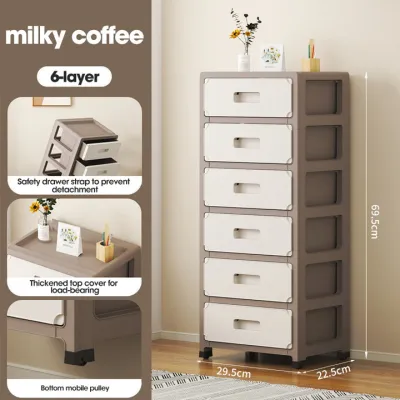
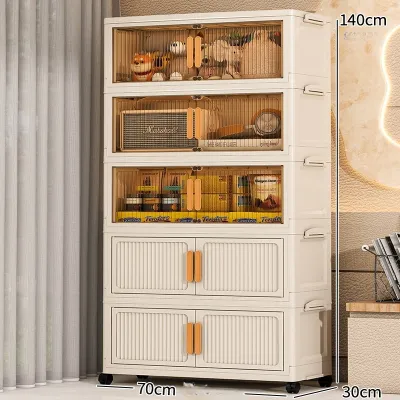
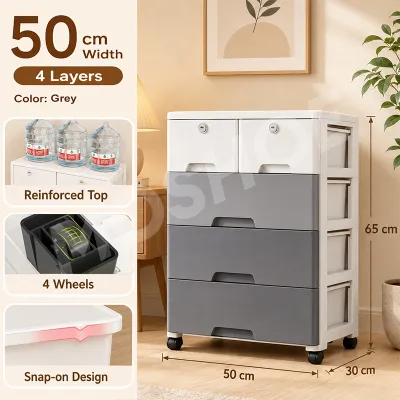
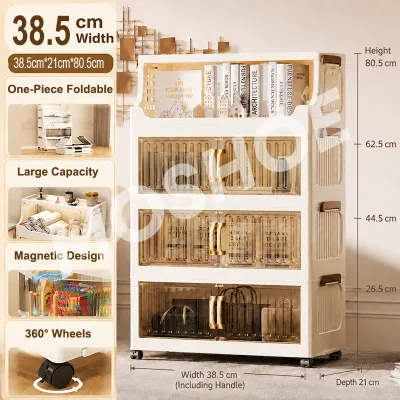
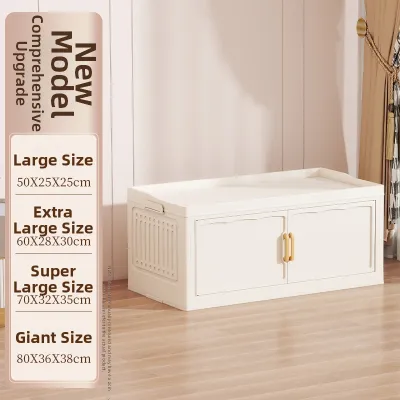
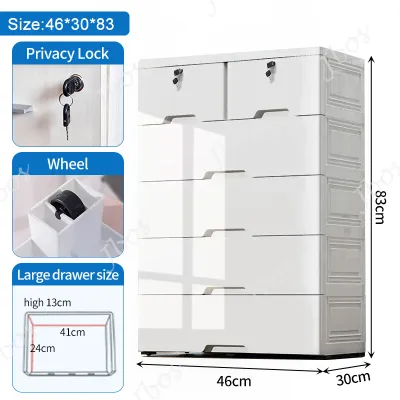
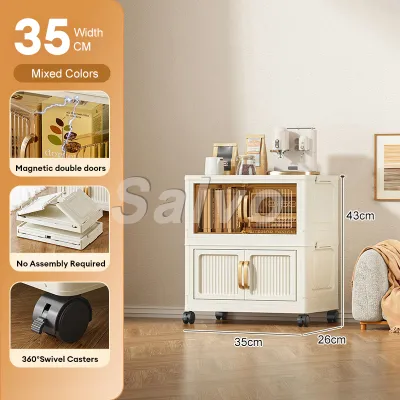
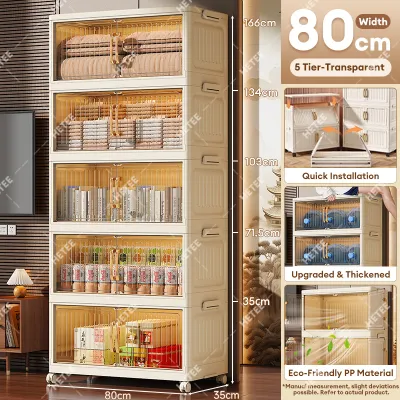
Prices are valid at publication and may change. Please refer to the product page for the latest price.
The environmental conditions of your kitchen also affect the longevity of plastic furniture. Assess the proximity of the designated space to heat sources like gas ranges, ovens, air fryers, or rapid-boil kettles. Prolonged exposure to elevated temperatures can soften certain thermoplastics, causing them to warp or sag under loads they would easily support in cooler zones. Also consider exposure to cooking grease, which can settle on surfaces and chemically degrade low-grade plastics over time, making them sticky and difficult to clean.
Finally, consider the safety and hygiene of your stored items. If you plan to store unpackaged food, dry goods in bulk, or direct-contact dining essentials like baby bottles and cutlery, verify the material’s safety. Look for explicit manufacturer labels indicating that the plastic is BPA-free and food-grade compliant. Some utility cabinets use industrial chemical stabilizers or recycled plastics that are not suitable for close contact with eating utensils. Always prioritize certified food-safe materials for your daily dining setup.
Evaluate Your Display and Aesthetic Requirements
A kitchen buffet is often as much about presentation as it is about utility. If you want to showcase fine glassware or heirloom china, evaluate how clear plastic panels perform over time. Clear plastic doors—typically made from polystyrene, acrylic, or polycarbonate—provide excellent visibility when new, but they behave differently than tempered glass. Acrylic is highly transparent but susceptible to surface scratches from daily handling and cleaning. Over time, these micro-scratches can dull the surface, giving the cabinet a cloudy appearance. Look for manufacturers that specify hard-coated or scratch-resistant acrylic panels.

Resistance to ultraviolet (UV) light is another critical factor for display cabinets. If your kitchen receives abundant natural sunlight, standard plastics can undergo photodegradation, leading to yellowing, brittleness, and a loss of structural strength. When selecting a plastic cabinet for a sunny room, check the product specifications for UV-stabilized materials or UV-resistant coatings. These additives help preserve the clear, colorless appearance of the display panels and protect the structural frame from sun damage.
The aesthetic integration of plastic into your kitchen requires a thoughtful design eye. Plastic cabinets have a distinct visual texture that can clash with traditional, rustic, or formal kitchen decors. However, they blend seamlessly into modern, minimalist, or Scandinavian-inspired spaces, especially if you choose clean lines, neutral colors, and matte finishes. While high-gloss, brightly colored plastics can look clinical, textured surfaces or frosted door panels can elevate the visual appeal of your dining space.
Do not overlook the hardware and moving parts, as these are often the first points of failure in plastic cabinetry. Inspect how the doors and drawers operate. Many budget-friendly plastic cabinets rely on molded plastic friction hinges or simple plastic pegs inserted into holes. These mechanisms can wear down quickly with daily use, leading to sagging doors that do not close properly. Look for units that utilize metal hinges, metal drawer slides, or reinforced magnetic latches for a more solid, premium feel.
If you want to maximize the visual impact of your displayed items, check the cabinet’s compatibility with integrated lighting. Unlike wood or metal cabinets, which easily host retrofitted puck lights, plastic requires extra caution. High-output lights generate localized heat that can warp or discolor plastic shelves. If you plan to add lighting, choose low-voltage, low-heat LED strips. Ensure there is a safe path to route the wiring without drilling holes that could compromise the cabinet’s structural integrity.
Verify Space, Clearance, and Structural Stability
Before purchasing, ensure the cabinet physically fits your kitchen layout and can be operated safely. Measure the exact floor space where you plan to position the unit, paying close attention to depth and height. Ensure the cabinet does not protrude into primary walkways or block access to nearby appliances like refrigerators, dishwashers, or ovens. Next, measure the swing clearance of the cabinet doors and the full extension of any drawers to prevent bottlenecks. Also map out the delivery path, checking the dimensions of your doorways and lift access.
Structural stability is a paramount safety concern with lightweight plastic furniture. Because an empty plastic cabinet is highly lightweight, it has a very high center of gravity once loaded. Placing heavy ceramic plates or glassware on the upper shelves while leaving the lower shelves empty creates a severe tipping hazard. A simple action like pulling open a loaded drawer, a child reaching for a glass, or a pet bumping into the side can cause the entire cabinet to fall forward, risking serious injury and destroying your valuable glassware.
To mitigate this risk, anchoring the cabinet is a non-negotiable step. When unboxing your plastic cabinet, verify if the manufacturer has included an anti-tip kit, which typically consists of heavy-duty wall straps, brackets, and wall anchors. If one is not provided, purchase a compatible furniture anchoring kit separately. Secure the straps firmly to the back of the cabinet and anchor them directly into the wall. For drywall, ensure the screws are driven into wooden wall studs; for concrete or masonry walls, use high-quality expansion anchors.
Finally, examine the base design of the cabinet. A stable unit should feature a wide, solid footprint that distributes weight evenly across the floor. Check if the cabinet includes adjustable leveling feet. Kitchen floors, especially those finished with ceramic tiles, often have minor imperfections and uneven grout lines. A cabinet sitting on an uneven surface will wobble, adding continuous stress to the plastic joints and increasing the likelihood of tipping. Leveling feet allow you to compensate for these floor variations.
Decide: When Plastic Works and When to Choose Alternatives
Deciding whether to buy a plastic cabinet or invest in an alternative material comes down to a clear assessment of your budget, storage needs, and long-term expectations. Plastic cabinets offer distinct advantages under the right conditions. They are highly economical, with prices in the Philippines typically ranging from ₱1,500 to ₱5,000, making them a fraction of the cost of solid wood options. They are also exceptionally lightweight, allowing for easy repositioning during deep cleaning. Furthermore, plastic is completely impervious to water damage, rust, and pest infestations like termites, making it excellent for high-humidity areas or semi-outdoor wet kitchens.
However, plastic is not a universal solution. You should avoid plastic and opt for alternative materials—such as solid wood, powder-coated steel, or tempered glass—if your storage requirements involve heavy, high-value, or high-temperature items. If you own extensive collections of heavy cast iron cookware, thick stoneware plates, or large ceramic serving platters, plastic shelves will likely bow and fail over time. Similarly, if the cabinet must sit directly next to a hot stove or oven, wood or metal is far safer. If you want a crystal-clear, scratch-proof display that maintains a premium look for decades, tempered glass panels set in a solid wood or metal frame are vastly superior.
To help you make the right choice, follow this simple decision matrix based on your self-diagnosis:
- Proceed with Plastic: Your storage consists primarily of lightweight melamine plates, plastic food containers, table linens, and dry pantry goods. The cabinet will be placed in a well-ventilated, low-heat area, and you require an affordable, moisture-resistant storage solution.
- Modify Your Plan: You decide on a plastic cabinet but adjust your loading habits. You commit to keeping all heavy items on the lowest shelves, using the upper shelves strictly for lightweight display items, and anchoring the unit securely to the wall.
- Pivot to Alternatives: You have heavy ceramic dinnerware, want a high-end aesthetic, or need to place the cabinet near heat sources. You choose to invest in a solid wood, metal, or tempered glass buffet cabinet instead.
When evaluating the long-term value, remember that upfront savings do not always translate to lifetime economy. A cheap plastic cabinet might save you money today, but if it warps, scratches, or cracks under daily kitchen use, you may find yourself replacing it within a few years. Conversely, a well-constructed wood or metal cabinet carries a higher initial price tag but can easily last for decades with basic care. Weigh the immediate financial savings against the durability, safety, and aesthetic longevity required for your specific kitchen setup.
Maintain and Inspect Your Plastic Cabinets
To preserve the structural integrity and visual clarity of your plastic cabinet, establish a gentle cleaning and maintenance routine. Plastic surfaces are easily damaged by harsh chemicals and abrasive materials. For routine cleaning, use a mild dish soap diluted in warm water and a soft, clean microfiber cloth. Gently wipe down the surfaces to remove dust, fingerprints, and cooking grease. Absolutely avoid using green scouring pads, steel wool, abrasive scouring powders, or harsh chemical solvents like acetone, ammonia, or paint thinners. These substances will permanently scratch, dull, or even melt the plastic.
In addition to regular cleaning, perform a quick structural inspection of your cabinet every few months. Empty the shelves and look for any signs of physical distress. Check for shelf sagging or bowing along the center span. Inspect high-stress areas—such as around door hinges, drawer tracks, and wall anchors—for tiny white stress marks, hairline cracks, or loose screws. If you notice any loose hardware, tighten the screws gently by hand; using a power drill can easily strip the plastic threads, permanently weakening the joint.
If you observe any shelf bowing or structural deformation during your inspection, take immediate action to prevent a catastrophic failure. Do not wait for the shelf to crack or collapse. Immediately remove the heavy items causing the stress and redistribute them to the lowest shelves or a different storage unit entirely. If the cabinet design allows, contact the manufacturer to purchase replacement shelves or structural support rods. Taking proactive steps ensures your kitchen remains a safe environment and protects your stored items from accidental damage.
Frequently Asked Questions (FAQ)
Can plastic cabinets withstand the heat and humidity of a tropical kitchen?
The performance of a plastic cabinet in a tropical kitchen depends heavily on the specific polymer blend and quality of construction. While high humidity is not an issue—since plastic does not rot, swell, or rust like wood or metal—ambient heat from cooking appliances can soften low-grade plastics over time. Always check the manufacturer’s official temperature and humidity ratings to ensure the unit is suitable for your specific kitchen environment.
How do I prevent plastic shelves from sagging under the weight of dishes?
To prevent sagging, always distribute weight evenly across the entire surface of each shelf rather than stacking everything in the center. Place your heaviest items, such as ceramic plates or glassware, near the outer edges of the shelf or directly over the vertical support columns where the structure is strongest. Most importantly, strictly adhere to the manufacturer’s stated weight limits and avoid overloading the shelves.
Community discussion
Share your experience or ask a question. Comments are reviewed before publication.