
In many homes across the Philippines, maximizing floor space is a practical necessity. Whether you are furnishing a compact condominium in Metro Manila or setting up a shared bedroom for siblings in a bustling household, a double deck bed is an excellent, space-saving solution. However, elevating a child’s sleeping area introduces unique safety responsibilities that parents must carefully evaluate.
The widely accepted international safety standard dictates that children under six years old should never sleep on the top bunk of a double deck bed. While this age threshold serves as a vital baseline, chronological age is only the starting point of the safety equation. Determining whether your child is truly ready for the upper bunk requires a thorough assessment of their physical coordination, behavioral maturity, and the physical environment of the bedroom.
General Age Guidelines and Why They Are Not Enough
Medical professionals, consumer safety groups, and furniture manufacturers globally agree on the six-year-old age limit for the top bunk. Before this age, a child’s physical coordination, balance, and spatial judgment are still developing. Falls from the upper bunk of a double deck bed can result in serious injuries, making this age restriction a non-negotiable rule for parents.
Products mentioned in this guide


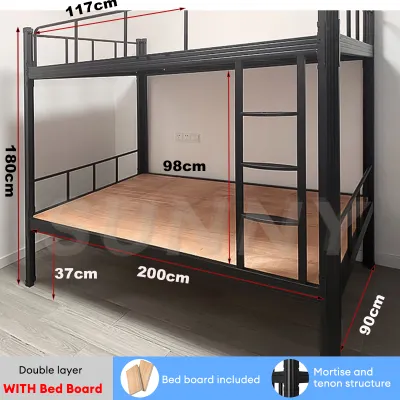




Prices are valid at publication and may change. Please refer to the product page for the latest price.
However, relying solely on a birthdate can lead to a false sense of security. Children mature at vastly different rates, and a child who has turned six may not automatically possess the physical stability or the presence of mind required to manage an elevated bed safely. Some six-year-olds are still deep sleepers who wake up disoriented, while others may lack the impulse control needed to resist playing on the ladder.
Before making the transition, you must look beyond the calendar and evaluate your child’s individual developmental milestones. A child’s readiness is a combination of physical capability and behavioral reliability. If your child is highly active, prone to night terrors, or struggles with basic balance, keeping them on the bottom bunk for an extra year or two is a wise and safety-conscious decision.
Additionally, always consult the specific manufacturer’s guidelines for your particular double deck bed. Manufacturers print age and weight limits directly on the bed frame’s warning label or in the instruction manual. These limits are calculated based on the structural engineering of the bed and must be strictly respected to prevent structural failures.
Physical and Behavioral Signs Your Child Is Ready
To confidently transition your child to the top bunk, you should observe them for specific physical and behavioral indicators. These signs demonstrate that they have the coordination and cognitive maturity to handle the responsibilities of an elevated sleeping space.

- Motor Skills and Coordination: Your child must be able to climb the ladder independently and confidently. Observe their climbing technique; they should naturally maintain three points of contact at all times, meaning two hands and one foot, or one hand and two feet, are firmly planted on the rungs as they ascend or descend.
- Spatial Awareness: Pay attention to how your child sleeps on a standard bed. If they regularly wake up with their head at the foot of the bed, or if they frequently roll close to the edge, their spatial awareness during sleep is not yet mature. A child ready for the top bunk should sleep relatively quietly and maintain a consistent position throughout the night.
- Nighttime Navigation: Consider how your child handles waking up in the middle of the night to use the bathroom. A child ready for the upper bunk must be able to wake up, fully orient themselves in the dark, and safely climb down the ladder without panic, grogginess, or parental assistance.
- Rule Comprehension: Behavioral maturity is just as important as physical skill. Your child must be capable of understanding, remembering, and consistently obeying safety rules. If they routinely ignore household boundaries or require constant reminders to avoid risky behavior, they are not yet ready for the top bunk.
Red Flags: When to Keep Your Child on the Bottom Bunk
Even if your child has reached their sixth birthday, certain behavioral or physiological traits should serve as clear warning signs to delay their move to the top bunk. Recognizing these red flags early can prevent dangerous accidents.
Active sleep issues are among the most critical warning signs. If your child sleepwalks, experiences frequent night terrors, or thrashes violently during heavy sleep cycles, the top bunk is highly unsafe. A sleepwalking child can easily step off the edge of an elevated bed before fully waking up, bypass guardrails entirely, or lose their footing on the ladder.
Poor impulse control during play is another major red flag. If your child tends to use furniture as a jungle gym, jumps on mattresses, or engages in roughhousing with siblings in the bedroom, the top bunk will likely become a hazard. The temptation to jump from the top platform or hang from the guardrails is simply too high for a child who struggles with physical boundaries.
Do not overlook emotional readiness, specifically a fear of heights. If your child expresses anxiety, hesitates midway up the ladder, or complains of dizziness when looking down, never force the transition. Forcing a fearful child to sleep on the top bunk can lead to nighttime panic, which increases the likelihood of a fall if they try to climb down quickly in the dark.
Finally, consider your child’s physical size relative to the bed’s design. If a child is exceptionally small or has low muscle tone for their age, they may struggle to pull themselves up the ladder safely. Furthermore, a smaller frame increases the risk of entrapment if they manage to slip through the gaps between the mattress and the guardrails.
Double Deck Bed Hardware and Room Safety Checklist
Ensuring your child is ready is only half the battle; you must also ensure the physical bed and the room environment meet strict safety standards. Conduct a thorough physical inspection of the furniture and the surrounding space.
Guardrail Verification Guardrails must be installed on both sides of the top bunk, even if the bed is pushed flush against a wall. Children can easily slip into the gap between the bed and the wall, creating a dangerous entrapment hazard. The guardrails must be robust, securely bolted, and free of any cracks or loose joints.
Mattress Fit and Thickness Choose a mattress that fits the bed frame snugly. There should be no gaps wider than 3 centimeters between the mattress and the frame sides. Crucially, verify the mattress thickness. To ensure the guardrails remain effective, the top of the guardrail must extend at least 12.7 centimeters (5 inches) above the top surface of the mattress. Purchasing a low-profile mattress designed specifically for bunk beds (which typically cost between ₱3,000 and ₱8,000 in local retail stores) is highly recommended to maintain this safety clearance.
Ladder Stability Inspect the ladder to ensure it is securely attached to the bed frame and does not wobble or slide when weight is applied. The rungs should be flat and wide enough for secure footing. In the humid tropical climate of the Philippines, wooden components can swell or warp, and metal fasteners can rust. Regularly check that the ladder steps remain slip-resistant and structural joints are tight.
Clearance and Surroundings Measure the distance between the top mattress and the ceiling. Your child must have enough headroom to sit up comfortably without bumping their head. Additionally, position the double deck bed far away from ceiling fans, light fixtures, air conditioning units, and windows. In many Filipino homes, wall-mounted fans are common; ensure these are completely out of reach of a child standing on the top bunk.
Structural Integrity Regularly inspect the entire frame of the double deck bed. Shake the frame gently; if it sways or squeaks excessively, the joints are loose. Use the appropriate tools to tighten all bolts, screws, and brackets. If you are using a wooden frame, check for cracks or splinters; if you are using a metal frame, inspect the welds for any signs of fatigue or parting.
Daily Rules to Prevent Falls and Injuries
Once the double deck bed is set up and your child is ready, establishing and enforcing daily household rules is essential. Consistency is key to keeping your children safe.
First, enforce a strict “one person on the top bunk” rule. The upper level is engineered to support the weight of a single sleeping child and their mattress. Allowing multiple children to gather, sit, or play on the top bunk dramatically increases the risk of structural failure or accidental falls due to crowding.
Second, designate the top bunk as a strict “no-play zone.” The bed must be associated exclusively with sleeping and quiet reading. Prohibit jumping, wrestling, pillow fights, and hanging from the guardrails or the ladder. If children want to play, they must do so on the bottom bunk or on the floor.
Third, teach and monitor proper climbing techniques. Instruct your child to always face the ladder when climbing up or down, grasping the rungs firmly with both hands. Sliding down the side of the ladder or jumping off the bottom steps must be strictly forbidden. Remind them never to climb the bed while wearing slippery socks or carrying toys in their hands.
Fourth, keep the landing zone clear. The floor area directly around the base of the ladder must remain completely free of clutter. Toys, shoes, bags, and clothes left on the floor can easily cause a child to trip and fall as they step off the ladder, especially during nighttime or early morning hours.
Finally, provide adequate lighting. Install a plug-in nightlight or a battery-operated tap light near the ladder. This ensures that if your child needs to get up during the night, they can clearly see the ladder rungs and navigate their way down safely without stumbling in the dark.
A Step-by-Step Plan for Transitioning to the Top Bunk
Moving to the top bunk is an exciting milestone for a child, but the transition should be gradual rather than immediate. A step-by-step approach allows your child to build confidence while you verify their safety under supervised conditions.
Start with daytime practice sessions. Before your child ever sleeps on the top bunk, spend time during the day letting them practice climbing up and down the ladder. Stand close by to guide them, ensuring they use the proper three-points-of-contact climbing technique. This builds their muscle memory and helps you identify any physical hesitation.
Next, prepare the floor area for the initial transition phase. Place thick rugs, foam play mats, or soft cushions on the floor surrounding the ladder and the open side of the bed. While these floor coverings do not replace the need for secure guardrails, they provide an extra layer of physical protection and psychological reassurance for both you and your child during the first few weeks.
Introduce the top bunk through supervised daytime naps. Sleeping in an elevated space feels very different from sleeping on the ground. Letting your child take a few weekend naps on the top bunk allows them to get used to the height, the view, and the boundaries of the bed in a controlled, daylight environment where you can easily monitor their movements.
Once they transition to nighttime sleep, maintain close supervision for the first few weeks. Check on your child periodically after they fall asleep to observe their sleeping position. Ensure they are sleeping comfortably away from the edges and that they can still navigate the ladder safely if they wake up groggy. Only when they have slept safely on the top bunk for several weeks without incident should you step back and allow them full independence.
Frequently Asked Questions (FAQ)
Can a child sleep on the top bunk if they are tall for their age but under the recommended age?
No, physical height does not substitute for developmental readiness. Even if a five-year-old child is exceptionally tall, they still lack the neurological maturity, spatial awareness, and impulse control required to sleep safely on an elevated platform. The age recommendation of six years old is based on cognitive and motor skills development, not physical height.
What type of mattress is safest for the top bunk of a double deck bed?
The safest mattress is a low-profile model that matches the exact inner dimensions of the bed frame to prevent entrapment gaps. It must be thin enough—typically between 10 to 15 centimeters (4 to 6 inches) thick—to ensure that the guardrails still rise at least 12.7 centimeters (5 inches) above the top of the mattress. Always verify the manufacturer’s maximum mattress thickness specification for your specific bed model.
How can I stop my child from playing on the double deck bed?
To prevent play, consistently enforce the rule that the bed is only for sleeping. If your child repeatedly climbs the ladder to play during the day, you can temporarily block access. For beds with detachable ladders, remove the ladder during daytime hours. For fixed ladders, you can secure a physical barrier, such as a padded ladder guard, over the rungs to prevent unsupervised climbing.
Community discussion
Share your experience or ask a question. Comments are reviewed before publication.