
Maximizing space in a compact condominium requires furniture that serves multiple purposes without cluttering walkways. A trolley cart organizer with table top is an excellent solution for small living rooms, functioning as a mobile side table, a temporary desk, or a flexible coffee table. To find the right cart for your space, you must look for specific features that balance structural stability, vertical storage capacity, and materials that can withstand local environmental conditions. Selecting the ideal model involves analyzing dimensions, surface durability, wheel quality, and frame construction to ensure it enhances your daily living experience.
Sizing Your Space: Dimensions and Clearance for Compact Living Rooms
Before purchasing a mobile cart, you must measure your living room layout to prevent the furniture from obstructing your daily movement. Many modern studio and one-bedroom condos in the Philippines range from 20 to 35 square meters, meaning every centimeter of floor space is highly valuable. Start by measuring the primary walking paths where you plan to roll the cart. A comfortable walkway requires a clearance of at least 60 to 75 centimeters so that residents can move freely without bumping into furniture.
Next, calculate the dimensions of the specific spot where the cart will be parked when it is not actively in use. If you plan to tuck the cart next to your sofa, measure the distance between the sofa armrest and the adjacent wall. For carts intended to slide under existing furniture, such as a console table or a wall-mounted desk, measure the exact vertical clearance from the floor to the underside of the tabletop. Do not forget to account for baseboards, which can prevent a cart from sitting completely flush against a wall, effectively stealing a few centimeters of space.
Products mentioned in this guide
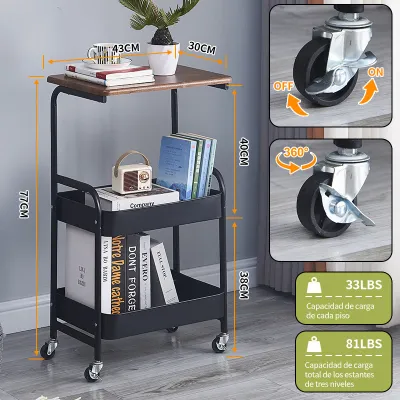
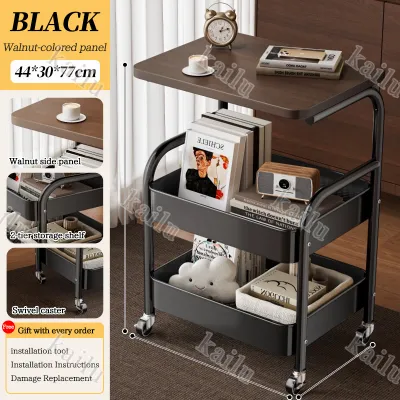
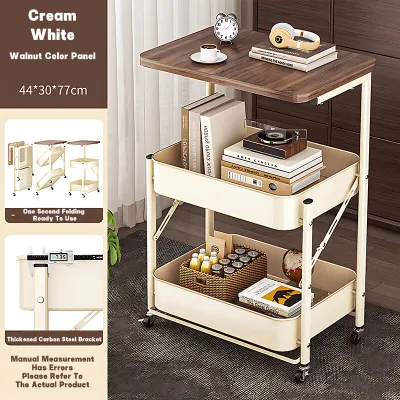
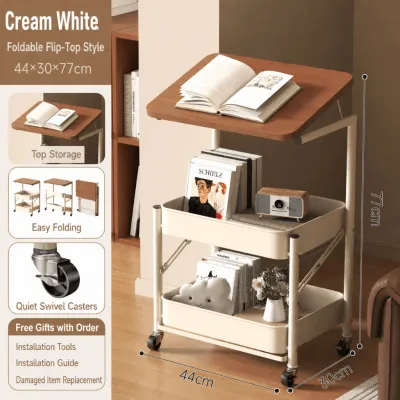
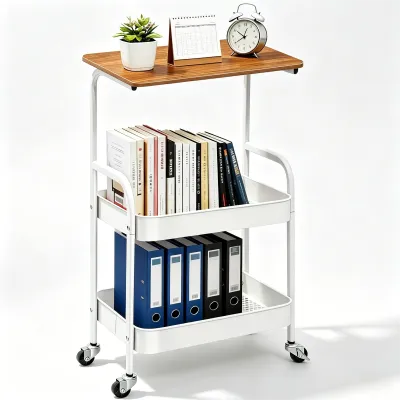
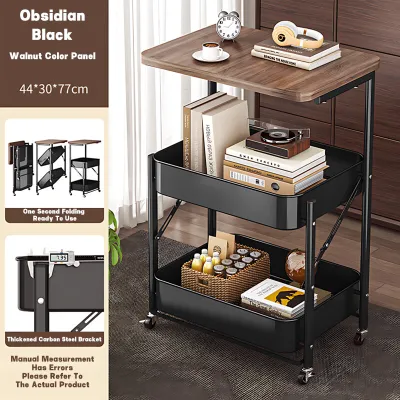
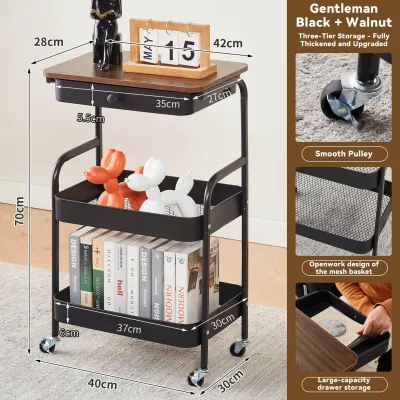
Prices are valid at publication and may change. Please refer to the product page for the latest price.
You must also verify the clearances around doors and entryways. Check the swing path of your main door, bathroom door, and sliding balcony doors to ensure the cart’s parked position will not interfere with these openings. If you live in a high-rise building, consider the narrow transitions in your hallway or the width of your doorway to ensure you can easily bring the cart into your unit on delivery day. Taking these precise measurements beforehand ensures your new mobile organizer remains a convenient asset rather than a physical obstacle.
Essential Design Features for a Trolley Cart Organizer with Table Top
A successful multi-functional cart must combine a reliable work surface with highly organized lower storage. Evaluating these design components individually will help you find a model that supports your lifestyle.

Table Top Functionality and Surface Materials
The table top is the defining feature of this organizer, transforming a basic storage bin into a functional piece of living room furniture. Because this surface will likely host hot coffee mugs, laptops, or small meals, the material must be highly durable and easy to maintain. In the humid tropical climate of the Philippines, material selection is particularly critical to prevent premature wear and damage.
- Solid Wood: Natural hardwoods like acacia or rubberwood offer excellent structural integrity and a warm aesthetic. However, they must be treated with a moisture-resistant sealant, such as polyurethane, to prevent water rings from condensation on cold glasses.
- Medium-Density Fiberboard (MDF): MDF is a common and budget-friendly option, but it is highly vulnerable to humidity. If you choose an MDF table top, ensure it features high-pressure laminate (HPL) coating and seamless PVC edge banding to prevent ambient moisture or spilled drinks from seeping into the core and causing the wood to swell and bubble.
- Tempered Glass: Glass tops resist moisture entirely and create a sense of visual openness in small rooms. The trade-off is that they require frequent wiping to remove fingerprints and can produce a loud clattering sound when placing items down.
- Powder-Coated Metal: Metal tops are incredibly robust, easy to sanitize, and immune to moisture damage. They fit well in industrial or modern minimalist interiors, though they can feel cold to the touch.
Beyond materials, pay close attention to the edge profiles of the table top. In a tight condo living room, sharp 90-degree corners pose a constant hazard for bruising or snagging loose clothing. Opt for rounded (bullnose) or beveled edges to ensure safe movement around the cart. Finally, check the manufacturer’s specified weight capacity for the top surface; a reliable table top should comfortably support at least 10 to 15 kilograms without bending or compromising the stability of the entire frame.
Storage Tiers and Organizer Configurations
The space beneath the table top determines how effectively the cart will reduce clutter in your living room. A smart configuration of shelves and compartments allows you to store books, remote controls, chargers, and snacks vertically, maximizing utility without increasing the cart’s physical footprint.
- Open Wire Baskets: These are ideal for tropical climates because the open mesh design promotes continuous airflow. This ventilation helps prevent dust accumulation and reduces the risk of mold or mildew forming on books or paper documents during the rainy season.
- Solid Trays: Solid plastic or metal trays are excellent for holding smaller items that might otherwise slip through wire mesh. They are also easier to wipe clean if a liquid spill occurs inside the storage compartment.
- Pull-Out Drawers: If you prefer a clean, clutter-free look, look for a cart that includes at least one drawer tier. This allows you to hide messy cables, stationery, and personal items from plain sight while keeping them easily accessible.
To maximize versatility, prioritize carts with adjustable shelf heights. This feature allows you to customize the vertical spacing between tiers, making it easy to accommodate taller items like water bottles, tall novels, or storage baskets. Additionally, ensure that the lower shelves feature raised lip guards or protective outer rails of at least 3 to 5 centimeters in height. These raised edges act as a barrier, preventing your belongings from sliding off and crashing onto the floor when you roll the cart across the room.
Mobility, Stability, and Frame Materials
The mobility of a trolley cart is its greatest advantage, but it can also be a safety hazard if the frame is poorly constructed or lacks proper locking mechanisms. A high-quality cart must glide smoothly when pushed but remain completely stationary when utilized as a desk or dining surface.
The frame material serves as the structural backbone of the cart. Powder-coated carbon steel is highly recommended for Philippine households due to its exceptional strength and resistance to rust in humid conditions. Aluminum frames are lighter and easier to push, but they may lack the structural weight needed to keep the cart stable when holding heavier items on the top surface. Avoid frames made entirely of thin, lightweight plastics, as they tend to wobble, warp, and degrade under constant load over time.
To ensure reliable stability, the cart must feature high-quality casters with robust, easy-to-engage brakes. Look for models equipped with at least two locking wheels, ideally located on the side you will face most often so you can quickly secure them. When the brakes are engaged, the cart should not budge or wobble when you apply light downward pressure while typing or eating.
Furthermore, pay attention to the physical design of the base. A cart with a low center of gravity and a slightly wider wheelbase is far less likely to tip over. This is especially important when moving the cart over floor transitions, such as the metal tracks of sliding balcony doors, thick area rugs, or uneven tile grout lines. Placing heavier items on the bottom shelf is also a practical way to maintain this low center of gravity and keep the cart rolling safely.
Common Sizing and Placement Mistakes to Avoid
To avoid buyer’s remorse, you must steer clear of several common mistakes when selecting and placing your mobile cart. The most frequent error is ignoring the height of the wheels when checking clearances. Many online product listings display the height of the cart’s metal frame alone, omitting the extra 5 to 8 centimeters added by the caster wheels. If you fail to account for this wheel height, you may find that the cart cannot slide under your sofa armrest or low side tables as planned.
Another critical mistake is placing the cart in a spot that blocks essential condo utilities or safety pathways. Avoid parking the cart directly in front of floor-mounted electrical outlets, split-type air conditioner vents, or standing fans, as this can restrict airflow and access. More importantly, never let the cart obstruct the clear path to your balcony door or main entryway, which must remain completely clear for emergency egress.
Finally, avoid overloading the top tier of the cart while leaving the lower shelves empty. This top-heavy weight distribution makes the cart highly unstable and prone to tipping forward when you push it over a rug edge or a minor floor bump. Always distribute the weight evenly, placing your heaviest items on the lowest shelf and reserving the top surface for lightweight, active-use items like your laptop, a book, or a beverage.
Frequently Asked Questions (FAQ)
Can a trolley cart replace a traditional coffee table?
Using a trolley cart as a coffee table replacement is an excellent strategy for studio apartments and small condo living rooms. The primary advantage is mobility; you can easily wheel the cart to the side to clear floor space for home workouts, cleaning, or hosting guests. It also offers multiple tiers of vertical storage, which a standard coffee table lacks. However, the trade-off is a significantly smaller top surface area and a slightly higher potential for minor wobbling. This substitution works best for solo dwellers or couples who prefer a flexible, minimalist layout over a large, static centerpiece.
What wheel type is best for typical condo flooring?
Most Philippine condos feature flooring made of ceramic tiles, SPC vinyl planks, or engineered wood laminate. To protect these surfaces from scratches and scuffs, you should avoid hard, cheap plastic nylon wheels. Instead, look for caster wheels coated in soft polyurethane (PU) or synthetic rubber. These materials glide silently, absorb vibrations, and will not leave dark marks or scratches on delicate laminate or vinyl finishes. Additionally, choose wheels with a diameter of at least 5 centimeters, as larger wheels roll much more smoothly over tile grout lines and thin area rugs without getting stuck.
Community discussion
Share your experience or ask a question. Comments are reviewed before publication.