
Finding the perfect bedside nightstand requires looking beyond basic aesthetics to evaluate how a piece of furniture interacts with your daily routine and your devices. A modern bedside table must serve as a functional hub, keeping your nighttime essentials organized while safely powering your smartphones, tablets, and smartwatches. To select the right model, you should focus on a balance of open and closed storage, integrated cable management, safe and modern charging ports (specifically a mix of USB-A and USB-C), and a structurally stable frame that aligns with your bed’s height. Additionally, incorporating a dedicated side storage organizer can significantly maximize your storage capacity without expanding the furniture’s physical footprint. By evaluating these key features, you can turn a cluttered bedside area into a highly efficient, streamlined charging station and storage zone.
Assessing Your Bedside Storage and Side Storage Organizer Needs
When planning your bedside layout, the first step is to analyze what items you actually need within arm’s reach when lying down. Bedside storage generally falls into two categories: open storage for immediate access and closed storage for privacy and clutter control. Open shelves or tabletop surfaces are ideal for items you use frequently throughout the night or first thing in the morning, such as a glass of water, reading glasses, or an alarm clock. In contrast, deep drawers or cabinets with solid doors are better suited for concealing personal items, medications, journal stacks, and loose charging cables that can quickly make a bedroom look untidy.
To maximize storage efficiency without taking up valuable floor space, consider how a side storage organizer can be integrated into the nightstand’s design. These specialized compartments, which can range from built-in wooden slots to attachable fabric or leather pockets, hang directly off the side panel of the nightstand. A side storage organizer is exceptionally useful for holding slim, flat items like tablets, e-readers, magazines, or remote controls. By shifting these items to the side, you free up the main tabletop surface for a bedside lamp or a decorative item, which is particularly beneficial in smaller bedrooms where a wide nightstand is not an option.
Products mentioned in this guide

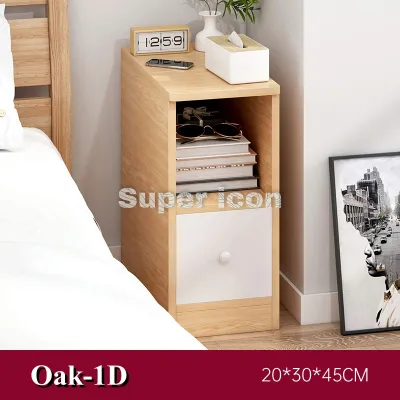
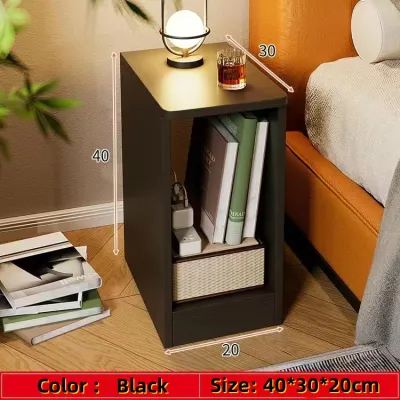
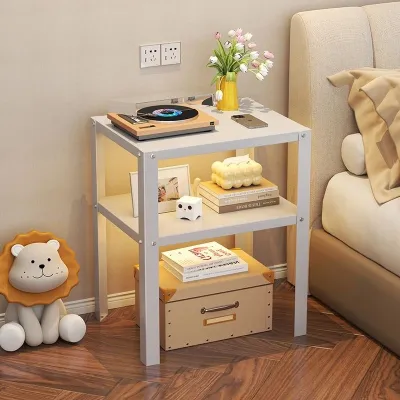
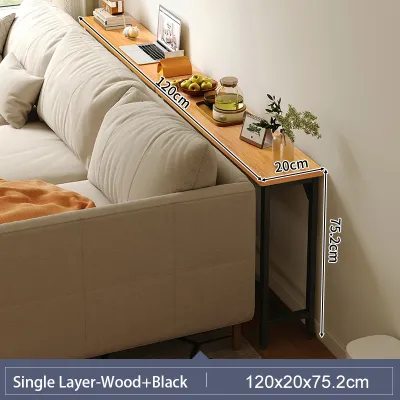
Prices are valid at publication and may change. Please refer to the product page for the latest price.
Before purchasing, always verify the internal dimensions of the drawers and shelves rather than relying solely on external measurements. Shallow top drawers or pull-out trays are highly functional for organizing small accessories, cords, and spectacles, preventing them from getting lost in a larger space. Deeper lower drawers are necessary if you plan to store bulkier items such as tissue boxes, books, or spare slippers. Make sure to check the manufacturer’s specifications for the internal width, depth, and height of each compartment to ensure your specific items will fit comfortably.
Finally, effective cable management is a crucial feature of any modern charging nightstand. Look for design elements such as back-panel grommets, recessed cord channels along the rear edge, or open-back compartments. These features allow you to route power cords directly from the internal charging station or wall outlet to your devices without leaving a tangled mess of wires visible on top of your table. Proper cable routing also prevents cords from slipping behind the nightstand when you unplug your devices, saving you from having to reach into tight gaps to retrieve them.
Evaluating Built-In Charging Port Specifications
An integrated charging station is only as useful as the ports it provides, making it essential to evaluate the electronic specifications before making a decision. When looking at the port configuration, prioritize a modern mix of USB-A and USB-C ports. While older accessories and lamps may still rely on standard USB-A connections, most modern smartphones, tablets, and smartwatches now ship with USB-C cables. Having native USB-C ports built directly into your nightstand eliminates the need for bulky wall adapter bricks, allowing you to plug your charging cables directly into the furniture for a cleaner look.

Do not assume that all built-in USB ports charge at the same speed; always check the manufacturer’s specification labels for power output, typically measured in amperage (A) or wattage (W). Many standard built-in ports only offer a basic 5V/1A (5 Watts) output, which is sufficient for slow overnight charging but will feel frustratingly slow if you need a quick battery boost before heading out. For faster, more efficient charging, look for modules that specify higher outputs, such as 2.4A or dedicated Power Delivery (PD) ports rated at 18 Watts or higher. Checking these labels ensures that the nightstand can safely and adequately power your specific devices without overloading the integrated circuit.
The physical placement of these ports also plays a major role in daily convenience and safety. Top-mounted charging panels offer the easiest access, allowing you to plug and unplug devices without bending down, but they come with a distinct risk. A top-mounted port is highly vulnerable to dust accumulation and accidental liquid spills from a bedside glass of water, which can damage the electronics or create a safety hazard. Back-mounted, side-recessed, or drawer-enclosed charging stations keep the ports hidden from view and protected from spills, though they require slightly more effort to reach. Additionally, verify the length of the nightstand’s main power cord; a short cord under 1.5 meters may limit where you can place the table relative to your wall outlets, potentially forcing you to use extension cords.
Safety should be your top priority when buying furniture with integrated electrical components. Never assume that a built-in charging module is safe simply because it is sold as a finished product. Look for explicit safety certifications and protection marks on the product labels, such as CE, FCC, or local electrical safety standards applicable in your region. The module should feature built-in surge protection, overcharge protection, and short-circuit prevention to shield your expensive electronics from power fluctuations. In areas prone to electrical instability or frequent lightning storms, having a certified surge-protected power strip built into your bedside table provides essential peace of mind.
Verifying Dimensions, Clearance, and Stability
A nightstand must fit seamlessly into your physical bedroom layout to be truly functional. To determine the correct height, measure the distance from the floor to the top of your mattress, including any mattress toppers. Ideally, the top surface of your nightstand should sit level with or up to two inches below the top of your mattress. This alignment allows you to reach for your phone, a glass of water, or the lamp switch naturally from a lying position without straining your arms or back, and it significantly reduces the likelihood of knocking items over in the dark.
Next, measure the available floor space beside your bed, keeping in mind both the footprint of the nightstand and the necessary clearance for daily use. Ensure there is adequate space for drawers to slide out fully or cabinet doors to swing open without hitting your bed frame, mattress, or nearby wardrobe doors. Walkways must remain clear; a nightstand that blocks the path around the bed will quickly become a daily frustration. If you live in an apartment or condominium, also verify the dimensions of your doorways, hallways, and elevator lifts to ensure the fully assembled nightstand can be easily transported into your home.
Structural stability is critical for any bedside table holding valuable electronics and liquids. Look closely at the base construction and weight capacity of the unit. Nightstands with a wide, solid plinth base or robust, angled legs generally offer better stability than those with thin, spindly legs. A top-heavy nightstand can easily tip forward when a heavily loaded drawer is pulled out completely, posing a safety risk. Check the manufacturer’s specified load limits for both the tabletop and individual drawers, and consider anchoring the unit to the wall if you have young children or pets in the home.
In the tropical climate of the Philippines, high relative humidity can severely affect the durability of bedroom furniture. When evaluating materials, remember that a material’s name alone does not guarantee performance; instead, check the quality of the protective finish and joints. Untreated engineered woods can absorb moisture from the air, leading to warping, swelling, or peeling laminates. Look for nightstands with sealed surfaces, moisture-resistant coatings, or solid wood treated with protective lacquers that can withstand humid conditions. Always review the manufacturer’s care instructions to ensure the surface can be safely wiped down with a damp cloth without degrading the finish over time.
Finalizing Your Choice Based on Daily Habits
To make your final decision, synthesize your storage and charging needs into a clear picture of your daily habits. If you are an avid reader who winds down with physical books, tablets, or magazines, prioritizing a nightstand with an integrated side storage organizer will keep your surface clear and your reading material organized. If your primary goal is to manage a high-tech bedside setup, focus your search on models that feature high-wattage USB-C ports, integrated surge protection, and robust cable management channels to keep cords hidden.
You should also weigh the trade-offs between buying a nightstand with a fully integrated charging module versus purchasing a traditional nightstand and customizing it yourself. A built-in unit offers a sleek, cohesive look with hidden wiring, but it can be more difficult to repair or upgrade if the electronic components fail or become obsolete. Buying a simpler, high-quality wooden nightstand and adding a separate power strip along with an aftermarket side storage organizer offers greater flexibility, lower initial costs, and easier replacement of parts, though it may not look as seamlessly integrated.
Before finalizing your purchase, run through a quick pre-purchase checklist to avoid common mistakes. Double-check your bedside measurements to ensure a perfect fit, and confirm that the built-in charging module is fully compatible with the power requirements of your specific devices. If purchasing online, review the retailer’s shipping policies, assembly requirements, and return policies, paying close attention to whether the warranty covers both the structural furniture frame and the integrated electronic components. Taking these final verification steps will ensure you invest in a functional, durable bedside companion that enhances your daily comfort.
Frequently Asked Questions (FAQ)
Can I use a separate side storage organizer if the nightstand lacks shelves?
Yes, attachable or hanging side storage organizers made of felt, fabric, or leather are excellent aftermarket options for minimalist nightstands. Before installing one, check your nightstand’s edge thickness and overall weight distribution to ensure the added weight of your devices won’t cause a lightweight table to tip over.
Is it safe to leave devices plugged into built-in USB ports overnight?
While modern smartphones are designed to prevent overcharging, the safety of overnight charging depends heavily on the quality of the nightstand’s built-in power module. Ensure the module has certified surge, overcurrent, and thermal protection, and always unplug the main power cord from the wall during severe tropical storms or extended absences.
How do I measure the correct nightstand height for my bed?
Measure vertically from the floor to the top surface of your mattress, including any thick toppers. For optimal ergonomic access while lying down, select a nightstand with a top surface that is level with this measurement or sits no more than two inches below it.
Community discussion
Share your experience or ask a question. Comments are reviewed before publication.