
Selecting the right camping hammock requires a shift in mindset from backyard relaxation to backcountry shelter planning. Unlike a standard patio lounger designed for brief afternoon naps, a dedicated camping hammock serves as your primary sleep system, protecting you from the elements, insects, and cold ground temperatures. To choose a setup that keeps you safe and comfortable throughout the night, you must evaluate specific technical features: fabric weave, weight capacity, suspension hardware, and integrated weather protection. In tropical climates like the Philippines, where high humidity, sudden downpours, and active insect populations are constant factors, these specifications become even more critical to your overall safety and sleep quality.
Essential Fabric and Material Specifications
The foundation of any reliable camping hammock is its fabric. The choice of material directly influences how well the hammock resists tearing, how much it stretches overnight, and how quickly it dries after a sudden tropical storm. Most modern camping hammocks are constructed from either nylon or polyester, each offering distinct physical properties that affect your outdoor experience.
Ripstop nylon is the industry standard for lightweight camping gear. This fabric is woven with a reinforcing grid of thicker threads at regular intervals, which prevents small punctures or snags from spreading into catastrophic tears. Nylon is highly valued for its soft texture, excellent breathability, and impressive strength-to-weight ratio. However, nylon naturally stretches under load. This elasticity can provide a comfortable, body-conforming feel, but it may also cause you to sag closer to the ground overnight, requiring you to adjust your suspension tension.
Products mentioned in this guide
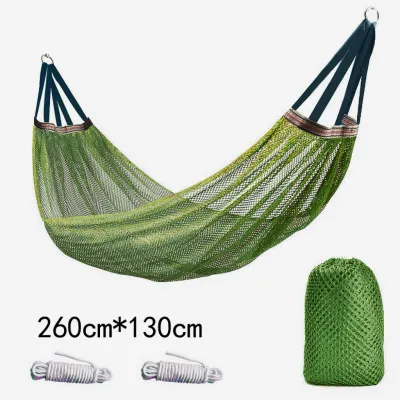
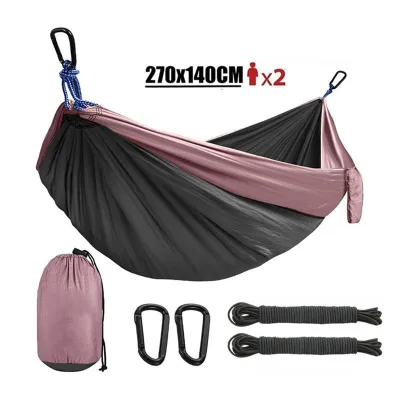
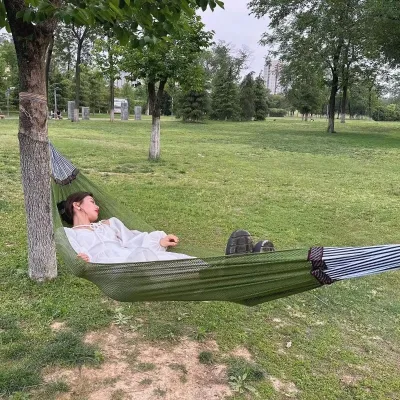
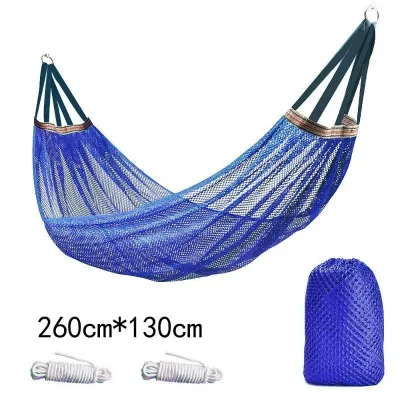
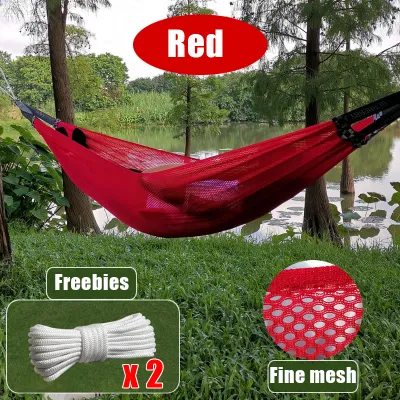
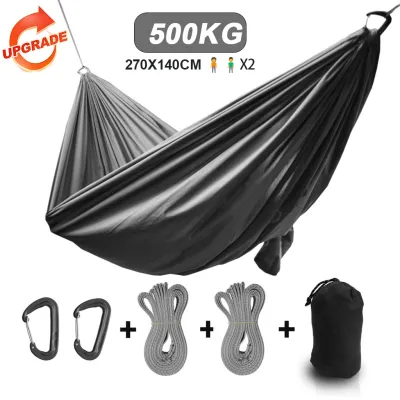
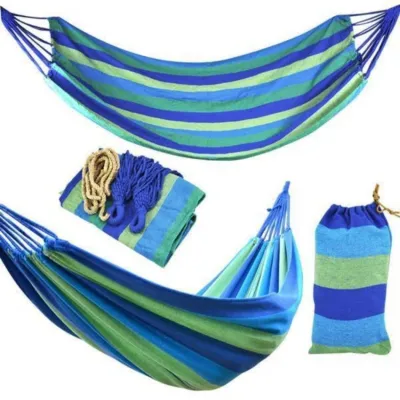
Prices are valid at publication and may change. Please refer to the product page for the latest price.
Polyester, on the other hand, exhibits significantly less stretch than nylon. A polyester hammock maintains its height and tension throughout the night, ensuring your sleeping posture remains consistent. Polyester also absorbs less moisture and dries faster than nylon, making it an excellent choice for highly humid environments or rainy seasons. The trade-off is that polyester can feel slightly stiffer and is often heavier than high-grade nylon of comparable strength.
When evaluating fabrics, pay close attention to the denier (D) rating listed on the manufacturer’s specification label. Denier measures the linear mass density of the fiber; a higher denier number indicates a thicker, heavier, and generally more durable thread. For example, a 70D nylon fabric offers robust abrasion resistance and durability, making it suitable for rugged use, car camping, or environments with dense underbrush.
Conversely, ultralight hammocks may use 20D or even 15D fabrics to minimize pack weight. While these ultralight options are highly packable, they require meticulous care to avoid punctures from twigs, zippers, or pocket items, and they typically have lower weight capacities. Always check the manufacturer’s product tags to verify the exact denier and weave type before purchasing.
Weight Capacity and Dimensional Fit
Ensuring your hammock can safely support your weight and fit your body shape is paramount to preventing structural failures and achieving a restful night’s sleep. Every camping hammock comes with a manufacturer-specified weight limit, which typically ranges from 136 to 226 kilograms. When selecting a model, do not simply match your body weight to the maximum limit. It is vital to factor in a safety margin that accounts for your sleeping gear, extra clothing, personal items stored inside the hammock, and the dynamic forces generated when you sit down or shift positions.

The physical dimensions of the hammock—specifically its length and width—are just as critical as its weight capacity. Many beginners mistakenly believe that a wider hammock is always better, but comfort actually depends on your ability to achieve a diagonal lay. In a gathered-end hammock, sleeping straight down the center line causes your body to banana-curve, compressing your shoulders and hyperextending your knees. By lying at a 30-degree angle relative to the center line, you create a flatter, more ergonomic sleeping surface.
To achieve a comfortable diagonal lay, the hammock must be sufficiently long and wide. Standard single hammocks are typically around 2.7 meters long and 1.4 meters wide. While highly packable, single hammocks can feel restrictive for taller individuals or those who prefer more room to move. Double hammocks, which generally measure 3 meters or more in length and 1.8 meters in width, provide the extra fabric necessary to stretch out diagonally. Despite the double label, these larger models are primarily used by single campers seeking optimal sleeping comfort, as sharing a gathered-end hammock with another person usually results in being squeezed together.
Before purchasing, measure your intended hanging space and verify that your suspension straps are long enough to span the distance between trees while maintaining a 30-degree hang angle. This angle is crucial for balancing the tension on the suspension lines and reducing the shear force exerted on the trees and hardware.
Suspension Systems and Hardware
A camping hammock is only as secure as the suspension system connecting it to the trees. Modern camping setups have largely abandoned traditional ropes in favor of wide, flat webbing straps. These tree-friendly straps, typically made of polyester or nylon webbing at least 2.5 centimeters wide, distribute the load across a larger surface area of the tree trunk. This design prevents the suspension from cutting into the bark, protecting the tree’s vital cambium layer from damage while ensuring a stable, non-slip anchor point on various trunk sizes.
The hardware connecting the hammock to the straps must be rated for climbing or heavy-duty load-bearing use. Look for aluminum wiregate or screw-gate carabiners that feature clear load-bearing specifications stamped directly onto the metal. Avoid cheap, accessory-grade carabiners often found on keychains, as they are not designed to support human weight and can fail catastrophically under tension.
Adjustability is another key factor to consider when evaluating suspension systems. Daisy-chain straps feature multiple pre-sewn loops along their length, allowing you to quickly clip your carabiners into the appropriate loop to adjust the height and tension of your hang. This system is incredibly user-friendly and excellent for beginners, though it offers slightly less precise adjustment than continuous loop systems.
For advanced campers looking to save weight and achieve micro-adjustments, whoopie slings—adjustable loops made from high-strength synthetic rope—provide a lightweight, highly customizable alternative. Whichever system you choose, ensure the hardware and straps are compatible and that you can easily adjust them to accommodate varying distances between trees.
Weather and Insect Protection Add-ons
To transition a simple hammock into a fully functional, year-round camping shelter, you must equip it with adequate protection against weather and insects. In tropical environments, a reliable bug net is non-negotiable. Mosquitoes, sandflies, and other biting insects can quickly ruin your sleep and pose health risks. You can choose between integrated hammocks, which feature a built-in bug net zippered directly to the fabric, and modular systems, where a separate net completely encloses the hammock.
When inspecting bug nets, look for high-density no-see-um mesh, which features holes small enough to block even the tiniest insects while still allowing for adequate airflow. Check the quality of the zippers; dual-sided, heavy-duty zippers allow for easy entry and exit. A structural ridgeline—a cord tensioned between the two ends of the hammock—is highly beneficial as it keeps the bug net suspended high above your face, preventing the mesh from resting on your skin where insects could bite through.
Rain protection is achieved through a dedicated hammock rainfly or tarp. Unlike standard camping tents that rely on a structured frame, a hammock rainfly is suspended from its own ridgeline above the hammock and secured to the ground with tie-out points. When choosing a rainfly, evaluate its coverage area and shape. Hexagonal tarps offer a great balance of coverage and weight, while rectangular or winter tarps feature end doors that can be closed to block wind-driven rain. Check the product tags for waterproof ratings, typically measured in millimeters of hydrostatic head, and ensure the seams are factory-taped to prevent leaks.
Even in warm climates, thermal insulation is a critical consideration. Wind blowing underneath the hammock carries away body heat rapidly through convective heat loss. Standard sleeping bags compress under your body weight, losing their insulating properties. To combat this, look for hammocks with a built-in sleeping pad sleeve on the bottom layer, or invest in an underquilt—an insulated blanket that hangs snugly beneath the hammock shell to trap warm air.
How to Match Features to Your Camping Style
Your choice of camping hammock features should align directly with how you plan to transport and use your gear. A backpacker traversing long distances will prioritize weight and packability, whereas a car camper can focus entirely on maximum comfort and spaciousness. Use the following comparison table to help guide your feature prioritization based on your specific outdoor activities:
| Camping Style | Recommended Fabric | Suspension Preference | Protection Needs | Key Trade-offs |
|---|---|---|---|---|
| Ultralight Backpacking | Low-denier ripstop nylon (15D–30D) | Whoopie slings or lightweight webbing | Integrated bug net, minimalist asymmetrical rainfly | Higher cost, delicate fabric requiring careful handling |
| Car Camping / Basecamp | High-denier polyester or nylon (70D+) | Heavy-duty daisy-chain straps | Modular bug net, large hexagonal or rectangular rainfly | Heavier pack weight, bulkier storage size |
| Casual Lounging | Standard nylon or cotton blends | Simple tree straps with basic carabiners | Minimal (optional bug net or sun shade) | Not suitable for overnight use or inclement weather |
When deciding between a modular setup and an all-in-one integrated system, consider your long-term camping goals. Integrated systems are convenient, quick to set up, and ensure all components fit together perfectly out of the box. However, modular setups offer superior versatility. A modular system allows you to leave the heavy bug net or rainfly behind during dry, insect-free seasons, or swap out individual components as they wear out or as your camping style evolves.
Pre-Purchase Checks and Safety Boundaries
Before finalizing your purchase, perform a thorough quality check to ensure your selected hammock meets safety standards. Carefully inspect product images or in-store displays for high-quality stitching patterns, particularly triple-stitching on the load-bearing end channels and seams. These areas experience the highest amount of stress during use, and poor stitching can lead to sudden fabric failure.
Verify that all included hardware—such as carabiners, slings, and straps—is explicitly rated to match or exceed the hammock’s stated weight capacity. Never assume bundled accessories are of the same quality as the hammock itself; check the individual hardware tags for load ratings. Additionally, review the manufacturer’s warranty terms and return policies to protect against manufacturing defects.
Once in the field, always adhere to safety boundaries. Never hang your hammock higher than you are willing to fall, with a general safety guideline of keeping the lowest point of the hammock no more than 50 centimeters off the ground when occupied. Inspect your chosen trees carefully before setup; only anchor to healthy, living trees with a trunk diameter of at least 15 centimeters. Avoid dead trees, rotting branches, or trees with loose bark, and consult local forestry guidelines or professional arborists if you are unsure of tree health or rigging safety in a specific area.
Frequently Asked Questions (FAQ)
Can I use a regular backyard hammock for camping?
No, standard backyard hammocks are generally unsuitable and unsafe for overnight camping. Backyard models often feature heavy, non-breathable materials like thick cotton or quilted fabrics that absorb moisture, dry slowly, and are far too bulky to pack. Many also utilize wooden spreader bars at either end to keep the fabric flat; while convenient for lounging, these bars make the hammock highly unstable, prone to tipping over when you shift in your sleep, and difficult to secure with standard camping suspension systems. Furthermore, backyard hammocks lack integrated attachment points for essential camping accessories like bug nets, structural ridgelines, and rainflies, leaving you completely exposed to insects and wet weather.
How do I clean and store a camping hammock after a trip?
To maintain the structural integrity of your hammock’s fabric and hardware, proper post-trip care is essential. Always refer to the manufacturer’s care label for specific instructions regarding water temperature and detergent types. Generally, you should hand-wash your hammock in cold water using a mild, non-detergent soap, avoiding harsh chemicals or fabric softeners that can degrade technical fabric coatings. Rinse the hammock thoroughly and hang it to air-dry completely in a shaded area; never put a camping hammock in a mechanical dryer or expose it to direct, intense sunlight for extended periods, as UV rays can weaken nylon and polyester fibers. Ensure the hammock, straps, and bug net are entirely dry before packing them into a breathable storage sack to prevent mold and mildew growth, and inspect the webbing straps for any signs of fraying or UV degradation before your next adventure.
Community discussion
Share your experience or ask a question. Comments are reviewed before publication.