
Selecting a kids bed requires looking beyond appealing designs and finding a structure that guarantees physical security. When browsing options like a homemaker furniture bed, your primary focus must be on verifying specific safety features, structural reinforcements, and material certifications. In the Philippines, where tropical humidity can affect wood joints and metal fasteners over time, choosing a bed with robust construction is essential for long-term safety. By systematically checking guardrail heights, slat spacing, material finishes, and frame stability, you can create a secure sleeping environment that protects your child from falls, entrapment, and chemical exposure.
Structural Integrity and Stability Checks
Evaluating the overall sturdiness of a bed frame is the first line of defense against structural failure. When visiting a showroom or inspecting an assembled unit at home, perform a physical shake test by grasping the top of the headboard or guardrail and applying firm, multi-directional pressure. A safe bed frame should feel rigid and grounded, showing no noticeable swaying, flexing, or creaking at the joint connections. If the frame wobbles during this test, it often indicates loose hardware, poor joint design, or low-grade materials that may degrade quickly under the daily physical activity of a growing child.
For elevated structures such as loft beds, bunk beds, or tall single frames, anti-tip anchoring hardware is a critical safety component. You must verify whether the manufacturer includes wall-anchoring brackets and straps designed to secure the frame directly to the wall studs or masonry. In tropical regions where homes may have concrete or plaster walls, ensure you have the correct wall plugs and heavy-duty screws to complete this installation securely. Anchoring prevents the bed from tipping over if a child attempts to climb the outer frame or hangs from the side rails.
Products mentioned in this guide
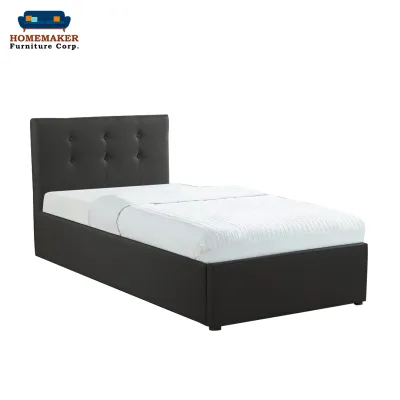
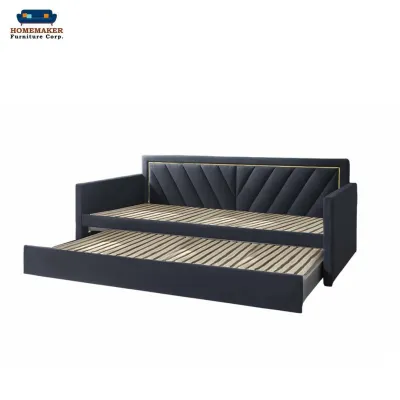
Prices are valid at publication and may change. Please refer to the product page for the latest price.
Additionally, closely inspect the quality and placement of all assembly hardware. Safe children’s furniture utilizes recessed bolts, barrel nuts, or capped screws that sit flush with or below the wood surface. Exposed screw heads, sharp metal brackets, or protruding bolts pose a significant risk of snagging clothing, blankets, or skin during play and sleep. Check that all metal fasteners are made of corrosion-resistant materials to withstand high indoor humidity without weakening or rusting over time.
Guardrails, Slats, and Entrapment Risks
Falls from bed are among the most common childhood injuries, making guardrail design a paramount consideration. When examining a bed, measure the height of the guardrails relative to the top of the mattress you plan to use. The guardrail must extend significantly above the mattress surface—ideally leaving a substantial protective barrier to prevent a sleeping child from rolling over the edge. Always refer to the manufacturer’s specified maximum mattress thickness to ensure you do not inadvertently compromise this safety clearance by using a mattress that is too tall.

Entrapment hazards are another critical area that requires precise verification rather than visual estimation. Check the spacing between individual slats, as well as any decorative cutouts in the headboard and footboard. To prevent a child’s head, neck, or limbs from becoming trapped, the gap between slats or within cutouts should be narrow enough to block passage but wide enough to avoid pinching. Look for product safety labels or technical specifications that explicitly state compliance with standard spacing limits, ensuring the design prevents dangerous gaps.
The mattress support system itself must be robust enough to handle active movement, jumping, and daily wear. Inspect how the slats are secured to the side rails; they should be firmly screwed down or locked into dedicated slots rather than simply resting on a ledge. For wider beds or bunk beds, verify the presence of a sturdy center support rail with adjustable legs that contact the floor. This center support distributes weight evenly, prevents the slats from sagging or bowing, and ensures the entire mattress foundation remains locked in place.
Material Safety and Finish Verification
The chemical composition of the materials used in your child’s bed directly impacts their indoor air quality and overall health. Before purchasing, look for manufacturer documentation or physical labels certifying that all paints, stains, and protective coatings are non-toxic and lead-free. Children often chew on bed rails, especially during teething years, making food-safe, lead-free finishes an absolute necessity. Certifications indicating low volatile organic compound (VOC) emissions help ensure the bed will not release harmful chemical fumes into a closed, air-conditioned bedroom.
Engineered wood products, such as medium-density fiberboard (MDF) or particleboard, are commonly used in modern furniture construction. If the bed contains these materials, verify that they comply with recognized formaldehyde emission standards, such as CARB Phase 2 or EPA TSCA Title VI. In the warm, humid climate of the Philippines, high temperatures and moisture can accelerate the off-gassing of formaldehyde from low-quality adhesives. Checking for these compliance labels ensures the engineered wood components meet strict safety thresholds for indoor air quality.
Physical material safety also extends to the tactile finish of the bed frame. Run your hands along all edges, corners, ladder rungs, and decorative elements to check for proper rounding and smooth sanding. Sharp corners should be softened or radiused to minimize the impact of accidental bumps, while wooden surfaces must be completely free of splinters, rough grain, or peeling laminate. Ensure that any plastic or metal trim is securely bonded to the frame without sharp edges or peeling corners that could scratch a child.
Mattress Fit and Compatibility
A mismatched mattress and bed frame can create dangerous gaps that pose severe entrapment and suffocation risks. To verify a safe fit, apply the “two-finger rule” around the entire perimeter of the mattress once it is placed inside the bed frame. If you can easily insert more than two fingers between the edge of the mattress and the inner side of the bed frame, the gap is too wide. This indicates that either the mattress is too small or the bed frame’s internal dimensions are non-standard, requiring a different mattress size to eliminate the hazard.
Furthermore, the thickness of the mattress must be carefully matched to the bed’s structural design. For bunk beds and loft beds, using a mattress that is too thick reduces the effective height of the guardrails, rendering them useless. Check the manufacturer’s safety markings on the bed frame, which often feature a line indicating the maximum allowable mattress height. Keeping the mattress surface well below this line ensures the guardrails can perform their protective function during the night.
Always verify that the mattress dimensions exactly match the manufacturer’s specified internal frame measurements. Do not rely solely on generic terms like “single” or “twin,” as standard mattress sizes can vary slightly between brands and regions. Measuring the inner length and width of the bed frame yourself, or cross-referencing the exact millimeter or inch specifications provided by the manufacturer, guarantees a snug, secure fit that prevents the mattress from shifting or sliding.
Age Appropriateness and Weight Limits
Selecting a bed that aligns with your child’s developmental stage is essential for preventing accidents. Carefully read the manufacturer’s mandatory warning labels regarding age restrictions before making a purchase. For instance, standard safety guidelines dictate that top bunks and loft beds are not suitable for children under six years of age due to the coordination and judgment required to navigate ladders safely. Choosing a low-to-the-ground toddler bed or a standard single bed is a much safer option for younger children who are transitioning from a crib.
Weight capacity is another critical specification that must be verified to prevent structural collapse. Check both the static weight limit (the weight the bed can hold when stationary) and the dynamic weight limit (which accounts for movement, such as a child climbing or rolling). Ensure the bed frame, ladder, and any integrated features like study desks or play platforms can comfortably support your child’s current weight plus expected growth. Keep in mind that parents may occasionally sit on the edge of the bed for bedtime stories, so factoring in this additional weight is a wise precaution.
The design of the ladder or steps on elevated beds requires close inspection to ensure safe climbing. Look for wide, flat rungs rather than thin, round metal bars, as flat steps provide better traction and are more comfortable for small feet. The ladder must attach securely to the bed frame using heavy-duty brackets or bolts that prevent it from shifting or detaching during use. Additionally, a slight incline is generally easier and safer for a child to climb than a completely vertical ladder, reducing the risk of slips and falls.
Frequently Asked Questions (FAQ)
How can I verify if a kids bed meets safety standards in the Philippines?
To verify safety compliance, start by inspecting the physical frame of the bed for permanently attached warning labels or manufacturer plates. These labels typically detail the manufacturer’s name, model number, production date, and specific safety warnings regarding age and mattress size. Next, review the product manual or assembly instructions for explicit statements of compliance with recognized international safety standards, such as ASTM or EN standards. If you cannot find physical labels or written compliance statements on the packaging, contact the retailer or manufacturer directly to request their official safety certification documentation before finalizing your purchase.
What should I do if the bed frame wobbles after assembly?
If you notice any wobbling or instability after assembling the bed, immediately stop using it and perform a systematic hardware check. Begin by re-examining the assembly manual to ensure all bolts, screws, and dowels were installed in the correct sequence and orientation. Use the appropriate tools to tighten all connections firmly, taking care not to over-tighten and strip the threads, especially in wooden frames. Next, verify that the bed is positioned on a completely level floor surface, as uneven flooring can cause a sturdy frame to rock; you can use a spirit level to check this and adjust any leveling glides if provided. If the wobbling persists after tightening and leveling, do not attempt to make DIY structural modifications or add unapproved reinforcements; instead, contact the manufacturer’s customer service or a qualified furniture professional to assess the frame for defects.

Community discussion
Share your experience or ask a question. Comments are reviewed before publication.