
Choosing the right couch for a large family in the Philippines is a major household decision. It is not just about finding a piece of furniture that looks good; it is about accommodating multi-generational gatherings, surviving the daily wear and tear of children and pets, and fitting seamlessly into your specific living room layout. The choice between an L-shaped couch and a modular couch often comes down to how you use your space, the architectural layout of your home, and your long-term flexibility needs.
An L-shaped couch is ideal if you have a defined corner space and want a structured, permanent lounging area that anchors the room. It offers a clean, cohesive look with a continuous frame. In contrast, a modular couch excels in open-concept living spaces, offering unmatched flexibility because you can rearrange, expand, or separate the individual seating sections as your household needs change. It is also highly practical for homes with tight entryways, narrow stairwells, or small condominium elevators.
Choose an L-Shaped Couch if:
Products mentioned in this guide
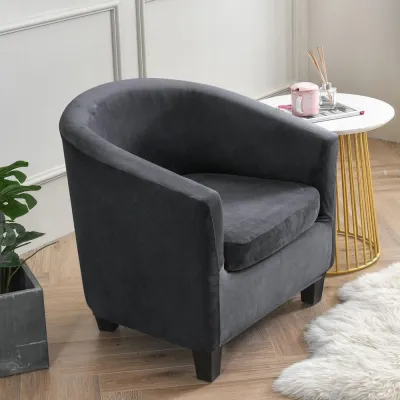
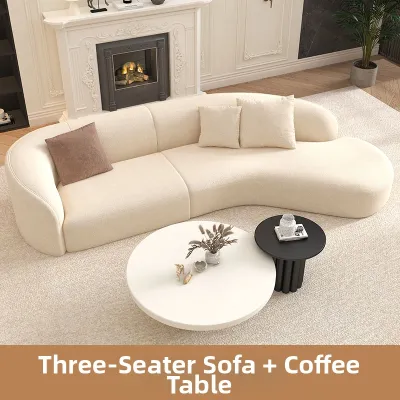
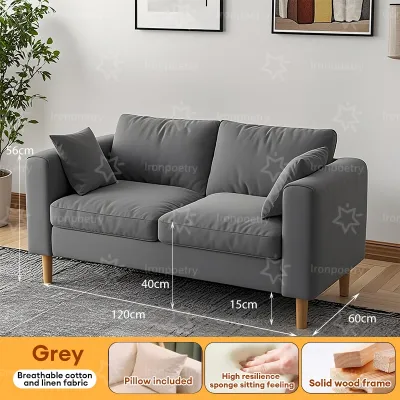
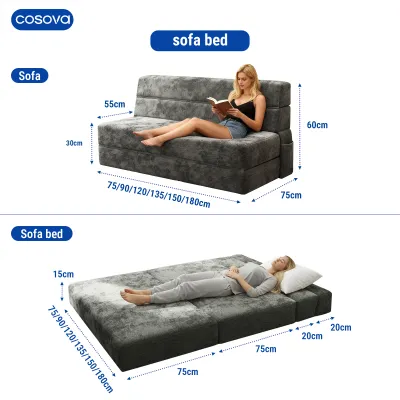
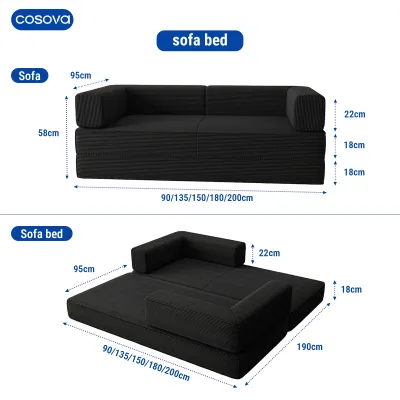
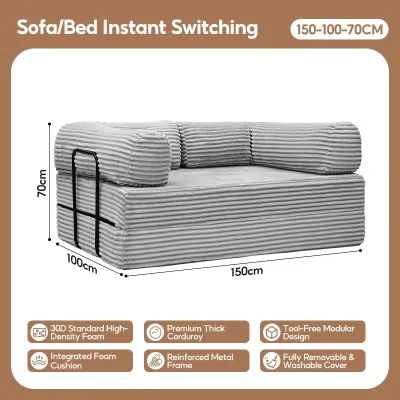
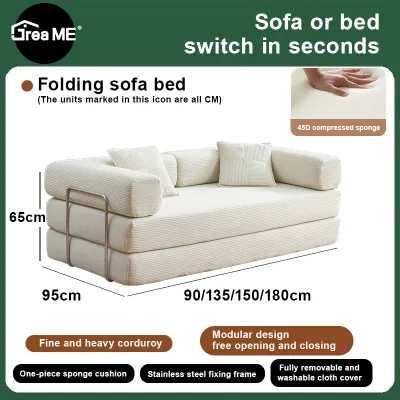
Prices are valid at publication and may change. Please refer to the product page for the latest price.
- You want to anchor a specific corner of your living room and maximize central floor space.
- You prefer a unified, traditional aesthetic with no visible gaps or seams between sections.
- You want a dedicated, continuous chaise lounge area for movie nights.
- Your home has wide doorways and straightforward delivery access.
Choose a Modular Couch if:
- You have an open-plan living and dining area and want a highly adaptable layout.
- You frequently host large family gatherings (salo-salo) and need to rearrange seating.
- You want the option to replace or clean individual damaged sections over time.
- Your home has narrow hallways, tight staircase turns, or a small elevator.
Understanding the Core Differences: L-Shaped vs Modular
To make an informed decision, you must first understand the structural and functional differences between these two popular configurations. While they can look similar at a glance, their underlying construction and daily usability are entirely different.
What Defines an L-Shaped Couch?
An L-shaped couch, often referred to as a sectional with a chaise, features a fixed, continuous frame. It typically consists of a standard multi-seat sofa section permanently attached to a corner terminal or a long chaise lounge on one side. When purchasing an L-shaped couch, you must choose between a Left-Arm Facing (LAF) or Right-Arm Facing (RAF) orientation. This orientation is determined by looking at the couch from the front. Because the frame is fixed, this configuration cannot be reversed or altered later. If you buy a left-facing couch, the chaise will always remain on the left, dictating how you must position the furniture in your room.
What Defines a Modular Couch?
A modular couch is composed of several independent, freestanding sections—often called modules—that can be arranged in multiple configurations. These modules typically include armless middle seats, corner units, left- and right-arm end pieces, and independent ottomans. They are designed to connect securely using specialized hardware, such as alligator clips, slide-in metal brackets, or heavy-duty interlocking bases. This design allows you to assemble the pieces into an L-shape, a symmetrical U-shape, a long straight sofa, or even separate them into individual armchairs and free-floating footrests. This adaptability makes modular seating highly versatile for dynamic households.
Space and Layout: Measuring Your Living Room for a Large Couch
Before browsing online catalogs or visiting local showrooms, taking precise measurements of your living room is non-negotiable. Large couches occupy a significant amount of visual and physical space, and an improperly sized piece can disrupt the natural flow of your home.

When measuring your living room, do not limit yourself to the length of the main wall. You must measure the total floor area, accounting for the placement of windows, electrical outlets, light switches, air conditioning units, and existing furniture like TV consoles or side tables. Crucially, map out the traffic flow. Ensure there is a clear pathway of at least 60 to 90 centimeters between the couch and other objects to allow family members to walk comfortably without bumping into corners.
An L-shaped couch naturally hugs the walls, making it an excellent choice for maximizing space in smaller or narrower living rooms. By placing the long sides against two walls, you keep the center of the room open for children to play or for placing a central coffee table. A modular couch, on the other hand, is highly effective when “floated” in the middle of a larger room. In modern open-plan Filipino homes, where the living area, dining area, and kitchen flow into one another, a modular couch can serve as a stylish, functional room divider that defines the lounge space without blocking sightlines.
To visualize how either option will fit, use painter’s tape or lay down newspapers on the floor to match the exact dimensions of the couch you are considering. Walk around this mock-up for a day or two to test the traffic flow. When reviewing product specifications, always rely on the manufacturer’s exact finished dimensions—including total width, depth, height, and armrest width—rather than generic industry terms like “6-seater” or “family size.” Actual depths and cushion overhangs vary significantly between brands, and a couch that looks compact in a high-ceilinged showroom can easily overwhelm a standard residential living room.
Seating Capacity and Family Habits: How Many People Actually Fit?
A large family requires seating that is not only spacious but also practical for daily interactions. How your family lounges, watches television, and hosts guests should directly influence which configuration you choose.
One common misconception is that a larger couch automatically translates to more usable seating. On a standard L-shaped couch, the corner seat where the two sections meet is often deep and lacks direct legroom if people are sitting on both adjacent sides. This “dead corner” is highly comfortable for one person to stretch out and lounge, but it is rarely useful for upright, formal seating when hosting guests. Consequently, an L-shaped couch with a nominal capacity of six might only seat four or five people comfortably during an active family gathering.
In contrast, a modular couch allows you to optimize usable seating based on the occasion. For a casual movie night, you can push the modules together to create a giant, bed-like lounging platform where parents and children can all pile on comfortably. For a Sunday salo-salo or a birthday celebration with extended family, you can separate the modules, pulling an ottoman to the center as an extra seat and shifting corner pieces to create distinct conversational zones. This prevents guests from feeling cramped or forced to sit shoulder-to-shoulder in a single line.
Because a large family puts continuous physical stress on living room furniture, structural stability and weight capacity are critical safety considerations. Instruct your family to avoid jumping on the cushions, and carefully check the manufacturer’s specifications for frame materials and joint construction. Look for frames made from kiln-dried solid hardwoods, which resist warping in humid climates, and joints that are double-doweled, glued, and reinforced with corner blocks. For modular couches, pay close attention to the connector hardware. Low-quality connectors can slip or bend over time, causing the individual modules to slide apart when someone sits down. Verify that the couch uses heavy-duty steel brackets or alligator clips that lock firmly into place.
Flexibility and Longevity: Adapting to Changing Family Needs
Investing in a high-quality couch is a long-term commitment. As your family grows, children age, or your living arrangements change, your furniture must be able to adapt to these transitions.
Modular couches offer superior long-term flexibility. If you move from a spacious house to a cozy condominium, you can easily reconfigure the modules to fit a smaller floor plan, or even move one or two modules into a bedroom or study. If your family expands, many manufacturers allow you to purchase additional matching modules years later, extending the lifespan of your original investment. With a fixed L-shaped couch, your options are limited. If you relocate to a home where the corner layout is reversed, a fixed left-arm chaise may block a primary walkway or window, forcing you to sell or replace the entire couch prematurely.
Maintenance and wear are also major factors in the longevity of family furniture, especially in the tropical, high-humidity climate of the Philippines. High humidity can trap moisture in dense cushions, leading to mold, mildew, and unpleasant odors if the materials are not properly maintained. Before purchasing, do not assume a specific fabric name guarantees durability or stain resistance. Instead, instruct your family to check the product’s care labels, cleaning codes (such as W for water-based cleaners or S for solvent-based cleaners), and the manufacturer’s specific guidelines for washing and stain removal.
Modular couches offer a distinct maintenance advantage for busy households with young children or pets. If a section of the couch suffers a severe spill, stain, or physical tear, you can isolate that specific module. Many modular designs feature fully removable, machine-washable slipcovers, making deep cleaning straightforward. If the damage is permanent, you can often order a single replacement module from the manufacturer rather than having to reupholster or replace the entire couch, saving significant money and effort over time.
Delivery, Assembly, and Moving: Navigating Tight Spaces
Many homeowners overlook the logistics of getting a large couch into their living room until the delivery truck arrives. In the Philippines, navigating narrow townhouse stairwells, tight suburban gates, or small high-rise condominium elevators can present major challenges.
An L-shaped couch typically arrives in two or three massive, heavy, and awkwardly shaped boxes. These large packages require significant clearance to maneuver around tight corners, through standard 80-centimeter doorways, and up multi-story staircases. If you live in a high-rise condominium, a large L-shaped box may not fit inside the residential elevator, requiring the delivery team to carry it up multiple flights of stairs—a logistical headache that often incurs extra fees or risk of damage.
Modular couches offer a massive logistical advantage because they are delivered in multiple smaller, uniform boxes—typically one box per module. These compact boxes are easy to carry through narrow front doors, navigate around tight hallway corners, and fit into standard passenger elevators. This makes modular configurations the preferred choice for urban condo dwellers and homes with restricted access.
Before placing your order, take the critical step of measuring every point of entry. Measure the height, width, and diagonal clearance of your front gate, main entry door, interior doorways, hallway turns, and staircase clearance (including low ceilings). If you use an elevator, measure the door opening width, interior cabin height, and depth.
Additionally, consider the assembly requirements. While modular couches are easier to transport, they require you to unbox and connect multiple individual pieces, which can be time-consuming. L-shaped couches, while heavier, often require less assembly beyond attaching the feet and securing the main interlocking brackets between the two primary sections. Always review the retailer’s delivery and assembly policies before purchasing to confirm if they offer professional assembly services and packaging removal, ensuring a smooth and stress-free setup.
Final Verdict: How to Choose the Right Couch for Your Home
Choosing between an L-shaped and a modular couch ultimately depends on balancing your physical space, your family’s daily lifestyle, and your long-term living plans. Both configurations offer distinct benefits, but one will align more naturally with your household’s unique needs.
Choose an L-Shaped Couch if:
- You have a defined corner wall in your living room and want to keep the central floor area completely open.
- You prefer a classic, seamless aesthetic with a continuous frame and no visible gaps between cushions.
- You want a dedicated, extra-long chaise lounge that is permanently positioned for personal comfort.
- Your home has wide, accessible entryways, and you do not plan on moving or rearranging your furniture frequently.
Choose a Modular Couch if:
- You live in an open-concept home and want to use the couch to divide or define different living zones.
- You host frequent family gatherings and need the flexibility to rearrange seating layouts quickly.
- You live in a home with tight entryways, narrow staircases, or small condominium elevators.
- You want a future-proof investment that can expand, shrink, or be reconfigured as your living arrangements change.
Verify First if:
- You are uncertain about your exact room dimensions, doorway clearances, or elevator limits. Stop and measure again, or consult the manufacturer's customer service team for detailed packaging dimensions before finalizing your purchase. Always check the structural weight limits and connector specifications to ensure the couch can safely support your family's daily activities.
Frequently Asked Questions (FAQ)
Can I convert a fixed L-shaped couch into a modular one later?
No, you cannot safely or easily convert a fixed L-shaped couch into a modular one. Fixed L-shaped couches are constructed with a continuous internal wooden frame and specialized joint brackets designed to keep the main sofa and chaise sections permanently aligned. Attempting to separate these sections will expose unfinished fabric, raw wood, and structural hardware, which compromises both the aesthetic appeal and the structural integrity of the furniture.
Which configuration is better for homes with young children and pets?
Neither configuration is universally better; instead, the key to durability lies in fabric selection and maintenance. However, modular couches offer a practical advantage because they allow you to isolate, clean, or replace a single damaged or heavily soiled module. Regardless of the configuration you choose, always check the manufacturer’s fabric care labels and cleaning codes to ensure the material can withstand frequent spot cleaning, vacuuming, or machine washing in a busy household.
Do modular couches separate easily when people sit on them?
High-quality modular couches are designed to stay firmly together using secure connecting mechanisms such as heavy-duty steel alligator clips, slide-in brackets, or weighted bases with non-slip rubberized feet. To prevent the sections from separating on smooth tile or wooden floors, verify the specific connector hardware used by the manufacturer and carefully follow the provided assembly instructions to ensure all modules are properly locked into place before use.
Community discussion
Share your experience or ask a question. Comments are reviewed before publication.