
Choosing the right sofa configuration for a large family in the Philippines is a decision that shapes the comfort, flow, and daily life of your household. The living room is often the most active space in a Filipino home, serving as a multi-generational gathering spot where children play, parents unwind, and grandparents relax. During weekends, holidays, and family milestones, this space must seamlessly transition into an entertainment hub for extended family and friends.
Deciding between an L-shaped and a modular Maia sofa configuration requires a careful balance of spatial planning, lifestyle analysis, and structural verification. While an L-shaped layout provides a structured, space-defining anchor that maximizes corner efficiency for daily lounging, a modular setup offers the flexibility to rearrange, expand, or separate seating to accommodate changing guest counts and active household activities. This guide outlines the spatial, structural, and logistical checks needed to select the right layout for your home.
Assessing Your Space and Household Needs
Before diving into specific sofa designs, you must thoroughly evaluate your living room’s physical dimensions and your family’s daily routines. Tropical homes often feature open-plan layouts that combine the living room, dining area, and kitchen into one continuous space. While this creates an airy, spacious feel, it also means your furniture must help define distinct zones without disrupting the overall flow of the home.
Products mentioned in this guide
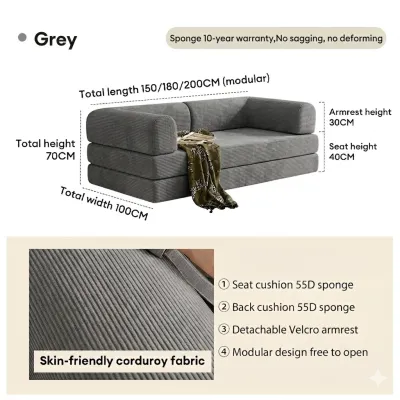
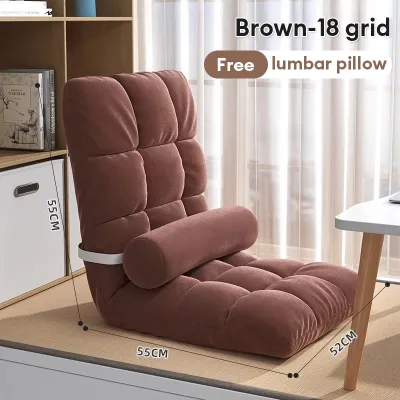
Prices are valid at publication and may change. Please refer to the product page for the latest price.
Begin by taking precise measurements of your available floor space. Do not rely on visual estimates; use a tape measure to map out the exact footprint where the sofa will sit. Pay close attention to fixed architectural features such as low-hanging windows, doorways, columns, and electrical outlets. In the Philippines, maintaining proper air circulation is crucial for managing indoor humidity and heat. Placing a large sofa directly against a window can block natural ventilation, while blocking wall outlets can limit your ability to plug in fans, air purifiers, or entertainment systems.
Next, identify your household’s primary use cases. Does your family spend most of their time watching television together, or do you prefer face-to-face conversations? If daily lounging and movie nights are your priority, you will want a configuration that offers deep seating and comfortable legroom for everyone. However, if you frequently host neighborhood gatherings, Bible study groups, or extended family dinners, your seating needs to facilitate easy interaction and movement.
Finally, determine the maximum seating capacity required for your household. A large family of five or six, plus regular weekend guests, can easily overwhelm a standard three-seater couch. You must calculate how many people need to sit comfortably at the same time. This calculation will serve as your baseline when comparing the seating capacities of L-shaped and modular configurations.
L-Shaped Maia Sofas: Fixed Comfort and Corner Efficiency
An L-shaped Maia sofa is an excellent choice for families seeking a dedicated, permanent lounging zone. This configuration features a continuous, unified frame with a fixed chaise or corner section that extends perpendicular to the main seating area. The primary benefit of this design is its ability to anchor a room, creating a clear visual boundary between the living area and other parts of the home, such as the dining room or entryway.

For homes with compact or corner-heavy layouts, an L-shaped sofa offers exceptional space efficiency. By tucking the corner section neatly into a corner of the room, you maximize seating capacity without consuming valuable floor space in the center of the living room. This leaves more open area for children to play safely or for high-traffic walkways to remain clear. The continuous design also provides a cozy, cohesive look that invites family members to gather closely for shared activities.
However, the fixed nature of an L-shaped sofa requires careful planning before you make a purchase. Because the frame cannot be rearranged, you must ensure that the sofa’s footprint does not block primary walkways or create awkward bottlenecks. A fixed chaise that extends too far into a high-traffic path can force family members to take inconvenient detours, which can become frustrating in a busy household.
Additionally, you must verify the specific chaise orientation required for your room’s layout before placing an order. L-shaped sofas are typically designated as either left-facing or right-facing, determined by looking directly at the front of the sofa. Choosing the wrong orientation can result in a chaise that blocks a doorway, covers an essential power outlet, or disrupts the visual balance of your living room. Carefully review your measured floor plan and compare it with the manufacturer’s product specifications to ensure you select the correct orientation for your space.
Modular Maia Sofas: Flexibility and Scalable Seating
For dynamic households that require high adaptability, a modular Maia sofa configuration offers a highly versatile seating solution. Unlike a traditional L-shaped sofa, which is built on a single, rigid frame, a modular sofa consists of individual, independent seating units—such as corner chairs, armless chairs, and ottomans. These pieces can be arranged, separated, and reconfigured in countless ways to suit your changing needs.
This flexibility is particularly advantageous for large families who love to host social gatherings. For everyday use, you can arrange the modules into a classic L-shape or U-shape to create a cozy, unified family lounging area. When guests arrive for a fiesta, birthday party, or casual get-together, you can easily separate the modules into smaller seating clusters around the room. This encourages natural conversation flow and allows guests to move freely without feeling crowded.
When evaluating a modular system, the connection mechanism between the individual pieces is a critical factor to check. Because the modules are separate units, they can slide apart on smooth flooring surfaces, such as polished tiles or hardwood, during active family use. Check the manufacturer’s specifications to ensure the sofa uses secure, heavy-duty connectors—such as alligator clips, interlocking brackets, or specialized rubberized feet. Reliable connection systems keep the modules firmly locked together, preventing gaps from forming and ensuring a safe, stable seating experience for children and older adults.
Another significant benefit of a modular configuration is its long-term scalability. As your family grows, your budget allows, or you move into a larger home, you can purchase additional modules to expand your seating capacity. This eliminates the need to buy an entirely new sofa when your living situation changes. However, before relying on this option, verify with the retailer whether individual modules are sold separately and if the specific fabric colors and textures will remain available in the future.
Key Dimensions and Clearance Checks for Large Families
Purchasing a large sofa for a big family involves significant logistical planning, especially when it comes to delivery and installation. Many homes in the Philippines, including multi-story townhouses, subdivisions, and high-rise condominiums, feature narrow entryways, tight stairwells, and compact elevators that can present major obstacles during delivery day.
Before finalizing your purchase, you must measure every doorway, hallway, stairwell, and elevator door through which the sofa sections must pass. Because L-shaped sofas feature large, rigid frames, they can be incredibly difficult to maneuver through tight corners or up narrow stairs. In contrast, modular sofas are typically delivered in smaller, individual boxes, making them much easier to transport through restricted spaces. If your home has challenging access points, a modular configuration may save you significant stress and potential delivery complications.
Next, verify the weight capacity and frame stability specifications provided by the manufacturer. A sofa for a large, active family must be built to withstand daily wear and tear. Look for frames constructed from high-quality, kiln-dried hardwoods, which resist warping and cracking in humid tropical climates. Check the joint construction methods, prioritizing reinforced joints such as double-dowelled or corner-blocked frames. Ensuring the sofa has a robust weight capacity is essential for maintaining safety and durability over years of heavy use.
Finally, ensure you maintain adequate clearance around the sofa to facilitate safe and comfortable movement. Standard interior design guidelines recommend leaving a minimum of 90 centimeters (approximately 3 feet) of walkway space between the sofa and other furniture pieces, walls, or doorways. This clearance prevents the living room from feeling cramped and ensures that family members can move around the space without bumping into corners or blocking pathways.
Decision Framework: Which Configuration Fits Your Home?
To finalize your choice between an L-shaped and a modular Maia sofa, consider how your spatial constraints align with your family’s lifestyle.
Choose the L-shaped configuration if:
- Your living room has a dedicated corner that can accommodate a permanent, fixed layout without blocking walkways.
- You prefer a clean, streamlined aesthetic with a continuous frame that clearly defines your living space.
- Your family's daily routine revolves around consistent, structured lounging, and you rarely feel the need to rearrange your furniture layout.
Choose the modular configuration if:
- You live in a condominium, townhouse, or home with narrow entryways and tight stairwells where a large, single-frame sofa cannot easily fit.
- You frequently host guests and need the ability to reconfigure your seating to accommodate different social activities and conversation layouts.
- You want a scalable seating solution that can grow with your family or adapt to different room layouts if you move in the future.
Before making your final decision, always verify the exact product specifications, fabric care requirements, and warranty terms provided by the manufacturer to ensure your investment is fully protected and perfectly suited to your home.
Frequently Asked Questions (FAQ)
How do I clean and maintain the Maia sofa fabric?
To keep your sofa looking its best in a humid tropical climate, regular maintenance is essential. Always consult the specific fabric care tag attached to your Maia sofa for exact cleaning instructions, as different materials require different care methods. For daily maintenance, vacuum the upholstery regularly to remove dust, pet dander, and allergens. In the event of a spill, act quickly: use a clean, dry cloth to blot the liquid immediately. Never rub or scrub the stain, as this can push the liquid deeper into the fabric fibers and damage the weave. For stubborn stains or deep cleaning, it is best to stop DIY attempts and consult a professional upholstery cleaning service to avoid accidental damage.
Can I add more modules to an existing L-shaped Maia sofa later?
Generally, fixed L-shaped sofas are built on a unified, solid frame, meaning they cannot be extended or converted into a modular system later. The structural design is set during manufacturing. On the other hand, true modular systems are designed specifically for expansion. If you purchase a modular configuration, you can typically add more pieces later, provided the manufacturer still produces the same model, fabric, and colorway. To avoid disappointment, always confirm the long-term availability of individual modules and compatibility options with the retailer or brand before making your initial purchase.
Community discussion
Share your experience or ask a question. Comments are reviewed before publication.