
Selecting the ideal seating arrangement for a bustling, multi-generational Filipino household is a decision that shapes your home’s daily rhythm. The right setup must accommodate grandparents, energetic children, and visiting relatives while fitting seamlessly into your space. When investing in a central living room piece, such as a high-quality leader sofa set, choosing between an L-shaped and a modular configuration determines how your family interacts, relaxes, and utilizes the room.
There is no single “best” option for every household; the ideal choice depends on your living room’s architectural layout and your family’s daily interaction patterns. L-shaped sofas offer a fixed, space-efficient corner solution that is ideal for defined living areas and unified media viewing. In contrast, modular sofas provide ultimate flexibility, allowing large or multi-generational households to reconfigure seating for hosting, conversing, or adapting to open-plan spaces. Key decision factors include your room’s physical dimensions, your immediate seating capacity needs, and your long-term adaptability requirements.
Space and Layout: Fitting Your Living Room Shape
Your living room’s architectural layout dictates which sofa configuration will function best without disrupting daily traffic. L-shaped sofas are highly effective at maximizing corner spaces, making them an excellent choice for rectangular or square rooms with clear, defined boundaries. By hugging the walls, an L-shaped configuration keeps the center of the room open, providing plenty of floor space for children to play or for placing a low coffee table. This layout naturally establishes a clear boundary for the living area, which helps define the space in homes where the living room sits adjacent to a dining area or entryway.
Products mentioned in this guide
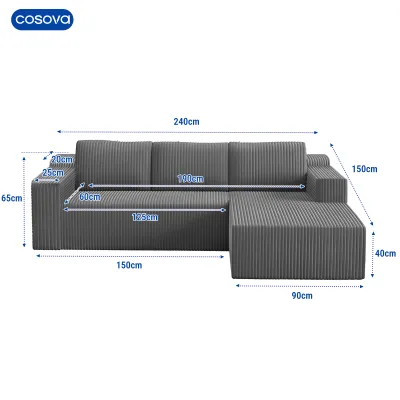
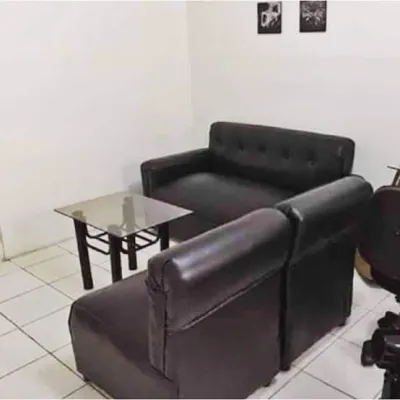
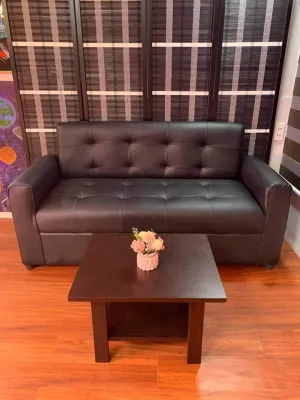
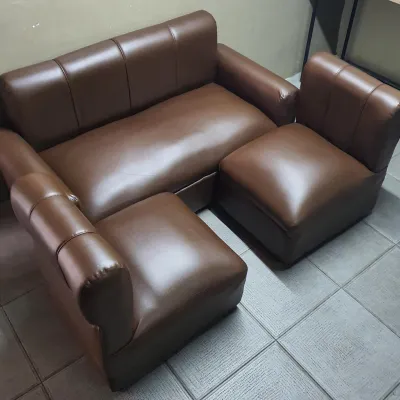
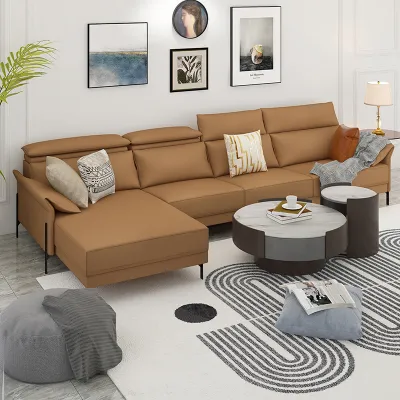
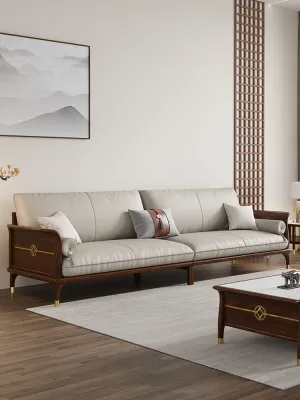
Prices are valid at publication and may change. Please refer to the product page for the latest price.
Modular sofas offer a different spatial advantage by adapting to irregular or highly open-plan living areas. Because a modular set consists of individual, movable sections, you can arrange the pieces into U-shapes, double L-shapes, or even separate them into distinct seating zones. In large, open-concept homes common in modern suburban developments, a modular configuration can act as a soft room divider without blocking natural light or airflow. If your living room features awkward architectural elements like structural columns, low windowsills, or offset doorways, modular pieces can be positioned to work around these obstacles rather than forcing you to block pathways.
Regardless of the configuration you choose, successful installation relies on meticulous measurement before purchasing. Large fixed sofas and multi-piece modular sets require careful clearance planning to ensure they can be delivered into your home without damage. You must measure every point of entry along the delivery path, not just the final living room footprint.
Delivery and Clearance Checklist
- Entry Points: Measure the height and width of all exterior doorways, security screen doors, and interior hallway doors.
- Stairwells and Hallways: Check the clearance of tight corners, low ceilings, and stairwell banisters, especially in multi-story townhouses.
- Condominium Elevators: If you live in a high-rise building, obtain the interior cabin dimensions (height, width, depth) and elevator door clearance from your building administration.
- Living Room Traffic Paths: Ensure there is at least 75 to 90 centimeters of walking space between the sofa and adjacent walls, dining tables, or structural pillars to maintain natural traffic flow.
- Sofa Clearance: Leave approximately 30 to 45 centimeters of space between the sofa cushions and your coffee table to allow for comfortable legroom and easy movement.
Seating Capacity and Family Dynamics
For a large Filipino family, the sofa is more than just a place to sit; it is the hub for Sunday gatherings, movie nights, and casual afternoon chats. An L-shaped configuration excels at creating a unified focal point. Because all seating sections are connected in a continuous line, everyone faces a central direction, such as a television screen, a home karaoke setup, or a large window. This makes the L-shaped sofa highly suitable for families who prioritize shared entertainment. However, this fixed arrangement can limit direct face-to-face conversation for people seated at the far ends of the “L,” as they must lean forward or turn sideways to make eye contact.

Modular configurations support more dynamic family interactions by allowing you to create intimate conversational groupings. By placing modular sections opposite or perpendicular to one another, you can encourage natural face-to-face discussion during family meetings or casual visits. For extended family gatherings, you can easily pull the modules apart to create separate zones. This allows the adults to sit together for a quiet chat in one corner of the room while the younger children use a separate module as a cozy reading or gaming nook nearby. This zoning capability is particularly beneficial in multi-generational households where different age groups share the same living space simultaneously.
When evaluating seating for a large family, comfort and physical durability must take precedence over aesthetics alone. Daily use by multiple generations places significant physical stress on a sofa’s frame, suspension, and cushions. Before making a purchase, it is highly recommended to physically test the seat depth and cushion firmness to ensure they meet your family’s needs.
Comfort and Upholstery Verification Guidelines
- Seat Depth and Height: Ensure the seat depth allows shorter family members to sit comfortably with their backs supported, while the seat height should enable older adults to stand up easily without straining their knees.
- Cushion Support: Look for high-density foam cores wrapped in polyester fiber or pocket springs, which offer a balance of initial comfort and long-term structural support.
- Frame and Joint Stability: Ask the retailer about the frame construction; kiln-dried hardwood frames with double-dowelled and glued joints provide superior stability under heavy weight compared to stapled engineered wood.
- Upholstery Durability: Check product labels and manufacturer specifications for heavy-duty fabric ratings, such as a high double-rub count (ideally 15,000 or more for busy households).
- Performance Treatments: Look for fabrics treated for stain resistance and water repellency, which allow you to easily wipe away spilled drinks or food crumbs before they penetrate the fibers.
- Material Limitations: Avoid assuming that specific material names automatically guarantee performance; always verify the manufacturer's care instructions to confirm the fabric can withstand frequent spot cleaning and vacuuming.
Flexibility, Maintenance, and Long-Term Adaptability
Investing in a large sofa set requires thinking about how your household might evolve over the next five to ten years. Modular sofas offer unparalleled long-term adaptability because the individual pieces can be rearranged, expanded, or reduced as your living situation changes. If your family relocates from a spacious suburban home to a compact city condominium, a modular set can be split up to fit the new layout, perhaps placing three modules in the living room and moving one into a study or bedroom. Standard L-shaped sofas, on the other hand, are generally fixed in their orientation. Unless you specifically purchase an L-shaped system designed with a reversible chaise or modular sections, you cannot change the direction of the “L” if your next living room layout demands a different orientation.
Daily maintenance routines also differ significantly between these two configurations. Modular sofas feature multiple individual units placed side by side, which naturally creates more vertical crevices and gaps between the cushions. In a busy household, these gaps quickly become collection points for dust, pet hair, and food crumbs from afternoon snacks. Keeping a modular sofa clean requires regular vacuuming between the sections and occasionally pulling the modules apart to clean the floor underneath. L-shaped sofas have fewer gaps and a more continuous surface, making daily surface dusting or vacuuming faster, though cleaning underneath a large, heavy, single-piece frame can be physically challenging.
Managing wear and tear is another area where modularity provides a distinct advantage. In any family living room, certain seating spots are naturally more popular than others, such as the seat directly facing the television or the one closest to an air conditioning vent. With a fixed L-shaped sofa, these high-traffic areas will show signs of cushion compression and fabric wear much faster than the less-used corners. If the cushions are sewn into the frame, you cannot easily rotate them to distribute this wear. With a modular sofa, you can periodically rotate the physical position of the modules themselves, swapping the highly used center pieces with the less-frequented end units to ensure the entire set wears evenly over time.
Decision Framework: Choosing the Right Leader Sofa Set
To select the perfect leader sofa set for your household, you must balance your spatial constraints with your family’s daily lifestyle. Use the following targeted profiles to determine which configuration aligns with your home.
Choose an L-Shaped Sofa if:
- You have a defined corner space: Your living room has a clear, rectangular layout, and you want to hug the walls to keep the center of the room completely open for foot traffic.
- Media viewing is your family's primary activity: You want a unified, theater-style seating arrangement where everyone faces the same direction for movies, television, or gaming.
- You prefer a streamlined, tidy aesthetic: You want a clean look with minimal gaps between cushions and prefer a sofa that stays firmly in place without any risk of individual sections shifting.
- You want a straightforward setup: You prefer a traditional furniture piece that does not require managing connecting hardware or aligning multiple individual sections.
Choose a Modular Sofa if:
- You live in an open-concept or irregularly shaped home: You need a versatile seating arrangement that can act as a room divider or wrap around architectural obstacles like pillars and low windows.
- Your family dynamics require multiple seating zones: You want the ability to split the sofa into separate conversational clusters to accommodate different age groups during multi-generational gatherings.
- You anticipate moving or changing your layout: You want a future-proof investment that can adapt to different room shapes, sizes, and orientations if you relocate.
- You want to manage wear and tear actively: You value the ability to rotate individual seating modules to ensure even cushion wear and fabric aging over several years of heavy use.
Verify Before You Buy
Before finalizing your purchase, always verify the manufacturer’s exact finished dimensions and the specific materials used. If you opt for a modular configuration, inspect the connection mechanisms—such as heavy-duty interlocking steel brackets, bottom-mounted alligator clips, or robust connector plates—to ensure the pieces will stay locked together during daily use. Request the manufacturer’s official fabric care sheet to confirm that the cleaning methods required match your family’s lifestyle, and review the warranty terms to ensure coverage extends to the frame and suspension under normal residential use.
Frequently Asked Questions (FAQ)
Can I convert a standard sofa into a modular or L-shaped setup later?
Standard, fixed-frame sofas cannot be safely or structurally converted into modular or L-shaped configurations. Their internal wooden frames, spring systems, and upholstery are built as single, unified structures. Attempting to alter these frames will compromise the sofa’s structural integrity, void the manufacturer’s warranty, and potentially make the seating unsafe. If you anticipate needing a larger or different configuration in the future, it is best to invest in a dedicated modular system from the start, ensuring you choose a collection where matching individual modules can be purchased separately later.
How do I prevent modular sofa pieces from sliding apart?
Quality modular sofas are designed with built-in connection mechanisms, such as interlocking metal brackets, alligator clips, or heavy-duty connector plates located beneath the frame. Always verify that these connectors are included and properly installed before finalizing your purchase. If your modular pieces still slide on smooth flooring like polished tiles or hardwood, you can place heavy-duty, non-slip rubber furniture pads under each leg. These pads increase grip, absorb movement, and protect your flooring from scratches when family members sit down or stand up.
What upholstery features should I look for in a humid climate?
In humid environments, it is essential to prioritize breathability and easy maintenance to prevent moisture buildup and musty odors. Look for upholstery fabrics with high breathability ratings, such as performance canvas, flat-weave synthetics, or specialized linen-synthetic blends that allow air to circulate through the fibers. Avoid heavy, dense fabrics like low-grade velvet or thick synthetic polyesters that trap heat and moisture. Always check product labels for moisture-wicking properties or soil-resistant treatments. To maintain your sofa’s condition, ensure your living room has consistent ventilation, keep the furniture away from direct sunlight, and follow the manufacturer’s recommended regular care and vacuuming instructions.
Community discussion
Share your experience or ask a question. Comments are reviewed before publication.