
Choosing between an L-shaped and a modular sofa for a large family depends primarily on your room’s physical constraints, your household’s daily routines, and your need for future flexibility. An L-shaped configuration is ideal for anchoring corners and creating a dedicated TV-viewing zone, while a modular setup offers superior adaptability for irregular spaces, frequent rearranging, and varied hosting needs. This guide breaks down the structural, spatial, and practical differences to help you select the layout that best supports your family’s lifestyle.
Defining L-Shaped and Modular Sofas for Large Households
An L-shaped sofa, often called a traditional sectional, features a fixed or semi-fixed corner joint that creates a continuous, right-angled seating surface. This design typically consists of a main multi-seater frame joined to a terminal chaise lounge or a secondary seating section. Because the frame is largely unified, the configuration remains stable and stationary once assembled, providing a clean, cohesive look that defines the boundaries of your seating area.
In contrast, a modular sofa is composed of individual, freestanding pieces—often called modules—that can be arranged and rearranged in various configurations. These pieces typically include corner units, armless middle chairs, and ottomans that connect using specialized brackets or interlocking mechanisms. This design allows you to create custom shapes, such as expansive U-shapes, long linear setups, or even separate seating clusters scattered throughout the room.
Products mentioned in this guide
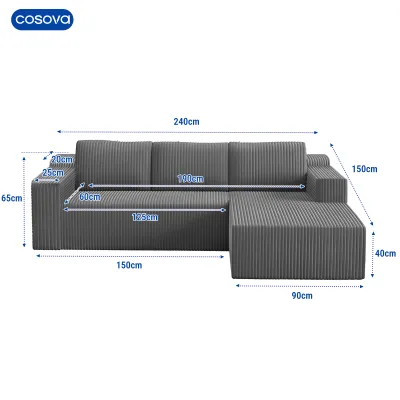
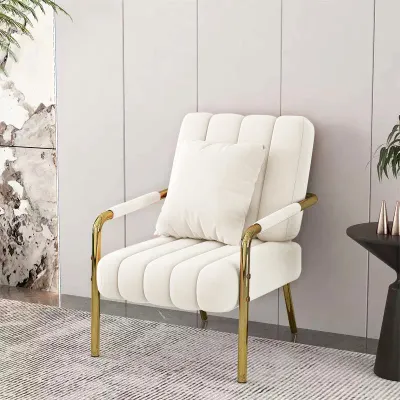
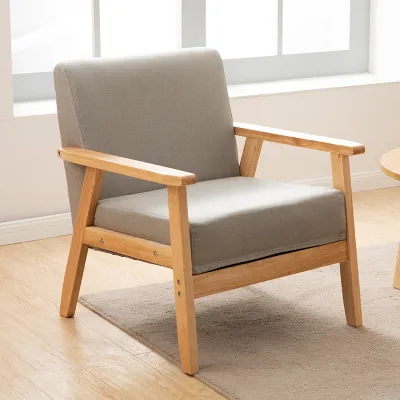
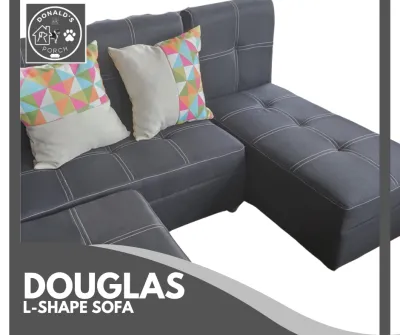
Prices are valid at publication and may change. Please refer to the product page for the latest price.
When selecting a sofa for a large family, relying solely on standard seat counts can be misleading. Instead, you must check the manufacturer’s specifications for total seat width, depth, and overall weight capacity. A large household requires deep seats and robust frames to ensure everyone can lounge comfortably without overloading the structure. Measuring the actual usable seating surface, rather than just the external dimensions, ensures that the sofa can truly accommodate your entire family during movie nights or weekend gatherings.
Evaluating Your Living Room Layout and Space Constraints
Before purchasing any large furniture piece, measuring your living room’s physical dimensions and access points is a critical first step. Large family sofas require significant floor space, but they also must physically fit through your doorways, hallways, stairwells, or elevator doors during delivery. Many homeowners overlook these tight corners and low ceilings, only to find that a massive, single-frame L-shaped sofa cannot be maneuvered into the home. Modular sofas offer a distinct advantage here, as they are delivered in smaller, individual boxes that easily navigate narrow passages.

Once inside the room, you must consider how the sofa’s placement affects the overall layout and traffic flow. An L-shaped sofa is highly effective at anchoring a room, especially when placed directly into a corner to maximize floor space in smaller or medium-sized living areas. It can also be used in open-plan layouts to act as a physical divider, separating the living zone from the dining area. Modular sofas, on the other hand, excel in irregular spaces, rooms with multiple architectural features like columns or fireplaces, or homes where you want to float the seating away from the walls.
Walkway clearance is another vital factor that directly impacts daily comfort and safety. In a busy household, natural pathways must remain clear to prevent accidental bumps and ensure easy movement, particularly in high-traffic areas. As a general rule, you should maintain at least 75 to 90 centimeters of clearance between the sofa and other furniture pieces, walls, or doorways. Blocking emergency exits, air conditioning vents, or natural light sources with a massive sofa configuration can make the living room feel claustrophobic and disrupt the home’s ventilation.
Matching the Sofa to Your Family's Daily Habits and Hosting Needs
Your family’s daily routines and socializing habits should heavily influence your choice of sofa configuration. If your household’s primary activity is gathering around the television for movie nights or gaming, an L-shaped sofa is often the more practical choice. The continuous seating and integrated chaise lounge allow multiple people to face the screen comfortably, with plenty of space to stretch out. This layout fosters a cozy, unified viewing experience where everyone has a clear line of sight to the entertainment center.
However, if your family prefers face-to-face conversation, board game nights, or hosting large gatherings of extended family and friends, a modular configuration is highly advantageous. By arranging the modules into a U-shape or creating separate seating clusters, you can facilitate natural eye contact and conversation flow. During large parties, you can even separate the individual modules to act as independent armchairs, providing extra seating options throughout the room rather than forcing guests to sit shoulder-to-shoulder on a single continuous frame.
Lounging comfort is highly subjective and depends on individual preferences for seat depth, cushion firmness, and armrest support. When evaluating options, look for deep seats that allow for comfortable reclining, and check the length of any chaise sections to ensure taller family members can stretch out fully. Some modular systems allow you to add or remove armrests and backrests, giving you the freedom to customize the lounging experience for different family members, whether they prefer sitting upright with firm support or curling up for an afternoon nap.
Planning for Future Changes: Flexibility and Relocation
A sofa is a long-term investment, and your living situation may change significantly over its lifespan. Modular sofas offer unparalleled adaptability for growing families or those who anticipate moving to a new home. If you relocate to a house with a completely different living room layout, a modular sofa can be easily reconfigured to fit the new space. You can transform a left-facing L-shape into a right-facing one, split the sofa into two smaller seating areas, or purchase additional modules to expand the seating capacity as your family grows.
Fixed L-shaped sofas, by comparison, offer very limited flexibility once purchased. Because the corner joint is typically fixed to one side, you cannot easily mirror the layout if your new living room requires the opposite configuration. If you attempt to place a left-facing sectional into a room that demands a right-facing one, you risk blocking walkways, windows, or doorways. While some semi-reversible L-shaped sofas allow you to move the chaise to either side, their overall shape and size remain rigid, making them less adaptable to major spatial changes.
When choosing a modular system, it is crucial to verify the quality and design of the connection mechanisms. High-quality modular sofas use sturdy interlocking brackets, heavy-duty clips, or weighted bases to keep the individual pieces firmly secured together. If the connection system is flimsy or difficult to operate, the modules may slide apart during daily use, creating uncomfortable gaps and safety hazards. Before finalizing your purchase, inspect these connectors to ensure they are durable, easy to engage, and capable of holding the pieces steady on your specific flooring type.
Checking Durability, Safety, and Maintenance for Busy Homes
In a home with a large family, furniture must withstand significant daily wear and tear. Before buying, always review the manufacturer’s specifications regarding frame construction and weight capacity. Look for frames made from kiln-dried hardwoods or reinforced metal, as these materials resist warping and structural failure under heavy loads. Check that the joints are double-doweled, glued, and screwed rather than simply stapled, as robust joint construction is essential for maintaining the sofa’s stability over years of active use.
Upholstery selection is equally critical for busy households, especially those with young children or pets. Rather than assuming a fabric is durable based on its name alone, carefully evaluate the manufacturer’s care labels and performance ratings. Look for fabrics with high rub counts (such as those rated for heavy domestic or commercial use) and built-in stain resistance. In warm, humid tropical climates, breathable fabrics that resist moisture buildup and mold are highly recommended. Removable, machine-washable cushion covers can also simplify maintenance, allowing you to clean spills and dirt quickly.
Safety should always be a priority when selecting large furniture pieces. Check the sofa’s design for sharp corners, exposed wooden frames, or hard edges that could pose a hazard to active children. Ensure that the sofa has a low center of gravity and a stable base to minimize the risk of tipping if someone leans heavily on the backrest or armrests. For modular configurations, verify that the pieces lock together securely so they do not shift unexpectedly when a family member sits down, preventing potential falls or pinched fingers.
The Decision Framework: Which Configuration Should You Choose?
To make your final decision, weigh your home’s specific conditions against the unique strengths of each configuration. An L-shaped sofa is the ideal choice if you have a clearly defined corner in your living room, prefer a cohesive and anchored aesthetic, and primarily use the space for unified activities like watching television. This option provides a structured, low-maintenance setup that remains perfectly in place, offering reliable comfort without the need for ongoing adjustments or configuration changes.
Conversely, a modular sofa is the superior option if your living room has an irregular layout, if you frequently host large gatherings that require flexible seating, or if you anticipate moving to a new home in the near future. The ability to customize, expand, and rearrange the seating ensures that your sofa can adapt to almost any spatial or social scenario. This flexibility makes modular systems a highly versatile long-term investment for dynamic, growing households.
Before making your purchase, always perform a final check of your delivery pathways and room dimensions. If your home has narrow doorways or tight stairwells, a modular sofa’s compact packaging may be the only viable way to get a large-capacity seating system into your living room. By carefully aligning your family’s daily habits, your room’s physical constraints, and your long-term plans with the right sofa type, you can select a configuration that brings comfort, safety, and harmony to your home.
Frequently Asked Questions (FAQ)
Can I convert an L-shaped sofa into a modular one later?
Most traditional L-shaped sofas feature fixed or semi-fixed frames that are structurally integrated, meaning they cannot be converted into modular setups later. The corner joints and frame rails are designed to function as a single, cohesive unit to ensure stability. Attempting to separate these pieces can damage the internal frame and void your warranty. Always check the manufacturer’s documentation before purchasing if you want a model that offers convertible or reversible configurations.
How do I prevent modular sofa pieces from separating during use?
To prevent modular pieces from sliding apart, ensure the system uses robust interlocking clips, connector pins, or heavy-duty alligator brackets. These connectors are typically installed on the underside or sides of the frames to lock adjacent modules together. Additionally, placing the sofa on a large area rug or using non-slip rubber pads under the legs can provide extra traction, especially on smooth tiled or wooden floors common in tropical homes.
Is a U-shaped sofa better than an L-shaped one for large families?
A U-shaped sofa offers excellent face-to-face seating and is highly effective for large families who enjoy group conversations or board games. However, U-shaped configurations require significantly more central floor space than L-shaped models and can easily overwhelm a standard living room. Before choosing a U-shaped layout, measure your room’s central area carefully to ensure you maintain adequate walkway clearance and that the furniture does not block natural traffic flow or doorways.
Community discussion
Share your experience or ask a question. Comments are reviewed before publication.