
Finding the right sala set sofa living room centerpiece requires balancing your family’s daily habits with the physical realities of your home. The ideal configuration depends on how you use your space: an L-shaped sectional maximizes corner lounging and fits neatly into tight corners; a modular system offers unmatched flexibility to adapt to changing layouts; and a traditional 3-to-5-seater linear sofa provides a formal, space-efficient setup that keeps walkways clear. By evaluating your room’s dimensions, your household’s seating habits, and the local climate’s impact on materials, you can select a configuration that remains comfortable and functional for years to come.
In many Filipino households, the living room serves as a multi-functional hub for hosting relatives, watching television, and relaxing during warm afternoons. Because a sofa is a significant investment, choosing the wrong shape can lead to cramped walkways, awkward seating arrangements, or restricted airflow in non-air-conditioned spaces. Understanding how each layout interacts with your floor plan ensures your living room remains welcoming, spacious, and easy to navigate.
Understanding the Core Sofa Configurations
To make an informed decision, you must first understand the structural differences and spatial footprints of the three primary sofa configurations available on the market.
Products mentioned in this guide

Prices are valid at publication and may change. Please refer to the product page for the latest price.
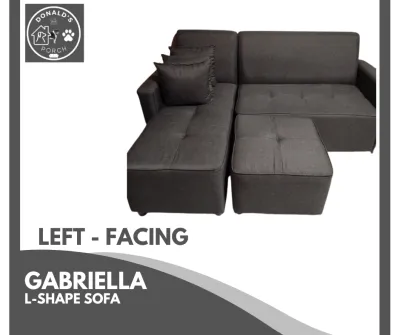
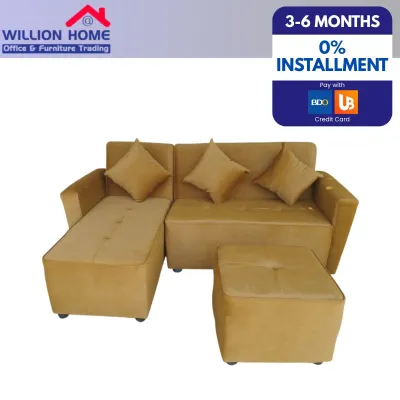
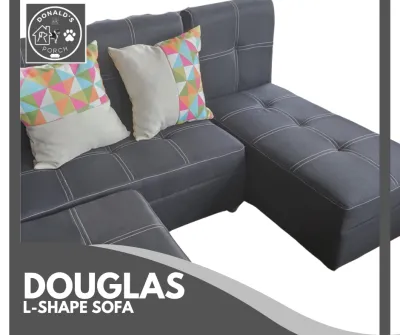
An L-shaped sofa, often referred to as a fixed sectional, features a continuous frame with a built-in chaise lounge or a perpendicular return. This design is specifically engineered to hug corners, turning what would otherwise be dead space into a cozy, continuous seating area. Because the frame is typically fixed, you must choose either a left-facing or right-facing orientation at the time of purchase, meaning the layout cannot be easily reversed if you decide to rearrange your room later.
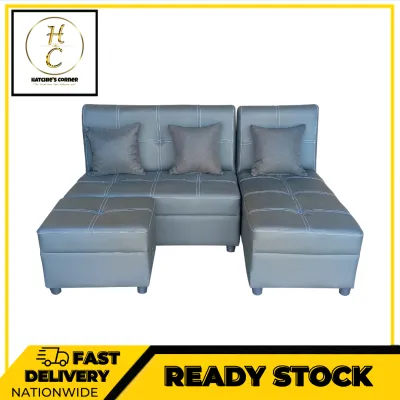
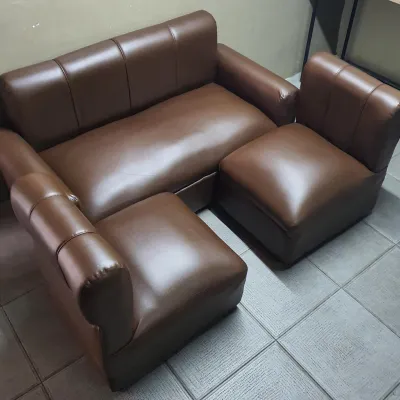
A modular sofa consists of individual, fully finished sections—such as corner units, armless chairs, and ottomans—that can be connected or separated at will. This configuration offers the highest level of adaptability, allowing you to create an L-shape, a long linear couch, or even separate seating zones depending on the occasion. The independent nature of each module makes transport and assembly significantly easier, especially in homes with narrow entryways or multi-story layouts.
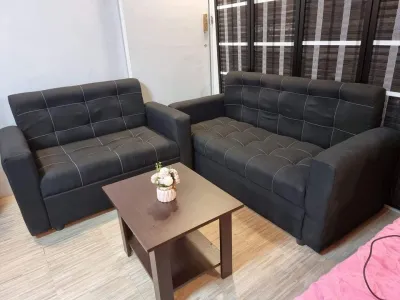
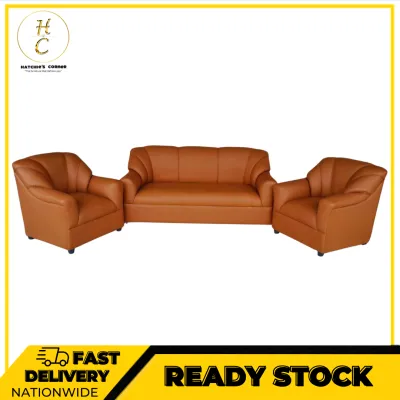
A standard 3-to-5-seater linear sofa features a traditional, unified frame that sits parallel to a single wall. This classic configuration is highly space-efficient, keeping the center of the room open and maintaining clear sightlines. Linear sofas are often paired with matching armchairs or single stools to create a traditional conversational circle, making them a highly versatile choice for both formal hosting and compact living rooms.
Evaluating Space and Living Room Layouts
Before committing to any sofa design, you must carefully assess your living room’s physical dimensions, architectural features, and traffic flow.

Measuring your space goes far beyond checking the wall length where the sofa will sit. You must account for clearance around doorways, window heights, electrical outlets, and the swing radius of entry doors. In tropical climates, maintaining a gap of at least 10 to 15 centimeters between the sofa and the wall is highly recommended to promote air circulation and prevent moisture buildup, which can damage both your walls and the sofa frame.
When comparing L-shaped and linear placements, consider how the furniture directs foot traffic. An L-shaped sofa works exceptionally well when pushed into a corner, but if placed in the middle of a room, the extended chaise can act as a physical barrier, blocking natural pathways to dining areas or kitchens. A linear 3-to-5-seater sofa, on the other hand, maintains a slim profile that keeps walkways wide and unobstructed, making it ideal for narrow, rectangular living rooms.
Modular configurations shine in irregular spaces, such as rooms with structural pillars, offset doorways, or integrated staircases. If your living room serves multiple purposes—such as a daytime home office and an evening family room—modular pieces can be rearranged to define distinct zones. This flexibility also ensures that if you move to a new home in the future, your sofa can adapt to a completely different floor plan without requiring a costly replacement.
Matching Family Size and Daily Living Habits
Your sofa configuration should directly support your family’s daily routines, household size, and hosting habits.
While a standard 5-seater sofa might seem like it offers plenty of room, the actual usable seating space depends heavily on how your family prefers to sit. In formal settings, people generally prefer individual seats with clear boundaries, making a linear sofa paired with separate armchairs highly effective. However, for casual family lounging, movie nights, or afternoon naps, the continuous cushions of an L-shaped sofa allow family members to stretch out comfortably without crowding one another.
Household dynamics also play a major role in your choice, especially in multi-generational homes. If your household includes young children or elderly relatives, ease of movement is critical. Low-slung modular sofas can be easy for children to climb, but older adults may find it difficult to stand up from deep, plush cushions. For homes with pets, choosing a configuration with removable, washable fabric covers is essential to manage dust, dander, and accidental spills during the humid rainy season.
Consider your primary activity-based needs before finalizing your layout. If your home is the designated gathering spot for Sunday family lunches, a modular set allows you to break the sofa apart into individual seats to facilitate face-to-face conversation. If your primary use case is watching television or unwinding after work, an L-shaped sectional with a deep chaise provides an excellent setup for reclining and relaxing.
Configuration Comparison Matrix
The following matrix summarizes the structural characteristics, spatial requirements, and practical trade-offs of each sofa configuration to help guide your decision.
| Configuration | Space Efficiency | Layout Flexibility | Assembly & Move Difficulty | Ideal For |
|---|---|---|---|---|
| L-Shaped Sofa | High (utilizes corners efficiently) | Low (fixed left or right orientation) | Moderate (requires clear path for large sections) | Corner lounging, TV viewing, and open-plan zoning |
| Modular Sofa | Moderate (requires space for multiple joints) | High (reconfigurable at any time) | Low (individual pieces fit through tight spaces) | Growing families, irregular rooms, and frequent movers |
| 3-5 Seater Sofa | High (slim profile fits narrow rooms) | Moderate (can be paired with accent chairs) | Moderate to High (long, single-frame delivery) | Formal hosting, narrow layouts, and traditional setups |
Step-by-Step Decision Checklist
To ensure your chosen sala set fits your home seamlessly, follow this practical step-by-step verification process before making your purchase.
- Measure Entryways and Clearances: Verify the height, width, and diagonal clearance of all doorways, hallways, stairwells, and elevator doors. Ensure the selected sofa frame can physically pass through these points during delivery.
- Map the Floor Plan: Use masking tape or newspaper to outline the exact footprint of the sofa on your living room floor. Walk around the outline to ensure there is at least 60 to 75 centimeters of clear walkway space.
- Identify the Primary Use Case: Determine whether your family prioritizes formal hosting, casual lounging, or maximum flexibility. Choose the configuration that aligns with this primary need.
- Inspect the Frame and Joints: Check the manufacturer's specifications for frame materials (such as kiln-dried hardwood) and joint construction to ensure long-term stability under daily family use.
- Verify Fabric and Care Instructions: For humid tropical environments, look for breathable, moisture-resistant, or removable and washable covers. Avoid non-breathable synthetic materials that trap heat.
- Check Modular Connectors: If choosing a modular system, inspect the connection mechanisms (such as alligator clips or interlocking brackets) to ensure the pieces will not slide apart on tiled or polished floors.
- Consult Professionals When Uncertain: If you are unsure about weight limits, delivery access, or fabric suitability for your specific home environment, stop and consult the retailer or a professional furniture installer before finalizing your order.
Frequently Asked Questions (FAQ)
Can I start with a 3-seater and add modular pieces later?
Standard 3-to-5-seater sofas are built on a single, fixed frame and cannot be structurally expanded or converted into modular systems. If you anticipate needing more seating in the future, you must purchase a dedicated modular line from the start. When expanding a modular sofa later, verify that the manufacturer still produces the same collection, as connection mechanisms can change. Additionally, keep in mind that fabric dye lots can vary over time, meaning newer modules might have slight color differences compared to your original pieces due to sun exposure and wear.
How do I ensure a large sofa will fit through my doors and stairs?
To guarantee a smooth delivery, measure the narrowest points of your entry path, including door frames, hallway corners, and stairwell ceilings. Compare these measurements against the sofa’s packaged dimensions, paying close attention to the diagonal depth and the total length. Many sofas feature removable legs, feet, or back cushions that can reduce the overall height by 10 to 15 centimeters during transport. If your home has tight turns or low ceilings, a modular sofa is often the safest choice, as the individual sections are packaged separately and can easily navigate restricted spaces.
Community discussion
Share your experience or ask a question. Comments are reviewed before publication.