
Selecting the right seating for a large household requires balancing comfort, space, and daily habits. For a large family, a bulky sofa offers the deep cushioning and generous proportions needed for everyone to gather comfortably, but the best configuration depends entirely on your living room’s layout and how your family uses the space. While an L-shaped sectional maximizes corner seating, a modular sofa provides unmatched flexibility for changing layouts, and a standard 3-to-5-seater couch offers a classic, space-saving linear footprint.
Investing in a large piece of furniture is a long-term decision that affects your home’s daily flow and comfort. A sofa that is too large can block walkways and make a room feel cramped, while one that is too small can lead to family members competing for the best seat. By understanding the structural differences, spatial requirements, and practical trade-offs of each configuration, you can make an informed choice that accommodates everyone in your household.
Understanding Bulky Sofa Configurations for Large Families
To choose the right sofa, it is essential to understand how different configurations are constructed and how their physical designs impact your living space. A bulky sofa is characterized by deep seat cushions, thick armrests, and high backrests, all of which contribute to a luxurious lounging experience. These design elements are excellent for relaxation, but they mean the sofa will have a much larger physical footprint than streamlined, minimalist alternatives.
Products mentioned in this guide
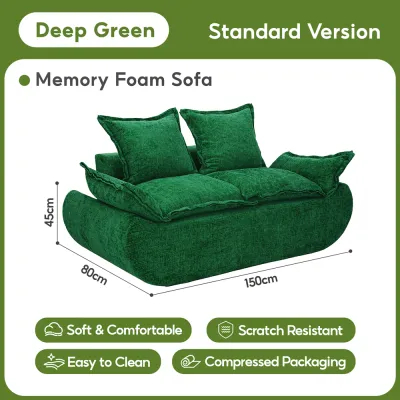
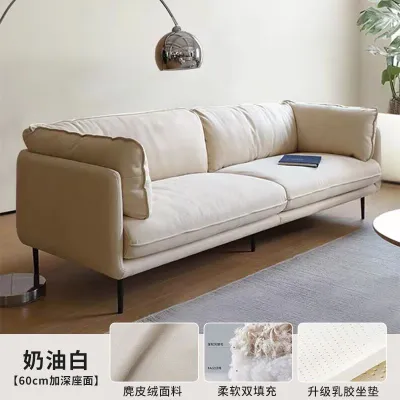
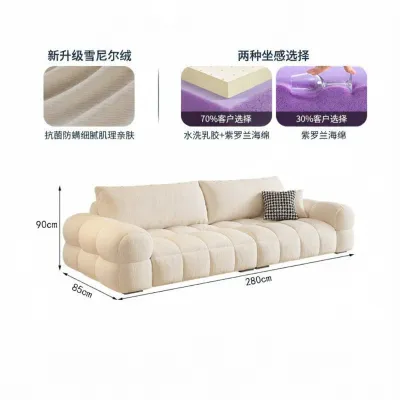
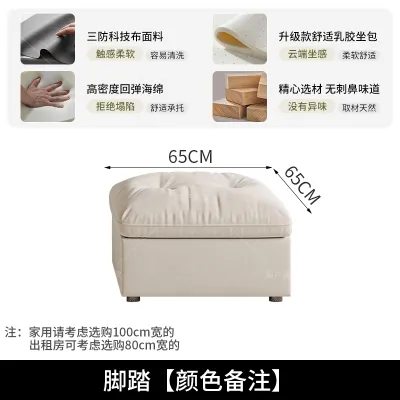
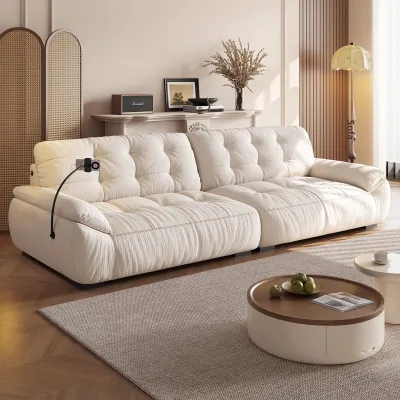

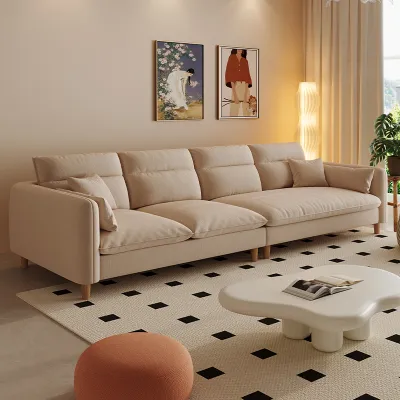

Prices are valid at publication and may change. Please refer to the product page for the latest price.
An L-shaped sectional sofa consists of two perpendicular seating sections joined together, typically featuring a standard sofa portion and an extended chaise lounge. This configuration is fixed, meaning you must choose whether the chaise is on the left or right side at the time of purchase. While this provides a sturdy, seamless look, it limits your ability to rearrange the room in the future.
In contrast, a modular sofa is made up of individual, self-contained units—such as corner pieces, armless middle seats, and ottomans—that connect in various arrangements. This design offers maximum flexibility, allowing you to expand the seating area by adding modules or split the sofa into separate zones when hosting. Because each module is a separate piece, modular sofas are also much easier to transport through tight spaces.
A standard 3-to-5-seater sofa features a traditional, linear frame with a continuous seating area. This classic design does not have a corner turn, making it a straightforward option for traditional living room layouts. While it lacks built-in lounging extensions, a long standard sofa can easily be paired with separate armchairs or footstools to customize your seating arrangement.
When exploring specific product lines, such as a Tao bulky sofa or other heavy-set designs, verify the exact dimensions and structural traits directly from the manufacturer. Different brands use varying frame materials and cushion densities, which affect both the overall size and weight. Always check the product specifications to ensure the frame’s construction aligns with your family’s durability needs.
Space and Layout: L-Shaped vs Modular vs Standard
The layout of your living room is the primary factor that dictates which bulky sofa configuration works best. An L-shaped sofa is highly effective at utilizing corner spaces that might otherwise go unused. Placing the sectional against intersecting walls maximizes seating while keeping the center of the room open. However, if your room has multiple doors, windows, or columns, a fixed L-shape can be difficult to position without blocking walkways.

Modular sofas excel in open-plan living spaces where they serve as functional room dividers. For example, you can use a long modular configuration to separate the living area from the dining space. The ability to rearrange the modules means you can adapt the layout to different occasions, such as moving an ottoman to create a temporary daybed or separating a corner module for an independent reading nook.
For narrow or rectangular living rooms, a standard 3-to-5-seater sofa is often the most practical choice. Placed flat against a single long wall, a linear sofa keeps the center of the room clear, ensuring smooth traffic flow. This configuration prevents the room from feeling overcrowded and allows you to place side tables or floor lamps at either end without obstructing walkways.
Before committing to any bulky sofa, measuring your space is a non-negotiable step. Large furniture must not only fit your living room but also navigate the journey into your home. Measure the width, height, and clearance of all doorways, hallways, stairways, and elevators. For multi-story homes or apartments in the Philippines, tight stairwells and small elevator cabins are common obstacles that can prevent a fully assembled bulky frame from reaching your living room.
To visualize how a bulky sofa will look in your space, use painter’s tape to map out the exact dimensions on your floor. Leave at least 60 to 90 centimeters of clearance around the sofa to allow for comfortable walking paths. This simple step helps you see if the deep seats or wide armrests of a bulky design will block access to electrical outlets, cabinets, or doorways.
Comfort, Seating, and Daily Use Trade-offs
A large family sofa must withstand the rigors of daily use, from movie nights to children playing. The lounging experience varies significantly between configurations. An L-shaped sofa with a dedicated chaise lounge offers a perfect spot for one or two family members to stretch out completely, but it can limit the seating options for others who prefer to sit upright.
Modular sofas offer a more versatile approach to lounging because you can reposition the ottoman modules to create multiple footrests or a large daybed. This setup allows several family members to lounge simultaneously without crowding. However, because modular pieces are designed to be rearranged, they may have small gaps between the cushions where dust, crumbs, or small items can accumulate, requiring more frequent vacuuming.
Seating equality is another important consideration for shared family activities. On a standard 3-to-5-seater sofa, every seat offers the same depth and support, making it ideal for watching television together. On sectionals, the corner seat can sometimes feel isolated or offer less legroom because the legs of people sitting on adjacent sides can collide. If your family prioritizes face-to-face conversation, an L-shaped or modular setup naturally encourages eye contact, whereas a standard linear sofa requires people to lean forward to see each other.
In the tropical climate of the Philippines, high humidity and warm temperatures place unique demands on sofa materials. Bulky sofas with deep, plush cushions can trap heat if upholstered in heavy, non-breathable fabrics. When selecting upholstery, look for breathable materials or performance fabrics that resist moisture and sweat. Always refer to the manufacturer’s care labels and material tags for specific cleaning instructions, as using the wrong cleaning agents can damage the fabric.
Decision Framework: Which Configuration Should You Choose?
To simplify your decision, consider how your family’s daily routine and your home’s physical layout align with each sofa type.
Choose an L-shaped sofa if:
- You have a spacious, defined corner in your living room that you want to fill with comfortable seating.
- Your family enjoys having a dedicated, built-in chaise lounge for stretching out during movie nights.
- You prefer a seamless, sturdy furniture piece that does not require frequent rearrangement.
Choose a modular sofa if:
- You live in an apartment or a home with tight entryways, narrow staircases, or small elevators where a single large frame cannot fit.
- You want the flexibility to change your living room layout for different social gatherings or family activities.
- You plan to move houses in the future and need furniture that can adapt to different room shapes.
Choose a standard 3-to-5-seater sofa if:
- Your living room is narrow or rectangular, requiring a linear layout to keep walkways clear.
- You prefer a classic, symmetrical aesthetic and want to pair your sofa with matching armchairs or accent tables.
- You want consistent seating depth and support for every family member without any corner-seat compromises.
Verify first if:
- You are considering a specific model like the Tao bulky sofa; always check the manufacturer's exact frame dimensions, cushion depth, and weight limits before purchasing.
- Your building has strict delivery guidelines, elevator weight capacities, or narrow corridor turns that could restrict oversized furniture delivery.
Pre-Purchase Checks for Bulky Sofas
Before finalizing your purchase, perform a thorough logistical check. Start by confirming the delivery access route. Measure the narrowest points of your entryways, including door frames, hallway corners, and ceiling heights in stairwells. If you live in a condominium, consult the building administration regarding elevator dimensions and delivery hours to avoid unexpected delays or return fees.
Next, verify the exact product specifications with the retailer. Do not rely solely on visual estimates from a showroom, as bulky sofas often look smaller in large display spaces than they do in a home. Ask the retailer if the sofa legs are removable, as removing them can often provide the extra clearance needed to squeeze a bulky frame through a tight doorway.
Finally, examine the structural quality and warranty terms of the sofa. A bulky sofa for a large family is a significant investment that will experience constant use. Check the manufacturer’s warranty details specifically for the frame, joint construction, and cushion springs. High-quality frames made from kiln-dried hardwood and reinforced joints are essential for supporting the weight of multiple people over many years.
Frequently Asked Questions (FAQ)
Can a bulky sofa fit through standard apartment doors?
Whether a bulky sofa can fit through a standard door depends on the sofa’s diagonal depth and whether its legs or cushions can be removed. Measure the door’s height and width, then compare them to the sofa’s minimum clearance depth, which is often the distance from the back of the frame to the front of the seat with the cushions removed. If the dimensions are close to your door frame limits, consult the manufacturer or delivery team to ask if the piece can be angled through the opening.
Are modular sofas less stable than standard or L-shaped ones?
The stability of a modular sofa depends entirely on the connection mechanisms and the weight of the individual bases. High-quality modular sofas use heavy-duty interlocking metal brackets, alligator clips, or weighted rubberized bases to prevent the modules from sliding apart. Before purchasing, check the product specifications to verify what type of connection hardware is included, as clip-less designs may shift on smooth tile or wooden floors when sat on heavily.
Community discussion
Share your experience or ask a question. Comments are reviewed before publication.