
Quick Answer: Which La-Z-Boy Configuration Fits Your Space?
Selecting the right lazyboy reclining sofa configuration depends on your living room dimensions, family size, and how often you rearrange your home. Each layout serves a distinct household dynamic and spatial layout.
- Choose a 3-Seater Reclining Sofa if you have a compact or narrow living room, prefer a traditional layout, and want straightforward placement without blocking walkways.
- Choose an L-Shaped Reclining Sectional if you have a spacious corner, want a dedicated chaise for stretching out, and regularly host family gatherings.
- Choose a Modular Reclining Sofa if you live in an adaptable space, anticipate moving houses, or want the freedom to reconfigure your seating layout as your family grows.
Space and Room Layout Requirements
Before bringing a lazyboy reclining sofa into your home, you must evaluate the physical footprint of your room. Reclining furniture requires significantly more operational space than standard stationary couches.

Wall Clearance and Footprint for 3-Seaters
A traditional 3-seater reclining sofa is highly efficient for rectangular living rooms. However, you must account for the recline clearance. Standard recliners require several inches of space between the back of the sofa and the wall to tilt fully. If space is tight, look for specialized “wall-away” or “wall-hugger” designs that slide forward as they recline, minimizing the gap needed behind the frame.
Products mentioned in this guide

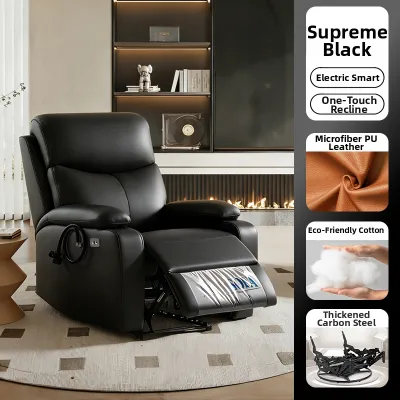

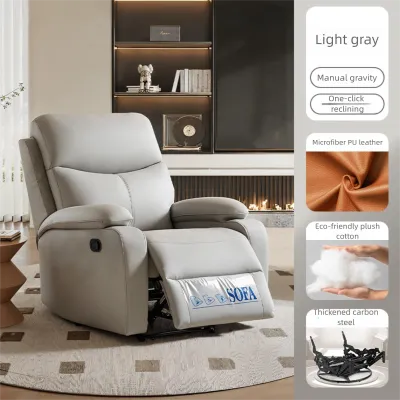
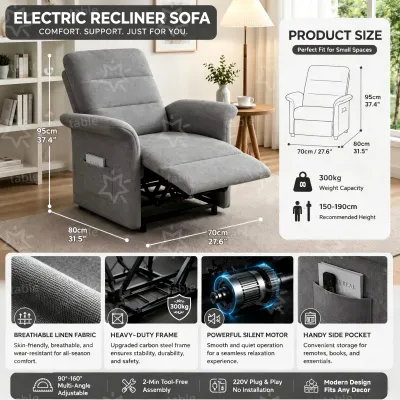
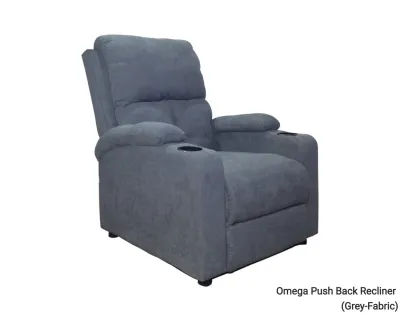
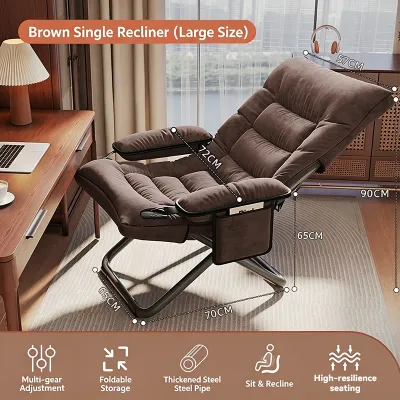
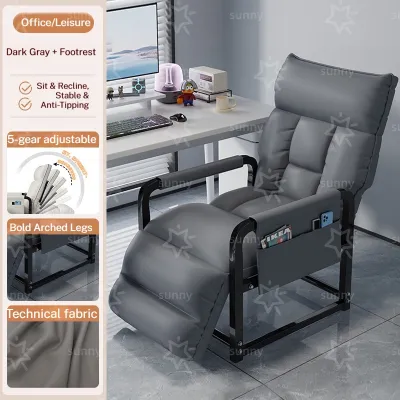
Prices are valid at publication and may change. Please refer to the product page for the latest price.
In tropical climates like the Philippines, keeping a small gap between the sofa and concrete walls is also highly practical. Proper airflow behind the furniture prevents moisture buildup, reducing the risk of mold and mildew on fabric or leather upholstery.
Corner Space and Traffic Flow for L-Shaped Sectionals
L-shaped reclining sectionals are excellent for defining open-concept spaces or filling large corners. However, they demand careful planning. You must decide whether a left-facing or right-facing chaise fits your room’s natural traffic flow.
An L-shaped configuration can easily block doorways or pathways if miscalculated. Ensure there is at least 60 to 90 centimeters of open walkway space around the extended footrests so family members can move freely without tripping.
Modular Footprint and Power Source Access
Modular reclining setups offer incredible layout versatility, but each individual module has its own footprint. Because these pieces can be arranged in various patterns, you must map out the maximum extended length of every reclining component.
Additionally, power reclining modules require proximity to electrical outlets. Running extension cords across the middle of a living room floor creates safety hazards and looks untidy. If you choose power-reclining modules, plan their placement near wall outlets or invest in floor-outlet covers to keep cords flat and secure.
Seating Capacity and Family Dynamics
Your daily household habits and the number of people sharing the space should heavily influence your configuration choice.
The 3-Seater: Individual Comfort for Smaller Households
A standard 3-seater lazyboy reclining sofa typically features two reclining outer seats, while the center seat remains stationary. This setup is ideal for smaller families or couples who want individual control over their comfort without taking up the entire room.
Because the middle seat is fixed, it provides a stable spot for placing a tray or sitting upright, while the outer occupants can fully recline. However, if you have a family of four or more, a 3-seater will likely lead to competition over who gets the reclining spots.
L-Shaped Sectionals: The Ultimate Lounging Hub
For larger families who love movie nights or Sunday afternoon naps, an L-shaped sectional offers a cozy, communal atmosphere. The corner wedge provides an extra corner seat, while the chaise end allows one person to stretch out completely without even deploying a reclining mechanism.
This layout encourages face-to-face conversation, making it excellent for hosting guests or gathering the clan. Keep in mind that the corner seat itself usually does not recline, serving instead as a cozy nesting spot.
Modular Sofas: Tailored to Growing Families
Modular configurations are the ultimate solution for dynamic households. If you have young children, you can start with a smaller setup and add armless chairs, consoles, or extra reclining modules as your family expands.
Modular designs also allow you to create distinct seating zones. For instance, you can separate a large modular sofa into a smaller loveseat for a reading nook and a three-piece setup for the main television area, adapting to your family’s changing daily needs.
Flexibility and Long-Term Adaptability
Investing in a lazyboy reclining sofa is a long-term decision. Considering how easily the furniture can adapt to future lifestyle changes will save you stress down the road.
Fixed Frames vs. Modular Freedom
Fixed frames, such as standard 3-seaters and one-piece L-shaped sofas, offer excellent structural stability. Because they are built as single, cohesive units, there are no gaps between seats, and the frame remains perfectly aligned over years of heavy use. However, their fixed shape makes them difficult to move into new homes or rearrange.
Modular sofas, by contrast, consist of independent chairs that lock together using heavy-duty metal brackets. This makes them incredibly easy to transport. If you live in a high-rise condominium or rent your home, moving a modular sofa piece-by-piece through narrow hallways and elevators is substantially easier than maneuvering a massive fixed sectional.
Verifying Future Compatibility
While modular sofas offer the promise of future expansion, you should never assume that compatible modules will always be available. Furniture manufacturers update their collections, fabrics, and locking mechanisms over time.
Before purchasing a modular setup with the plan to expand it later, check the manufacturer’s product lifecycle guidelines. It is often safest to buy all necessary modules upfront, or confirm with the retailer how long they plan to stock replacement pieces and matching fabric dye lots.
Comparing the Three Configurations at a Glance
To help you visualize the trade-offs, this table compares the three primary configurations across key practical dimensions.
| Feature | 3-Seater Reclining Sofa | L-Shaped Reclining Sectional | Modular Reclining Sofa |
|---|---|---|---|
| Ideal Room Size | Small to medium, narrow rooms | Large rooms, open-concept spaces | Medium to large, irregular layouts |
| Seating Capacity | Comfortably seats 3 | Seats 4 to 6 or more | Highly customizable (3 to 8+) |
| Layout Flexibility | Low (fixed position) | Medium (reversible chaise options) | High (can be rearranged at will) |
| Ease of Transport | Moderate (heavy, but fits standard doors) | Difficult (bulky, requires wide clearance) | Easy (individual pieces fit small spaces) |
| Power Access Needs | Low (usually 1 or 2 power cords) | Moderate (depends on reclining pieces) | High (requires planning for multiple cords) |
Note: Exact dimensions, weights, and recline clearances vary by model. Always verify these measurements against the official product specification sheet before finalizing your purchase.
Pre-Purchase Measurement and Verification Checklist
Avoid delivery-day disappointment by performing these essential checks before placing your order.
- Measure Entryway Clearances: Measure the width and height of your front door, apartment corridors, stairwells, and elevator doors. Reclining sofas have heavy steel mechanisms and do not bend around tight corners easily.
- Map the Reclined Footprint: Use masking tape or newspapers to outline the sofa's dimensions on your living room floor. Be sure to map the measurements for both the fully upright position and the fully reclined position with footrests extended.
- Check Walkway Clearances: Ensure that even when every seat is fully reclined, there is still enough space for family members to walk past safely without having to climb over the footrests.
- Locate Power Outlets: If you are buying a power-reclining model, identify the nearest wall outlets. Plan your cord paths to avoid high-traffic areas where family members or pets might trip over them.
- Inspect Floor Surfaces: Reclining sofas are heavy. If you have polished hardwood or delicate tile floors, plan to install heavy-duty felt pads or a durable area rug under the sofa frame to prevent scratching during use.
Final Decision Framework
To make your final choice, match your household’s primary constraints to these clear guidelines:
- Go with a 3-Seater if you want a classic, budget-friendly option that fits neatly into a standard living room layout without requiring complex planning.
- Go with an L-Shaped Sectional if you have a dedicated family entertainment room, love to stretch out on a chaise, and want a cozy corner that brings everyone together.
- Go with a Modular Sofa if you value versatility, live in a rental or condo with tight access points, or want a future-proof seating system that can grow alongside your family.
Always measure your space twice, verify your delivery route, and check the manufacturer’s specifications to ensure your new reclining sofa fits your home perfectly.
Frequently Asked Questions (FAQ)
Do all seats in an L-shaped or modular La-Z-Boy sofa recline?
No, not all seats in these configurations recline. In most standard L-shaped sectionals, only the outermost seats (the ends of the sofa) feature reclining mechanisms, while the corner wedge and middle seats remain stationary. For modular sofas, reclining capability depends entirely on the specific modules you select. You can choose to mix reclining chairs with stationary armless chairs. Always check the detailed product specification sheet or consult your retailer to confirm which specific pieces in your chosen layout have active reclining hardware.
Can I add more modules to a La-Z-Boy modular sofa later?
Whether you can add modules later depends on the specific collection’s design, production status, and stock availability. While modular systems are designed for flexibility, manufacturers occasionally retire specific collections, change fabric dye lots, or update connection brackets. If you plan to expand your sofa in the future, it is highly recommended to ask the authorized retailer about the long-term availability of that specific collection, or purchase the core pieces you anticipate needing at the same time.
Community discussion
Share your experience or ask a question. Comments are reviewed before publication.