
Quick Answer: Which Queen Mattress Material is Right for You?
Choosing a queensize mattress in a tropical climate like the Philippines requires balancing support, pressure relief, and heat dissipation. The right material depends entirely on your sleep position, sensitivity to heat, and budget.
Latex offers a responsive, buoyant bounce and natural cooling, making it excellent for hot sleepers who dislike sinking. Innerspring mattresses provide traditional firm support and maximum airflow through open coils, ideal for back sleepers and humid nights. Memory foam delivers deep contouring and exceptional motion isolation, which is perfect for couples, though it tends to retain more heat unless designed with cooling technologies.
How Latex, Innerspring, and Memory Foam Compare
To help you scan the options quickly, we can compare these three primary materials across key performance dimensions. While individual models vary based on manufacturing quality, certain baseline characteristics define each type.
Products mentioned in this guide
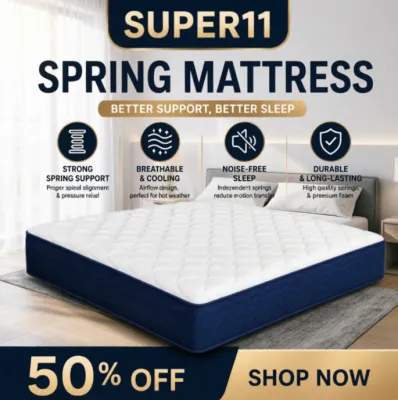
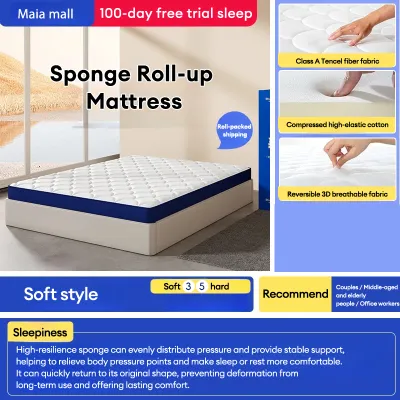
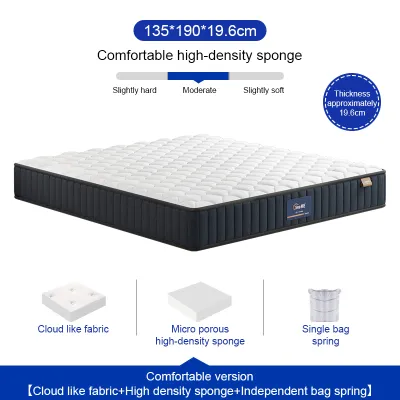
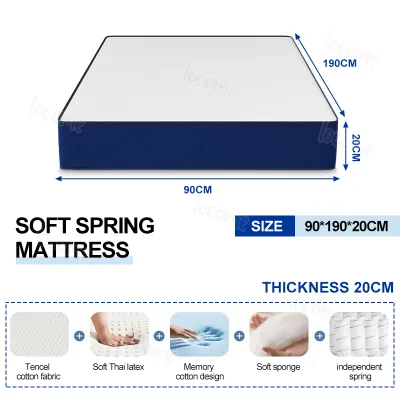
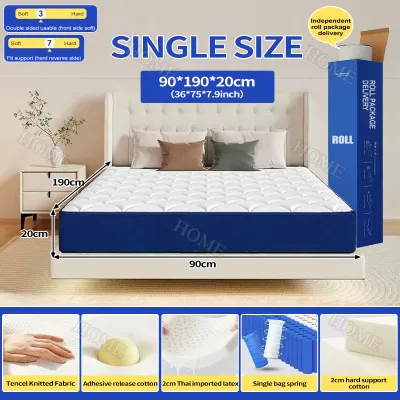
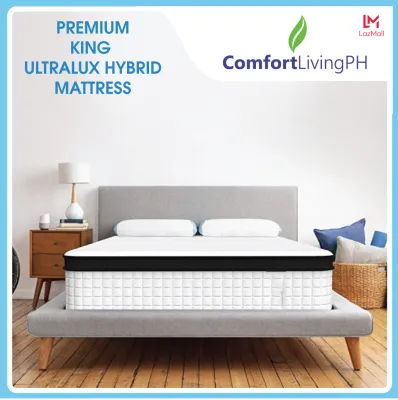
Prices are valid at publication and may change. Please refer to the product page for the latest price.

| Feature | Latex | Innerspring | Memory Foam |
|---|---|---|---|
| Primary Feel | Buoyant, responsive bounce | Traditional, firm push-back | Deep contouring, hugging |
| Support Level | Moderate to high | High (structural) | Moderate (conforming) |
| Temperature Regulation | High natural airflow | Excellent open-air circulation | Tends to retain heat |
| Motion Isolation | Moderate | Low to moderate | High (excellent for couples) |
| Typical Lifespan | Long (highly resilient) | Moderate (depends on coils) | Moderate to long |
When shopping, remember that exact specifications—such as Indentation Load Deflection (ILD) for latex or coil count and gauge for innersprings—vary by manufacturer. Always check the product label or specification sheet to verify these details. While hybrid options combine these materials, focusing on these three primary categories will help you establish your baseline preference.
Detailed Breakdown of Each Mattress Material
Evaluating a queensize mattress requires looking past marketing claims and examining the physical construction. A mattress’s performance, comfort, and durability depend heavily on material density, layer thickness, and manufacturing standards.
Before purchasing, check the product tags for recognized safety and emission certifications. Certifications like CertiPUR-US for foams or OEKO-TEX for textiles verify that the materials meet specific standards for emissions and chemical content, providing peace of mind for your home.
Latex Mattresses: Natural Bounce and Cooling
Latex mattresses are highly regarded for their resilient, uplifting support. When browsing, you will encounter natural, synthetic, and blended latex. Natural latex, harvested from rubber tree sap, offers superior durability and breathability, whereas synthetic latex is petroleum-based and tends to hold heat more. You can verify the natural latex content by checking the product’s certification labels.
The feel of latex is distinctly buoyant. Instead of sinking into the mattress, you sleep “on top” of it, which allows for effortless movement and repositioning throughout the night. This responsiveness is highly beneficial for active sleepers.
However, natural latex is exceptionally heavy. A queensize latex mattress can be difficult to unbox, set up, and rotate. Ensure your bed frame can support this substantial weight, and plan for assistance during delivery and installation.
Innerspring Mattresses: Traditional Support and Airflow
Innerspring mattresses utilize a network of metal coils to provide a classic, highly supportive sleep surface. The type of coil system—such as pocketed coils or open coils—directly impacts how the mattress contours to your body and isolates movement. Pocketed coils are individually wrapped, allowing them to compress independently and reduce motion transfer across a queensize bed.
The primary advantage of an innerspring design is its superior airflow. Because the core of the mattress consists of open space between steel coils, heat and moisture escape easily, making this style highly suitable for warm, humid environments.
A potential drawback is that traditional innersprings can become noisy or sag over time, especially if the comfort layers on top of the coils are thin or made of low-density foam. Inspecting the thickness and material quality of these upper comfort layers is essential for long-term comfort.
Memory Foam Mattresses: Contouring Comfort and Motion Isolation
Memory foam, or viscoelastic foam, is famous for its pressure-relieving properties. It responds to body heat and weight, contouring closely to your physical shape to distribute weight evenly and relieve pressure on joints.
This close contouring makes memory foam the premier choice for motion isolation. If you share a queensize mattress, the foam absorbs movement, preventing vibrations from traveling across the bed when a partner tosses or turns.
The trade-off for this hugging sensation is heat retention. Dense memory foam naturally traps body heat, which can be uncomfortable during warm tropical nights. To counter this, look for specifications indicating open-cell structures, gel infusions, or phase-change covers designed to pull heat away from the body.
Key Decision Factors for Tropical Climates
In hot and humid climates like the Philippines, ambient temperature and moisture levels heavily influence how a mattress performs. High humidity can make dense, non-breathable materials feel damp and sticky, while trapped body heat can disrupt deep sleep cycles.
When selecting a queensize mattress for a tropical home, use this checklist to verify cooling and moisture-control features:
- Breathable Cover Fabrics: Look for natural fibers like Tencel, bamboo-derived rayon, or organic cotton that actively wick away moisture.
- Ventilated Latex Cores: Verify if the latex layer has open pinholes to facilitate continuous air circulation.
- Gel-Infused or Open-Cell Foams: Ensure any memory foam layers specify an open-cell structure or cooling gel additives to help dissipate heat.
- Coil-Based Support: Consider pocket springs or innersprings if you require maximum airflow through the mattress core.
Proper maintenance is also crucial to prevent moisture buildup and mold in humid regions. Always pair your mattress with a highly breathable, waterproof mattress protector to block sweat while allowing air to flow. Additionally, ensure your bed frame has a slatted base to promote ventilation underneath the mattress.
How to Choose Based on Your Sleep Needs
Selecting the right queensize mattress requires matching your physical needs and sleeping habits to the strengths of each material. Use this structured framework to guide your decision.
Choose Latex if:
- You prefer a buoyant, responsive feel and want to avoid the sensation of being "stuck" in the bed.
- You sleep hot and want a naturally breathable, durable material.
- You want a highly resilient mattress that maintains its shape for many years.
Choose Innerspring if:
- You require firm, traditional support and excellent edge stability.
- You sleep in a very warm room and need maximum airflow through the mattress core.
- You prefer a classic, bouncy feel and easy movement.
Choose Memory Foam if:
- You suffer from joint pain and need deep pressure relief and body contouring.
- You share your queensize bed and want to eliminate motion transfer from your partner.
- You prefer a cozy, "hugged" sensation while sleeping.
Verify first if:
- You have severe allergies: Check the latex type and certifications to ensure it is hypoallergenic and free of harsh chemical additives.
- You have mobility issues: Avoid deep-sinking memory foam, as it can make getting out of bed or changing positions difficult.
- You have doorway or lift access constraints: Measure your entryways, stairwells, and lifts before ordering a heavy, non-bendable latex or traditional innerspring mattress.
Neither may fit if:
- You want both the deep pressure relief of memory foam and the cooling airflow of springs. In this case, a hybrid mattress combining pocketed coils with a foam comfort layer may be the ideal solution.
Budget and Value Considerations
When planning your purchase, understanding the general pricing hierarchy helps set realistic expectations. Natural latex mattresses typically command a premium price due to the cost of harvesting and processing natural rubber. Memory foam mattresses span a wide range, from budget-friendly options to high-end models with advanced cooling technologies. Traditional innerspring mattresses often sit at the lower to mid-range price points, though pocket-spring models can reach premium tiers.
Rather than focusing on a single price tag, evaluate mattresses within local retail tiers using ₱ to compare budget, mid-range, and premium options. A higher upfront investment in a durable material like natural latex can offer better long-term value by delaying the need for a replacement.
To protect your investment, always verify the warranty length, trial period, and return policy. A comprehensive warranty of at least 10 years and a risk-free sleep trial are strong indicators of a manufacturer’s confidence in their product’s durability.
Frequently Asked Questions (FAQ)
Can I use a standard queensize bed frame for all three mattress types?
While the outer dimensions of a queensize mattress are standard, the internal support requirements differ significantly by material. Heavy natural latex and flexible memory foam mattresses require a sturdy, unyielding foundation to prevent sagging. Check your mattress manufacturer’s warranty guidelines; many require slatted frames to have slat spacing of no more than 3 inches, or specify a solid platform. Using an incompatible frame can void your warranty and damage the mattress structure.
How do I know if a mattress will sleep cool enough for me?
To verify cooling claims, look past marketing buzzwords and inspect the technical specifications. Check the density of any foam layers, as higher-density foams trap more heat unless they feature open-cell construction or gel infusions. Look for breathable cover materials like bamboo or cool-to-the-touch fabrics. Finally, read verified customer reviews, specifically filtering for feedback from buyers living in hot, tropical regions, to see how the mattress performs under real-world ambient temperatures.
Community discussion
Share your experience or ask a question. Comments are reviewed before publication.