
Finding the right balance of countertop space and storage is a common challenge for home cooks. While traditional, built-in kitchen cabinet installations offer a permanent solution, they require significant renovation costs, structural alterations, and a permanent commitment of floor space. For those seeking a flexible, non-permanent alternative, a mobile cooking cart is an ideal solution. The best mobile cooking cart is one that matches your specific kitchen layout, provides a highly stable prep surface that accommodates your largest cutting boards, and offers secure locking mechanisms to keep the unit stationary during active meal preparation. Rather than relying on a one-size-fits-all model, choosing the right cart involves evaluating your spatial constraints, storage needs, and the specific environmental conditions of your home.
Why Choose a Mobile Cart Over a Fixed Kitchen Cabinet?
Traditional built-in kitchen cabinets are excellent for long-term storage, but they come with high capital expenditure, structural drilling, and a fixed layout. If you are renting an apartment, or if you simply want to test a new kitchen workflow before committing to a costly renovation, a permanent kitchen cabinet is often impractical. A mobile cart offers immediate utility without any structural changes. They require no wall anchoring, can be easily moved out of the way when cleaning, and can travel with you if you relocate.
From a financial perspective, custom carpentry can easily run into tens of thousands of pesos. In contrast, high-quality mobile carts generally span broad price bands, from basic utility models starting around ₱3,000 to premium, island-style stations priced at ₱15,000 or more. This makes them highly accessible for budget-conscious homeowners who need immediate workspace relief. By choosing a mobile alternative, you retain the freedom to reconfigure your kitchen layout whenever your cooking habits or household needs evolve.
Products mentioned in this guide
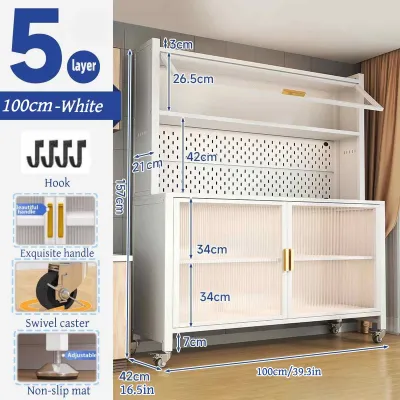
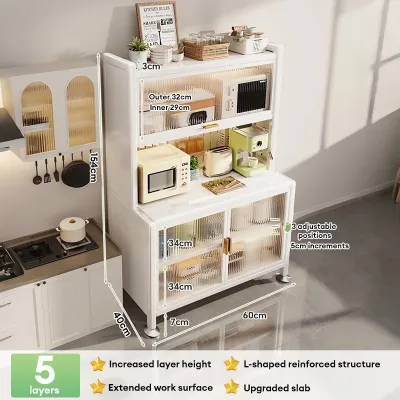
Prices are valid at publication and may change. Please refer to the product page for the latest price.
Essential Features for Extra Prep Space and Storage
To ensure the cart serves as an effective prep station, measure your primary cutting boards and any countertop appliances you plan to use. A surface that is too narrow will cause items to fall or crowd your workspace. Look for tops with smooth, food-safe finishes and check if there are protective edge treatments or slight overhangs that can catch spills or allow you to clamp down manual tools like pasta rollers.

Do not assume that a cart is durable or highly load-bearing simply because the manufacturer labels it as “solid wood” or “stainless steel.” Always check the explicit manufacturer-stated weight limits for both the top surface and individual shelves. Look for structural bracing, such as reinforced corner brackets or crossbars, which prevent the frame from swaying or warping when you apply downward force during food prep.
The quality of the casters (wheels) determines how easily the cart moves and how securely it stays in place. Heavy-duty polyurethane or rubber wheels are ideal for preventing scratches on delicate tile or hardwood floors, whereas cheap plastic wheels can crack under heavy loads or slide across smooth surfaces. Ensure at least two of the casters have robust, easy-to-engage locking mechanisms to lock the cart firmly in place.
Assess your storage needs before purchasing. If you intend to store small spices, utensils, or knives, a cart with shallow drawers is highly beneficial. For larger pots, pans, or dry pantry goods, look for deep, adjustable open shelving or closed cabinets. Always verify the internal dimensions (height, width, and depth) of these storage compartments against your tallest pots or appliance boxes to ensure a proper fit.
Matching the Cart to Your Kitchen Layout and Cooking Style
Compact Kitchens with Limited Floor Space
In smaller homes or condominiums where floor space is at a premium, a bulky, static island will disrupt the natural traffic flow. For these layouts, look for slim-profile carts or models featuring fold-down drop-leaf extensions. These extensions allow you to expand your prep surface when actively cooking and collapse it afterward to tuck the cart against a wall. Before buying, verify the clearance of your walkways, refrigerator doors, and existing cabinet drawers when the cart is in both its fully expanded and collapsed states to prevent tight bottlenecks.
Open-Plan Kitchens Needing a Central Prep Island
If you have an open-plan living and dining area, your mobile cart will likely serve as a visual focal point and a social hub. In this scenario, prioritize aesthetic finishes that complement your existing built-in kitchen cabinets and dining furniture. Look for carts designed with 360-degree access—meaning drawers and shelves can be accessed from multiple sides—so you can prep food while facing guests. Additionally, ensure the cart’s height closely aligns with your standard countertops (typically around 85 to 90 centimeters) to allow for seamless food transfer and comfortable standing posture.
Heavy-Duty Cooking and Appliance Storage
For home bakers and cooks who rely on heavy, motorized appliances like stand mixers, food processors, or large air fryers, structural integrity is paramount. These appliances generate dynamic, vibrating loads that can cause weak joints to loosen over time. Seek out carts featuring thick, reinforced tabletops and robust leg structures. Verify the manufacturer’s dynamic load specifications rather than static limits, as the force of kneading dough or operating a high-speed mixer requires significantly more stability than simply storing static pantry items.
How to Measure and Verify Fit Before You Buy
To avoid the frustration of a cart that does not fit your space or cannot be delivered, perform a thorough physical measurement of your home. First, measure the exact footprint where the cart will be parked when not in use. Beyond the static dimensions of the cart itself, calculate the additional clearance required to fully open its drawers, cabinet doors, and any drop-leaf extensions.
Second, map out the delivery route. Measure the width of your entry doors, hallways, stairwells, and elevator doors (if living in a high-rise condominium) to guarantee the packaged box or pre-assembled unit can physically pass through. This step is often overlooked but is critical for avoiding delivery failures.
Third, check your kitchen floor for levelness. Use a bubble level tool on the floor where you plan to prep. An uneven floor can cause a mobile cart to drift or wobble, even with locked wheels. Finally, inspect any threshold transitions between rooms; high or uneven thresholds can snag small casters, making it difficult or unsafe to roll a fully loaded cart between the kitchen and dining areas.
Care and Stability Tips for Humid Environments
The tropical, high-humidity climate of the Philippines presents unique challenges for kitchen furniture. Excess moisture in the air can accelerate the degradation of materials if they are not properly maintained. Always check the manufacturer’s care labels and product tags for specific moisture-resistance instructions.
For wooden surfaces, regularly inspect the finish for signs of swelling, cracking, or water spots. Apply food-safe mineral oil or wood conditioners as recommended by the manufacturer to maintain a protective barrier against humidity. For metal frames, joints, and casters, conduct routine visual checks for surface rust, especially around weld points and screws.
Keep the cart away from direct water splashes from the sink, and ensure your kitchen has adequate ventilation—such as utilizing exhaust fans or keeping windows open—to reduce localized humidity. When cleaning, avoid harsh abrasive chemicals; instead, use mild, surface-appropriate cleaners and immediately wipe the cart dry with a soft microfiber cloth to prevent moisture from pooling in joints or crevices.
Frequently Asked Questions (FAQ)
Can a mobile cooking cart support heavy appliances like a stand mixer?
Yes, but support depends entirely on the manufacturer’s stated weight limits, structural bracing, and leg thickness rather than the tabletop material alone. Before placing a heavy, vibrating appliance on your cart, verify the product specifications to ensure it can handle the load. To maximize stability and prevent tipping, always keep heavy appliances centered over the strongest support points, ideally directly above the legs rather than on extended drop-leaves or outer edges.
How do I prevent the cart from rolling while chopping?
Preventing movement requires high-quality locking casters that are suitable for your specific floor type. If your kitchen floor consists of smooth ceramic tiles, plastic wheels may slide even when locked; rubber or polyurethane wheels provide much better traction. Ensure the floor is level, clean, and free of grease or water. If you experience minor drifting during vigorous chopping, test the locks on a completely dry, hard surface, and inspect the wheels for wear or debris that might be compromising the locking mechanism.
Community discussion
Share your experience or ask a question. Comments are reviewed before publication.