
Modern rattan and bamboo outdoor tables can withstand the Philippine tropical climate, but their long-term durability depends entirely on whether you choose synthetic materials like high-density polyethylene or properly treated natural fibers, combined with consistent maintenance. In a climate characterized by intense solar heat, high humidity, and torrential monsoon rains, untreated natural materials will rapidly degrade. To ensure your outdoor table remains a functional and beautiful centerpiece on your patio or balcony, you must know how to evaluate material specifications, verify protective treatments, and implement practical care routines.
Understanding Tropical Climate Challenges for Woven and Natural Materials
The Philippine climate presents a unique set of environmental stressors that can quickly compromise outdoor furniture. High relative humidity, intense ultraviolet (UV) radiation, and heavy seasonal rainfall work together to accelerate the wear and tear of woven and natural materials. Understanding these challenges is the first step in selecting a table that will endure.
Moisture and humidity are the primary catalysts for structural damage in organic fibers. When natural rattan or bamboo is exposed to high humidity, the fibers naturally absorb moisture from the surrounding air. This trapped water creates an ideal breeding ground for mold and mildew, which can stain the material and cause a persistent musty odor. Over time, constant moisture absorption causes natural fibers to swell, stretch, and lose their structural tension, particularly at the joints and woven intersections where stability is most critical.
Products mentioned in this guide
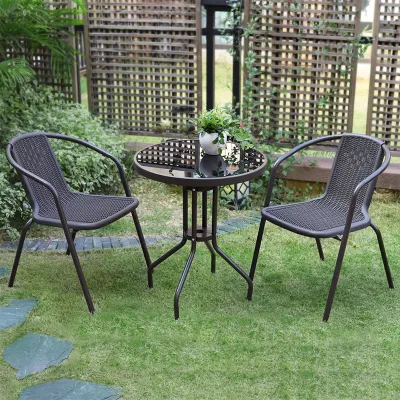
Prices are valid at publication and may change. Please refer to the product page for the latest price.
UV radiation from the intense tropical sun poses another significant threat. Prolonged sun exposure breaks down the chemical bonds in both natural and synthetic materials. For natural rattan and bamboo, UV rays strip away natural oils, leading to fading, cracking, and extreme brittleness. For low-quality synthetic materials, UV exposure degrades the plastic polymers, causing the woven strands to crack, unravel, and crumble under minimal pressure.
Heavy rainfall presents physical challenges beyond simple moisture absorption. Torrential rains can cause water to pool on flat table surfaces, seeping into the underlying frame or saturating the woven layers. If the table frame is made of untreated wood or bamboo, standing water triggers structural rot from the inside out, which severely compromises the load capacity and overall stability of the furniture.
Evaluating Modern Rattan: Synthetic vs. Natural Options
When shopping for a rattan outdoor table, you will encounter both synthetic and natural options. Distinguishing between these materials and understanding their specific limits is essential for making a durable choice.

Synthetic rattan, often referred to as synthetic wicker, is highly popular for outdoor use, but not all plastic wicker is created equal. When evaluating a synthetic rattan table, check the manufacturer’s specifications for High-Density Polyethylene (HDPE) or Polyethylene (PE) wicker. HDPE is highly resistant to UV radiation and moisture. However, you should look for explicit manufacturer labels confirming UV stabilization and waterproof claims, rather than assuming any plastic-looking weave is weatherproof. Avoid cheap PVC alternatives, which degrade rapidly under the tropical sun.
Natural rattan is exceptionally strong and beautiful, but it is inherently porous. If you prefer the authentic look of natural rattan, you must verify whether the product has been treated with marine-grade or outdoor-grade protective sealants. Untreated natural rattan is highly susceptible to moisture damage and is generally intended only for indoor spaces or fully covered, dry outdoor areas like a deeply recessed veranda.
Regardless of the weave material, the durability of an outdoor table is only as good as the frame beneath it. Inspect the underlying structure before buying. Prioritize frames made of powder-coated aluminum, which is naturally rust-resistant and lightweight. Avoid untreated steel frames, as any scratch in the outer coating will allow tropical humidity to cause rapid rusting, leading to structural failure and unsightly rust stains on your patio tiles.
Assessing Bamboo Durability and Treatment Requirements
Bamboo is a highly sustainable and aesthetically pleasing material, but because it is technically a grass, it requires specific treatments to survive outdoors in a tropical climate.
Before purchasing a bamboo outdoor table, direct your inquiries to the manufacturer’s documentation regarding preservation treatments. Look for terms like carbonization, which is a thermal process that removes sugars to prevent pest attraction, or boron treatment, a natural mineral salt that deters insects and decay. Additionally, verify if the bamboo has been sealed with multi-layered, outdoor-grade polyurethane varnishes to block moisture absorption.
Next, examine how the bamboo poles and slats are connected. The joints of a bamboo table are its primary failure points under stress. High-quality outdoor bamboo furniture utilizes stainless steel hardware, heavy-duty bolts, or specialized metal brackets to secure the joints. Avoid tables that rely solely on organic bindings, basic adhesives, or simple wooden dowels, as these materials quickly degrade, stretch, or rot when exposed to alternating wet and dry tropical cycles.
It is crucial to recognize that even the most thoroughly treated bamboo requires more stringent shelter and maintenance than synthetic alternatives. The long-term performance of a bamboo outdoor table depends entirely on the integrity of its applied finish. Once the protective varnish or sealant chips or wears away, the underlying bamboo is exposed to immediate climate damage.
Key Specifications to Verify Before Buying an Outdoor Table
To ensure you are purchasing a truly outdoor-ready table, you must look past generic marketing terms like “all-weather” or “weather-resistant” and verify tangible product specifications.
First, confirm the exact material composition. Demand specific material names from the retailer or manufacturer, such as high-density polyethylene (HDPE) for synthetic components or pressure-treated natural bamboo. If the retailer cannot provide these specific material details, it is safer to assume the product is not designed for harsh tropical exposure.
Second, carefully review the manufacturer’s warranty terms. A robust warranty is a strong indicator of a manufacturer’s confidence in their product’s durability. Check if the warranty specifically covers outdoor exposure, UV fading, or rust. Be aware that some warranties are voided if the furniture is left uncovered during severe weather or if it is placed in an unsheltered area.
Third, evaluate the physical dimensions, weight, and stability of the table. A durable outdoor table must be heavy enough to withstand strong tropical winds, especially during the typhoon season. Look for tables with a solid, weighted base or those that feature adjustable leveling feet to ensure stability on uneven outdoor tiles. Additionally, measure your available space, doorway, and lift access before purchasing to ensure the finished dimensions allow for easy delivery and installation. Verify the manufacturer’s stated load capacity to prevent overloading, and consider how you will anchor the table if you live in a high-wind area.
Routine Maintenance and Protection Strategies
Implementing a consistent maintenance routine is the most effective way to extend the lifespan of your rattan or bamboo outdoor table, regardless of the material type.
Regular cleaning prevents the buildup of dirt and organic matter that can trap moisture. Use a mild, non-abrasive soap mixed with warm water and a soft-bristled brush to gently clean between the woven strands of rattan or along the grain of bamboo. Never use high-pressure washers, as the intense force of the water can easily tear synthetic weaves, strip away protective bamboo sealants, and force water deep into structural joints.
After heavy tropical downpours, do not allow water to pool on the table surface. Wipe down the table with a dry, soft cloth to remove standing water. Ensure there is adequate airflow underneath and around the table; placing the furniture in a stagnant, damp corner of your patio will accelerate mold growth and structural decay.
The most effective way to protect your investment is to use high-quality, breathable, and waterproof furniture covers. Cover your table during the prolonged rainy season or whenever it is not in use for extended periods. Ensure the cover is securely fastened to prevent it from blowing away during sudden squalls, but leave a small gap at the bottom to allow air circulation and prevent trapped humidity.
While routine maintenance can handle surface issues, you must know when to seek professional assistance. If you notice that mold has penetrated deep into the fibers of natural rattan or bamboo, or if the structural joints have become loose and unstable, stop using the table immediately. Consult the manufacturer or a qualified furniture restoration professional to assess whether the table can be safely repaired or if it needs to be replaced.
Frequently Asked Questions (FAQ)
Can I leave natural rattan or bamboo tables outside during the rainy season?
It is highly recommended to move natural rattan and bamboo tables to a fully covered, dry indoor area or a well-sheltered veranda during the rainy season. Even when treated with protective sealants, prolonged exposure to constant moisture and standing water will eventually penetrate the finish, leading to structural rot, mold growth, and joint failure. If indoor storage is not possible, you must protect the table with a heavy-duty, breathable, and waterproof cover, ensuring it is elevated off damp ground to prevent moisture from wicking up the legs.
How do I remove surface mold from woven outdoor tables?
To remove surface mold without damaging your table, mix a mild solution of dish soap or white vinegar with warm water. Dip a soft-bristled brush or microfiber cloth into the solution, wring out the excess liquid, and gently scrub the affected areas, paying close attention to the crevices in the weave. Once the mold is removed, wipe the surface with a clean, damp cloth to remove any soap residue, and dry the table thoroughly with a clean towel. Allow the table to air dry completely in a well-ventilated, shaded area before using it or covering it again. Avoid using harsh chemical bleach or abrasive scrubbers, as these can permanently discolor synthetic wicker and strip protective coatings from natural materials.
Community discussion
Share your experience or ask a question. Comments are reviewed before publication.