
Finding a comfy sofa bed that accommodates a large family in the Philippines requires balancing daytime comfort with nighttime utility. In multi-generational households, living rooms are high-traffic zones where family members gather to watch television, chat, and relax. When guests stay overnight, the sofa must transition into a supportive, spacious bed. Selecting the right model involves looking past basic aesthetics to evaluate structural integrity, mechanism safety, and climate-appropriate materials.
Investing in a multi-functional piece of furniture is a practical way to optimize living space, especially in urban condominiums or shared family homes. However, because a sofa bed serves two distinct purposes, it faces twice the wear and tear of standard furniture. By understanding the key configurations, material specifications, and spatial requirements, you can select a model that provides long-term comfort for both sitting and sleeping.
How to Evaluate Comfort and Durability for Large Households
A standard sofa is designed for upright sitting, while a bed requires flat, uniform support. For large families, this dual-purpose challenge is amplified because the unit must withstand constant weight shifting and high-frequency use. Seat depth is a critical factor; a depth of 55 to 60 centimeters provides excellent support for sitting, but when converted, the sleeping surface needs to offer at least 190 centimeters of length and 150 centimeters of width—equivalent to a queen-size mattress—to comfortably sleep two larger adults without crowding.
Products mentioned in this guide
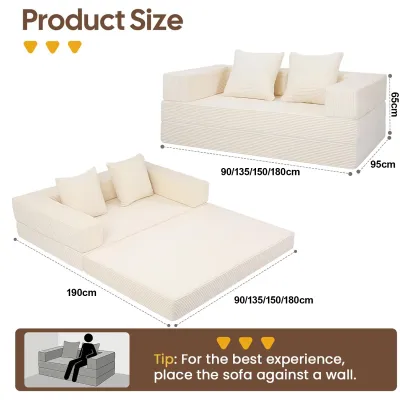
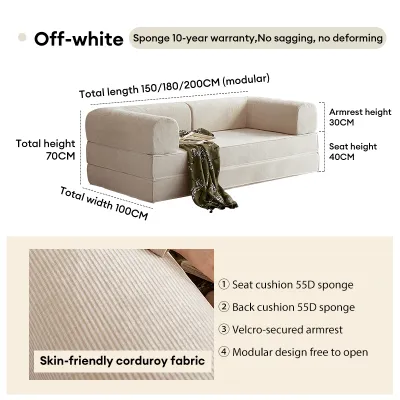
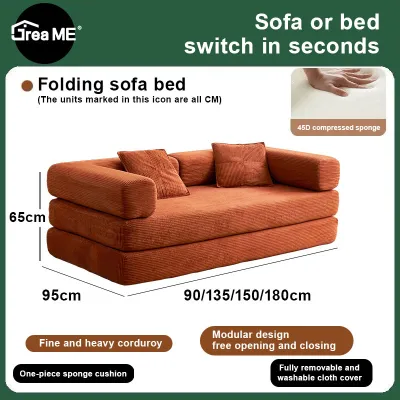
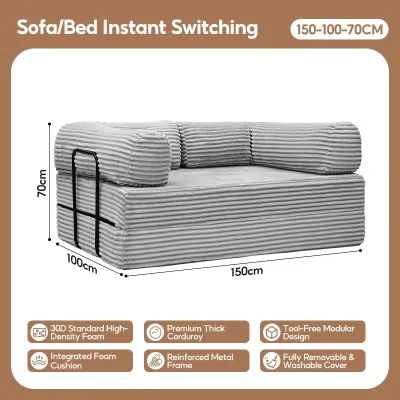
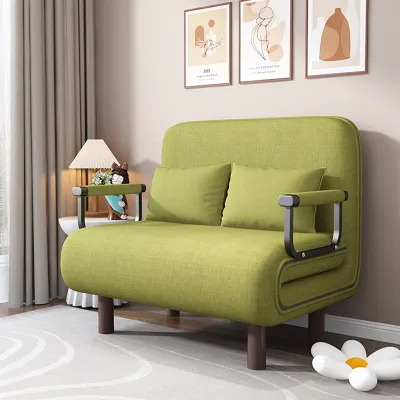
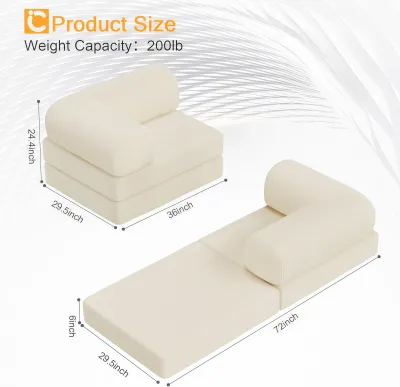
Prices are valid at publication and may change. Please refer to the product page for the latest price.
To ensure the furniture survives daily family life, you must establish strict structural evaluation standards. A 3-to-5-seater sofa bed must support a collective weight of 300 to 500 kilograms across the frame when fully occupied. Look for frames constructed from kiln-dried hardwoods like mahogany or gmelina, or heavy-duty reinforced steel. Avoid frames made entirely of thin particleboard or medium-density fiberboard (MDF), as these materials can warp or crack under the weight of multiple family members.
Joint stability is another critical point to verify before purchase. Look for double-doweled joints, corner blocks, and metal bracket reinforcements. If a sofa bed wobbles, creaks, or squeaks when you sit on the edge, the joints are likely under-reinforced and may fail over time. A stable frame ensures that the weight of multiple sleepers is distributed evenly, preventing localized sagging.
Finally, evaluate the mechanism’s ease of use and safety features. Converting the sofa should not require extreme physical exertion. Pull-out trundles and click-clack mechanisms must glide or click smoothly without catching. Safety features like anti-pinch hinges and soft-close dampers are vital, especially in households with active children or elderly relatives who might assist with setup. A high-quality mechanism should lock securely into both sofa and bed positions without sliding out of place.
Best Comfy Sofa Bed Configurations for 3 to 5 Seaters
The layout of your living room dictates which configuration is most practical. For large families, 3-to-5-seater configurations generally fall into two main categories: L-shaped sectionals and modular pull-outs. Each configuration distributes weight differently and impacts the flow of your living space.

When shopping in the Philippines, you will find these configurations across various price points. Mid-range options typically span from ₱25,000 to ₱55,000, while premium, highly durable imports or custom-built solid wood models can range from ₱60,000 to over ₱120,000. Evaluating these configurations based on your room’s dimensions ensures you do not block essential walkways.
L-Shaped and Sectional Sofa Beds
L-shaped sectionals are highly favored for their ability to maximize corner spaces. The extended chaise lounge portion provides a natural spot for daytime lounging without deploying the full bed mechanism. At night, this chaise often serves as a primary sleeping surface or integrates seamlessly with a pull-out trundle to create a massive, unified bed.
Many L-shaped models feature hidden storage beneath the chaise. In Philippine households, where space optimization is key, this storage is invaluable for keeping extra pillows, thin blankets, and bedsheets dust-free and easily accessible. This eliminates the need for separate linen chests, saving valuable floor space.
Opt for reversible chaise options if you anticipate moving houses or rearranging your living room layout in the future. A reversible design allows you to switch the chaise from the left to the right side, ensuring the sofa bed remains functional in different room configurations. This adaptability prolongs the useful life of your investment.
Keep in mind the footprint requirements. L-shaped sectional sofa beds are bulky and require a large, open area. When the bed mechanism is fully extended, you must ensure there is at least 60 to 80 centimeters of clearance around the perimeter so family members can walk safely without bumping into walls or other furniture.
Modular and Wide 3-Seater Pull-Outs
Modular sofa beds consist of separate, moveable pieces—such as individual armless chairs, corner units, and freestanding ottomans—that you can rearrange to fit your immediate needs. For a large family, this means you can push the pieces together to create a massive, customized sleeping platform or separate them to facilitate face-to-face conversation during family gatherings.
Wide 3-seater pull-outs utilize a built-in mechanism, such as a trundle or a bi-fold frame, that tucks neatly beneath the main seating cushion. When pulled out, these models typically transform into a spacious queen or king-sized sleeping surface, providing a highly consistent and level mattress area.
Consider the trade-offs between these two styles. Modular setups offer unmatched flexibility but rely on the friction of individual pieces to stay together; if they lack secure interlocking brackets, the pieces can slide apart during the night, creating uncomfortable gaps. Conversely, single-frame pull-out designs offer superior structural stability and a cohesive sleeping surface, but they are incredibly heavy and difficult to move once assembled.
Key Materials and Mechanisms for Frequent Conversion
The longevity of a comfy sofa bed depends heavily on its internal components and upholstery, especially in a tropical environment. In the Philippines, high humidity and warm temperatures accelerate wear on low-quality foams and metals, making material selection a primary concern.
When evaluating mattress and cushion materials, consider the following options:
- High-Density Polyurethane Foam: Look for a density of at least 30 kg/m³. This offers excellent resilience, ensuring the cushions do not sag after a few months of heavy use.
- Pocket Springs: These are ideal for the sleeping section because they isolate motion—meaning one person tossing and turning won't wake up others. They also offer contouring support similar to a traditional bed.
- Memory Foam Toppers: While they add a layer of plush comfort, they tend to trap body heat. If you choose memory foam, look for gel-infused variants or pair it with a breathable bamboo mattress protector.
Always check the manufacturer’s specifications, as material names alone do not guarantee performance.
For the frame and conversion mechanisms, metal components should be constructed from powder-coated steel to prevent rust and corrosion in humid coastal areas. Hardwood frames must be kiln-dried to reduce moisture content, preventing warping, splitting, and squeaking over time. Examine the tracks and rollers; heavy-duty nylon or steel rollers on a dedicated track ensure smooth, quiet operation during daily conversion.
Upholstery choices should balance durability, breathability, and ease of cleaning. Linen blends and tightly woven polyesters are excellent for tropical climates because they allow air to circulate, preventing the sofa from feeling sticky. If you have young children or pets, look for performance fabrics treated with stain-resistant coatings. Always verify the cleaning codes (such as “W” for water-based cleaners or “S” for solvents) on the manufacturer’s care label before attempting to clean spills, rather than assuming a fabric’s durability based on its name alone.
Space Planning and Delivery Access Checklist
Before finalizing your purchase, careful space planning is essential to ensure the sofa bed fits both your living room and the physical path into your home. Large 3-to-5-seater models are exceptionally heavy and bulky, making delivery one of the most common bottlenecks.
Use this measuring checklist to prepare your space:
- Overall Room Footprint: Measure the length and width of the designated area, ensuring the sofa does not block doorways, electrical outlets, or air conditioning vents.
- Deployment Clearance: Measure the total depth of the sofa bed when fully extended. Ensure there is at least 60 centimeters of clearance between the foot of the bed and the nearest wall or coffee table.
- Walking Paths: Verify that family members can navigate around the extended bed safely, especially in low-light conditions.
Conduct a thorough delivery access check. Measure the width and height of all doorways, narrow hallway turns, stairwells, and elevator doors. Many condominium elevators in urban areas have strict height and weight limits; verify these specifications with your building administration beforehand to avoid a situation where a non-refundable sofa bed cannot reach your unit.
Protect your flooring during assembly and daily use. Use thick area rugs or heavy-duty felt pads under the sofa legs and pull-out rollers to prevent scratching delicate hardwood, laminate, or ceramic tiles. When assembling the unit, strictly follow the provided manual. If you encounter conflicting instructions, missing hardware, or misaligned structural parts, stop immediately and consult the manufacturer or a qualified professional to prevent damaging the frame or compromising its weight capacity.
Frequently Asked Questions (FAQ)
Can a sofa bed replace a regular bed for everyday sleeping?
While a high-quality sofa bed can serve as a temporary sleeping solution for guests, it is generally not recommended as a permanent, everyday replacement for a traditional bed. Even premium models with thick high-density foam or pocket spring mattresses lack the comprehensive spinal and edge support provided by a dedicated mattress. Over time, daily sleeping on a sofa bed can lead to accelerated wear on the support slats or mesh system, potentially causing the mattress to sag and leading to back discomfort.
How do I maintain the mechanism of a frequently used sofa bed?
To extend the lifespan of your sofa bed, perform regular visual inspections of all moving parts, including hinges, tracks, rollers, and locking pins. Keep these areas free of dust, pet hair, and debris, which can accumulate and cause the mechanism to jam. If the manufacturer’s instructions permit, apply a light, dry silicone lubricant to the joints and tracks annually. If you ever feel resistance, hear grinding noises, or notice a misalignment while converting the sofa, stop immediately and consult a professional technician rather than forcing the mechanism, which can permanently bend the metal frame.
Community discussion
Share your experience or ask a question. Comments are reviewed before publication.