
Finding the right no-drill desk side storage options for condos in the Philippines involves balancing space constraints, rental rules, and tropical environmental factors. With compact floor plans in major urban hubs, expanding your workspace requires utilizing vertical areas and desk edges without drilling into concrete walls—a practice strictly prohibited by most condominium association rules and rental agreements. Fortunately, non-invasive storage solutions can expand your workspace, keep your essential tools within arm’s reach, and protect your security deposit from costly wall-damage deductions.
Selecting the right no-drill storage involves matching the physical structure of your desk and walls with the weight of the items you need to store. In the tropical climate of the Philippines, factors like high humidity can significantly impact the performance of adhesives, making mechanical alternatives like clamps, tension rods, and freestanding units highly practical choices. By understanding the strengths and limitations of each storage type, you can design an organized, clutter-free workstation that fits seamlessly into your condo layout.
Key Criteria for Evaluating No-Drill Desk Storage
Before purchasing any storage accessories, it is essential to establish the baseline requirements of your specific condo workspace. Taking precise measurements and assessing your daily work habits will prevent you from buying organizers that do not fit or fail under the weight of your equipment.
Products mentioned in this guide
Prices are valid at publication and may change. Please refer to the product page for the latest price.
First, assess the available clearance around your desk. Measure the thickness of your desk surface, paying close attention to any metal support beams or decorative bevels underneath the edge, as these can obstruct clamp-on organizers. Check the distance between the sides of your desk and the adjacent walls. If your desk is pushed flush against a wall, side-hanging organizers might not fit unless you pull the desk forward, which could reduce your valuable floor space or block walking paths. Additionally, ensure that any under-desk or side-mounted storage does not restrict your legroom or interfere with the movement of your office chair.
Second, identify the primary storage need by categorizing the items you use daily. Lightweight accessories like charging cables, pens, USB drives, and earphones can easily be accommodated by simple adhesive hooks or small magnetic trays. Conversely, heavier items such as reference books, tablets, external hard drives, and power strips require robust mechanical support. Placing heavy items on weak mounts can lead to sudden failures, potentially damaging your expensive electronics and cluttering your workspace.
Third, carefully evaluate your rental agreement restrictions. Most condo leases in the Philippines contain strict clauses regarding wall modifications, often charging tenants significant fees for any holes drilled into concrete or drywall. Even adhesive residues can peel off paint layers during removal, leading to deductions from your security deposit, which can amount to ₱10,000 or more. Choosing non-invasive, easily removable storage options ensures you maintain a functional workspace without violating your lease terms.
Comparing No-Drill Storage Solutions by Type
No-drill organizers rely on different physical mechanisms to stay secure, each distributing weight in unique ways. Understanding how these systems interact with your desk and wall surfaces is the first step in building a practical shortlist for your condo.

Some solutions attach directly to the desk frame, while others utilize the vertical space between the desk and the ceiling, or stand independently on the floor. By comparing these mechanisms, you can select the option that matches your desk material, wall texture, and weight requirements.
Adhesive Hooks and Mounting Strips
Adhesive-based storage is widely used due to its low profile and ease of installation. These systems typically use double-sided acrylic or silicone adhesive strips to mount hooks, small bins, or cable organizers directly to the side of your desk or the adjacent wall.
These mounts are highly suitable for lightweight to medium items, such as headphones, coiled cables, and small plastic stationery holders. They allow you to utilize the flat, vertical surfaces of your desk legs or monitor stands without adding bulk.
However, adhesives face distinct limitations in the Philippines, where tropical humidity can weaken the chemical bonds over time. They do not adhere well to textured concrete walls, rough plaster, or porous wood surfaces. If applied to freshly painted walls, the adhesive may bond to the paint layer rather than the wall itself, causing the paint to peel off when weight is applied. To prevent damage, always check the manufacturer’s instructions for curing times and weight limits, and ensure the surface is thoroughly cleaned and dried before application.
Magnetic Organizers and Panels
Magnetic storage solutions offer a highly modular and clean aesthetic, allowing you to reposition shelves, hooks, and bins instantly without leaving any residue. These systems rely on strong magnets that cling to ferromagnetic surfaces.
To use magnetic organizers, your desk must have a steel or iron frame, or you must install a dedicated magnetic backing board or pegboard. Many modern minimalist desks feature metal legs or support structures that are perfect for holding magnetic cable clips and small utility trays.
While highly convenient for small, frequently accessed metal tools, paperclips, and lightweight trays, magnetic storage has strict weight distribution limits. If a magnetic bin is overloaded, it can slide down vertical metal surfaces, potentially scratching the finish of your desk frame. To avoid this, verify the load capacity of the magnets and look for organizers with rubberized backings that increase friction and protect the underlying metal from scratches.
Tension Rod and Clip-On Systems
Tension-based and clamp-on systems rely on physical pressure rather than adhesives or magnetic attraction, making them exceptionally stable and completely residue-free. These are among the most reliable options for holding heavier items beside your desk.
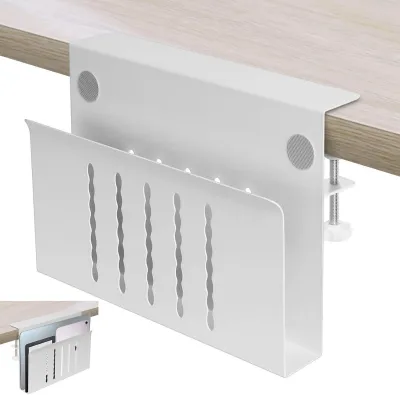
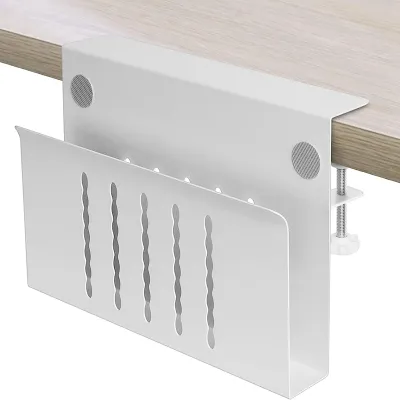
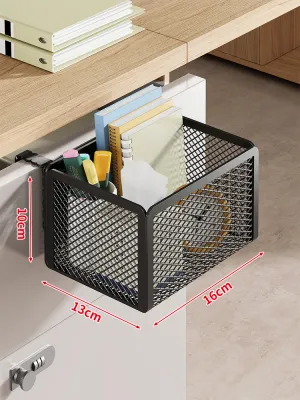
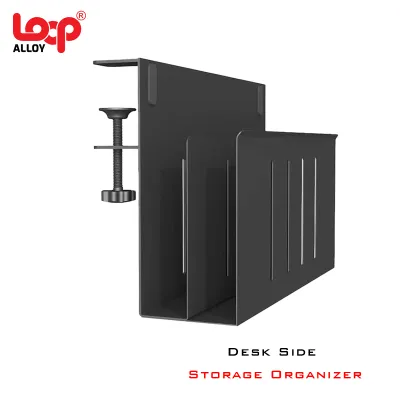
Clip-on desk trays, cup holders, and pegboards clamp directly onto the edge of your desk. Before choosing a clamp-on model, verify that your desk edge has sufficient lip clearance and that the material can withstand concentrated pressure. Avoid using heavy clamps on thin veneer or hollow-core desks, as the pressure can compress or crack the surface.
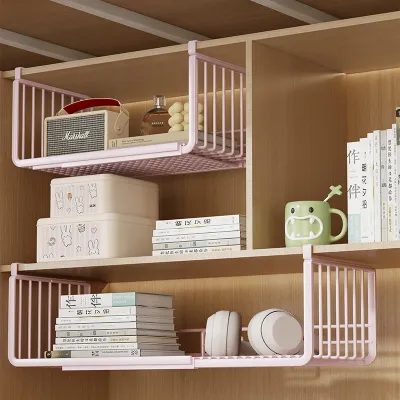
Tension rod setups extend vertically from the surface of your desk to the ceiling, or between two adjacent walls. These systems create a sturdy grid or shelving unit beside your desk, allowing you to hang shelves and baskets at various heights. When installing tension systems, perform regular stability checks to ensure the feet do not slip, and use protective silicone or rubber pads to prevent scratching your desk or leaving marks on the ceiling.
Freestanding and Gravity-Based Edge Organizers
Freestanding and gravity-based options require absolutely no attachment to your walls or desk, relying entirely on their own weight and balance to remain stable. This category includes slim rolling carts, under-desk shelving units, and counterweighted edge organizers.
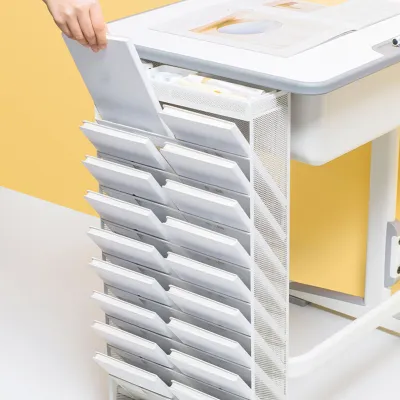
Monitor stands with built-in side compartments and desk-edge organizers that drape over the side using a counterweight are excellent for keeping small items organized without any installation. For larger storage needs, a slim, multi-tier rolling cart placed directly beside your desk can hold books, printers, and files.
When selecting freestanding carts or slim shelving units, verify the finished dimensions to ensure they fit through narrow condo doorways and lift access points during delivery. The primary trade-off with freestanding units is floor space consumption. In a compact condo, a rolling cart might block pathways or restrict your chair movement. However, they offer substantial storage capacity and can be easily rolled away or repurposed in another room if your layout changes, making them a highly versatile investment.
Surface Compatibility and Installation Checks
To prevent property damage and ensure your storage remains secure, always perform a thorough compatibility check before installing any no-drill organizer. A systematic approach will save you from fallen shelves and damaged walls.
Begin by testing the paint adhesion on your walls if you plan to use any adhesive-based mounts. Apply a small, inconspicuous piece of painter’s tape to the wall, press it down firmly, and pull it off. If any paint flakes or residue adhere to the tape, the wall paint is prone to peeling, and you should avoid using adhesive strips. For wooden desks, check if the surface is porous or sealed; unsealed wood can absorb moisture from adhesives, leading to a weak bond and potential staining.
Next, carefully read the manufacturer’s specifications for your chosen storage product. Pay close attention to weight limits, recommended curing times for adhesives, and temperature or humidity restrictions. In the Philippines, where indoor humidity can fluctuate, it is advisable to allow adhesives to cure for at least 24 hours—or longer than the manufacturer’s standard recommendation—before hanging any items. When choosing metal or plastic organizers, check the manufacturer’s care instructions and the quality of the protective finish to ensure they can withstand the high humidity of a tropical environment without rusting or degrading.
If you encounter highly textured walls, delicate wallpaper, or brittle plaster, stop and re-evaluate. Do not attempt to force an adhesive or clamp-on solution onto an incompatible surface. In these scenarios, consult your landlord or property manager to understand the exact wall composition, or pivot entirely to freestanding or tension-based systems that do not rely on wall contact.
Space Planning for Small Condo Desks
Integrating your chosen storage solutions into a cohesive, clutter-free layout requires careful space planning. The goal is to maximize your vertical space while keeping your primary work surface clear and ergonomic.
Start by mapping your vertical and horizontal zones. Keep your desk surface reserved strictly for active work items like your computer, keyboard, and notebook. Use the vertical space directly beside or behind your desk for storage. By mounting a pegboard or tension shelf to the side, you can move passive items—like headphones, reference documents, and stationery—off your desk, instantly making the workspace feel larger.
Group your items by frequency of use to determine their placement. Frequently used items, such as pens, glasses, and phone chargers, should be placed in easy-reach zones, such as desk-edge clamps or magnetic trays. Less frequently used items, like backup hard drives, extra cables, or reference books, can be stored in under-desk rolling carts or lower shelves.
Finally, maintain adequate clearance for cable management. Side-mounted organizers can easily become tangled with power cords and monitor cables. Use adhesive cable clips or under-desk cable trays to route wires away from your storage units. This not only prevents accidental snags when you reach for an item but also reduces visual clutter, creating a calm and productive environment in your condo.
Frequently Asked Questions (FAQ)
Can I use adhesive storage on textured condo walls?
Standard adhesive strips generally fail on textured, porous, or uneven paint because they cannot form a complete, airtight bond with the surface. The gaps created by the texture allow air and moisture to penetrate, leading to sudden adhesive failure. If your condo walls are textured, it is highly recommended to use freestanding shelving units, slim rolling carts, or tension rod systems that do not rely on adhesive contact to remain stable.
How do I remove adhesive hooks without damaging the paint?
To remove adhesive hooks safely, always follow the manufacturer’s specific stretch-and-pull instructions, pulling the tab slowly and parallel to the wall rather than outward. To make the process safer on delicate condo paint, use a hair dryer on a low, warm setting to gently heat the adhesive backing for a few seconds. This softens the adhesive, allowing it to release its grip smoothly without tearing the underlying paint or drywall.
Are clamp-on organizers safe for glass or acrylic desks?
Clamp-on organizers can pose a significant risk to glass or acrylic desks because these materials do not handle concentrated pressure well and can easily crack or shatter. If you must use a clamp-on system on a glass desk, ensure the clamp has thick, soft rubber or silicone padding to distribute the pressure evenly, and never overtighten the mechanism. Additionally, check your desk manufacturer’s warranty and weight tolerance guidelines before installing any pressure-based mounts.
Community discussion
Share your experience or ask a question. Comments are reviewed before publication.