
Condominium living in the Philippines offers unparalleled convenience, but it often comes with strict structural limitations and compact floor plans. Most high-rise developers and landlords prohibit drilling into concrete shear walls, tiled backsplashes, or structural columns, leaving residents with the challenge of maximizing storage without risking their security deposits. Hidden drawer cabinets that utilize no-drill mounting systems offer an elegant solution to this dilemma. These clever storage units keep clutter out of sight, maintain a clean minimalist aesthetic, and install securely using non-invasive methods.
By choosing the right mounting mechanism and verifying the structural limits of your space, you can introduce functional, concealed storage to your entryway, kitchen, bedroom, or home office. This guide explores the primary no-drill hidden storage systems, provides a comprehensive evaluation checklist for small-space compatibility, outlines critical safety boundaries for damage-free installation, and explains how to verify product specifications on online marketplaces.
Understanding No-Drill Hidden Storage Mechanisms
To select the ideal hidden drawer cabinet, you must first understand the engineering behind no-drill mounting systems. Different mechanisms suit different weight requirements, surface types, and aesthetic goals. Choosing the wrong mechanism can lead to falling cabinets, damaged walls, or jammed drawers.
Products mentioned in this guide
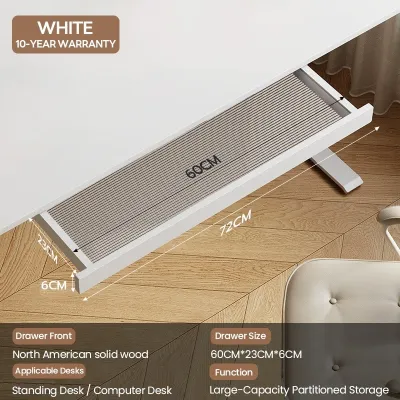
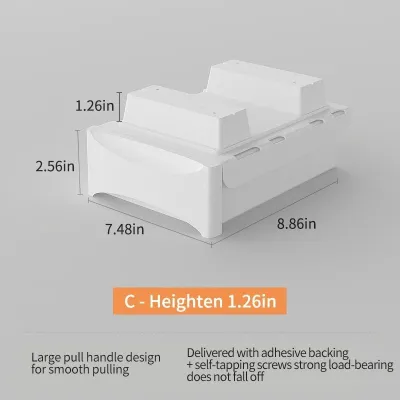
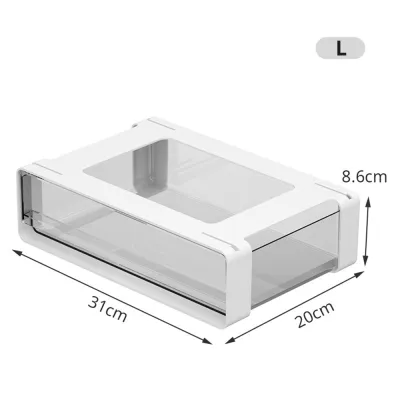
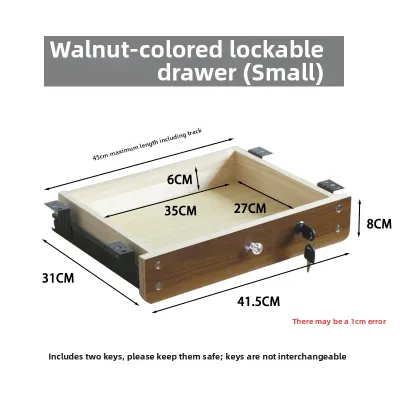
Prices are valid at publication and may change. Please refer to the product page for the latest price.
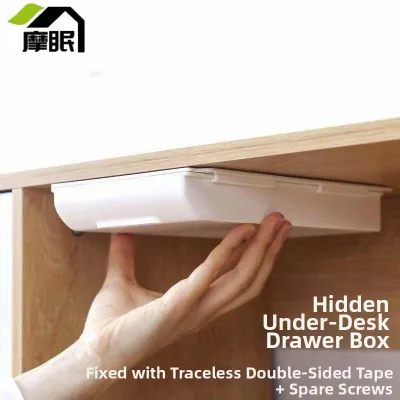
Adhesive-mounted systems rely on high-performance chemical bonding agents, such as heavy-duty double-sided acrylic foam tapes or specialized structural glues. These systems are highly effective for lightweight, low-profile hidden drawers, such as under-desk organizers or small vanity drawers. However, their load capacity is strictly limited by the tensile and shear strength of the adhesive, as well as the integrity of the mounting surface. They perform exceptionally well on smooth, non-porous materials like glass, polished metal, and sealed laminates, but they can fail catastrophically on textured or dusty surfaces.
Tension-based or friction-fit units utilize mechanical pressure to stay in place. These systems often feature adjustable vertical poles or horizontal tension rods that press firmly against opposing walls, floors, ceilings, or the interior panels of existing wardrobes. Because they do not rely on chemical bonds, tension systems are highly reliable and completely immune to the high humidity levels common in tropical climates. They are ideal for creating modular, hidden drawer stacks inside existing closets or alcoves without altering the surrounding woodwork.
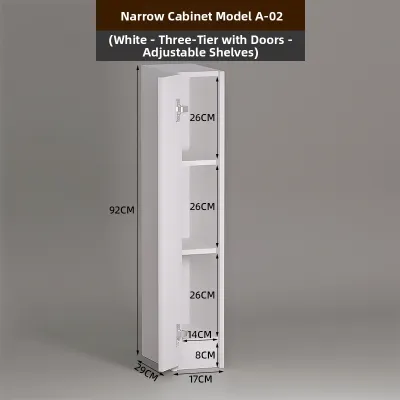
Freestanding cabinets with concealed drawer fronts require no mounting hardware whatsoever. These units sit directly on the floor or on top of existing sturdy furniture, relying on gravity and balanced weight distribution for stability. The “hidden” aspect of these cabinets comes from their design: they feature seamless, handleless drawer fronts, push-to-open latch mechanisms, or panels that mimic solid walls or decorative columns. Because they require no wall attachment, they are the safest and most versatile option for renters who need to store heavier items like books, files, or kitchen appliances.
Magnetic or hook-based hanging drawers offer temporary, highly flexible storage for lightweight essentials. These units typically feature strong neodymium magnets that cling to steel appliance bodies, or integrated brackets that slide over existing cabinet shelves or desk edges. They are perfect for adding hidden compartments under dining tables, inside metal-framed utility shelves, or along the side of a refrigerator. While incredibly easy to install and reposition, their weight capacity is modest, and they are best reserved for small items like keys, documents, or kitchen utensils.
Evaluation Checklist for Condo Hidden Drawers
Before purchasing any hidden drawer cabinet, you must systematically evaluate its physical dimensions, weight limits, and material finishes to ensure it fits seamlessly into your condo layout.

- Finished Dimensions and Clearance: Measure your available floor or wall space with absolute precision. Beyond the closed footprint of the cabinet, you must calculate the drawer extension depth to ensure the drawers can open fully without colliding with bed frames, dining chairs, or doorways. Additionally, verify the clearance of your condo building's service elevators, narrow hallways, and main entry door to guarantee the unit can be delivered safely to your unit.
- Weight Capacity and Load Distribution: Always check the manufacturer's specifications for both static and dynamic load limits. Static load refers to the weight the drawer can support when completely still, while dynamic load accounts for the downward and outward forces exerted when the drawer is pulled open. Ensure the weight of your intended items is distributed evenly across the drawer base to prevent the tracks from warping or binding over time.
- Concealment Effectiveness: Evaluate the hardware and design elements that make the drawer truly hidden. Look for high-quality push-to-open latches, touch-release runners, or integrated finger pulls that eliminate the need for visible handles. The gaps between the drawer fronts and the cabinet frame should be minimal and uniform to create the illusion of a solid, decorative panel.
- Material and Finish Checks: Do not rely solely on generic material names like "wood" or "metal" to judge durability. In the humid climate of the Philippines, untreated wood and low-grade medium-density fiberboard (MDF) are highly susceptible to swelling, warping, and mold. Instead, verify that the cabinet features protective surface treatments, such as water-resistant melamine laminates, sealed edge-banding, or powder-coated steel frames. Check that the drawer runners are made of corrosion-resistant materials like galvanized steel to ensure smooth operation during the wet season.
Surface Preparation and Safety Boundaries
Installing a no-drill cabinet requires careful preparation of the mounting surface to prevent structural failures and avoid costly lease penalties when it is time to move out.
Surface compatibility is the single most critical factor for adhesive-mounted drawers. Ideal surfaces include smooth ceramic tiles, tempered glass, polished stone, sealed solid wood, and high-pressure laminates. Unsuitable surfaces include textured plaster, matte latex paint, wallpaper, and unsealed concrete. Applying heavy-duty adhesives to painted drywall or wallpaper will almost certainly result in the paint or paper tearing away under the weight of the drawer, damaging the wall and causing the cabinet to fall.
Understanding the difference between adhesive shear strength and safe working load is vital for long-term safety. Shear strength refers to the adhesive’s ability to resist sliding forces parallel to the wall, while tensile strength resists forces pulling directly away from the wall. When you pull a drawer open, you exert both downward shear force and outward tensile force on the mounting brackets. To ensure a safe margin of error, never load a no-drill drawer to more than fifty percent of the adhesive manufacturer’s rated weight capacity.
Reversibility and damage-free removal must be planned before installation begins. If you use high-strength double-sided foam tape or mounting adhesive, you must be prepared to remove it without gouging the underlying surface. Keep a high-quality adhesive solvent, a plastic putty knife, and a standard hairdryer on hand. Heating the adhesive softens the polymer bonds, allowing you to gently slice through the foam core using a piece of dental floss or fishing line, after which you can clean the remaining residue with the solvent.
There are clear stop conditions where you must abandon no-drill wall mounting entirely. If you intend to store heavy items such as cast-iron cookware, large stacks of ceramic plates, or extensive book collections, adhesive and tension mounts are fundamentally unsafe. In these scenarios, you must opt for freestanding, floor-supported cabinets. These units distribute their weight directly to the floor, eliminating the risk of sudden mounting failure while still providing the clean, handleless aesthetic of hidden storage.
Sourcing and Verifying Product Specifications
Finding the right hidden drawer cabinet on online marketplaces requires a strategic approach to search terms, product reviews, and seller policies.
When searching on e-commerce platforms, avoid broad, generic terms that yield thousands of irrelevant results. Instead, use highly specific, search-optimized phrases such as “push-to-open freestanding drawer,” “adhesive under-desk drawer organizer,” “no-drill slide-out cabinet insert,” or “handleless hidden storage tower.” These targeted terms will help you bypass standard dressers and direct you to products engineered specifically for small-space concealment and non-invasive installation.
Once you locate a promising product, locate the digital user manual or specification sheet provided by the seller. Pay close attention to the required curing times for any included adhesives. Many high-strength structural glues require a full 24 to 72 hours to cure completely before you can attach the drawer or place any weight inside. Attempting to load the drawer before the adhesive has fully cured is the leading cause of premature mounting failure.
User feedback is an invaluable resource for verifying a product’s real-world performance. Filter reviews to look for comments from buyers living in high-humidity regions, as they will often note if the drawer tracks tend to jam, if the panels warp, or if the included adhesive fails under tropical conditions. Pay attention to reviews that mention the quality of the packaging, as misaligned drawer runners or chipped corner panels often occur during transit and can ruin the seamless look of a hidden cabinet.
Finally, carefully review the seller’s return policies and warranty terms before finalizing your purchase. Ensure the seller offers a clear return window for defective hardware, missing concealed hinges, or damaged panels. When budgeting for your storage upgrade, remember to factor in the cost of high-quality replacement adhesives or specialized surface primers, which typically cost between ₱150 and ₱500, to ensure your installation is as secure and durable as possible.
Frequently Asked Questions (FAQ)
How do I safely remove adhesive-mounted drawers without peeling the paint?
To remove adhesive-mounted drawers safely, start by using a hairdryer on a medium-heat setting to warm the mounting brackets for several minutes. This heat softens the adhesive polymers, making them pliable. Next, take a length of dental floss or strong fishing line, slip it behind the bracket, and use a gentle sawing motion to cut through the softened foam tape. Once the bracket is detached, apply a small amount of commercial adhesive remover or isopropyl alcohol to a microfiber cloth, let it sit on the residue for a minute, and gently scrape the remaining glue away using a plastic putty knife or an old credit card. Always test the solvent on an inconspicuous spot first to ensure it does not discolor the wall finish.
Can I install a no-drill hidden drawer inside an existing wardrobe?
Yes, retrofitting a no-drill hidden drawer inside an existing wardrobe is an excellent way to utilize dead space. Before purchasing, measure the internal width, depth, and door hinge clearance of your wardrobe to ensure the drawer can slide out without hitting the wardrobe doors. You can secure the drawer unit using heavy-duty tension rods designed for closet interiors, or by placing a compact, freestanding drawer insert directly onto an existing sturdy shelf. If using adhesive mounts inside a wardrobe, ensure the interior panels are made of sealed laminate or finished wood, and verify that the wardrobe frame itself is stable enough to handle the shifting dynamic weight of the drawer when it is pulled open.
Community discussion
Share your experience or ask a question. Comments are reviewed before publication.