
Living in a compact condominium in the Philippines, such as a studio or a cozy one-bedroom unit in Metro Manila, requires smart spatial planning. Every square meter counts, and the bedroom often presents the ultimate puzzle: how to fit a comfortable bed without blocking access to your built-in wardrobe. A metal folding bed offers an excellent, flexible solution to this dilemma, allowing you to reclaim valuable floor space during the day.
However, choosing the wrong size can quickly turn your bedroom into an obstacle course where closet doors can only open halfway. Finding the perfect fit requires a clear understanding of your room’s physical boundaries, wardrobe door clearance paths, and the exact footprint of the bed when both open and closed. By taking accurate measurements and selecting a compatible layout, you can enjoy a comfortable sleep setup without compromising the daily functionality of your storage space.
Measure Your Space: Bed Footprint vs. Closet Clearance
Before browsing online marketplaces or visiting local furniture showrooms, you must take precise measurements of your bedroom. Start by mapping out the entire room using a steel tape measure, noting the locations of fixed elements like electrical outlets, baseboards, window sills, and the entry door. The most critical measurement, however, is the clearance zone directly in front of your wardrobe. This zone is determined entirely by the type of closet doors installed in your condo.
Products mentioned in this guide
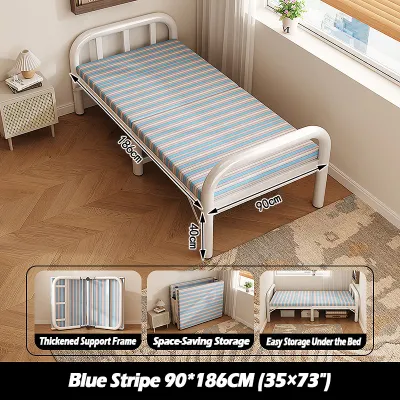
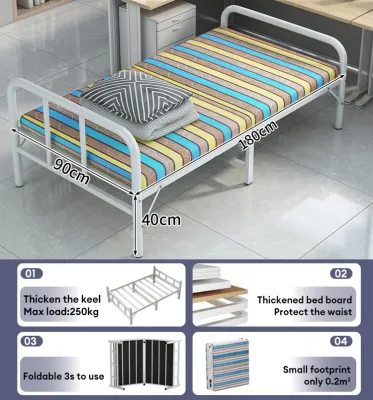
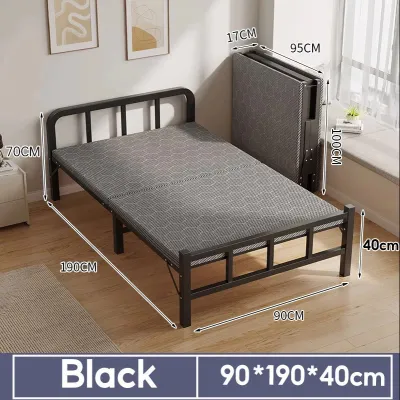
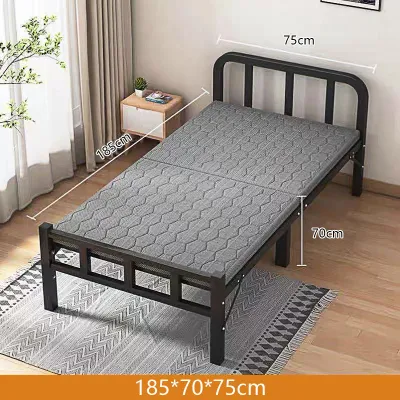
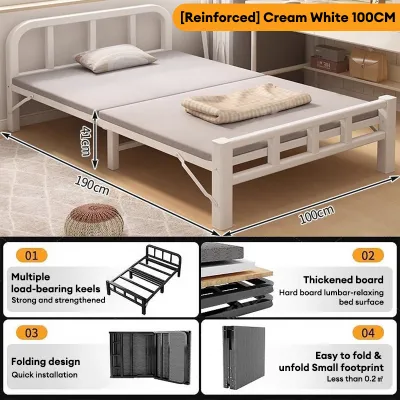
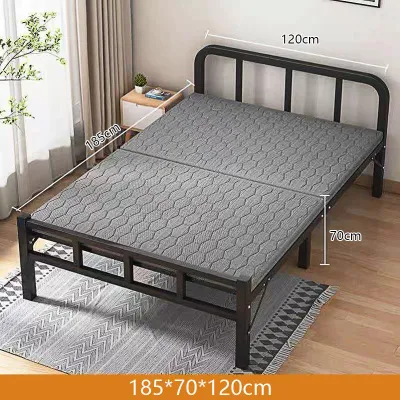
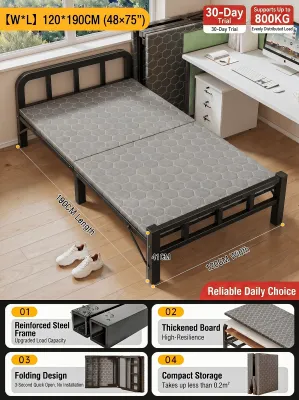
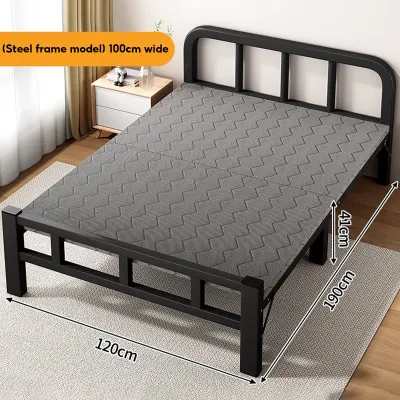
Prices are valid at publication and may change. Please refer to the product page for the latest price.
If your wardrobe features traditional hinged (swing) doors, they require a clear, unobstructed arc to open fully. Standard wardrobe doors in Philippine condos typically measure between 45 cm and 60 cm in width. To open these doors and stand comfortably in front of them to select your clothes, you need to add an extra 15 to 30 cm of standing room. This means your metal folding bed must be positioned at least 60 to 90 cm away from the face of the wardrobe. Placing the bed any closer will force you to squeeze into tight corners or partially fold the bed just to grab a shirt.
Sliding closet doors are far more forgiving in small spaces because they do not swing outward into the room. However, they still require a dedicated walkway so you can comfortably stand and slide the panels. For a sliding door wardrobe, aim for a minimum clearance of 45 to 60 cm between the edge of the bed frame and the closet track. This ensures you can access your clothes without your knees brushing against the mattress.
To calculate your maximum allowable bed footprint, start with the total length and width of the room’s usable floor area. Subtract the “dead zones” where furniture cannot sit, such as the entry door’s swing path (usually 80 to 90 cm) and the wardrobe clearance zone you just calculated. The remaining space represents the maximum dimensions your metal folding bed can occupy when fully unfolded. Keeping these numbers in mind prevents the common mistake of buying a bed that fits the room in theory but blocks essential pathways in practice.
Standard Metal Folding Bed Dimensions and Room Fit
Metal folding beds come in several standardized sizes, each offering a different balance of sleeping comfort and space efficiency. Understanding these dimensions—and how they translate to real-world floor space—is essential for making an informed purchase.

Single or Twin-size folding beds are the most popular choice for compact condo bedrooms and guest rooms. When fully unfolded, a standard single metal folding bed typically measures approximately 90 cm in width and 190 cm in length. This narrow footprint is ideal for tight layouts because it easily slips into narrow spaces, leaving plenty of room for walkways and wardrobe doors. In a typical secondary bedroom measuring 2.4 meters by 2.4 meters, a single bed can be positioned to leave over a meter of clearance on one side, keeping your closet fully accessible.
Double or Full-size folding beds offer more sleeping surface, measuring around 135 cm in width and 190 cm in length when open. While comfortable for couples or solo sleepers who prefer more room, a double folding bed demands a much larger footprint. In a small condo bedroom, a double bed will likely consume almost the entire available floor space. If you choose this size, you must accept the trade-off: the bed will almost certainly block your wardrobe doors when unfolded, meaning you will need to fold it up and roll it aside every morning before getting dressed.
Do not overlook the folded dimensions of the bed, as this is how the furniture will exist for most of the day. When folded, a standard bi-fold metal frame typically stands about 100 to 110 cm high, with a depth (or thickness) ranging from 30 to 50 cm. The exact thickness depends heavily on the mattress type and the folding mechanism. A bed with a thick, plush mattress will naturally have a bulkier folded profile than one with a slim, high-density foam mattress.
Additionally, check if the frame design includes protruding legs, headboards, or mounting brackets, as these can add several centimeters to the overall folded width and depth. Always verify the manufacturer’s official specification sheet for both the unfolded and folded dimensions rather than relying on generic size labels, as metal frame structures can vary significantly between brands.
Layout Strategies to Keep Closet Access Clear
Once you know your room’s dimensions and the bed’s footprint, you can plan a layout that maximizes both sleep comfort and daily utility. How you orient the bed relative to your wardrobe determines how easily you can move around the room.
One highly effective approach is parallel placement. This involves positioning the long side of the bed parallel to your wardrobe wall. This layout works exceptionally well in rectangular rooms where one wall is significantly longer than the other. By placing a single metal folding bed against the opposite wall, you maximize the central walkway. If the room is at least 2.4 meters wide, a 90 cm wide bed leaves a generous 1.5 meters of open space, allowing even the widest hinged closet doors to swing open with room to spare.
Alternatively, you can opt for perpendicular placement, where the head of the bed is positioned against a wall perpendicular to the closet. This layout is particularly suited for rooms with sliding wardrobe doors, as it creates a clear pathway along the side of the bed leading directly to the closet. If you use this layout, ensure that the foot of the bed does not extend into the entry door’s swing path or block access to other essential furniture like a study desk or vanity mirror.
If the folding bed is intended primarily for occasional guests, take advantage of corner and alcove utilization. When folded, the bed can be rolled into a quiet corner, placed inside a walk-in utility closet, or tucked behind a decorative folding screen. This completely frees up the bedroom floor during the day, allowing you to use the space as a home office, yoga area, or dressing room without any physical obstructions.
To guarantee your chosen layout works in reality, use a simple visualization trick before making a purchase. Take rolls of painter’s tape or lay down sheets of newspaper on your bedroom floor to outline the exact dimensions of the bed in both its unfolded and folded states. Walk around the taped boundaries and physically open your wardrobe doors to their fullest extent. If a door collides with the tape, you will immediately know that you need to adjust your layout or opt for a more compact bed size.
Key Features to Check Before Buying
Beyond physical dimensions, several structural and design features dictate how practical, safe, and durable a metal folding bed will be in your condo. Investing in the right features ensures the bed is easy to manage daily.
First, evaluate the folding mechanism and overall ease of use. Because you will likely fold and unfold the bed frequently in a tight space, the mechanism must be smooth and lightweight. Look for frames equipped with counterbalanced springs or smooth-gliding hinges that allow a single person to operate the bed safely without heavy lifting or risk of pinching fingers.
Second, high-quality casters and wheels are essential for small-space living. Because you may need to roll the bed away from the closet to unfold it, and then roll it back into a corner for storage, the wheels must glide smoothly over your flooring. Look for 360-degree swiveling casters made of non-marking rubber or polyurethane to protect your condo’s vinyl planks, laminate wood, or ceramic tiles from scratches. Crucially, ensure that at least two of the casters feature robust locking brakes to keep the bed securely anchored in place while you sleep.
Third, consider how the mattress integrates with the folding frame. Standard mattresses are not built to bend and will suffer permanent structural damage if folded. Therefore, you should select a bed that comes with a mattress specifically engineered for folding frames. High-density polyurethane foam is the most common and practical choice, as it recovers its shape quickly after being unfolded. While a thicker mattress (such as 10 cm or more) offers superior comfort, keep in mind that it will increase the bed’s folded profile and require more storage depth.
Finally, verify the frame’s stability, joint quality, and weight capacity by checking the manufacturer’s specifications. A sturdy steel or iron frame with a powder-coated finish is highly recommended for the tropical, humid climate of the Philippines, as it helps prevent rust and corrosion over time. Look for frames with reinforced legs and solid welded joints rather than thin wire mesh, which can sag over time. Ensure the legs are fitted with protective rubber caps to provide extra grip on slippery tile floors and prevent any unwanted wobbling during the night.
Frequently Asked Questions (FAQ)
Can I use a metal folding bed as a permanent bed in a small condo?
Yes, you can use a high-quality metal folding bed as a permanent sleeping solution, provided you choose a model built for daily use. Look for a robust steel frame with supportive wooden slats or heavy-duty steel mesh rather than thin, bouncy springs. Pair this with a high-density foam mattress that is at least 10 cm thick to ensure proper spinal support. Because daily folding and unfolding subjects the frame to regular wear, make it a habit to inspect and tighten the bolts and joints every few months to maintain structural integrity and prevent squeaking.
How much space should I leave between the bed and the wardrobe?
The ideal clearance depends on your wardrobe’s door style. For sliding wardrobe doors, maintain a minimum walkway of 45 to 60 cm to allow comfortable standing and movement. For hinged (swing) doors, the clearance must equal the full width of the door panel (typically 60 cm) plus an additional 15 to 30 cm of standing space. This results in a total recommended clearance of 75 to 90 cm between the bed frame and the front of the wardrobe, ensuring you can open the doors fully without restriction.
Community discussion
Share your experience or ask a question. Comments are reviewed before publication.