
Selecting a reliable table folding heavy duty setup requires looking past basic designs to focus on materials that can survive intense moisture. To prevent rust and structural failure during the wet season, the optimal choice is a table featuring an anodized or thick-walled aluminum frame, or a hot-dip galvanized steel frame with a multi-layer powder-coated finish, paired with a high-density polyethylene (HDPE) resin tabletop. These materials provide the necessary structural strength to support heavy loads while resisting the constant dampness, high humidity, and heavy downpours characteristic of tropical climates.
In regions like the Philippines, where the monsoon season brings relentless rain and relative humidity levels frequently soar above 80 percent, standard metal furniture quickly deteriorates. Water collects in joints, penetrates thin paint layers, and triggers rapid oxidation. By understanding how different metals, protective coatings, and tabletop materials interact with moisture, you can make an informed investment that remains safe, stable, and completely rust-free for years to come.
How High Humidity and Rain Affect Heavy-Duty Folding Tables
Moisture damage on outdoor furniture is more than an aesthetic issue; it directly impacts structural safety. Cosmetic surface rust, which appears as light orange or brown discoloration on the outer metal layer, is often the first sign of trouble. While surface rust can sometimes be cleaned, structural corrosion is far more dangerous. This deep-seated oxidation eats away at the core metal, thinning the structural walls of the legs and frame until they can no longer support their rated weight capacity.
Products mentioned in this guide
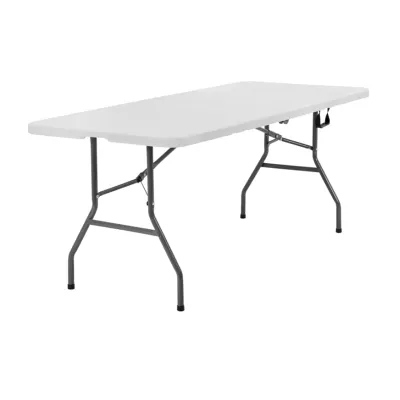
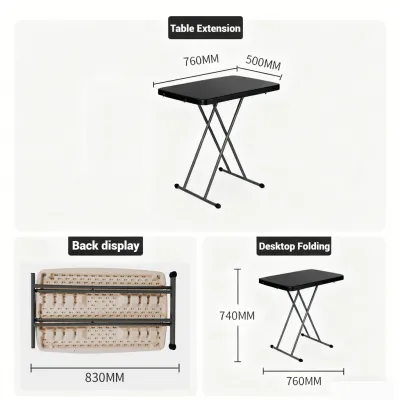
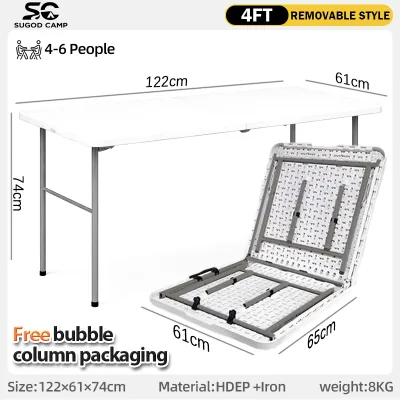
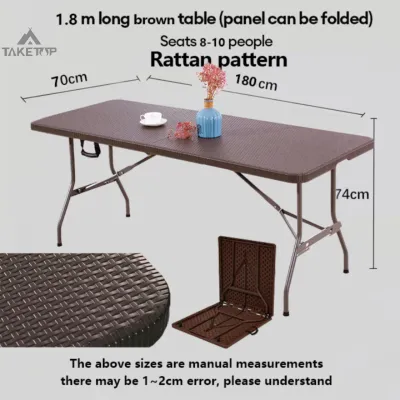
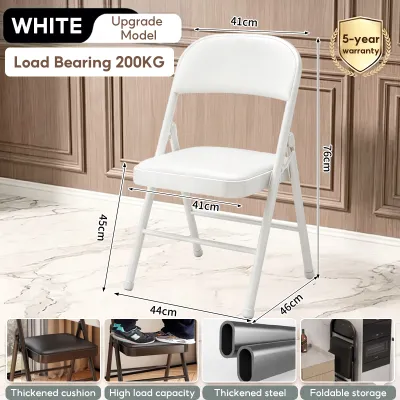
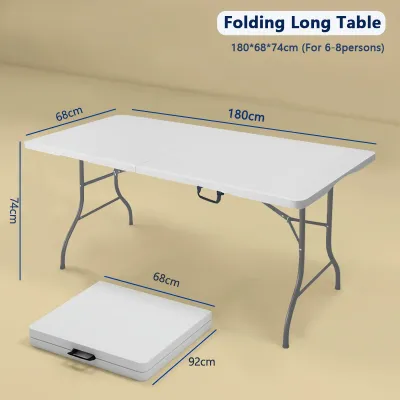
Prices are valid at publication and may change. Please refer to the product page for the latest price.
Heavy-duty folding tables are uniquely vulnerable to this degradation because of their mechanical design. Unlike static furniture, folding tables rely on a network of moving joints, locking pins, hinges, and load-bearing stress points. When exposed to constant dampness, these moving parts scrape against one another, wearing down protective paint or coatings. This leaves the raw metal underneath exposed to the air, creating perfect breeding grounds for rust right where the table needs its strength the most.
Furthermore, the way these tables are stored during the rainy season often accelerates their decay. When a wet or damp table is folded and put away, moisture becomes trapped inside the nested legs, hinges, and under-table support channels. Without proper airflow, this trapped water cannot evaporate, leading to rapid, hidden corrosion. Over time, the internal frame can weaken significantly, presenting a sudden collapse risk the next time the table is loaded with heavy equipment, catering supplies, or tools.
Frame and Leg Materials That Resist Corrosion
The foundation of any heavy-duty folding table lies in its legs and support frame. In wet environments, selecting a frame material with built-in corrosion resistance or a highly durable protective barrier is essential to prevent structural failure.

Aluminum vs. Treated Steel
Aluminum is naturally highly resistant to rust because it forms a self-protecting oxide layer when exposed to air. This microscopic barrier prevents oxygen from reaching the deeper metal, making aluminum an exceptional choice for highly humid or coastal environments. However, because aluminum is naturally softer and less dense than steel, you must verify its structural specifications. Look for heavy-duty aluminum frames featuring thick-walled tubing and internal structural ribbing to ensure the table will not bend or buckle under heavy loads.
Steel remains the traditional choice for maximum weight capacity, but untreated steel will rust almost immediately in wet conditions. If you choose a steel frame, avoid tables with standard liquid paint finishes, which chip easily and allow moisture to creep underneath. Instead, look for hot-dip galvanized steel or frames finished with an industrial-grade, chip-resistant powder coating. Powder coating involves electrostatically applying a dry powder that is then cured under heat to form a hard, continuous protective skin over the metal.
When inspecting a powder-coated steel frame, pay close attention to the uniformity of the coating. The most critical areas are the welds, joints, and sharp corners, where the coating is often thinnest. Any tiny gap, bubble, or scratch in the powder coat will allow water to penetrate, leading to rust that spreads unseen beneath the surface. Ensure the manufacturer has applied a comprehensive, multi-layer coating that covers every millimeter of exposed steel.
Verifying Load-Bearing Specifications
A table’s rust resistance is meaningless if it cannot safely support your intended load. Rather than assuming a table is heavy-duty based solely on its appearance or weight, always check the manufacturer’s officially rated weight capacity label. These ratings are typically divided into static weight capacity (stationary loads) and dynamic weight capacity (loads in motion), providing a clear limit for safe operation.
Along with weight limits, prioritize checking the finished dimensions of the table. Ensure the unfolded footprint fits your available space safely without blocking pathways, and verify that its folded dimensions allow for easy doorway or lift access during transport. These checks prevent physical strain and damage to the frame during setup.
To handle heavy loads safely, a folding table must feature robust secondary support structures. Look for frames designed with integrated cross-bracing, gravity-slide locking rings, or double-hinged legs that distribute weight evenly across the footprint. It is vital to verify that these secondary braces, rivets, and sliding mechanisms are treated with the exact same rust-resistant coatings as the main legs, as a failure in a small brace can cause the entire table to buckle.
Weather-Resistant Tabletop Materials for Heavy Loads
While the frame keeps the table standing, the tabletop must withstand both the downward force of heavy items and direct exposure to falling rain and intense sunlight.
High-Density Polyethylene (HDPE) and Resin
High-Density Polyethylene (HDPE), often referred to simply as heavy-duty resin, is one of the most reliable tabletop materials for wet climates. Produced through a blow-molding process, HDPE tabletops are completely waterproof, non-porous, and impervious to rot, mold, and insect damage. They resist staining, are incredibly easy to wipe clean after a downpour, and do not suffer from the structural degradation that plagues organic materials.
However, outdoor performance relies on more than just water resistance. Between heavy rain showers, tropical climates often experience intense, direct sunlight. You must check the product specifications to ensure the HDPE tabletop is treated with UV inhibitors. Without UV protection, prolonged exposure to solar radiation will break down the plastic polymers, causing the tabletop to become brittle, fade, and eventually crack under heavy loads.
Aluminum and Treated Composite Surfaces
For applications requiring extreme rigidity or resistance to heat, aluminum slat or solid aluminum tabletops are excellent alternatives to resin. Like the frame, an aluminum top will not absorb water, warp, or rot. These tabletops are often designed as interlocking slats that allow rainwater to drain straight through, preventing pooling and reducing the wind profile of the table when set up outdoors.
Conversely, you should strongly avoid folding tables with tops made of standard Medium-Density Fiberboard (MDF), particleboard, or untreated natural wood. Even when covered with a thin plastic laminate, these engineered wood products are highly susceptible to moisture. Once humidity or rain penetrates the edges or screw holes, the wood fibers absorb water, swell, lose their structural bonding, and quickly rot. This swelling completely compromises the table’s structural integrity, making it highly unsafe for heavy-duty use.
Critical Hardware and Folding Mechanisms to Inspect
When a folding table fails during the rainy season, the culprit is rarely the main tabletop; instead, it is almost always the small hardware components. Folding hinges, locking pins, rivets, bracket screws, and spring-loaded latches are the unsung heroes of a folding table, and they are highly susceptible to corrosion. Because these parts must move freely, they cannot easily be sealed with thick powder coatings.
When shopping for a heavy-duty folding table, inspect the hardware specifications closely. High-quality tables utilize stainless steel, brass, or heavily galvanized hardware. Stainless steel contains chromium, which provides excellent built-in resistance to rust, ensuring that the critical moving joints remain strong and functional even after weeks of exposure to damp air.
Avoid tables that feature exposed, untreated iron springs or unsealed steel rivets. These components easily trap water in their tight crevices, leading to rapid rust formation that can cause the folding mechanism to seize up entirely. A seized hinge not only makes the table difficult to store but also tempts users to apply excessive force, which can bend the frame or damage the locking joints, rendering the table unsafe.
Rainy Season Care and Storage Guidelines
Even the most advanced rust-resistant materials require basic care to maximize their lifespan in harsh tropical climates. Establishing a simple maintenance routine during the rainy season will keep your heavy-duty folding table safe and operational for years.
First, always wipe down the table surface and frame with a dry cloth after every exposure to rain. Before folding the table for storage, ensure that every part—especially the undersides, hollow leg tubes, and hinge crevices—is completely dry. Folding and storing a wet table creates a high-humidity microclimate inside the folded structure, which accelerates the breakdown of protective coatings and encourages mold growth.
Second, store your folding table in a covered, well-ventilated indoor space, garage, or storage shed. Avoid leaving the table folded directly on wet grass, soil, or damp concrete floors, as constant ground moisture will rise and attack the leg caps and lower frame. If indoor storage is not possible, elevate the folded table off the ground on wooden pallets and cover it with a breathable, waterproof furniture cover.
When setting up the table on uneven or wet ground, always check its overall stability. If the table is used outdoors in windy conditions alongside heavy rain, consider temporary anchoring methods to prevent tip-overs, and ensure the assembly conditions are completely safe before loading. Finally, keep the folding mechanisms operating smoothly by applying a thin layer of manufacturer-approved lubricant, such as a light silicone spray, to the hinges and joints. Silicone spray helps displace moisture and creates a temporary protective barrier against damp air. Always read the product’s care manual first to ensure the lubricant is compatible with your table’s specific coatings and plastic components, avoiding any actions that could void your warranty.
Frequently Asked Questions (FAQ)
Can I leave a heavy-duty folding table outside all year round?
Even if a folding table is constructed from highly rust-resistant materials like anodized aluminum or UV-treated HDPE, leaving it permanently outdoors is not recommended. Continuous exposure to heavy rain, pooling water, high humidity, and intense tropical sunlight will gradually degrade the protective coatings, weaken the hardware, and shorten the table’s overall lifespan. To preserve its structural integrity and heavy-duty weight capacity, store the table indoors when not in use, or protect it with a high-quality, breathable, waterproof furniture cover.
How do I treat minor surface rust on a steel folding table frame?
If you notice minor surface rust on a steel frame, you can perform a simple, reversible touch-up. Start by gently sanding the rusted spot with fine-grit sandpaper or a wire brush to remove the loose oxidation, taking care not to gouge the surrounding healthy metal. Clean the area thoroughly with a damp cloth to remove any dust, and let it dry completely. Once dry, apply a matching rust-inhibiting primer and touch-up paint recommended by the manufacturer. If the rust is located near a structural weld, a load-bearing joint, or a folding hinge, stop immediately and consult a professional or the manufacturer to ensure the table remains safe to use.
Community discussion
Share your experience or ask a question. Comments are reviewed before publication.