
Organizing a shoe collection in the Philippines presents unique challenges, primarily due to the tropical climate’s high humidity, dust, and seasonal moisture. Standard cardboard shoe boxes deteriorate quickly, harbor pests, and hide your footwear from view, leading to forgotten pairs that may succumb to mold or dry rot. Clear acrylic shoe boxes offer an elegant, highly functional solution for closet organization. They provide instant visibility, protect your investment from environmental damage, and elevate the overall aesthetic of your wardrobe.
Selecting the right boxes requires a careful evaluation of material quality, structural design, and closet dimensions to ensure your storage system remains stable, accessible, and beautiful for years to come. By focusing on key physical attributes and practical features, you can build a durable organization system that keeps your footwear collection in pristine condition.
Evaluating Material Quality and Structural Integrity
When shopping for clear shoe storage, you will encounter various plastic options, but not all clear boxes are created equal. True acrylic, or polymethyl methacrylate (PMMA), is a premium material prized for its glass-like clarity, rigidity, and impact resistance. In contrast, cheaper alternatives made from polystyrene (PS), polypropylene (PP), or thin polyethylene (PET) lack structural integrity, warping under weight, scratching easily, and yellowing over time.
Products mentioned in this guide
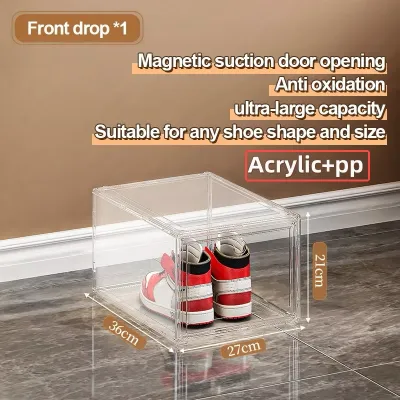
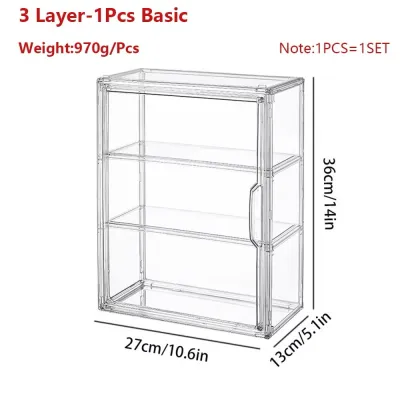
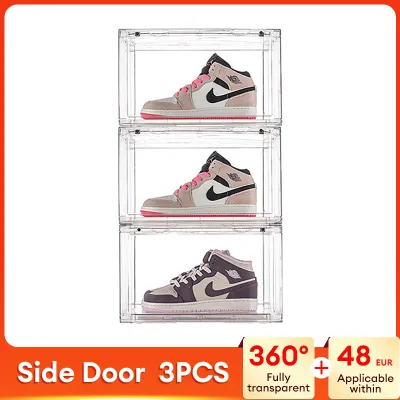
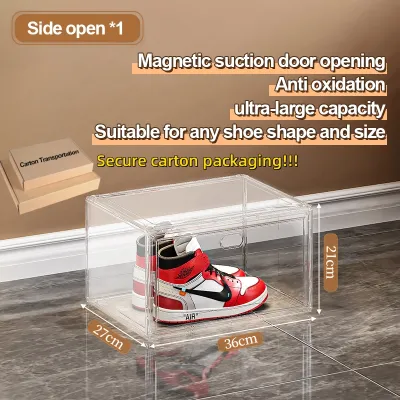
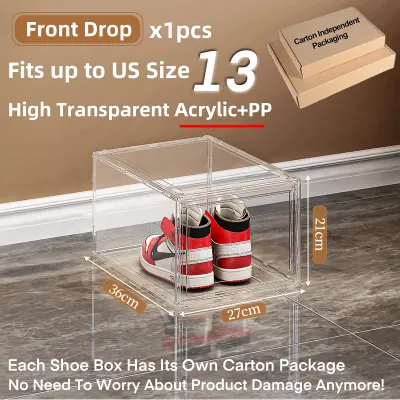
Prices are valid at publication and may change. Please refer to the product page for the latest price.
To identify high-quality acrylic shoe boxes, check the material thickness. Premium boxes typically feature panels with a thickness of 2.0mm to 3.0mm, providing the necessary rigidity to support multiple stacked units without bowing. If panels are too thin—typically 1.5mm or less—the top panel will sag under the weight of the boxes above, jamming the door mechanism and compromising stack stability.
Next, examine the edges and joints of the boxes. High-quality acrylic products feature smooth, polished edges. Look for flame-polished or diamond-polished finishes, which eliminate sharp, rough edges that could scratch your hands or snag delicate clothing in your closet. The joints should be clean and securely bonded. Premium boxes often utilize solvent bonding, which fuses the acrylic panels at a molecular level, or precise injection molding that creates seamless corners. Avoid boxes with visible glue bubbles, messy adhesive residue, or loose joints, as these represent weak points prone to cracking.
Finally, consider the environmental conditions of your closet. In the Philippines, homes are often exposed to bright, indirect sunlight and high ambient temperatures. Standard plastics degrade quickly under these conditions, turning yellow and brittle. When selecting acrylic boxes, look for products that specify UV resistance or UV-stabilized formulations. This feature ensures the acrylic retains its crystal-clear transparency and structural strength, even if your closet is located near a window or illuminated by bright artificial lighting.
Measuring Your Closet Space and Shoe Collection
Before purchasing any storage boxes, you must conduct a thorough assessment of your closet’s physical dimensions and the specific requirements of your footwear collection. A common mistake is buying boxes based on shoe size alone, only to find they do not fit your closet shelves or cannot be accessed comfortably.

Begin by measuring the internal dimensions of your closet shelves. Use a metal measuring tape to record the depth, width, and height clearance of each shelf. Standard closet depths in the Philippines typically range from 35cm to 60cm. If your shelves are shallow, you must store your shoe boxes facing forward (short side facing out). For deeper shelves, you can store them sideways or double-stack them depth-wise, provided they remain accessible.
Next, account for the mechanics of your closet doors and surrounding space. If your closet has hinged doors, sliding doors, or internal drawers, ensure the shoe boxes do not obstruct their movement. For example, drop-front boxes require several centimeters of clearance in front for the door to swing downward. If your closet doors close tightly against the shelves, or if the walkway is narrow, a drop-front door might be difficult to open. In such cases, sliding-drawer designs or side-opening doors are more practical.
Equally important is categorizing your footwear to determine the internal dimensions required for each pair. Do not assume one size fits all. Low-profile footwear, such as sandals, flats, slippers, and low-top canvas sneakers, can easily fit into standard-sized boxes, which typically measure around 30cm to 33cm in length, 20cm to 22cm in width, and 13cm to 14cm in height. High-top sneakers, athletic shoes, platform heels, and ankle boots require extra-tall or wide boxes, often featuring a height of 18cm to 22cm.
To ensure a perfect fit, measure the widest part of your bulkiest shoes (usually the outsole across the forefoot) and the total height of your tallest heels or boots. Storing shoes in boxes that are too small forces the material to bend or compress, which can permanently deform leather, suede, or structured athletic uppers.
Comparing Access Designs and Functional Features
The functionality of your closet organization system depends heavily on how easily you can retrieve and store your shoes daily. Acrylic shoe boxes come in several distinct access designs, each offering unique advantages and trade-offs depending on your closet layout.
Drop-front doors with magnetic closures are the gold standard for stacked closet organization. These doors hinge at the bottom, swinging downward for easy access. Magnetic closures keep the door securely shut when not in use, allowing you to retrieve shoes from the bottom of a high stack without disturbing the boxes above. When evaluating magnetic doors, ensure the magnets are strong enough to prevent the door from falling open under the weight of a shoe resting against it, yet smooth enough to open with a gentle pull.
Side-opening boxes are an alternative design where the door swings open like a cabinet. This layout is highly beneficial if you have wide, shallow shelves, as it showcases the side profile of your shoes—a popular choice for sneaker collectors. However, side-opening doors require significant lateral clearance, which may not be feasible in tight closet corners or narrow walk-in wardrobes. Top-lid designs, where the entire lid must be lifted off, are generally impractical for stacked configurations. They are best reserved for single-layer storage on top shelves or under-bed rolling organizers where stacking is not required.
In the humid Philippine climate, ventilation is a critical feature that should never be overlooked. Enclosing leather, suede, or canvas shoes in an airtight plastic container traps moisture, creating an ideal breeding ground for mold, mildew, and dry rot. Look for acrylic boxes designed with integrated ventilation slots, rear mesh panels, or small circular air holes. These openings promote continuous airflow, allowing moisture to evaporate and keeping your shoes fresh. However, ensure the ventilation holes are small enough to prevent common household pests, such as silverfish, cockroaches, or spiders, from entering and damaging your footwear.
Finally, evaluate the stackability and interlocking mechanisms of the boxes. To build a stable, multi-tiered shoe wall, the boxes must lock together securely. Look for models with molded interlocking grooves, recessed top panels, or matching pegs and holes that align the boxes vertically. These features prevent the boxes from shifting, sliding, or toppling when you open the doors or accidentally bump into the stack. Avoid stacking simple, flat-topped boxes without interlocking features more than three units high, as they can easily slide off one another.
Building Your Shortlist: Pre-Purchase Checks
Once you have determined your required dimensions and preferred features, you are ready to browse online marketplaces and specialty home stores. Because acrylic is a premium and somewhat fragile material, performing diligent pre-purchase checks is essential to avoid buyer’s remorse.
First, cross-reference the dimension diagrams provided by the seller with the written descriptions. Online listings can contain errors or use generic photos. Pay close attention to the distinction between external and internal dimensions. External dimensions dictate how the box fits onto your closet shelf, while internal dimensions dictate whether your shoes will fit inside. A box with thick walls or a bulky door frame might lose up to 2cm of internal space, which is critical for larger shoe sizes, such as men’s US size 11 and above.
Second, investigate the seller’s shipping and packaging standards. Acrylic is rigid and brittle, making it susceptible to cracking or shattering during transit. Read customer reviews specifically for feedback on packaging quality. Reliable sellers package acrylic boxes with thick bubble wrap, foam corner protectors, individual plastic wrapping to prevent scratches, and sturdy outer cardboard boxes. Additionally, verify the seller’s return or replacement policy for items that arrive damaged, ensuring a hassle-free process for replacing cracked panels.
Third, plan for batch consistency. If you have a large shoe collection, you might prefer to buy a few boxes first to test their quality. While sensible, keep in mind that manufacturers frequently update designs, molds, and materials. If you buy boxes in separate batches over several months, the interlocking grooves, door hinges, or acrylic tint may change slightly, preventing them from stacking neatly or matching visually. To ensure a uniform look, try to purchase your entire required quantity in a single order, or confirm with the seller that future stock will remain compatible.
Maintaining Clarity and Structural Condition
To preserve the pristine, high-end look of your clear acrylic shoe boxes, you must practice proper maintenance and cleaning techniques. Acrylic is a beautiful material, but it is softer than glass and can easily scratch or cloud if treated with improper cleaning agents or rough cloths.
When cleaning your shoe boxes, avoid harsh chemical cleaners. Commercial glass cleaners, ammonia-based sprays, multi-purpose surface cleaners, and rubbing alcohol should never be used on acrylic. These chemicals cause “crazing”—a dense network of microscopic cracks within the material that permanently ruins optical clarity, leaving the box cloudy and structurally weak. Instead, use a simple solution of mild dishwashing liquid and lukewarm water.
The choice of cleaning cloth is equally critical. Avoid paper towels, polyester rags, kitchen sponges, or old cotton t-shirts, which can trap microscopic dust particles and drag them across the surface, creating fine scratches that dull the shine over time. Instead, use only clean, high-quality microfiber cloths designed to lift and trap dust without scratching. For stubborn smudges, dampen the cloth with your mild soapy water solution, wipe gently, and dry with a separate microfiber cloth to prevent water spots.
Finally, handle your boxes with care during reorganization. When cleaning shelves or rearranging your layout, do not lift or slide an entire stacked column of boxes at once. Lifting multiple loaded boxes puts immense stress on the joints, interlocking tabs, and bottom panels of the lowest unit, leading to sudden cracking. Always unstack the boxes individually, starting from the top, and move them one by one to protect your investment and keep the system structurally sound.
Frequently Asked Questions (FAQ)
Can clear acrylic shoe boxes support heavy footwear like winter boots or work shoes?
Yes, high-quality clear acrylic shoe boxes can support heavier footwear, but you must verify the load capacity and stack them strategically. Standard acrylic boxes with a panel thickness of 2mm to 3mm are generally rated to support weights up to 1.5kg to 2kg. Heavy leather work boots, thick-soled platform shoes, or riding boots can approach or exceed this limit. Before purchasing, check the product specifications for explicit weight limits. If you are storing heavy footwear, always place these boxes at the very bottom of your stack. This ensures that the heaviest loads rest directly on the solid closet shelf rather than putting downward pressure on the top panels of other boxes, which could cause structural bowing, door misalignment, or cracking. For exceptionally heavy boots, consider storing them on open shelves or using heavy-duty reinforced storage crates.
How do I prevent stacked acrylic shoe boxes from sliding on smooth closet shelves?
Stacked acrylic shoe boxes can slide on smooth closet shelf surfaces, such as polished wood, melamine laminate, or glass, especially when you pull open the drop-front doors. To secure your storage system without causing permanent damage, use simple, non-damaging stabilization methods. Placing a thin, clear silicone non-slip pad or a small piece of removable museum putty under the four corners of the bottom-most box in each stack provides excellent grip and prevents sliding. These solutions are residue-free and easily repositioned. Additionally, look for box models that feature built-in anti-slip rubber feet or textured base pads. Avoid using strong double-sided tapes, hot glue, or permanent adhesives, which can mar the acrylic surface, strip the paint off your closet shelves, and make future reorganization difficult.
Community discussion
Share your experience or ask a question. Comments are reviewed before publication.