
Designing a closet system requires careful planning, especially when determining the correct dimensions for footwear storage. The ideal internal depth for a standard drawer for shoes ranges from 30 cm to 40 cm (approximately 12 to 16 inches). This baseline range comfortably accommodates most adult footwear sizes, allowing shoes to sit straight without bending the heels or crushing the toes. However, selecting the right drawer is not just about matching the length of your shoes; you must also account for the difference between the external cabinet frame and the actual usable internal space.
In the tropical climate of the Philippines, high relative humidity makes shoe storage particularly challenging. Storing shoes in a drawer that is too cramped or lacks proper ventilation can trap moisture, leading to mold growth, musty odors, and the rapid deterioration of leather and adhesive bonds. To prevent these issues, your drawer system must balance space efficiency with adequate airflow, ensuring that your investment in quality footwear remains protected over time.
Depth and Height Requirements by Footwear Type
Different styles of footwear present unique storage challenges due to their varying silhouettes, sole thicknesses, and structural rigidity. A flat sandal requires very little vertical clearance, whereas a platform wedge or an ankle boot demands substantial height to avoid being crushed when the drawer is pushed closed. To help you plan your wardrobe layout, the following table outlines the recommended internal dimensions for various footwear categories based on standard adult sizes.
Products mentioned in this guide
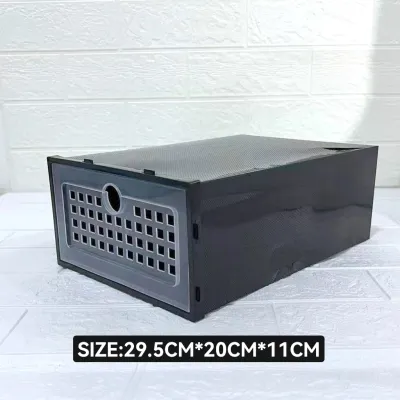
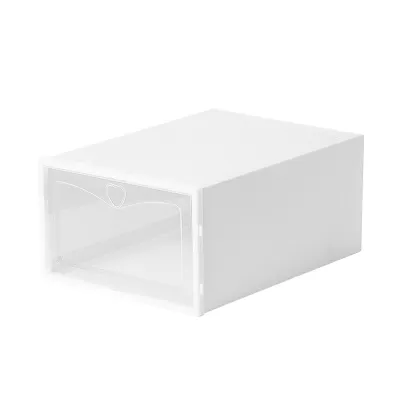
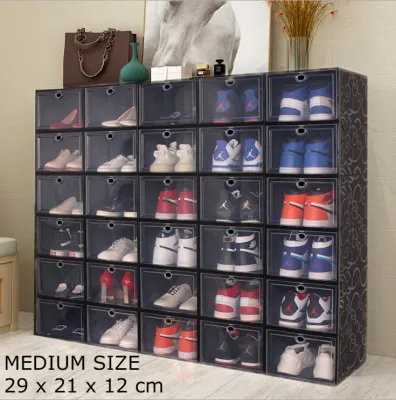
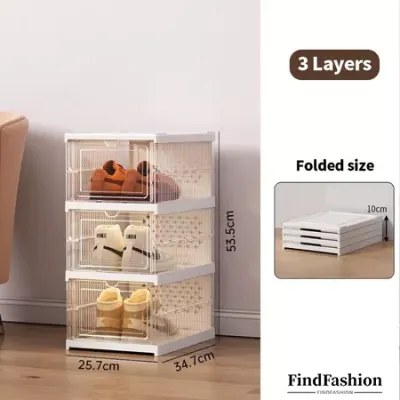
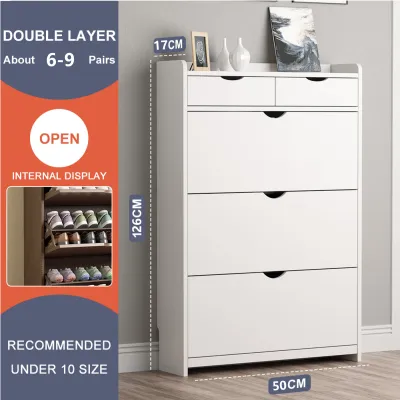
Prices are valid at publication and may change. Please refer to the product page for the latest price.
| Footwear Category | Recommended Internal Depth | Minimum Internal Height | Key Design & Storage Considerations |
|---|---|---|---|
| Everyday Flats & Sandals | 30 cm to 33 cm | 10 cm to 12 cm | Ideal for shallow, multi-tiered drawer systems to maximize vertical space. |
| Sneakers & Loafers | 33 cm to 38 cm | 12 cm to 15 cm | Chunky soles or larger sizes (US 12+) require the upper end of the depth range. |
| High Heels & Wedges | 30 cm to 35 cm | 15 cm to 25 cm | Store upright or alternate toe-to-heel orientation to optimize width. |
| Ankle Boots & Booties | 35 cm to 38 cm | 18 cm to 22 cm | Requires moderate vertical clearance; do not fold or compress the shafts. |
| Tall & Knee-High Boots | 45 cm to 55 cm (laid flat) | 15 cm to 20 cm | Best stored flat on pull-out trays or with supportive boot shapers. |
While these ranges serve as a reliable baseline, you should always measure your largest, widest, or most unusually shaped pairs before finalizing your drawer dimensions. A single pair of oversized basketball sneakers or high-platform heels can easily disrupt a standardized drawer layout if not accounted for during the design phase.
Sneakers, Loafers, and Everyday Flats
Standard everyday shoes, including low-profile sneakers, loafers, canvas slip-ons, and flats, are the easiest to accommodate in a standard drawer system. For most men’s and women’s sizes, an internal drawer depth of 30 cm to 35 cm is perfectly sufficient. This allows the shoes to lie flat and straight, aligned side-by-side. If your household includes larger shoe sizes—specifically US men’s size 12 or above—you will need to increase the internal depth closer to 38 cm to prevent the toes or heels from rubbing against the drawer front or back panels.
The vertical clearance for these everyday styles is relatively minimal, typically requiring only 12 cm to 15 cm of internal height. This low profile makes them ideal candidates for shallow, multi-tiered drawer configurations. By stack-building several shallow drawers within a single wardrobe section, you can dramatically increase your storage capacity without wasting valuable vertical space. For tropical households, where lightweight canvas shoes and sandals are daily staples, utilizing shallow drawers keeps these frequently worn items easily accessible while protecting them from dust.
High Heels, Wedges, and Platform Shoes
Elevated footwear introduces a different set of spatial requirements where vertical clearance and toe-box depth are far more critical than the overall length of the shoe. Although a high heel or wedge may have a shorter physical footprint than a running shoe, the angle at which the shoe rests demands careful planning. To store high heels upright, the internal drawer height must comfortably clear the highest point of the heel, which often requires a drawer depth/height clearance of 15 cm to 25 cm.
If your drawer height is restricted, you may have to lay your heels flat or store them at an angle. However, laying delicate materials like patent leather, suede, or embellished satin on their sides increases the risk of friction damage, scuffing, and color transfer. In humid environments, leather uppers stored in direct contact with one another can stick together and peel when separated. If you must store heels on their sides, ensure the drawer is deep enough to accommodate protective fabric dust bags, and consider installing adjustable acrylic dividers to keep each pair physically isolated.
Boots, Tall Footwear, and Winter Shoes
Bulky footwear and tall boots are notoriously difficult to integrate into standard closet drawer systems. While low-cut ankle boots can comfortably fit into a slightly deeper standard drawer of 35 cm to 38 cm with a height of around 20 cm, taller styles like knee-high or riding boots present a major challenge. Forcing a tall leather boot into a shallow or low-clearance drawer is a recipe for disaster; it bends the shaft, creates permanent creases, weakens the zipper or stitching, and can permanently ruin the boot’s structure.
To store tall boots properly within a drawer system, you generally have two viable options: specialized deep drawers where the boots are laid flat side-by-side, or pull-out trays equipped with boot shapers to keep the shafts upright. Storing boots flat requires an internal drawer depth of at least 45 cm to 55 cm, depending on the shaft height. If you frequently travel to cold-climate destinations or keep riding boots for sport, investing in these specialized deep drawers is highly recommended. Always verify that your boot drawers include ventilation slots or are paired with moisture-absorbing silica gel packets to prevent the trapped air from ruining the leather during warm, humid months.
How to Measure Your Closet and Shoes for the Perfect Fit
Achieving a seamless, custom-fit storage system requires precise measurements of both your physical footwear collection and the available wardrobe space. Relying on guesswork often leads to drawers that jam, shoes that get crushed, or wasted closet space. Follow these three essential steps to plan your dimensions accurately.

Step 1: Measure your actual shoes. Do not rely on standard shoe size charts, as sole thicknesses, heel shapes, and toe designs vary wildly between brands. Gather the longest, widest, and tallest pairs in your current collection. Using a firm measuring tape, measure the absolute maximum length from the tip of the toe to the edge of the heel. Next, measure the widest part of the sole, and finally, measure the vertical height from the bottom of the sole to the highest point of the collar or heel. Write these dimensions down, as they will dictate the minimum internal usable space of your drawers.
Step 2: Understand drawer anatomy and hardware loss. One of the most common design errors is confusing the external cabinet depth with the internal drawer box depth. A wardrobe cabinet with an external depth of 40 cm will not yield 40 cm of usable shoe storage. You must subtract the thickness of the back panel (typically 0.9 cm to 1.8 cm), the thickness of the drawer front face (usually 1.8 cm to 2.0 cm), and the clearance required for the drawer slide hardware. Side-mounted ball-bearing slides generally require 1.3 cm of clearance on each side of the drawer box, while under-mount slides require specific vertical and depth clearances beneath the drawer bottom. Always consult the manufacturer’s technical specifications for your chosen drawer slides to calculate the exact internal dimensions.
Step 3: Check clearance, extension, and ventilation. A functional drawer must be able to open fully without obstruction. Measure the space in front of your wardrobe to ensure that when the drawers are fully extended, they do not collide with bedroom doors, adjacent walls, or hanging clothes. If your wardrobe has hinged doors, verify that the doors can swing open wide enough (at least 90 to 110 degrees) to allow the drawer boxes to pull out smoothly without scraping the door panels or hinges. Additionally, leave a 2 cm to 3 cm safety clearance at the very back of the cabinet. This gap not only accommodates the slide mechanisms and prevents the drawer from slamming against the back wall, but it also facilitates air circulation—a crucial factor in preventing mold and mildew in humid climates.
Common Sizing Mistakes to Avoid When Planning Shoe Drawers
Planning wardrobe storage is an investment, and avoiding common design missteps can save you from costly modifications or damaged footwear.
Mistake 1: Confusing external cabinet depth with internal drawer depth. As highlighted in the measurement steps, buying a “35 cm deep cabinet” does not mean you have 35 cm of space for your shoes. Once you account for the rear wall, the drawer front, and the hardware bumpers, the actual usable depth might shrink to 31 cm or less. If your shoes are 32 cm long, the drawer will not close fully, or the toes of your shoes will constantly be crushed against the front panel. Always design your system based on internal usable dimensions.
Mistake 2: Ignoring the impact of the slide mechanism. The type of drawer slides you choose directly affects the internal dimensions of the drawer box. Side-mounted slides reduce the usable width of the drawer, which might mean you can only fit three pairs of shoes side-by-side instead of four. Under-mount slides, while aesthetically pleasing because they are hidden beneath the drawer, require extra vertical clearance, which reduces the usable height inside the drawer. Be sure to select your hardware before building or purchasing the drawer boxes so you can adjust the wood cuts accordingly.
Mistake 3: Forgetting to account for storage accessories. If you prefer to store your shoes in fabric dust bags, use plastic shoe trees to maintain their shape, or place individual silica gel packets inside, these items add physical bulk. A shoe inside a thick flannel dust bag or fitted with a rigid wooden shoe tree will require slightly more width and depth than the bare shoe itself. If you plan to use acrylic drawer dividers to keep your pairs organized and upright, remember to subtract the thickness of those dividers from your total usable width.
Mistake 4: Overlooking the weight capacity of the drawer and slides. Footwear is surprisingly heavy, especially when dealing with thick-soled sneakers, leather boots, or heavy wedges. A single pair of high-quality leather shoes can weigh up to 1.5 kg. If a wide drawer holds 8 to 10 pairs of shoes, the total weight of the footwear—combined with the weight of the wooden drawer box itself—can easily exceed 15 kg to 20 kg. Standard, low-cost drawer runners can sag, stick, or derail under this weight. To ensure smooth, long-term operation, always specify full-extension, ball-bearing drawer slides rated for at least 30 kg to 45 kg, and check that the drawer bottom panel is securely grooved into the drawer sides rather than simply nailed to the bottom.
Frequently Asked Questions (FAQ)
Can I use standard kitchen drawers for shoe storage?
Standard kitchen base cabinets typically have an external depth of 60 cm, which is significantly deeper than the 30 cm to 40 cm required for most footwear. Using them for shoes in a bedroom or entryway closet often wastes valuable floor space and makes it difficult to reach shoes stored at the very back of the drawer. However, if you are repurposing existing kitchen cabinetry, the internal drawer boxes will easily accommodate even the largest shoe sizes. To make this setup practical, consider installing internal partitions or angled inserts so your shoes do not slide around when the deep drawer is pulled open.
How much weight can a typical shoe drawer hold?
The load capacity of a shoe drawer depends heavily on the quality of the drawer slides and the construction of the drawer box. A standard pair of adult shoes weighs between 0.5 kg and 1.5 kg. A wide drawer holding 10 pairs can easily accumulate 15 kg of weight. For safe and reliable operation, look for drawers fitted with full-extension, ball-bearing slides rated for a minimum of 30 kg to 45 kg. This ensures the drawer glides smoothly without sagging or binding, even when fully loaded with heavy leather boots or chunky sneakers.
Should I store shoes in their original boxes inside the drawer?
Storing shoes in their original cardboard boxes inside a drawer is generally not recommended because it wastes a massive amount of space. A standard shoebox adds roughly 5 cm to 10 cm of unnecessary depth, width, and height to each pair, which severely limits the number of shoes you can fit in a single drawer. Furthermore, in humid environments like the Philippines, cardboard boxes can trap moisture and harbor mold spores or pests. To maximize your drawer capacity and protect your shoes, store them without boxes, using breathable non-woven dust bags, acrylic dividers, or individual silica gel packets instead.
Community discussion
Share your experience or ask a question. Comments are reviewed before publication.