
Maximizing limited floor space is a constant challenge for high-rise dwellers in Metro Manila, where studio and one-bedroom units often feature compact secondary bedrooms. When every square meter counts, a single folding bed—often searched locally as a “poldingbed single” or single folding bed—offers an elegant compromise between daytime productivity and nighttime comfort. To make the most of a small condo bedroom, the ideal dimensions for a single folding bed are a standard mattress size of 36 inches by 75 inches (91 cm x 190 cm), paired with a folding frame that collapses to a compact depth of 12 to 18 inches (30 to 46 cm).
Choosing the right size is not just about the mattress; it requires understanding how the bed interacts with your room’s physical boundaries. By evaluating the dynamic footprint of the bed, calculating clearances for walkways and wardrobes, and accounting for vertical space, you can select a model that preserves your room’s flow. This guide details the exact dimensions, clearances, and measurement steps required to integrate a single folding bed seamlessly into your condo layout.
Standard Single Folding Bed Sizes and Footprints
When shopping for a single folding bed, you must distinguish between the sleeping surface and the actual frame footprint. In the Philippines, a standard single mattress measures 36 inches wide by 75 inches long (approximately 91 cm by 190 cm). This size is highly practical, offering enough sleeping surface for a single adult or teenager while keeping the bed’s physical presence minimal.
Products mentioned in this guide

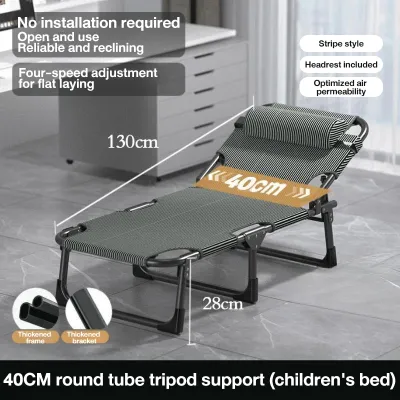
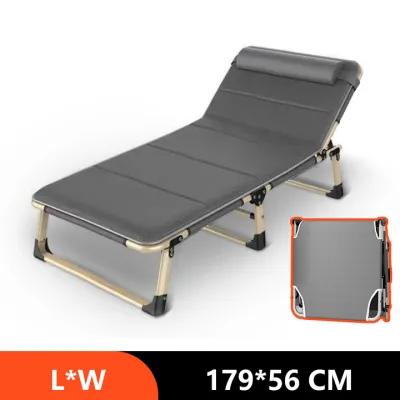
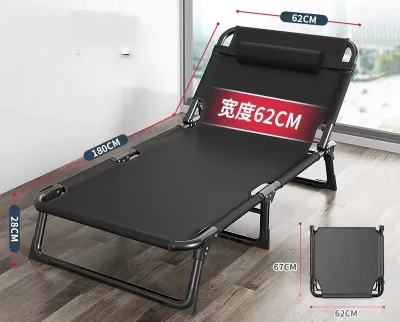
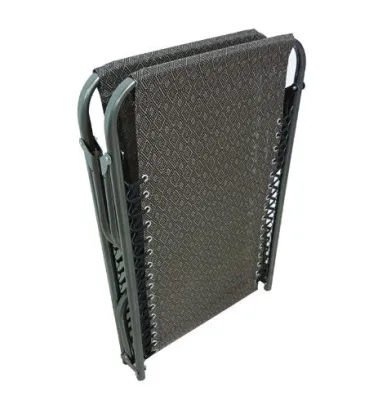



Prices are valid at publication and may change. Please refer to the product page for the latest price.
However, the mattress size does not represent the total floor area the bed will occupy. The structural frame—whether made of steel tubing, wood panels, or composite materials—adds extra inches to the overall length and width. A typical metal rollaway frame can add 1 to 3 inches (2.5 to 7.6 cm) to both the length and width, resulting in a finished open footprint of roughly 38 inches by 77 inches. Wooden cabinet-style folding beds can be even bulkier, often extending the width to 40 inches or more to accommodate the wooden side walls and folding mechanism.
To plan your layout effectively, you must analyze both the “open” footprint and the “collapsed” footprint. The open footprint is the total floor space occupied when the bed is fully deployed for sleeping. The collapsed footprint is the space occupied when the bed is folded upright for storage. A standard vertical rollaway single folding bed typically folds up to a height of 42 to 50 inches (107 to 127 cm), a width of 36 to 38 inches (91 to 97 cm), and a depth of 12 to 20 inches (30 to 51 cm).
Because frame designs, caster wheel bases, and folding brackets vary significantly between manufacturers, never rely solely on generic size charts. Always check the manufacturer’s detailed product specifications for the exact finished exterior dimensions. This step is especially critical if you plan to store the folded bed inside a tight niche, behind a door, or within an existing closet cavity.
Calculating Clearance for Walkways and Wardrobes
To prevent your condo bedroom from feeling cramped, you must maintain comfortable walkways around the bed when it is fully opened. Ergonomic guidelines recommend a minimum walkway width of 60 centimeters (approximately 24 inches) on at least one side of the bed and at the foot of the bed. This clearance allows an adult to walk naturally without having to squeeze past walls or other furniture. If space is exceptionally tight, a bare minimum of 50 centimeters (20 inches) may be tolerated, but anything less will restrict daily movement and increase the risk of stubbed toes.

Wardrobe door clearance is another critical factor in small condo layouts. Standard swing-out wardrobe doors require a clearance of 45 to 60 centimeters (18 to 24 inches) to open fully. If your wardrobe features sliding doors, you do not need to worry about door swing clearance, but you must still ensure that the open bed frame does not block access to the sliding tracks. For wardrobes with pull-out drawers, measure the full extension depth of the drawers—typically 30 to 45 centimeters (12 to 18 inches)—and verify that they can open completely without striking the side of the open bed.
Managing these clearances requires treating the folding bed as a dynamic object that occupies two different footprints depending on the time of day. You should map out two distinct operational modes for the room:
- Day Mode (Collapsed): The bed is folded and stored away, maximizing open floor space. During the day, walkways should be completely clear, and all wardrobes, drawers, and desks must be fully accessible.
- Night Mode (Open): The bed is fully deployed for sleeping. In this mode, it is acceptable for the bed to temporarily block access to certain wardrobe drawers or lower shelves, provided that the primary pathway to the bedroom door, the bathroom, and emergency exits remains unobstructed.
When positioning the bed, avoid placing it directly in the path of the room’s main entrance. Blocking the doorway not only makes entering and exiting difficult but also violates basic home safety guidelines.
Vertical Clearance and Ceiling Constraints
While floor space is the most obvious constraint, vertical clearance is equally important, particularly for wall-mounted Murphy beds, cabinet folding beds, or tall rollaway frames. As these beds transition from a horizontal sleeping position to a vertical storage position, they sweep through a vertical arc. If your ceiling is too low, or if there are overhead obstructions, the bed frame may strike them during operation.
Most modern residential condos in the Philippines have ceiling heights ranging from 2.4 to 2.7 meters (approximately 7.8 to 8.8 feet). However, structural concrete beams, dropped gypsum ceilings used to conceal utility pipes, and decorative bulkheads can significantly reduce the clearance in specific areas of the bedroom. You must measure the exact ceiling height at the precise location where the bed will be installed or stored.
Before purchasing a folding bed, inspect your ceiling and upper walls for potential physical obstructions. Common items that can interfere with the bed’s folding path include:
- Ceiling Fans: These are highly popular in tropical climates for air circulation, but their spinning blades present a severe safety hazard if they intersect the bed's folding arc.
- Pendant Lights and Chandeliers: Low-hanging light fixtures can easily be struck and shattered by a rising bed frame.
- Split-Type Air Conditioners: Indoor AC units typically protrude 20 to 30 centimeters (8 to 12 inches) from the wall. If a folding bed is raised directly beneath a low-mounted AC unit, the top of the frame may collide with the appliance.
- Exposed Beams and Curtain Rods: Structural beams and heavy curtain rods can block the upper portion of a wall-mounted cabinet.
The “folding arc” or pivot clearance is the maximum height the top of the bed reaches during the folding process. Because the pivot point is located slightly above the floor, the bed frame actually requires more vertical clearance while being raised than its final upright height. Always check the manufacturer’s technical specifications for the required pivot clearance. Operating a folding bed without sufficient vertical clearance can scrape your ceiling paint, damage your walls, or warp the bed’s mechanical hinges.
Common Sizing Mistakes in Small Condo Bedrooms
One of the most frequent mistakes condo owners make is forgetting to account for baseboards, skirting boards, and wall outlets. Baseboards typically protrude 1 to 2 centimeters (0.4 to 0.8 inches) from the wall. This small gap prevents a folded bed frame or a wood cabinet from sitting completely flush against the wall. If you have designed a tight alcove with exactly 95 centimeters of width for a 91-centimeter bed, the presence of baseboards on either side can prevent the bed from fitting into the space. Additionally, if the folded bed blocks wall outlets, you lose access to essential charging ports or risk damaging electrical plugs pressed tightly against the frame.
Another common error is underestimating the physical weight and bulk of the folded unit. While a single folding bed is compact, a sturdy steel frame equipped with a high-density foam mattress can easily weigh 20 to 40 kilograms. If the unit does not feature high-quality, smooth-rolling caster wheels, moving it daily from its storage niche to its sleeping position can become an exhausting chore. In humid, tropical environments, dragging a heavy, poorly wheeled frame across laminate or vinyl flooring can also cause permanent scratches and damage to the floor finish.
Do not overlook the delivery path from the building’s entrance to your bedroom. Many condo residents purchase furniture online only to discover that the delivery box cannot fit inside the building’s passenger elevator or navigate the tight, 90-degree turns of the emergency stairwell. Before ordering, measure the height and width of the elevator doors, the interior dimensions of the elevator cab, and the width of your condo’s hallways. If the boxed bed cannot safely reach your unit, you may face expensive return shipping fees or be forced to unbox and carry the heavy frame pieces up multiple flights of stairs.
Finally, beware of the “thick mattress trap.” It is tempting to replace the standard, thin mattress that comes with a folding bed with a thicker, more luxurious model. However, folding bed frames are engineered with strict mattress thickness limits—usually between 4 to 6 inches (10 to 15 cm). If you install a mattress that exceeds this limit, the folding mechanism will not close or lock properly. This puts excessive stress on the hinges, brackets, and locking straps, which can lead to mechanical failure or a warped frame over time.
Step-by-Step Room Measurement Guide
To ensure your chosen single folding bed fits perfectly without causing daily frustration, follow this step-by-step room measurement guide before making your purchase:
- Tape the Footprints: Obtain a roll of painter's tape, which can be applied to tile, laminate, or wood floors without leaving a sticky residue. Using the manufacturer's exact open and closed dimensions, tape out both footprints on your bedroom floor. Leave the tape in place for a few days to physically visualize how much space the bed will consume in both Day Mode and Night Mode.
- Test the Clearances: Walk around the taped areas. Open your wardrobe doors, pull out your desk drawers, and open your bedroom door completely. Check if any of these items collide with the taped boundaries. If they do, adjust the taped position to find a more suitable layout.
- Measure Entryways and Corners: Measure the clear width of your bedroom door frame, the hallway leading to the bedroom, and any tight corners. Ensure that the bed—either fully assembled or in its shipping box—can easily navigate these spaces during delivery and assembly.
- Verify Floor Levelness: Condo floors can sometimes have minor slopes or uneven tiles. Place a spirit level (or use a leveling app on your smartphone) on the floor where the bed will be deployed. An uneven floor can cause a rollaway bed to drift while you sleep or put uneven twisting force on the folding joints, which may cause the mechanism to squeak, bind, or jam over time.
- Document the Space: Take clear photos of your taped floor layout, noting down the exact measurements on your phone. Having these photos and numbers handy will make it much easier to verify compatibility when browsing online marketplaces or visiting local furniture showrooms in Metro Manila.
Frequently Asked Questions (FAQ)
Will a folded single bed fit inside a standard condo closet?
Standard built-in closets in Philippine condos typically have an interior depth of 55 to 60 centimeters (22 to 24 inches). While an ultra-compact, tri-fold mattress or a slim, lightweight folding frame can fit inside, most standard rollaway single folding beds are too tall or wide when collapsed to fit inside a standard double-door closet. Always measure the interior height, width, and depth of your closet, and compare them against the manufacturer’s collapsed dimensions. Be sure to allow at least 5 centimeters (2 inches) of extra clearance on all sides so you can easily maneuver the bed in and out without scraping the closet frame or damaging your clothing.
Do rollaway single folding beds require floor anchoring?
Freestanding rollaway single folding beds do not require floor or wall anchoring. They are designed to stand independently on their own legs or caster wheels, which should feature locking mechanisms to prevent the bed from rolling or shifting during use. However, wall-mounted folding beds, such as Murphy beds, strictly require secure anchoring to wall studs or solid masonry. Because of the heavy spring tension and leverage involved in folding these beds, unanchored units pose a severe tip-over hazard. Always follow the manufacturer’s exact installation instructions, check your condo’s wall composition (such as concrete vs. lightweight drywall partitions), and consult a professional installer to ensure the unit is mounted safely.
Community discussion
Share your experience or ask a question. Comments are reviewed before publication.