
Selecting a sofa bed with storage for a large living room requires balancing daily seating comfort with the physical demands of a dual-purpose furniture piece. While a spacious room offers layout flexibility, a 3-to-5-seater model can easily overwhelm the space or become non-functional if you do not account for its fully extended dimensions. The ideal size is one that anchors your living space visually while leaving ample clearance for the bed mechanism to deploy and the storage compartments to open.
To find the right fit, look beyond generic labels like “3-seater” or “L-shaped.” Instead, focus on the precise physical dimensions of the sofa in both its closed and open states. By measuring your room’s active zones and understanding how different storage configurations operate, you can select a piece that serves as a comfortable family hub by day and a practical guest bed by night.
Assessing Your Living Room Layout and Available Space
Before browsing online marketplaces or visiting local showrooms, establish the maximum footprint your living room can comfortably accommodate. Begin by measuring the wall-to-wall dimensions of the designated seating area using a standard measuring tape. Note the location of fixed architectural features such as low-hanging windows, columns, electrical outlets, and light switches. In many homes in the Philippines, the placement of wall-mounted split-type air conditioners or window-type AC units dictates where tall furniture can safely stand without obstructing airflow.
Products mentioned in this guide
![[Manila 24-hour Boat] 88/108/128/158*78*85CM Foldable Sofa Bed with Storage Cabinet Dual Purpose Small Unit Living Room Lazy Person Sofa Single/Double/Queen Size with Roller Sofa Bed Side Pocket Multi-functional Telescopic Bed 2 Free Throw Pillows](https://img.lazcdn.com/g/p/6b1f7448cee77492697016c498ba8b44.jpg_400x400q80.jpg_.webp)
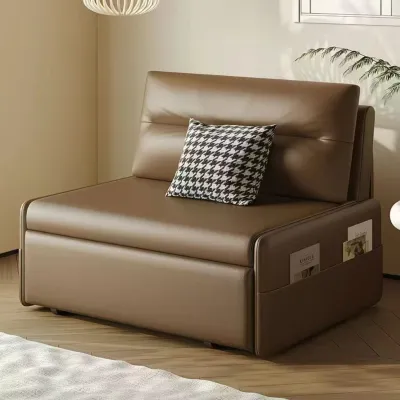
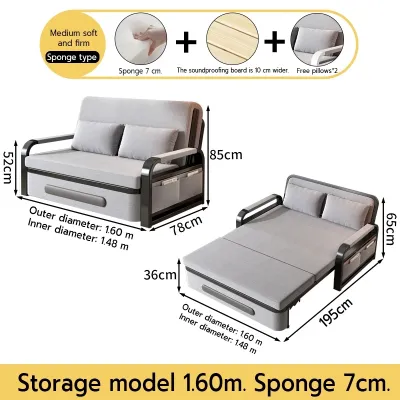
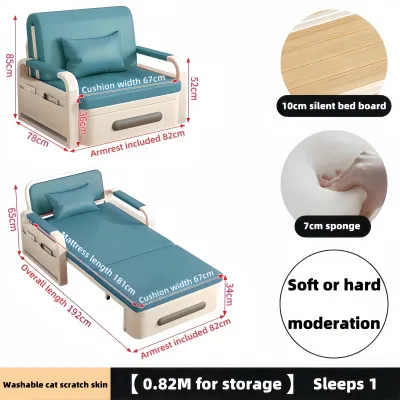
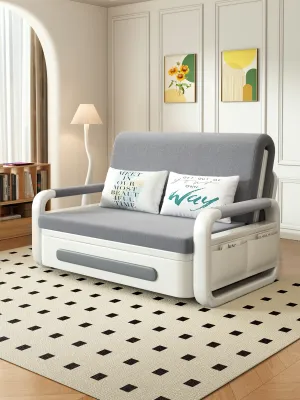
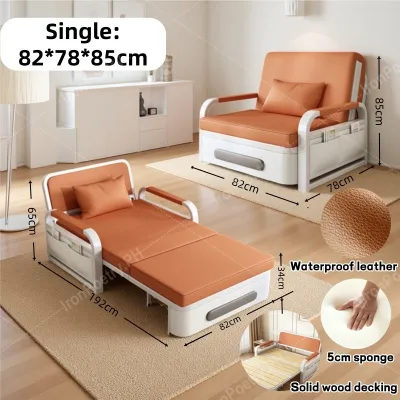
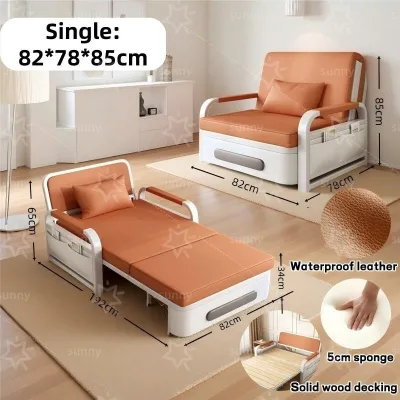
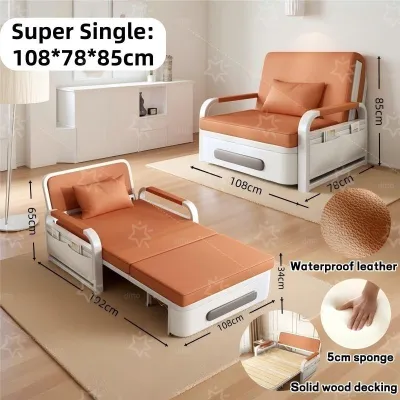
Prices are valid at publication and may change. Please refer to the product page for the latest price.
Next, map out the primary traffic paths through the room. A large living room often serves as a central thoroughfare connecting the entryway, dining area, and kitchen. Ensure that the proposed location of your sofa bed with storage leaves clear walkways, allowing family members to move freely without squeezing past the furniture. Marking the floor with masking tape is a practical way to visualize how much physical space the sofa will occupy during daily use.
Finally, account for your existing furniture pieces and their operational zones. Consider the distance between the sofa and your television console, coffee table, or display cabinets. If you plan to place side tables next to the sofa, verify that they will not block access to power outlets or interfere with the sofa’s conversion mechanism. This step prevents the room from feeling cluttered and ensures that every piece of furniture remains fully accessible.
Understanding 3-5 Seater Sofa Bed Configurations
Multi-seater sofa beds come in several distinct configurations, each offering unique spatial advantages and storage capacities. A classic straight 3-seater sofa bed is highly versatile and fits well against long walls, making it ideal for narrower rectangular rooms. For larger square-shaped living rooms, an L-shaped sectional or a modular 4-to-5-seater configuration provides generous seating while naturally defining the boundaries of the lounge area.

The way storage is integrated into these configurations heavily influences the sofa’s overall depth and height. Many straight models feature pull-out drawers beneath the main seating frame, which require clear floor space directly in front of the sofa to open. L-shaped sectionals often utilize a lift-up chaise lounge compartment powered by hydraulic gas lifts. This design provides deep, easily accessible storage for pillows, blankets, and banig mats, but it requires sufficient vertical clearance and a stable frame that will not wobble when opened.
When shopping, always prioritize the manufacturer’s detailed specification sheet over generic seating capacity labels. A “3-seater” from one brand might measure 200 centimeters in width, while another brand’s version could exceed 240 centimeters. Check the outer dimensions carefully, paying close attention to the depth of the seat cushions and the height of the backrest, to ensure the unit aligns with your physical space and comfort preferences.
Calculating Clearance for Sleeping and Storage Access
A common oversight when purchasing a sofa bed with storage is failing to calculate the clearance required for its secondary functions. When converted into a bed, the sofa’s footprint expands significantly. Pull-out mechanisms require you to roll or slide a sleeping platform forward, which can double the depth of the unit. Click-clack or fold-down designs require you to push the backrest flat, meaning the sofa cannot sit flush against the wall unless you move it forward every time you use it.
Storage access demands its own dedicated clearance zones. If your chosen model features front-pull drawers, you must measure the exact extension length of the drawers when fully opened. There must be enough open floor space in front of the sofa to pull these drawers out completely without hitting coffee tables, rugs, or accent chairs. For lift-up chaise compartments, check the height of the open lid to ensure it does not strike low-hanging wall decor, shelving, or wall-mounted fans.
Maintaining safe and comfortable walkways around the fully deployed bed is essential, especially for nighttime use. Standard design guidelines suggest leaving a clear path of at least 60 to 75 centimeters around the sides and foot of the bed. This allows guests to get in and out of bed safely and ensures that family members can navigate the living room in the dark without tripping over the extended frame.
Balancing Proportions in a Large Living Room
In a spacious living room, a sofa that is too small can look lost and uninviting, while an oversized unit can make the room feel cramped despite its generous square footage. To visually ground a large 3-5 seater sofa bed, use a large area rug that extends past the front legs of the sofa. This creates a cohesive visual zone and prevents the furniture from appearing to float aimlessly in the middle of the room.
Balance the visual weight of the sofa by pairing it with appropriately scaled complementary furniture. A massive sectional pairs best with a substantial, low-profile coffee table that is easy to reach from all seats but does not block the pull-out bed path. If you add accent chairs, position them at angles that encourage conversation while keeping the central area open and uncluttered.
If your room layout allows, consider floating the sofa bed away from the walls rather than pushing it flat against them. Leaving a gap of 30 to 50 centimeters behind the sofa can dramatically improve air circulation, which is particularly beneficial in warm, humid tropical climates. This arrangement also creates a natural walkway behind the seating area, preserving the main flow of traffic through your home.
Common Sizing and Placement Mistakes to Avoid
One of the most frequent errors is relying solely on the total square footage of the living room without measuring specific wall lengths and door clearances. A room may be large overall, but structural columns, alcoves, or low windows can severely limit where a long sofa bed can actually be placed. Always measure the specific wall segment where the sofa will rest to ensure a proper fit.
Another critical mistake is forgetting to measure the delivery path. A large 5-seater sectional or a heavy sofa bed frame must be transported through your building’s entry points. Measure the height and width of all doorways, stairwells, hallways, and elevator cabins. For high-rise condominium residents, checking elevator weight capacities and dimensions with building administration beforehand is essential to avoid delivery day complications.
Lastly, avoid placing the sofa too close to walls or heavy furniture that blocks the storage compartments. If you must move a heavy coffee table or slide the entire sofa forward every time you need to retrieve a blanket, the storage feature will quickly become impractical. Plan your layout so that all drawers and lift-up mechanisms can be operated with minimal effort.
Frequently Asked Questions (FAQ)
How much extra space do I need to pull out the storage compartments?
The exact clearance depends on the storage mechanism of your sofa bed. Front-pull drawers typically require an additional 50 to 80 centimeters of clear floor space directly in front of the sofa base to slide out fully. Top-lift chaise compartments do not require extra floor space in front, but they do need clear vertical space above the chaise—usually around 130 to 150 centimeters from the floor—to allow the lid to swing open safely. Always consult the product manual or ask the retailer for the exact drawer extension and lid height measurements before finalizing your layout.
Can a modular sofa bed be rearranged if my living room layout changes?
Yes, many modular sofa beds offer flexibility, but their reconfigurability depends on the design of the connectors and the storage bases. Some modular systems allow you to move individual seats or the chaise portion to either the left or right side. However, if the storage compartment is integrated into a specific chaise unit, its orientation may be fixed due to the alignment of the connecting brackets or the hydraulic lift mechanism. Before purchasing, check the product specifications to confirm if the storage module is reversible or if it must remain in a fixed left- or right-hand configuration.
Community discussion
Share your experience or ask a question. Comments are reviewed before publication.