
To accommodate both daily family life and overnight visitors, a 3-to-5 seater folding sofa bed must strike a precise balance between its folded seating footprint and its fully extended sleeping surface. For a standard living room, a 3-seater model typically requires a folded width of 180 to 210 centimeters, while larger 4-to-5 seater or modular configurations can span 220 to over 300 centimeters. When unfolded, these units extend outward by 190 to 230 centimeters, transforming into double, queen, or custom-sized sleeping platforms.
In the Philippines, maximizing vertical and horizontal space is crucial, especially in urban condominiums and townhouses where square footage is at a premium. When searching for a functional “sopa bed folding” solution, you must look beyond the aesthetic design and focus on the physical geometry of the furniture. Understanding how these dimensions interact with your room’s layout, traffic pathways, and ventilation is the key to choosing a piece that serves as a comfortable family hub by day and a supportive guest bed by night.
Baseline Dimensions for 3-to-5 Seater Sofa Beds
To plan your living room layout effectively, you must first understand the standard dimensional baselines of folding sofa beds. These dimensions are divided into two distinct states: the folded configuration for daytime seating and the unfolded configuration for nighttime sleeping. Because manufacturers use different frame styles, padding thicknesses, and folding mechanisms, these ranges serve as general industry standards that you must verify against specific product spec sheets before purchasing.
Products mentioned in this guide
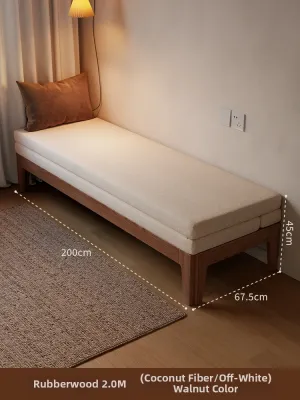
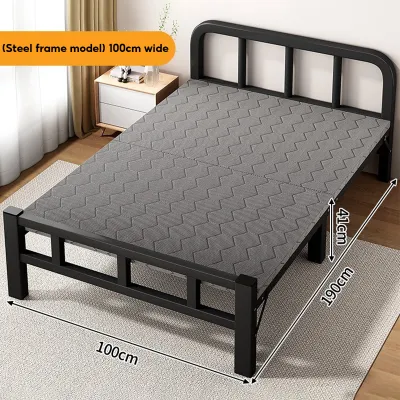
![[AVAILABLE ONHAND] Classic Black Leather Folding Sofa Bed Foldable up to 180 Degree](https://img.lazcdn.com/g/p/56577d29f132e6501a5ea4451c45d397.jpg_400x400q80.jpg_.webp)
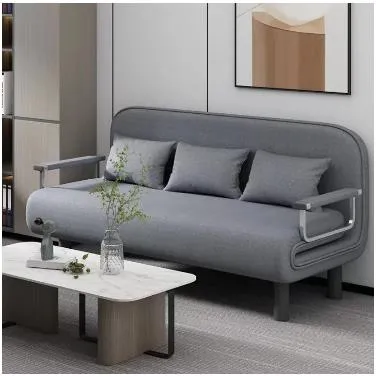
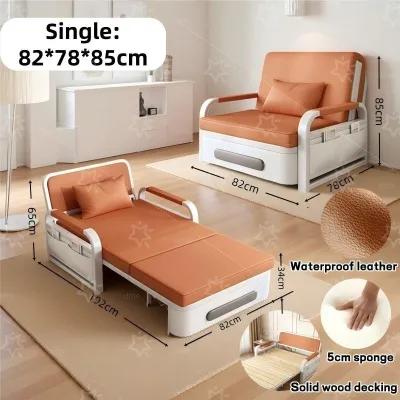
![[Manila 24-hour Boat] 88/108/128/158*78*85CM Foldable Sofa Bed with Storage Cabinet Dual Purpose Small Unit Living Room Lazy Person Sofa Single/Double/Queen Size with Roller Sofa Bed Side Pocket Multi-functional Telescopic Bed 2 Free Throw Pillows](https://img.lazcdn.com/g/p/6b1f7448cee77492697016c498ba8b44.jpg_400x400q80.jpg_.webp)
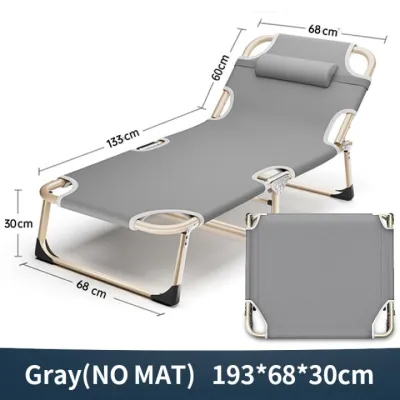
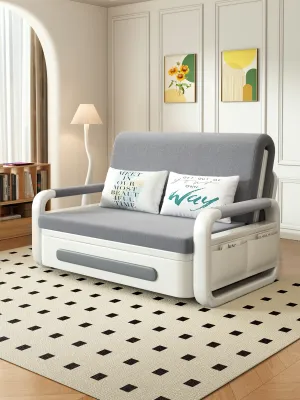
Prices are valid at publication and may change. Please refer to the product page for the latest price.
A standard 3-seater folding sofa bed generally features a folded width of 180 to 210 centimeters and a folded depth of 85 to 100 centimeters. When you transition this unit into a bed, the mechanism typically extends forward to deliver a sleeping surface equivalent to a standard double mattress (approximately 137 centimeters wide by 190 centimeters long) or a compact queen mattress (152 centimeters wide by 190 centimeters long). The total depth of the room occupied by the fully extended bed, including the backrest frame, usually ranges from 190 to 220 centimeters.
For larger spaces, 4-seater and 5-seater options often utilize L-shaped sectional designs or modular configurations. A 4-seater sofa bed typically has a folded width of 210 to 250 centimeters, while a 5-seater or extended modular unit can easily exceed 280 to 320 centimeters. Unfolding these larger models often yields a spacious queen- or king-equivalent sleeping area (152 to 183 centimeters wide by 200 centimeters long). In many modular designs, the sleeping surface is created by combining a pull-out mechanism with a stationary chaise lounge, resulting in a versatile multi-person sleeping zone.
The physical height of these units also plays a critical role in spatial perception and comfort. Most folding sofa beds maintain a seat height of 40 to 50 centimeters from the floor, which aligns with standard ergonomic seating. The backrest height typically ranges from 80 to 100 centimeters. When unfolded, the mattress height often sits lower—around 45 to 55 centimeters for pull-out metal frames, and as low as 20 to 30 centimeters for floor-resting futon or click-clack foam styles. Always check the manufacturer’s exact specifications to confirm these heights, as they impact how easily guests can get in and out of bed.
Measuring Your Living Room and Delivery Pathways
Before committing to a large 3-to-5 seater folding sofa bed, you must conduct a thorough spatial audit of your home. This process involves mapping the physical footprint of the furniture in both its active states, ensuring that the daily flow of your household is preserved and that the heavy item can safely enter your living space.

Begin by measuring the primary wall where the folded sofa will rest. Mark the maximum width and depth on your floor using painter’s tape to create a highly visible, 1:1 scale mockup. When positioning the sofa, verify that it does not block essential room features. In tropical climates, ensuring proper air circulation is vital; blocking wall-mounted split-type air conditioning units, floor fans, or natural ventilation pathways can lead to localized humidity buildup and mold growth on fabric surfaces. Additionally, ensure the sofa does not cover electrical outlets, light switches, or internet access points that you need to reach daily.
Next, extend your physical mockup to represent the fully unfolded sleeping configuration. Measure the distance from the back wall to the absolute furthest edge of the extended mattress. To maintain a functional room, you must preserve a clearance path of at least 60 centimeters—ideally 90 centimeters—around the foot and sides of the bed. This clearance ensures that overnight guests can move comfortably without climbing over the mattress, and it allows other household members to access bathrooms, kitchens, or balconies during the night without disruption.
The final step of your spatial audit is verifying the delivery pathway. A bulky 4- or 5-seater frame is exceptionally heavy and rigid, often requiring professional handling. Measure the clear width and height of every doorway, hallway corner, stairwell turn, and elevator entrance the delivery team must navigate. In many residential buildings, elevators have strict weight and depth limits, and narrow stairwells in multi-story townhouses can easily trap long sofa frames. Compare these pathway clearances against the packaged dimensions of the sofa bed, noting whether the armrests, legs, or backrests can be disassembled for transport.
Balancing Seating Capacity and Sleeping Comfort
Selecting the right sofa bed requires balancing daytime seating capacity with nighttime sleeping comfort. A common mistake is assuming that a high seating capacity automatically translates to a wider, more comfortable sleeping surface. In reality, the internal folding mechanism and frame architecture dictate the actual sleeping dimensions.
A standard 3-seater sofa bed is highly efficient for daily seating, comfortably accommodating three adults side-by-side. However, when converted, the resulting double-size sleeping surface can feel restrictive for two adults over multiple nights. If you host couples frequently, prioritizing a 3-seater with thin armrests can maximize the internal mattress width, sometimes allowing for a true queen-size sleeping surface within a compact overall footprint.
For households that host multiple guests simultaneously, 4-to-5 seater modular systems or L-shaped sectional sofa beds offer superior flexibility. These systems often feature a main pull-out section paired with a reversible chaise lounge or independent, heavy-duty ottomans. By aligning these modular pieces, you can configure an expansive sleeping platform that rivals a king-size bed. This setup allows multiple guests to sleep comfortably without crowding. The trade-off is that these modular configurations require a substantial amount of open floor space and can be more complex to set up and disassemble.
The underlying mechanism of the sofa bed heavily influences both comfort and durability. Click-clack models are simple and highly reliable, but they feature a central split line where the backrest and seat meet, which some sleepers find uncomfortable. Pull-out metal frames with independent mattresses offer a traditional bed feel but add significant weight and mechanical complexity to the frame. Tri-fold foam models rest directly on the floor, eliminating mechanical failure points, but they offer less structural support and sit very low to the ground. When choosing, consider the physical health and comfort preferences of your typical guests, and inspect the quality of the frame joints and support slats.
Common Sizing and Placement Mistakes to Avoid
To ensure your folding sofa bed remains a highly functional asset rather than a spatial hindrance, you must avoid several common planning pitfalls. These mistakes often stem from overlooking the secondary physical movements required by multi-functional furniture.
One of the most frequent errors is ignoring the “tail swing” or wall gap required by certain folding mechanisms. Many click-clack and traditional fold-out models require you to pull the sofa 15 to 30 centimeters away from the wall before you can recline the backrest or engage the internal hinge. If you place the sofa flush against a wall without accounting for this movement, you will be forced to physically drag a heavy, multi-seater frame across your floor every time you host a guest. To prevent this, check if the manufacturer specifies a “zero-wall” clearance mechanism, or plan your layout to accommodate the necessary rear gap.
Another common oversight is failing to subtract the armrest width from the overall frame dimensions. A sleek, armless 3-seater sofa bed with a total width of 190 centimeters provides a full 190 centimeters of sleeping width. Conversely, a bulky 3-seater with thick, rolled armrests might have the same 190-centimeter footprint but offer only 150 centimeters of actual sleeping space, with the remaining 40 centimeters consumed by non-functional padding. Always prioritize the actual mattress or sleeping surface dimensions over the external frame measurements when evaluating guest comfort.
You must also carefully plan the orientation of the extended bed relative to your room’s primary traffic lanes. If unfolding the sofa bed completely blocks the main path to the kitchen, bathroom, or exit doors, you create a safety hazard and a daily inconvenience. If your living room is narrow, consider an L-shaped sofa bed where the bed extends parallel to the longest wall, rather than perpendicular to it, to preserve a clear walkway.
Finally, do not underestimate the sheer weight of large folding sofa beds. Multi-seater frames equipped with steel pull-out mechanisms can weigh well over 80 to 100 kilograms. This concentrated weight can damage delicate flooring materials, such as soft vinyl tiles or polished hardwood, especially when the bed is unfolded and loaded with the weight of multiple sleeping guests. To protect your floors, verify that the sofa’s feet are equipped with wide, non-marking rubber or felt protectors, and avoid dragging the frame during repositioning.
Frequently Asked Questions (FAQ)
Can a standard 3-seater sofa bed comfortably sleep two adults?
Yes, a standard 3-seater sofa bed can sleep two adults, but comfort levels depend heavily on the unfolded mattress width and the support mechanism. Most 3-seater models unfold into a double bed (approximately 137 cm wide), which provides roughly 68 cm of sleeping width per person. While this is sufficient for occasional overnight stays, it can feel cramped for larger adults or extended visits. For optimal comfort, look for 3-seater designs that unfold into a true queen-size surface (152 cm wide) and feature a high-density foam mattress of at least 10 to 12 centimeters in thickness to prevent sleepers from feeling the underlying support bars.
How much clearance do I need in front of a folding sofa bed?
As a standard rule, you need a minimum front clearance equal to the full extended length of the bed plus at least 60 centimeters of open walking space. Since most folding sofa beds extend 190 to 220 centimeters from the back wall when fully opened, your room should have at least 250 to 280 centimeters of clear space measured from the wall. Providing 90 centimeters of front clearance is highly recommended if the foot of the bed faces a major household thoroughfare, ensuring that family members can walk past safely without tripping in the dark.
Are modular sofa beds better for hosting multiple guests than single-frame folding sofas?
Modular sofa beds are generally superior for hosting multiple guests because they offer greater spatial flexibility and larger potential sleeping configurations. Unlike single-frame folding sofas, which are locked into a fixed rectangular footprint, modular systems allow you to rearrange individual pieces—such as movable chaises, corner units, and independent ottomans—to create customized sleeping arrangements. This flexibility is particularly useful in L-shaped living rooms or open-concept spaces. However, single-frame folding sofas remain the preferred choice for smaller, formal living rooms where a clean, traditional aesthetic and quick, single-step setup are prioritized.
Community discussion
Share your experience or ask a question. Comments are reviewed before publication.