
Fitting a curved living room sofa into a 20 square meter condo living room requires balancing sculptural style with strict spatial discipline. While the sweeping lines of a curved sofa offer an elegant, organic alternative to traditional boxy furniture, their unique geometry physically and visually occupies more space than a standard straight sofa. To prevent your living room from feeling cramped or restricting daily movement, the ideal curved sofa for a 20 sqm space should have a maximum chord length (the straight-line distance from end to end) of 180 to 210 centimeters, paired with a shallow arc depth of no more than 85 to 95 centimeters. This specific sizing allows you to preserve the essential 75 to 90 centimeters of clear walkway space required for comfortable traffic flow. Achieving this balance involves understanding your room’s net usable footprint, calculating precise clearances, and selecting design features that minimize visual weight.
Map Your 20 Sqm Living Room Layout and Clearances
Before shopping for a curved living room sofa, you must map the exact dimensions of your 20 square meter space to identify the actual usable floor area. In many modern condominiums, the living room is not an isolated box; it often shares space with an open kitchen, a dining area, or an entryway. Begin by measuring the total length and width of the room using a reliable tape measure. Next, plot the swing radius of all doors, including the main entry door, bedroom doors, and especially balcony glass doors, which are vital for natural ventilation in tropical climates. Any furniture placed within these swing zones will cause daily frustration and potential damage to the frames.
Architectural obstacles are another critical factor in high-rise condo layouts. Note the location of structural concrete columns, protruding pillars, built-in shelving, air conditioning units, and floor-mounted electrical outlets. These fixed elements dictate where your sofa can physically sit. Once these obstacles are mapped, trace the primary and secondary traffic paths—such as the route from the entrance to the balcony, or from the kitchen to the seating area. For a comfortable home environment, primary walkways require a minimum clearance of 90 centimeters, while secondary pathways between furniture pieces can be scaled down to 75 centimeters. Any sofa selection must respect these boundaries to keep your home feeling open and breathable.
Products mentioned in this guide
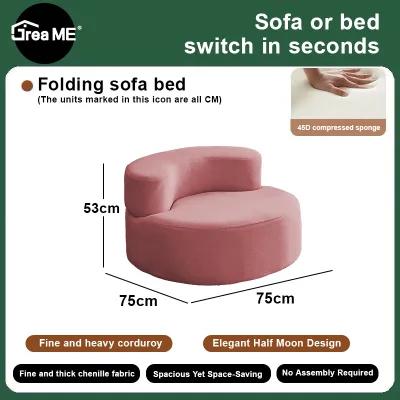
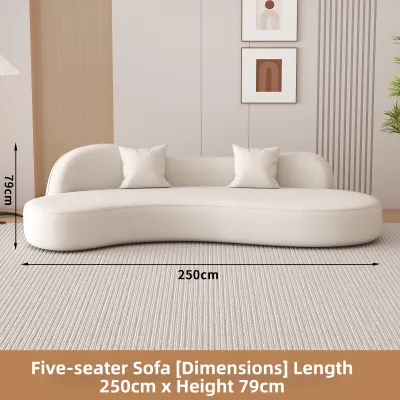
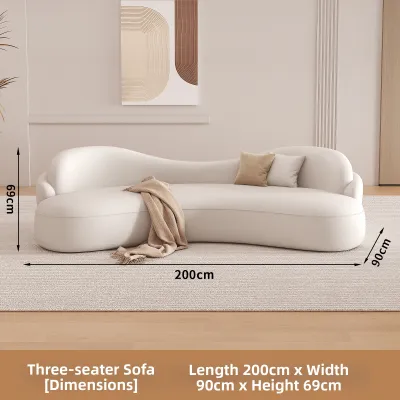
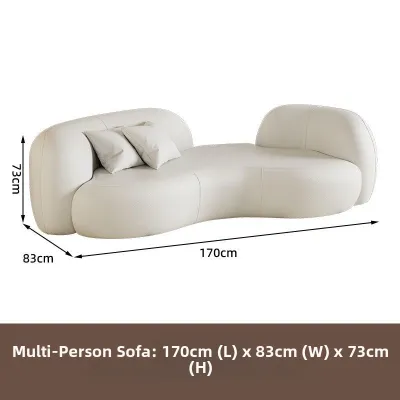
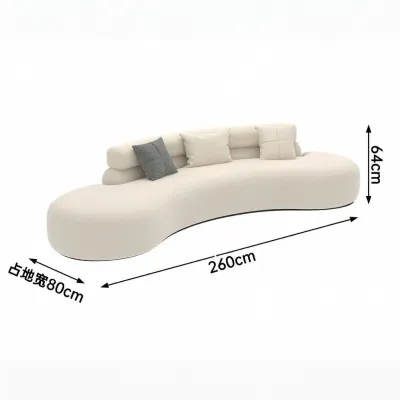
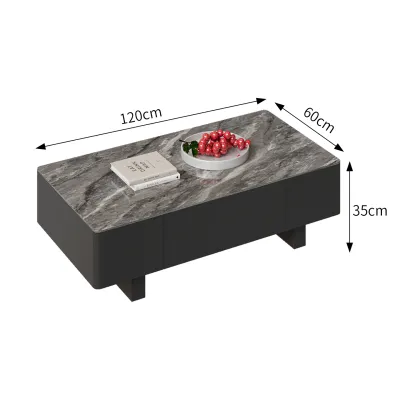
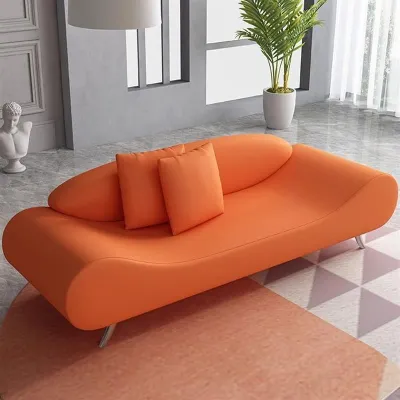
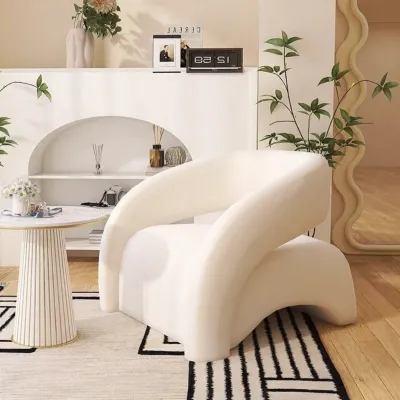
Prices are valid at publication and may change. Please refer to the product page for the latest price.
Calculate Maximum Curved Sofa Dimensions
To choose a curved living room sofa that fits harmoniously, you must understand how curved furniture dimensions differ from standard rectangular pieces. A curved sofa is defined by two primary measurements: the chord length and the maximum arc depth. The chord length is the straight-line distance from the outermost left point to the outermost right point of the sofa. The maximum arc depth is the perpendicular distance from that straight chord line to the deepest point of the sofa’s backrest curve. In a 20 sqm room, a sofa with a chord length exceeding 210 centimeters will likely dominate the space, leaving little room for side tables or comfortable walkways.

To determine your maximum allowable dimensions, subtract your required walkway clearances from the room’s total width. For example, if your living room wall is 3.5 meters wide and you require a 90-centimeter walkway on one side and a 45-centimeter clearance from a side table on the other, your maximum sofa chord length is limited to approximately 215 centimeters. Additionally, compare the spatial impact of different curve profiles. A gentle, shallow crescent curve mimics the footprint of a straight sofa while offering a soft, inviting aesthetic. In contrast, a deep, semi-circular or C-shaped sofa projects far forward into the room, which can severely restrict the space available for a coffee table and media console. For compact condo living, a shallow arc is almost always the more practical choice.
Arrange the Sofa to Maintain Traffic Flow
How you position your curved living room sofa determines whether your living room feels like a sophisticated lounge or an obstacle course. Floating the sofa in the center of the room is a popular design choice that highlights its sculptural backrest. However, in a 20 sqm space, floating is only viable if you have an open-concept layout where the sofa acts as a subtle divider between the living and dining zones. If you choose to float the sofa, ensure there is a consistent 90-centimeter clearance path entirely around the piece so that family members do not have to squeeze past.
For most compact condos, anchoring the curved sofa against a flat wall or tucking it into a corner is a more space-efficient strategy. While placing a curved back against a straight wall naturally creates a small wedge of empty space, you can utilize this area constructively. Placing a tall, slender indoor plant or a custom-built wedge console table behind the curve prevents the zone from looking like wasted space. Alternatively, positioning the sofa at an angle in a corner can soften the rigid, boxy lines of the room and open up the central floor area for a more spacious feel. To complement this arrangement, replace bulky central coffee tables with compact nesting tables or C-shaped side tables that slide neatly over the sofa cushions, preserving precious floor space.
Select Space-Saving Curved Sofa Features
When selecting a curved living room sofa for a smaller footprint, specific design details can make a significant difference in how spacious the room feels. Modular curved sofas are highly advantageous for condo living. These designs consist of separate sections that can be rearranged or even split apart into individual chairs if your layout needs change or if you host a larger gathering. This flexibility allows you to adapt the furniture to your space rather than forcing a rigid shape into a tight corner.
Additionally, pay close attention to the sofa’s arms and base. Sofas with wide, heavily padded rolled arms consume valuable centimeters of floor space without adding to the actual seating area. Instead, look for armless designs or those with slim, low-profile track arms to maximize the usable seating width. The base of the sofa also plays a major role in visual weight. A solid, block-style base that sits flat on the floor can make a small room feel heavy and congested. Opting for a sofa with raised, slender legs—whether crafted from warm wood or sleek metal—creates an open gap beneath the seat. This allows light to pass through and exposes more of the floor, tricking the eye into perceiving the room as larger and more airy.
Avoid Common Sizing and Placement Mistakes
One of the most frequent mistakes when decorating a 20 sqm condo is ignoring the “dead space” that naturally forms behind a curved sofa. Attempting to push a curved backrest completely flush against a flat wall can look awkward and result in pinched fabrics or scuffed paint. Instead, intentionally embrace the gap by leaving a few centimeters of breathing room, or fill it with a slim, low-profile console table designed for narrow spaces. Another common error is choosing a sofa with an excessively deep seat or a towering backrest. While deep seats offer excellent comfort, they push the front edge of the sofa further into your primary walkway, disrupting the balance of the entire room.
Finally, never overlook the physical logistics of getting the sofa into your unit. Many condo residents select the perfect dimensions for their living room, only to discover on delivery day that the sofa cannot fit inside the building’s service elevator, navigate the tight turns of the emergency stairwell, or pass through the unit’s front doorway. Before finalizing your purchase, measure the height, width, and diagonal clearance of all entry points, elevators, and hallways. If access is tight, prioritize modular curved designs that are delivered in smaller, manageable sections and assembled directly inside your living room.
Frequently Asked Questions (FAQ)
Can a curved sofa work in a rectangular 20 sqm room?
Yes, a curved sofa can work exceptionally well in a rectangular 20 sqm room by softening the rigid, linear feel of the space. To make it work, align the straight chord length of the sofa parallel to the longer wall. This orientation keeps the main body of the sofa out of the central traffic lane. You can then use the gentle curve of the front to create a natural, inviting conversation area, leaving the corners of the room open for slim floor lamps, small side tables, or indoor plants.
How do I measure a curved sofa for my floor plan?
Measuring a curved sofa requires tracking three key dimensions: the overall chord length (straight-line width from end to end), the maximum arc depth (the deepest point of the curve), and the total height. Because curves can be deceptive on paper, the most reliable method is to map the sofa’s footprint directly onto your living room floor. Use blue painter’s tape or lay down flattened cardboard cutouts matching the manufacturer’s specified dimensions. Walk around this mock-up for a day or two to physically test the clearance of your walkways and ensure all doors can open freely.
What type of coffee table pairs best with a curved sofa in a small space?
Round, oval, or organic-shaped coffee tables are the ideal companions for a curved sofa in a compact living room. These shapes echo the natural flow of the sofa’s arc, creating a cohesive design language while eliminating sharp corners that can bruise shins in tight walkways. For maximum versatility in a 20 sqm condo, consider nesting coffee tables or lightweight accent tables. These can be easily tucked away when you need extra floor space for movement or pulled close when hosting guests.

Community discussion
Share your experience or ask a question. Comments are reviewed before publication.