
The ideal foldable bed table for a small condo bedroom typically features a tabletop width of 55 to 65 centimeters and a depth of 35 to 40 centimeters, allowing it to rest comfortably over your lap or beside the mattress without protruding into vital walkways. To prevent blocking pathways in compact spaces, the table must leave at least 50 to 60 centimeters of clear walkway space when in use, and fold down to a thickness of under 10 centimeters so it can be tucked away easily. Selecting the right size requires balancing your personal workspace needs with the physical boundaries of your bedroom layout, ensuring that daily movement remains fluid and unhindered.
Measuring Your Bed and Room for Safe Clearance
Before browsing options on an online marketplace, you must gather precise measurements of your sleeping area. Start by measuring your bed height from the floor to the top of the mattress, including any thick mattress toppers or protectors. This height determines how tall the table legs must be if you choose a floor-standing model, or how much clearance you need above your lap if you opt for a lap-desk style. For overbed tables with legs that slide under the bed frame, check the clearance between the floor and the bottom of your bed frame to ensure the base can actually slide underneath without getting stuck on support slats.
Next, measure the width of your mattress to ensure the table legs can span across your lap or the mattress width without hanging off the edges awkwardly. If the table is designed to span the entire bed, the inner width of the table frame must be wider than the mattress width by at least 5 to 10 centimeters. This prevents the frame from rubbing against the mattress fabric and causing premature wear.
Products mentioned in this guide

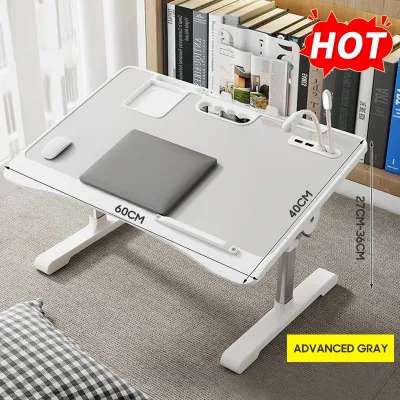

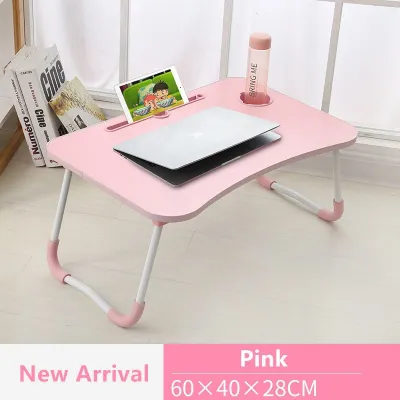

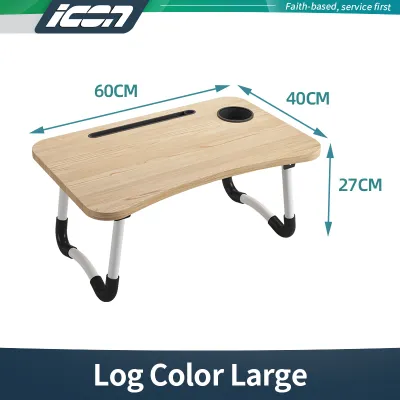
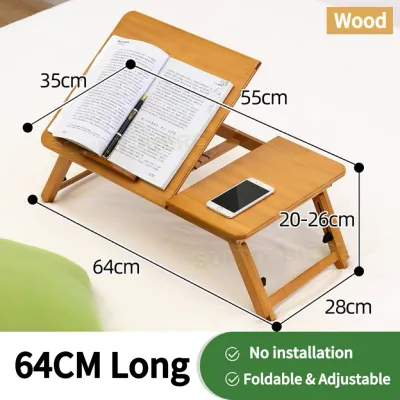
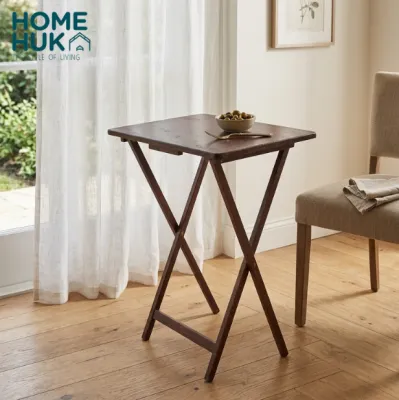
Prices are valid at publication and may change. Please refer to the product page for the latest price.
Finally, calculate the remaining floor space to maintain adequate walkway clearance. In compact condo bedrooms, space is at a premium. Standard ergonomic guidelines suggest maintaining a walkway of at least 60 centimeters for comfortable passage. If your bedroom is exceptionally tight, you may have to compromise down to 50 centimeters, but any less will make moving around the bed difficult. Ensure the table’s footprint, when fully extended, does not reduce this walkway below these functional limits.
Proportional Guidelines for Foldable Bed Table Dimensions
Your table’s surface area should be proportional to your bed size to maintain stability and visual balance. A massive table on a single bed looks bulky and is hard to balance, while a tiny tray on a queen bed might feel unstable. A standard laptop and a mouse require a surface of about 60 centimeters in width. If you only use a tablet or read books, a narrower 50-centimeter table is more space-efficient and easier to handle.

Height adjustability is another crucial factor to consider. Mattresses can vary from thin foam mats to thick, multi-layered spring mattresses. Choosing a foldable bed table with adjustable legs allows you to customize the height to your specific mattress thickness and your sitting posture. This adjustability prevents neck strain and ensures your legs have enough room to move underneath without lifting the table.
Tabletop depth usually ranges from 30 to 45 centimeters. A deeper table offers more room for a keyboard or notebooks but pushes the table further down the bed, potentially blocking your legs or extending past the bed’s edge. A shallower table keeps the center of gravity closer to you, improves reachability, and preserves precious room flow when you need to slide out of bed.
Assessing Folded Footprints and Storage Options
Different folding styles recover different amounts of floor space. Flat-fold lap tables collapse completely flat and are highly space-efficient. Rolling overbed tables with vertical frames take up permanent floor space unless they have a folding frame or a tilting top that allows them to park flat against a wall. Wall-mounted drop-leaf tables fold down against the wall when not in use, completely freeing up the floor but requiring secure wall anchoring.
Before purchasing, measure the exact dimensions of your intended storage spot. Common storage areas in small condos include the gap under the bed, the space behind a bedroom door, or inside a wardrobe. A table that folds down to a thickness of 5 to 8 centimeters can easily slide under most bed frames or stand upright in a narrow closet gap. Always check the finished folded dimensions provided by the manufacturer to ensure a proper fit.
Additionally, verify the weight capacity and stability mechanisms directly from the manufacturer’s specifications. Look for tables with locking mechanisms on the folding joints to prevent accidental collapse during use. If choosing a model with wheels, ensure it has locking casters to keep the table stable on smooth condo flooring like vinyl or polished tiles. Anti-slip pads on the legs are essential for lap tables to prevent them from sliding on slippery bed sheets.
Common Sizing and Placement Mistakes to Avoid
One of the most common mistakes is forgetting to account for door swings. A table placed beside the bed might block wardrobe doors, sliding closet panels, or the main bedroom door from opening fully. Always map out the swing path of all doors and drawers in the room before deciding where to place or store the table.
Another frequent error is overestimating the usable surface area. Do not assume the outer dimensions equal the usable workspace. Some tables have thick decorative frames, wide cup holders, built-in tablet slots, or bulky hinges that reduce the actual flat surface area. Check the manufacturer’s detailed product specifications for the usable tabletop dimensions rather than relying solely on the overall width and depth.
Finally, buyers often fail to verify the actual folded thickness and weight before purchasing. A table might look compact when open, but if the legs fold bulkily or the frame is made of heavy steel, it can be difficult to lift, fold, and store daily. In humid tropical environments, heavy or poorly finished metal frames can also be prone to rust if stored in damp, unventilated closet corners. Verify the folded thickness and total weight to ensure you can easily handle the table without straining.
Frequently Asked Questions (FAQ)
Can I use a foldable bed table on a soft mattress?
Using a foldable bed table on a soft or plush mattress requires careful attention to stability. Soft surfaces cause the table legs to sink unevenly, which can tip over drinks or laptops. To use a table on a soft mattress, choose a model with a wide, continuous sled-style base rather than four individual thin legs, as this distributes the weight more evenly. Always check the manufacturer’s instructions regarding surface compatibility and avoid overloading the table to prevent deep sinking.
How much walkway space should I leave around the bed?
For comfortable movement in a small condo bedroom, you should ideally leave at least 60 centimeters of clear walkway space around the sides of the bed. This allows a single person to walk naturally without turning sideways. In extremely tight layouts, you can reduce this clearance to 50 centimeters, but any tighter space will make daily tasks like changing bed sheets or opening closets highly inconvenient. Ensure your foldable bed table can be stored away completely when not in use to keep these walkways clear.
Community discussion
Share your experience or ask a question. Comments are reviewed before publication.